
In the world of personal finance, corporate accounting, and investment analysis, mathematics is the primary language spoken. While most individuals are familiar with the basic operations of addition and subtraction, the mechanics of division—specifically the relationship between the dividend, the divisor, and the quotient—form the bedrock of financial literacy. Understanding these terms is not merely an academic exercise; it is the key to deciphering stock market indices, evaluating company health through ratios, and managing personal wealth with precision.
To the uninitiated, these terms might sound like relics from a middle-school classroom. However, in a professional financial context, they represent the components of every critical metric, from the Price-to-Earnings (P/E) ratio to the calculation of dividends per share. By mastering these concepts, an investor moves from guessing at market trends to calculating the intrinsic value of an asset.
Foundations of Financial Literacy: Decoding the Vocabulary of Math in Business
At its simplest level, division is the process of splitting a large amount into equal parts. In the context of business finance, this allows us to scale data so that it becomes comparable and actionable. Every time a financial analyst looks at a spreadsheet, they are looking at how various “dividends” are affected by specific “divisors” to produce a “quotient” that indicates performance.
The Dividend: The Total Value Under Review
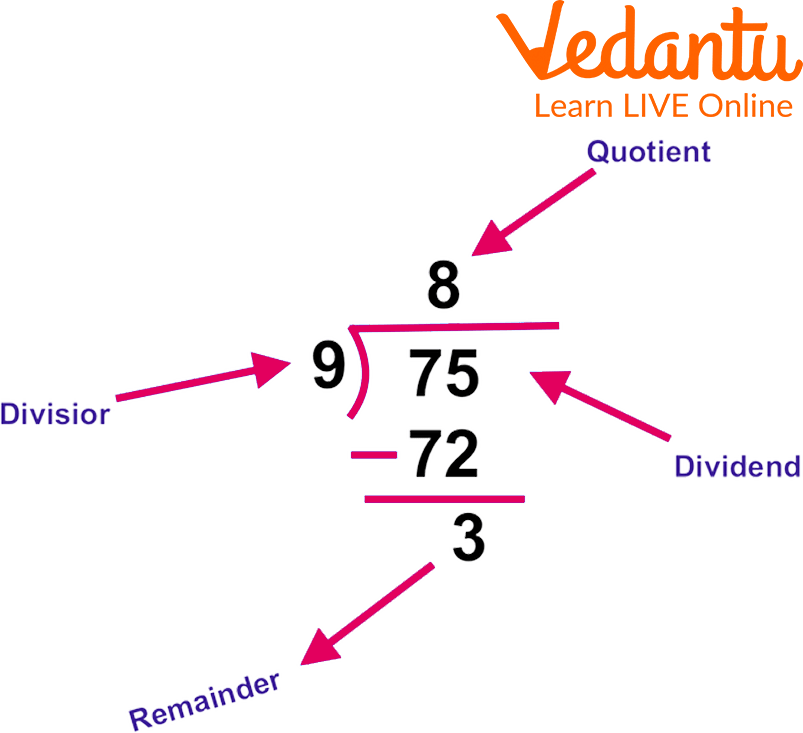
In mathematics, the dividend is the number that is being divided. In the financial world, the “dividend” often refers to a specific distribution of profits to shareholders, but in the broader context of financial math, it represents the total pool of resources available.
When calculating a company’s Earnings Per Share (EPS), for instance, the total net income of the company serves as the mathematical dividend. It is the large “pie” that is about to be sliced. Without a clear understanding of the dividend, an investor cannot know the scale of the opportunity. Whether it is the total revenue of a firm or the total amount of money saved in a retirement account, the dividend is the starting point of every strategic calculation.
The Divisor: The Factor of Distribution
The divisor is the number by which the dividend is divided. In business, the divisor is often a unit of measurement that provides context to a raw number. If you have $1 million in profit (your dividend), that number means very little without a divisor. Is that profit shared among two partners or ten million shareholders?
The divisor acts as the lens through which we view the dividend. In the Dow Jones Industrial Average, for example, the “Dow Divisor” is a famous mathematical tool used to account for stock splits and corporate actions. It ensures that the index remains a consistent benchmark over time. In personal finance, your divisor might be the number of months in a year or the number of people in a household. It determines the “weight” of the distribution.
The Quotient: The Result of Strategic Calculation
The quotient is the result obtained by dividing the dividend by the divisor. In the niche of finance, the quotient is almost always referred to as a “ratio,” a “rate,” or a “yield.” This is the most important number for decision-making.
The quotient tells you the efficiency of an investment. If you divide your total return by your initial investment, the quotient is your Return on Investment (ROI). If you divide a company’s stock price by its earnings, the quotient is the P/E ratio. The quotient is the “bottom line” of division; it provides the actionable insight that tells an investor whether an asset is overvalued, undervalued, or performing according to expectations.
The Role of the Dividend in Investment and Corporate Finance
While “dividend” is a mathematical term for the number being divided, it is also a cornerstone of the “Money” niche in its own right. A corporate dividend represents a portion of a company’s earnings that is paid out to shareholders. Understanding the relationship between these two definitions—the mathematical and the fiscal—is essential for any income-focused investor.
Corporate Dividends: Rewarding Stakeholders
When a company is profitable, the board of directors must decide what to do with the excess cash. They can reinvest it into the business, or they can distribute it as a dividend. In this scenario, the total pool of cash designated for shareholders is the mathematical dividend.
Investors who focus on “dividend growth” strategies look for companies that consistently increase this payout. This is a sign of financial maturity and stability. From a mathematical perspective, as the “dividend” (the payout) grows while the “divisor” (the number of shares) stays constant or decreases through buybacks, the “quotient” (dividend per share) increases, providing more value to the individual investor.
Dividend Yield as a Financial Quotient
One of the most common ways to evaluate an income stock is by looking at its dividend yield. This is a classic example of using a quotient to make a comparison. To find the yield, you take the annual dividend per share (the dividend) and divide it by the current stock price (the divisor).
A high quotient (yield) might indicate that a stock is a bargain, providing a high return for every dollar invested. However, if the quotient is too high, it might signal that the stock price (the divisor) has plummeted because the market expects the company to fail. In this way, understanding the mechanics of how the quotient is derived allows an investor to look past the surface and see the underlying financial health of the organization.
Divisors in Market Indices and Portfolio Management
In the sophisticated world of market tracking, the divisor is much more than a simple number; it is a vital adjustment tool that maintains the integrity of financial data over decades.
How the Index Divisor Works
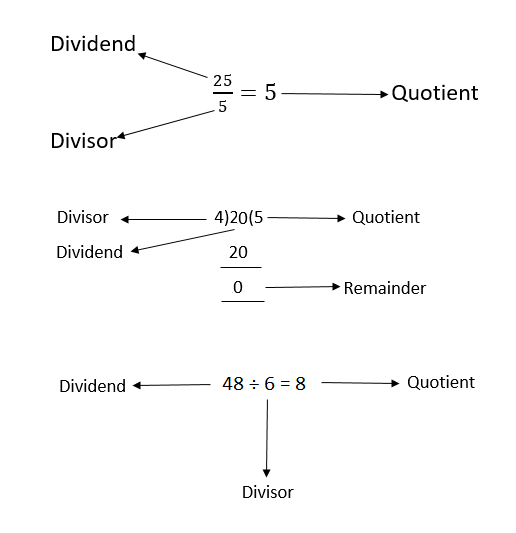
The Dow Jones Industrial Average (DJIA) and the S&P 500 do not simply add up stock prices. If they did, a stock split would cause the entire market index to appear as though it had crashed. To prevent this, economists use a “divisor.”
When a company in the index undergoes a 2-for-1 stock split, its price is halved. To ensure the index (the quotient) remains the same, the divisor is adjusted downward. This mathematical wizardry ensures that the “dividend” (the sum of the prices) and the “divisor” (the adjustment factor) always produce a “quotient” (the index value) that accurately reflects the market’s historical movement. For the modern investor, understanding that the divisor is dynamic is crucial for trusting the benchmarks used to measure portfolio performance.
Normalizing Data for Accurate Comparison
Divisors are also used in portfolio management to “normalize” data. If you are comparing a $10,000 portfolio to a $1,000,000 portfolio, you cannot compare their raw gains in dollars. Instead, you use the initial investment as the divisor.
By dividing the total gain (dividend) by the initial capital (divisor), you arrive at a percentage (quotient). This allows a small-scale investor to compare their performance directly against a hedge fund manager. In finance, the divisor is the great equalizer; it removes the noise of scale and focuses on the signal of percentage-based growth.
Financial Ratios: Leveraging Quotients for Business Health
The true power of division in finance is realized through the creation of ratios. These quotients provide a snapshot of a company’s liquidity, profitability, and debt levels. Without the quotient, data is just a collection of large, unmanageable numbers.
Liquidity Ratios: Measuring Short-term Stability
A company’s “Current Ratio” is a vital quotient for creditors. It is calculated by taking current assets (dividend) and dividing them by current liabilities (divisor).
- If the quotient is greater than 1, the company has more assets than debts due within a year.
- If the quotient is less than 1, the company may be facing a liquidity crisis.
Here, the divisor (debt) acts as a threshold. By understanding this relationship, a business owner can manage their “dividend” (assets) more effectively to ensure the “quotient” (stability) remains in a healthy range.
Profitability Ratios: The Efficiency Quotient
Return on Equity (ROE) is perhaps the ultimate quotient for stockholders. It is calculated by dividing net income (dividend) by shareholder equity (divisor). This ratio tells you how much profit a company generates with the money shareholders have invested.
A rising quotient in this category suggests that the management team is becoming more efficient at turning capital into profit. Conversely, if the divisor (equity) increases because the company is issuing more shares, but the dividend (income) stays the same, the quotient (ROE) will drop. This mathematical reality warns investors that their stake is being diluted.
Practical Applications: Using Division to Build Wealth
Beyond the boardroom and the stock exchange, the concepts of dividend, divisor, and quotient are essential for daily money management and long-term wealth accumulation.
Cost Averaging and Unit Pricing
When you purchase assets over time, such as in a 401(k), you are practicing a form of division known as “Dollar Cost Averaging.” Your total capital spent is the dividend, and the number of shares purchased is the divisor. The resulting quotient is your average cost per share.
In a fluctuating market, a savvy investor uses division to their advantage. By keeping the dividend (the amount invested monthly) constant, they naturally buy more shares (a larger divisor) when prices are low. Over time, this lowers the quotient (the average cost), leading to higher profit margins when the market recovers.

Budgeting by Division: The Rule of 50/30/20
Finally, division is the primary tool for successful budgeting. The famous 50/30/20 rule is essentially a series of division problems. Your total take-home pay is the dividend. To find your spending limits, you apply divisors to see if your “quotients” (actual spending in categories like “Needs,” “Wants,” and “Savings”) align with your goals.
If your “Needs” quotient is 0.7 (70%) of your dividend, you know immediately that your financial structure is out of balance. By identifying which part of the equation is the problem—the dividend (not enough income) or the divisor (too many expenses)—you can make the necessary adjustments to achieve financial freedom.
In conclusion, while the terms quotient, dividend, and divisor originate in basic arithmetic, they are the silent engines driving the world of finance. Whether you are calculating the yield on a blue-chip stock, analyzing a corporate balance sheet, or simply trying to make your monthly paycheck go further, these three components are your most reliable tools. By mastering the math of division, you gain the clarity needed to navigate the complexities of the modern economy and build a secure financial future.
aViewFromTheCave is a participant in the Amazon Services LLC Associates Program, an affiliate advertising program designed to provide a means for sites to earn advertising fees by advertising and linking to Amazon.com. Amazon, the Amazon logo, AmazonSupply, and the AmazonSupply logo are trademarks of Amazon.com, Inc. or its affiliates. As an Amazon Associate we earn affiliate commissions from qualifying purchases.