
Divorce is frequently viewed through a lens of emotional upheaval and immediate lifestyle changes, but from a financial perspective, it is one of the most significant wealth-transfer events an individual will ever experience. Among the various instruments used to facilitate this transfer, the Qualified Domestic Relations Order, or QDRO, stands as one of the most critical tools for personal finance management.
A QDRO is a legal judgment, decree, or order that recognizes the right of an “alternate payee”—typically a former spouse—to receive a portion of the benefits payable under a participant’s retirement plan. Without this specific document, the division of retirement assets governed by federal law is not only difficult but can result in catastrophic tax consequences. For anyone navigating a high-net-worth divorce or simply trying to protect their financial future, understanding the mechanics of a QDRO is essential to maintaining long-term solvency and retirement readiness.
The Financial Framework of a Qualified Domestic Relations Order
To understand a QDRO, one must first understand the Employee Retirement Income Security Act of 1974 (ERISA). ERISA is a federal law that sets minimum standards for most voluntarily established retirement and health plans in private industry to provide protection for individuals in these plans. One of the core tenets of ERISA is the “anti-alienation” provision, which prevents a plan participant from assigning their retirement benefits to someone else. This is designed to ensure that retirement funds are available for the employee’s retirement.
However, divorce creates a unique financial necessity that requires an exception to this rule. A QDRO serves as that exception. It allows a state court to order that a portion of a retirement plan be paid to a non-employee spouse, child, or other dependent. From a money management perspective, the QDRO is the bridge between a state-level divorce decree and federal-level retirement plan regulations.
Defined Contribution vs. Defined Benefit Plans
The impact of a QDRO varies significantly depending on the type of retirement account being divided. In the realm of personal finance, we generally deal with two categories:
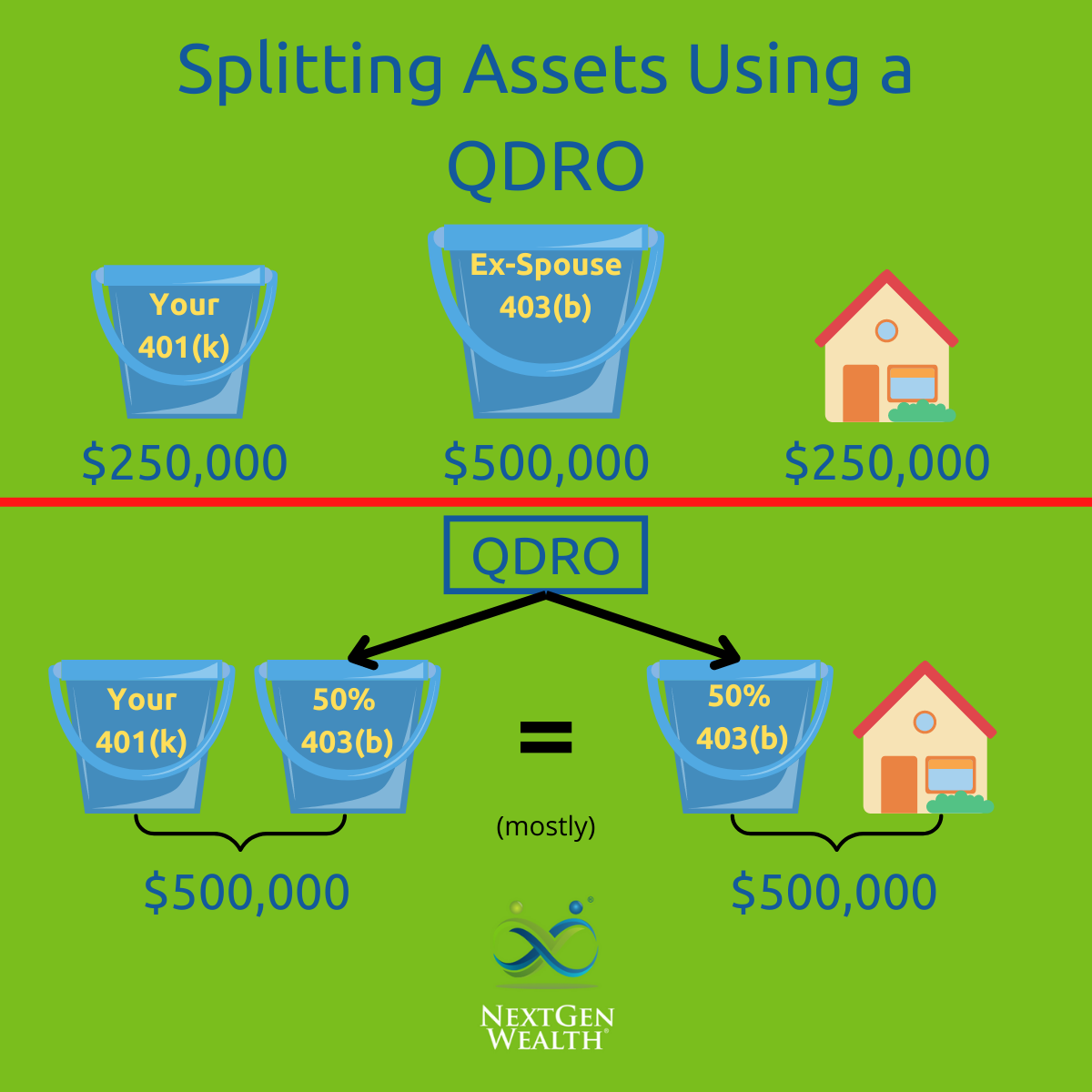
- Defined Contribution Plans (e.g., 401(k), 403(b), Profit Sharing): These are accounts where the balance is clear. A QDRO for a 401(k) usually specifies a dollar amount or a percentage of the account balance to be transferred to the alternate payee. The funds can often be rolled over into the alternate payee’s own IRA, allowing for continued tax-deferred growth.
- Defined Benefit Plans (Pensions): These are far more complex. A pension promises a specific monthly payment upon retirement. A QDRO for a pension must determine how that future stream of income is split. This involves complex actuarial calculations to determine the “present value” of future payments, which is a vital step in equitable distribution.
The Role of the Plan Administrator
Unlike other financial transfers, a QDRO is not finalized when the judge signs it. The document must be submitted to the retirement plan’s administrator. The administrator has the fiduciary responsibility to ensure the order meets the specific requirements of the plan and the Internal Revenue Code. If the QDRO is not “qualified” by the administrator, the financial transfer cannot occur. This creates a procedural hurdle that requires precise financial drafting to ensure that the intended division of wealth is actually executed.
Tax Implications and Wealth Preservation Strategies
One of the primary reasons financial advisors emphasize the use of a QDRO is for its tax-shielding properties. Normally, if you withdraw money from a 401(k) before age 59½, you face a 10% early withdrawal penalty in addition to standard income taxes. In the context of a divorce, a QDRO provides a unique strategic advantage for managing liquidity and tax liability.
Avoiding the 10% Early Withdrawal Penalty
Under Internal Revenue Code Section 72(t)(2)(C), payments made to an alternate payee under a QDRO are exempt from the 10% early withdrawal penalty. This is a powerful financial planning tool. If a spouse needs immediate liquidity to purchase a new home or cover legal fees following a divorce, taking a distribution directly from the participant’s 401(k) via a QDRO allows them to access that cash without the 10% haircut. While they will still owe ordinary income tax on the distribution, the savings on the penalty can represent thousands of dollars in preserved capital.
The Power of the Direct Rollover
For those focused on long-term wealth accumulation, the most effective strategy is the direct rollover. When the QDRO is executed, the alternate payee can elect to have their portion of the assets transferred directly into an Individual Retirement Account (IRA) or their own employer-sponsored 401(k).
By choosing a rollover, the alternate payee avoids all immediate taxes. The funds continue to grow in a tax-advantaged environment, preserving the power of compound interest. In a divorce settlement, the difference between taking a cash distribution and performing a rollover can result in a six-figure difference in retirement net worth twenty years down the line.
Tax Responsibility Shifts
It is also a crucial financial detail that when a QDRO is used to pay a former spouse, the alternate payee becomes responsible for the income taxes on the distributions they receive. This is a departure from other forms of support, like child support (which is tax-neutral) or certain older alimony arrangements. When negotiating the split of assets, savvy investors must calculate the “after-tax” value of the retirement account. A $500,000 house is not financially equivalent to a $500,000 401(k) because the latter carries a deferred tax liability.

Strategic Financial Planning and Valuation Challenges
Valuing retirement assets during a divorce is rarely as simple as looking at a current account statement. Because retirement funds are often earned both before and during a marriage, the “coverture fraction” or “marital portion” must be calculated. This is the ratio of the time the participant was in the plan while married to the total time the participant was in the plan.
Shared Payment vs. Separate Interest
When dealing with pensions, financial planners must choose between two primary methods of distribution via the QDRO:
- The Shared Payment Approach: The alternate payee only receives payments when the participant actually retires and starts collecting their pension. If the participant dies before retirement, the alternate payee may receive nothing unless specific survivor benefits were negotiated. This approach carries higher risk for the alternate payee’s financial security.
- The Separate Interest Approach: This method effectively splits the pension into two separate life annuities. The alternate payee can often choose to begin receiving their portion of the benefit as soon as the participant reaches the plan’s “earliest retirement age,” regardless of whether the participant actually retires. This provides the alternate payee with greater control over their financial timeline and eliminates the risk of losing benefits if the participant dies prematurely.
Dealing with Volatility
In a fluctuating market, the timing of the QDRO can significantly impact the final dollar amount transferred. If a divorce decree awards 50% of a 401(k) as of a specific “valuation date,” but the QDRO isn’t processed for six months, the account value could have risen or fallen.
Proactive financial management requires that the QDRO language specifies whether the alternate payee is entitled to gains and losses on their share from the valuation date until the date of distribution. Neglecting this detail can lead to “missing” wealth if the market performs well during the administrative delay, or an unexpected shortfall if the market declines.
Common Pitfalls and Protecting Your Net Worth
The process of securing a QDRO is fraught with administrative and legal complexities that can jeopardize a person’s financial standing. One of the most common mistakes is failing to finalize the QDRO at the same time as the divorce decree.
The Risk of Delay
If a participant dies or retires before the QDRO is officially “qualified” by the plan administrator, the alternate payee may lose their right to the benefits entirely. From a risk management perspective, the QDRO should be drafted and pre-approved by the plan administrator before the divorce is even finalized. This ensures that the transfer of wealth is seamless and protected against unforeseen life events.
Specificity in Drafting
Generic language is the enemy of financial precision. A QDRO must be highly specific. It should address:
- The exact name of the retirement plan.
- The percentage or dollar amount to be paid.
- The number of payments or the period to which the order applies.
- Provisions for “survivorship benefits” to ensure the alternate payee continues to receive funds if the participant passes away.
Without these specifics, the plan administrator will reject the order, leading to additional legal fees and delayed access to capital.
Loans and Outstanding Balances
Another financial nuance involves outstanding 401(k) loans. If a participant has a $20,000 loan against their retirement account, the “account balance” is technically lower. The QDRO must specify whether the alternate payee’s share is calculated based on the balance including or excluding the outstanding loan. Failure to account for this can result in an inequitable split of the actual liquid assets.
The Long-Term Financial Impact
Ultimately, a QDRO is more than just a legal necessity; it is a fundamental component of post-divorce financial health. Retirement accounts are often the largest or second-largest asset in a marital estate. Managing the division of these assets with precision allows both parties to exit the marriage with a clearer path toward financial independence.
For the alternate payee, the QDRO represents the preservation of their standard of living in their later years. For the participant, a properly executed QDRO ensures that their legal obligations are met without incurring unnecessary penalties or tax burdens.
In the broader context of personal finance, the QDRO serves as a reminder that wealth protection requires attention to detail. By understanding the tax advantages, the valuation methods, and the administrative requirements of a QDRO, individuals can navigate the complexities of divorce while keeping their long-term investment goals intact. Divorce marks the end of one financial partnership, but with the right tools, it can also be the strategic beginning of a well-funded, independent financial future.
aViewFromTheCave is a participant in the Amazon Services LLC Associates Program, an affiliate advertising program designed to provide a means for sites to earn advertising fees by advertising and linking to Amazon.com. Amazon, the Amazon logo, AmazonSupply, and the AmazonSupply logo are trademarks of Amazon.com, Inc. or its affiliates. As an Amazon Associate we earn affiliate commissions from qualifying purchases.