
Understanding the Cornerstone of Project Management
In the dynamic world of project management, where uncertainty and change are often the only constants, establishing a clear reference point is paramount to success. This reference point, meticulously defined and agreed upon, is known as the project baseline. It serves as the bedrock upon which all subsequent project activities, progress tracking, and performance evaluation are built. Without a well-defined baseline, a project is akin to a ship sailing without a compass or a map, susceptible to drifting off course and ultimately failing to reach its intended destination.
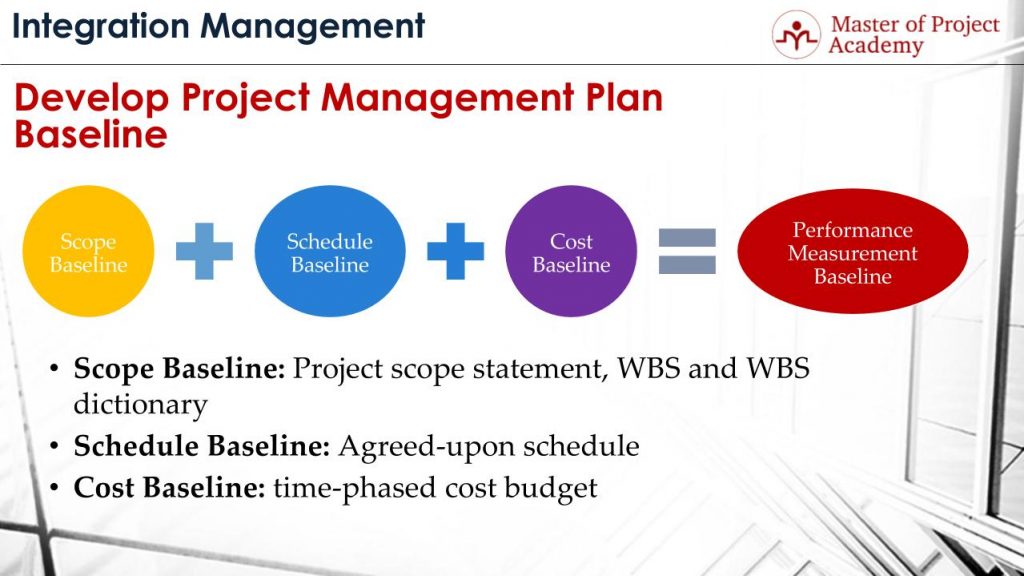
The concept of a project baseline extends beyond mere documentation; it is a strategic tool that imbues a project with direction, accountability, and control. It represents the initial, approved plan for a project, encompassing its scope, schedule, and cost. By freezing these key elements at a specific point in time, the baseline provides a fixed target against which the project’s performance can be measured throughout its lifecycle. Any deviation from this agreed-upon plan is then identifiable, quantifiable, and can be addressed proactively.
This article will delve into the fundamental aspects of what constitutes a project baseline, explore its critical components, and illuminate why it is an indispensable element for any project aiming for successful delivery. We will unpack the various types of baselines, the process of their creation, and their profound impact on project control and stakeholder communication.
The Triad of Baselines: Scope, Schedule, and Cost
At its core, a project baseline is not a singular entity but rather a composite of three interconnected and interdependent components: the scope baseline, the schedule baseline, and the cost baseline. Each of these baselines represents a snapshot of the approved plan for a specific project dimension at a designated point in time, typically after the planning phase is complete and before execution begins.
The Scope Baseline: Defining What Success Looks Like
The scope baseline is arguably the most foundational element. It meticulously defines the project’s boundaries, outlining exactly what will be delivered and, just as importantly, what will not be delivered. This clarity is crucial for preventing scope creep, a phenomenon where uncontrolled changes or additions are made to the project’s scope after its initiation.
The scope baseline typically includes:
- The Project Scope Statement: This document provides a detailed description of the project’s deliverables, objectives, and the work required to achieve them. It elaborates on the features, functions, and overall characteristics of the product, service, or result that the project aims to create.
- The Work Breakdown Structure (WBS): The WBS is a hierarchical decomposition of the total scope of work to be carried out by the project team to accomplish the project objectives and create the required deliverables. It breaks down the project into smaller, more manageable components, often referred to as work packages. This granular breakdown ensures that all necessary tasks are identified and accounted for.
- The Work Breakdown Structure Dictionary (WBS Dictionary): This companion document to the WBS provides detailed information about each component in the WBS. It includes descriptions of the work to be performed, the responsible party, acceptance criteria, and any other relevant details necessary for clarity and execution.
By establishing a robust scope baseline, project managers ensure that all stakeholders have a shared understanding of the project’s objectives and deliverables. This agreement is vital for managing expectations and preventing misunderstandings that can lead to project delays, cost overruns, and ultimately, dissatisfied clients or stakeholders. Any proposed changes to the scope must be formally assessed against the scope baseline, triggering a change control process to evaluate their impact on schedule and cost before approval.
The Schedule Baseline: Charting the Course of Time
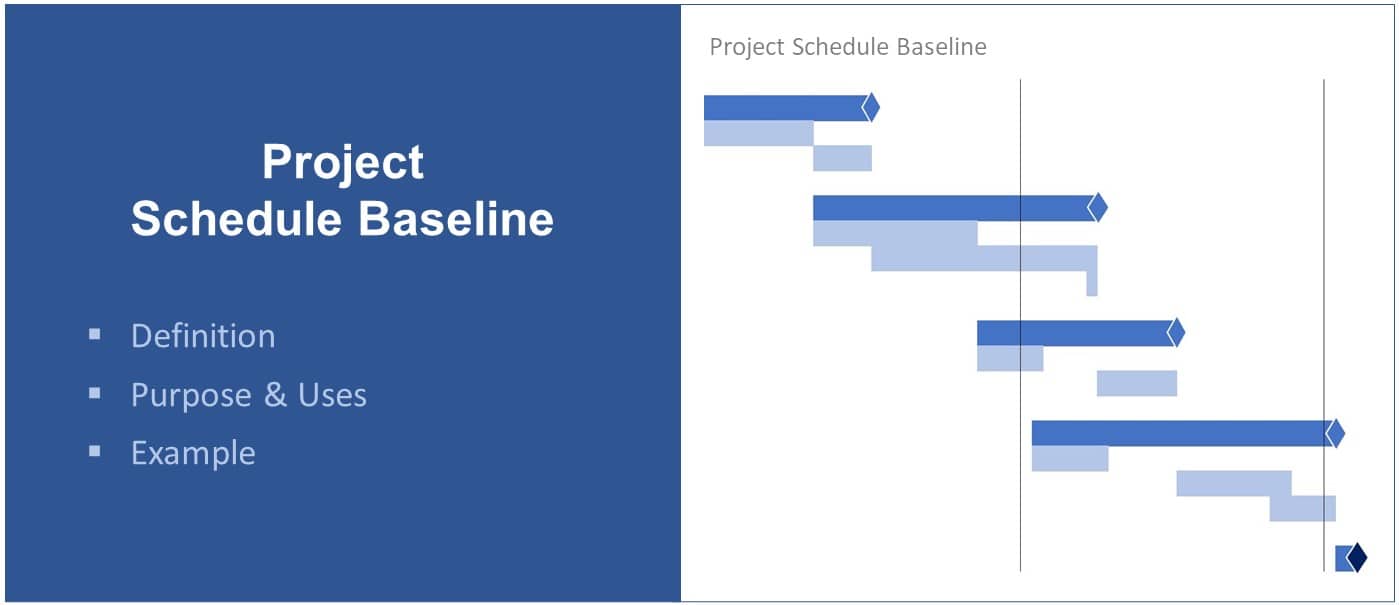
The schedule baseline represents the approved project schedule, outlining the planned start and end dates for all project activities and milestones. It is a critical tool for monitoring progress, identifying potential delays, and ensuring that the project remains on track to meet its deadlines.
Key elements of the schedule baseline include:
- The Project Schedule: This is typically represented by a Gantt chart or a network diagram, illustrating the sequence of activities, their durations, dependencies, and critical path. The critical path identifies the longest sequence of activities that determines the shortest possible duration of the project. Any delay in a critical path activity will directly impact the project’s overall completion date.
- Milestones: These are significant points or events in the project schedule, often representing the completion of a major phase or deliverable. Milestones are critical for tracking overall progress and providing visible indicators of achievement.
The schedule baseline provides a framework for managing time effectively. It allows project managers to identify activities that are ahead of schedule, behind schedule, or on track. By regularly comparing the actual progress against the schedule baseline, deviations can be detected early, enabling the project team to take corrective actions, such as reallocating resources, expediting tasks, or adjusting the sequence of activities, to mitigate potential delays.
The Cost Baseline: Financial Guardrails for the Project
The cost baseline represents the approved budget for the project, detailing the planned expenditures over time. It is essential for financial control, ensuring that the project remains within its allocated financial constraints and that resources are utilized efficiently.
Components of the cost baseline typically include:
- The Project Budget: This is a detailed breakdown of all anticipated costs, including labor, materials, equipment, overhead, and contingency reserves. The budget is usually aggregated at various levels, often aligning with the WBS, providing a clear picture of where the money is allocated.
- Planned Value (PV): This represents the budgeted cost of the work scheduled to be completed by a specific point in time. It is a key metric used in earned value management (EVM) to assess schedule and cost performance against the baseline.
The cost baseline serves as a financial roadmap for the project. It allows project managers to track actual expenditures against the planned budget, identify any cost variances, and forecast the total cost at completion. By employing cost management techniques, such as earned value management, project managers can gain insights into the project’s financial health, enabling them to make informed decisions to control costs and avoid budget overruns.
The Genesis of a Project Baseline: A Collaborative Endeavor
The creation of a project baseline is not a solitary act but a comprehensive and collaborative process that typically occurs during the project planning phase. It requires input from various stakeholders, including the project team, subject matter experts, and key clients or sponsors. The accuracy and completeness of the baseline are directly proportional to the rigor and diligence applied during its development.
The process of establishing a project baseline generally involves several iterative steps:
Defining the Project Scope and Deliverables
This initial step involves a deep dive into understanding the project’s objectives and requirements. Through meetings, workshops, and document analysis, the project team works to define the precise scope of work. This includes identifying all the deliverables, features, and functionalities that the project will produce. Techniques such as stakeholder interviews, requirement gathering sessions, and market research can be employed to ensure a comprehensive understanding of what is expected. The outcome of this phase is the initial scope statement.
Developing the Work Breakdown Structure (WBS)
Once the scope is defined, the next step is to decompose the project into smaller, more manageable work packages. The WBS provides a hierarchical structure that systematically breaks down the project into progressively smaller components. This ensures that no aspect of the project is overlooked and that each work package can be assigned to a specific individual or team for execution. The WBS serves as the foundation for subsequent schedule and cost planning.
Estimating Activity Durations and Resources
With the WBS in place, the project team can begin estimating the time required to complete each work package and the resources (human, material, equipment) needed. This often involves leveraging historical data from similar projects, consulting with subject matter experts, and using estimation techniques such as analogous estimating, parametric estimating, or three-point estimating. The accuracy of these estimates directly influences the validity of the schedule and cost baselines.
Sequencing Activities and Defining Dependencies
Understanding the relationships between different project activities is crucial for developing a realistic schedule. This involves identifying dependencies, such as “finish-to-start” (one activity must finish before the next can start) or “start-to-start” (one activity must start before the next can start). This sequencing process helps to define the logical flow of work and identify the critical path of the project.
Developing the Project Schedule
Using the estimated durations, resource assignments, and activity sequences, the project schedule is created. This typically involves using project management software to generate a Gantt chart or network diagram. This schedule outlines the planned start and end dates for each activity and milestone, forming the schedule baseline.
Estimating Project Costs
Based on the resource requirements and activity durations, the cost of each work package is estimated. This involves identifying all direct and indirect costs associated with completing the work. These individual cost estimates are then aggregated to form the overall project budget, which becomes the cost baseline.
Establishing the Baseline
Once the scope, schedule, and cost components are developed and refined, they are formally reviewed and approved by key stakeholders, including the project sponsor and client. This formal approval signifies the establishment of the project baselines. The baselines are then “frozen” in time, meaning they become the official reference points for measuring project performance. Any future changes to these baselines must go through a formal change control process.
The Impact and Importance of Project Baselines
The establishment and diligent management of project baselines are not merely procedural requirements; they are fundamental to effective project control and successful project delivery. Their impact reverberates throughout the project lifecycle, influencing decision-making, communication, and ultimately, the achievement of project objectives.
Enabling Effective Performance Measurement and Control
The primary purpose of a project baseline is to provide a benchmark against which project performance can be measured. By comparing actual progress against the planned scope, schedule, and cost, project managers can identify variances. Earned Value Management (EVM) is a powerful technique that integrates scope, schedule, and cost measurements to assess project performance. EVM metrics such as Schedule Variance (SV), Cost Variance (CV), Schedule Performance Index (SPI), and Cost Performance Index (CPI) are derived by comparing actual performance against the baseline, providing objective insights into the project’s health.
- Schedule Variance (SV) = Earned Value (EV) – Planned Value (PV): A positive SV indicates the project is ahead of schedule, while a negative SV means it’s behind.
- Cost Variance (CV) = Earned Value (EV) – Actual Cost (AC): A positive CV indicates the project is under budget, while a negative CV means it’s over budget.
- Schedule Performance Index (SPI) = EV / PV: An SPI greater than 1 indicates the project is progressing faster than planned, while an SPI less than 1 means it’s slower.
- Cost Performance Index (CPI) = EV / AC: A CPI greater than 1 indicates the project is costing less than planned, while a CPI less than 1 means it’s costing more.
These metrics, when tracked consistently against the baseline, enable project managers to detect deviations early, diagnose the root causes of performance issues, and implement corrective actions before problems escalate. Without baselines, such objective performance assessment would be impossible.
Facilitating Informed Decision-Making
Project baselines provide a critical foundation for making informed decisions throughout the project. When a proposed change arises, its impact can be assessed by comparing it against the established baselines. This allows for a data-driven evaluation of whether the change is beneficial and whether the trade-offs in terms of scope, schedule, and cost are acceptable. Without baselines, decisions would be based on intuition or guesswork, increasing the risk of negative consequences.
Enhancing Stakeholder Communication and Expectation Management
Clear and agreed-upon baselines are essential for transparent communication with stakeholders. They establish a common understanding of what the project aims to achieve, when it is expected to be completed, and what it is expected to cost. When deviations occur, the baselines provide the context for explaining why these deviations are happening and what actions are being taken to address them. This proactive and transparent communication helps to manage stakeholder expectations, build trust, and foster a collaborative project environment. Regular reporting against the baselines ensures that all stakeholders are kept informed of the project’s progress and any potential challenges.

Providing a Basis for Change Control
The change control process is a vital mechanism for managing modifications to the project plan. Project baselines serve as the reference point against which all proposed changes are evaluated. A change request must detail how it will impact the scope, schedule, and cost baselines. The change control board or designated authority then assesses these impacts to determine whether the change should be approved. This structured approach prevents uncontrolled scope creep and ensures that any changes are aligned with the overall project objectives and constraints.
In conclusion, the project baseline is not just a document; it is a dynamic tool that underpins successful project management. By clearly defining the project’s scope, schedule, and cost, it provides a solid foundation for planning, execution, monitoring, and control. Its establishment is a crucial step, and its diligent management throughout the project lifecycle is paramount to navigating the complexities of project delivery and achieving desired outcomes.
aViewFromTheCave is a participant in the Amazon Services LLC Associates Program, an affiliate advertising program designed to provide a means for sites to earn advertising fees by advertising and linking to Amazon.com. Amazon, the Amazon logo, AmazonSupply, and the AmazonSupply logo are trademarks of Amazon.com, Inc. or its affiliates. As an Amazon Associate we earn affiliate commissions from qualifying purchases.