
The term “plate type” refers to a classification system for flat, rigid components fundamental to a vast array of technological and engineering applications. Far from a singular definition, the “type” of a plate is distinguished by its material composition, geometric configuration, surface characteristics, and crucially, its intended function within a larger system. These seemingly simple elements are often critical enablers, influencing everything from the efficiency of industrial processes and the clarity of digital displays to the performance of advanced computing hardware. Understanding the various plate types reveals the intricate engineering behind much of our modern world.
The Ubiquitous Role of Plates in Technology and Engineering
In a technical context, a “plate” typically denotes a flat, rigid body whose thickness is substantially smaller than its other two dimensions (length and width). This broad definition encompasses an immense range of components, from the structural elements in large-scale machinery to microscopic substrates in advanced microelectronics. The significance of specifying a “plate type” lies in the fact that the choice of plate directly impacts performance, cost, durability, and the overall feasibility of a technological solution.
The evolution of technology has consistently leveraged and refined different plate types. Early industrial machinery relied on robust metal plates for structural integrity and heat transfer. With advancements in materials science and manufacturing, the complexity and specialization of plate types have proliferated. Today, plates can be found serving as electrical insulators, heat exchange surfaces, optical substrates, mechanical separators, and even as active components in chemical and biological reactors. Their role is often foundational, providing a stable platform or an interface for more complex operations.
Diverse Plate Types Across Industries
The concept of a “plate type” is best understood by examining its manifestations across various critical industries, each requiring specific properties and designs.
Printing Technology: The Foundation of Mass Communication
One of the oldest and most impactful applications of specialized plates is in the printing industry. Here, a “printing plate type” refers to the medium that carries the image or text to be transferred onto a substrate (like paper).
- Offset Printing Plates: These are typically thin aluminum sheets coated with a photosensitive emulsion. The image area becomes oleophilic (ink-attracting) and hydrophobic (water-repelling), while non-image areas are hydrophilic (water-attracting) and oleophobic. Different types exist based on the emulsion (e.g., positive-acting, negative-acting) and the printing run length they can sustain. Advances in computer-to-plate (CTP) technology have shifted from film-based platemaking to direct imaging on these plates, enhancing speed and quality.
- Flexographic Plates: Made from photopolymer or rubber, these plates feature raised relief images. Their flexibility allows them to conform to various surfaces, making them ideal for printing on packaging materials, labels, and corrugated cardboard. Different photopolymer formulations and durometers (hardness) constitute various flexo plate types, optimized for specific inks, substrates, and print quality requirements.
- Gravure Cylinders/Plates: Unlike offset or flexo, gravure printing uses recessed cells etched into a copper or chrome-plated cylinder (or flat plate for some applications). The depth and size of these cells determine the amount of ink transferred, allowing for excellent tonal reproduction. The type here often relates to the etching method (electromechanical, laser) and the plating materials used for durability.
Heat Exchangers: Engineering Efficiency and Energy Transfer
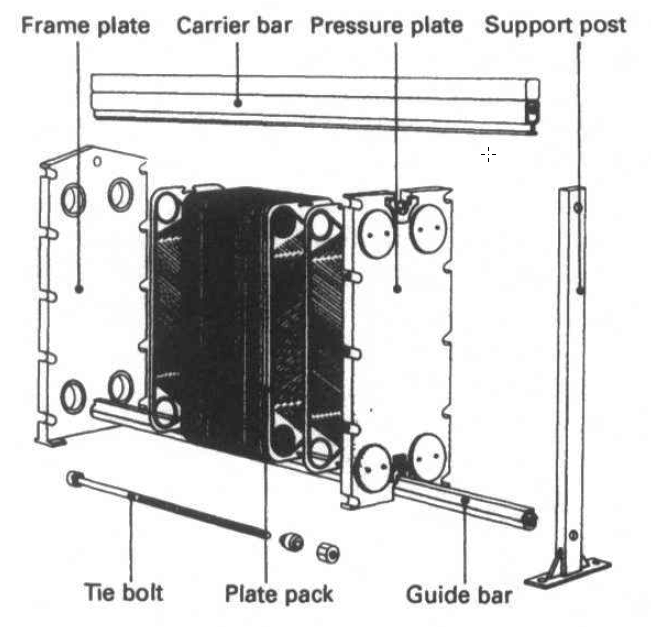
In numerous industrial processes, the efficient transfer of heat is paramount. Plate heat exchangers (PHEs) utilize various “plate types” to maximize heat exchange within a compact footprint.
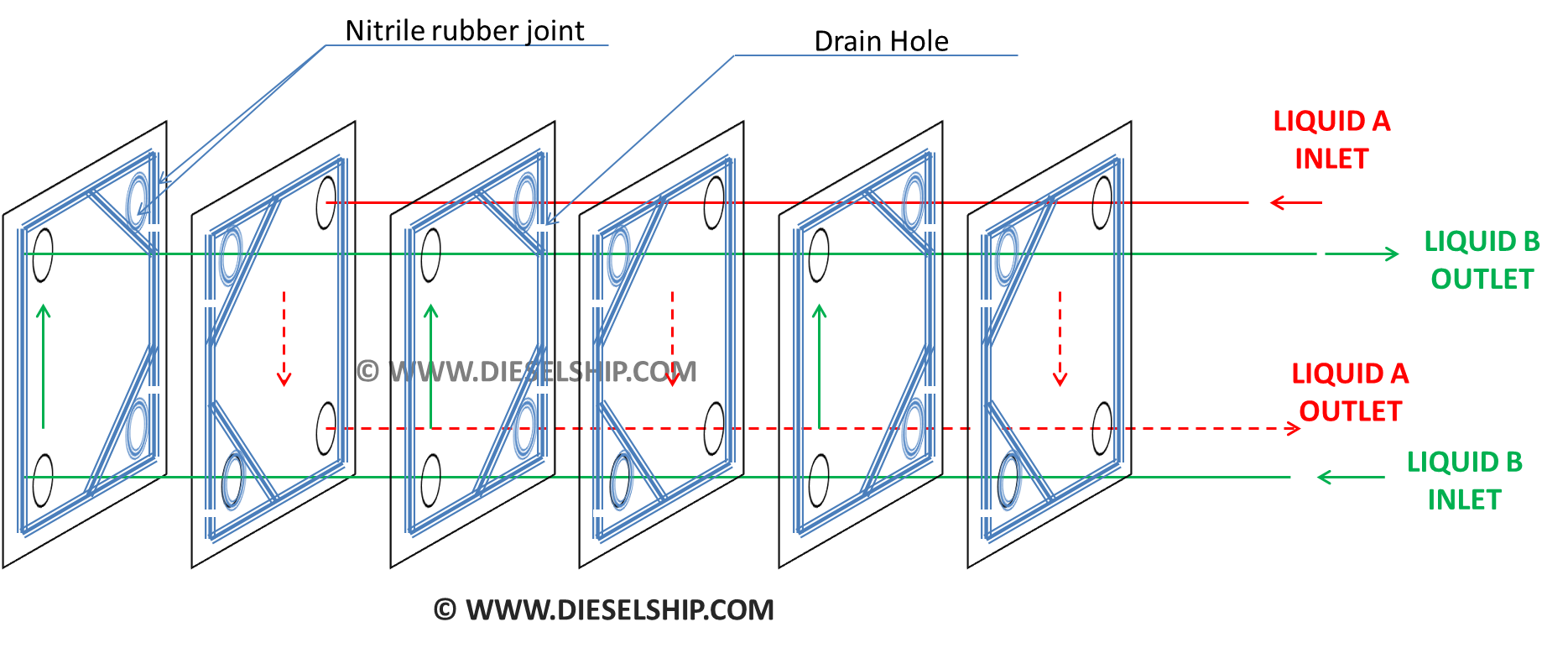
- Gasketed Plate Heat Exchangers (GPHEs): These are perhaps the most common, featuring thin, corrugated metal plates separated by gaskets. The corrugation patterns are crucial, creating turbulence and increasing the surface area for heat transfer. Common plate types include chevron patterns, dimple patterns, and combinations thereof, each optimized for specific flow rates, pressure drops, and fouling resistance. Materials like stainless steel, titanium, and nickel alloys are selected based on the fluids’ corrosivity and temperature.
- Welded Plate Heat Exchangers: For higher temperatures and pressures where gaskets are unsuitable, plates are welded together. This includes plate-and-shell designs or compact welded blocks. The “type” here often relates to the welding configuration (e.g., laser-welded, fully welded) and the specific internal baffling or flow arrangements designed into the welded plate structure.
- Brazed Plate Heat Exchangers (BPHEs): In these compact units, plates are brazed together, forming permanent flow channels without gaskets. They are common in HVAC, refrigeration, and small-scale industrial applications. The plate type is largely defined by the brazing material (e.g., copper, nickel) and the specific embossed patterns on the plates that create the internal channel structure and enhance turbulence.
Electronics and Semiconductors: Substrates and Circuits
In the world of electronics, plates serve as fundamental substrates and structural components.
- Printed Circuit Board (PCB) Substrates: While often called “boards,” these are essentially multi-layered plates. Different “plate types” (e.g., FR-4, polyimide, ceramic) are distinguished by their dielectric properties, thermal conductivity, mechanical strength, and cost. FR-4 (flame retardant type 4) is the most common, but advanced applications demand high-frequency laminates or flexible circuit plate types.
- Integrated Circuit (IC) Lead Frames: These are metal “plates” (stamped or etched) that provide mechanical support and electrical connections for semiconductor chips within their packages. The specific lead frame “type” varies significantly based on the IC package (e.g., QFN, SOIC, BGA), the number of pins, and the material (typically copper alloys or alloy 42).
- Chip Carriers and Interposers: In advanced packaging, ceramic or silicon plates can act as interposers, providing an intermediary substrate with fine-pitch wiring between a chip and a larger PCB, enabling higher density and better performance.
Display Technology: Shaping Our Visual World
Flat panel displays, from smartphones to large-screen TVs, rely on specialized plate types for their functionality and structural integrity.
- Glass Substrate Plates: These are the foundational elements of LCD, OLED, and other flat-panel displays. Different “glass plate types” are categorized by their material composition (e.g., soda-lime glass, borosilicate glass, alkali-free glass), purity, flatness, and thermal expansion coefficient. High-performance displays demand increasingly thinner, lighter, and more robust glass plate types with extremely uniform surfaces.
- Backlight Unit (BLU) Components: In LCDs, various plates are used within the backlight unit. This includes light guide plates (LGPs) made from acrylic or polycarbonate, which distribute light evenly, and diffuser plates that smooth out illumination. The optical properties and manufacturing precision define these plate types.
- Organic Light-Emitting Diode (OLED) Substrates: While often glass, flexible OLEDs utilize polyimide plastic plates as their substrate, enabling bendable and foldable displays. The choice of substrate “plate type” is critical for the display’s mechanical properties, thermal management, and optical performance.
Emerging Technologies and Advanced Materials
Beyond established applications, new plate types are continually being developed to meet the demands of future technologies.
- Fuel Cell Plates (Bipolar Plates): These are critical components in fuel cell stacks, often made from graphite, metal alloys, or composites. Their type is defined by the flow field design (serpentine, parallel, interdigitated), which manages reactant gases and removes water, as well as their electrical conductivity, corrosion resistance, and mechanical strength.
- Bioreactor Plates: In biotech, multi-well plates are used for high-throughput screening and cell culturing. The “type” refers to the number of wells (e.g., 96-well, 384-well), material (polystyrene, polypropylene), surface treatment (tissue culture treated, low-attachment), and specialized features like optical bottoms or filtration membranes.
- Structural Composite Plates: In aerospace and automotive industries, advanced composite materials like carbon fiber reinforced polymer (CFRP) are formed into plate-like structures. These “plate types” offer superior strength-to-weight ratios and stiffness, crucial for high-performance applications.
Key Characteristics and Selection Criteria for Plate Types
Choosing the correct plate type for a given application involves a rigorous evaluation of several critical characteristics:
Material Composition and Properties
The inherent properties of the material are often the primary differentiator. This includes mechanical strength (tensile, yield, fatigue), hardness, stiffness, thermal conductivity, electrical conductivity or insulation, corrosion resistance, chemical inertness, optical transparency, and density. For instance, titanium plates are chosen for their corrosion resistance in harsh environments, while silicon plates offer unique semiconducting properties.
Form Factor and Geometry
The physical dimensions and design features of a plate are equally important. This encompasses thickness, surface area, flatness, the presence of perforations, etched patterns, embossed features, or specific edge profiles. The geometry significantly influences fluid dynamics in heat exchangers, stress distribution in structural components, or light dispersion in optical applications.
Manufacturing Processes
The method used to produce a plate type can dictate its achievable precision, surface finish, and cost. Common processes include stamping, etching, laser cutting, rolling, casting, and increasingly, additive manufacturing (3D printing) for complex geometries or specialized materials. The chosen manufacturing technique directly impacts the plate’s final properties and suitability for an application.
Cost and Scalability Considerations
Economic factors are always a crucial selection criterion. The cost of raw materials, manufacturing complexity, and the ability to produce plates at scale without compromising quality are significant drivers in determining the viability of a particular plate type for mass production or niche applications.
The Impact of Plate Type Innovation on Modern Systems
Continuous innovation in plate types is a quiet but powerful force driving technological progress.
Driving Performance and Miniaturization
The development of thinner, stronger, and more conductive plate types enables the miniaturization of electronic devices and the creation of more efficient heat exchange systems. For example, advancements in glass substrates allow for thinner, lighter, and higher-resolution displays, while sophisticated PCB plate types facilitate increasingly dense and powerful microprocessors.
Enhancing Durability and Sustainability
New material plate types, such as advanced ceramics or composite laminates, offer enhanced durability, extending the lifespan of components in demanding environments. Furthermore, developments in recyclable or bio-degradable plate materials contribute to more sustainable manufacturing and product lifecycles, reducing environmental impact.

Enabling New Functionalities
Beyond improvements, entirely new plate types with novel properties unlock previously impossible functionalities. Think of flexible electronic substrates enabling wearable technology, or specialized bioreactor plates accelerating pharmaceutical research. The ability to engineer specific surface characteristics or embed active elements directly into a plate can transform what was once a passive component into an intelligent, functional unit.
In essence, “what is a plate type?” is a question whose answer is as diverse as modern technology itself. From the macroscopic to the microscopic, plates are silent workhorses, their specific characteristics dictating the limits and possibilities of countless technological systems we rely upon daily. Understanding their varieties and the principles behind their selection is key to comprehending the intricate world of engineering and innovation.
aViewFromTheCave is a participant in the Amazon Services LLC Associates Program, an affiliate advertising program designed to provide a means for sites to earn advertising fees by advertising and linking to Amazon.com. Amazon, the Amazon logo, AmazonSupply, and the AmazonSupply logo are trademarks of Amazon.com, Inc. or its affiliates. As an Amazon Associate we earn affiliate commissions from qualifying purchases.