
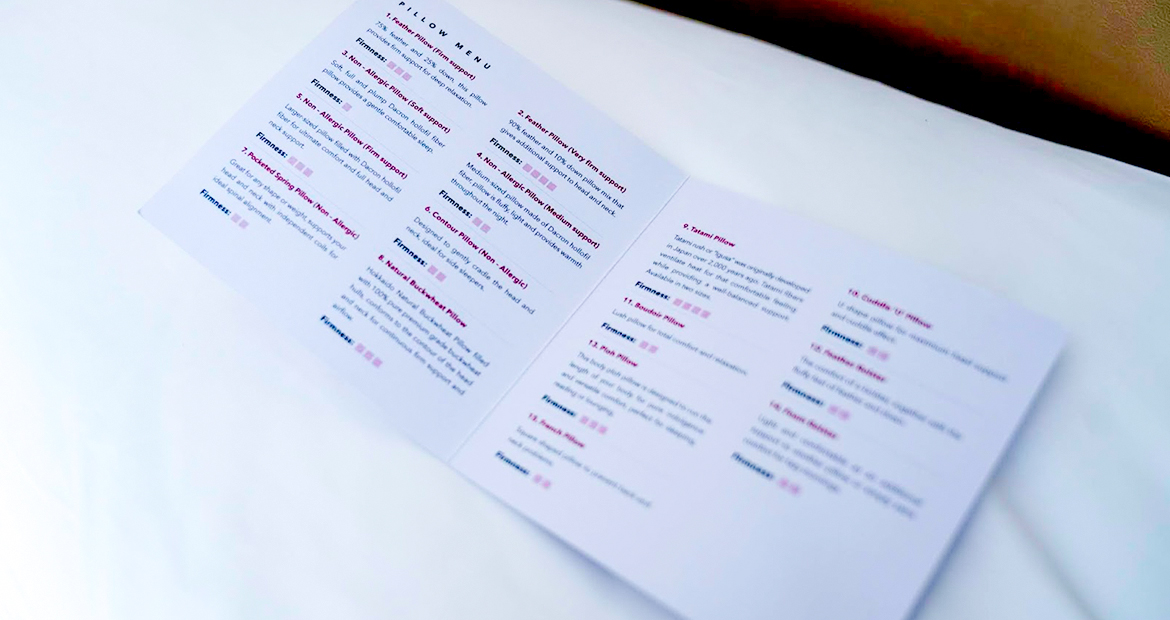
In the increasingly competitive landscape of the hospitality industry, where differentiation is key to capturing discerning clientele, hotels and luxury accommodations are constantly seeking innovative ways to elevate the guest experience. One such nuanced yet powerfully effective offering is the “pillow menu.” Far from being a mere whimsical amenity, a pillow menu is a carefully curated selection of various pillow types offered to guests, allowing them to choose the perfect support and comfort tailored to their individual sleep preferences. But beyond its obvious comfort benefits, the pillow menu serves a profound strategic purpose within a brand’s overall identity and marketing efforts, transforming a simple bedding option into a powerful tool for brand differentiation, guest loyalty, and enhanced reputation.

The Strategic Role of a Pillow Menu in Brand Differentiation
At its core, a brand is a promise—a commitment to a certain level of quality, service, and experience. For hospitality brands, this promise often revolves around comfort, luxury, and personalized attention. A pillow menu, while seemingly a small detail, is a tangible manifestation of this promise, communicating a brand’s meticulous attention to guest well-being and its commitment to going above and beyond standard offerings.
Elevating Guest Experience and Perception
The modern traveler seeks more than just a place to sleep; they desire an experience that caters to their personal needs and offers a sense of bespoke luxury. A pillow menu directly addresses this desire by empowering guests to customize a fundamental aspect of their stay: their sleep. By offering a choice of pillows—ranging from hypoallergenic down alternatives and memory foam to ergonomic neck support and aromatic lavender-infused options—a hotel acknowledges the diverse sleep habits and health considerations of its guests.
This personalization transforms a standard overnight stay into a tailored sanctuary. Guests feel valued and understood, recognizing the brand’s effort to ensure their utmost comfort. This not only enhances their immediate satisfaction but also creates a lasting positive impression. The perception shifts from “just another hotel” to a brand that genuinely cares about the details of their well-being, fostering a deeper emotional connection that transcends transactional relationships. Such elevated experiences are crucial for luxury brands aiming to justify premium pricing and cultivate an image of unparalleled service.
Crafting a Unique Brand Identity
In a crowded market, a brand needs distinguishing features that resonate with its target audience. A pillow menu provides a unique selling proposition (USP) that can significantly contribute to a brand’s distinct identity. For a wellness-focused hotel, a menu featuring ergonomic, organic, or therapeutic pillows reinforces its core brand message of health and rejuvenation. For a boutique luxury hotel, offering bespoke silk or cashmere-blend pillows aligns with its exclusive, high-end positioning.
The type and quality of pillows offered, the design of the menu itself, and the seamlessness of the ordering process all become extensions of the brand’s personality and values. It demonstrates a commitment to innovation and an understanding of contemporary guest expectations. This thoughtful approach helps carve out a niche, making the brand memorable and setting it apart from competitors who might offer generic amenities. It becomes part of the brand’s story, a tangible example of its dedication to delivering an exceptional, distinctive experience that cannot be easily replicated.
Fostering Loyalty and Repeat Business
Brand loyalty is the ultimate goal for any business, and in hospitality, it translates into repeat bookings and positive word-of-mouth referrals. A delightful and personalized guest experience, largely influenced by details like a pillow menu, is a powerful driver of loyalty. When guests experience superior comfort and feel genuinely cared for, they are more likely to return and recommend the brand to others.
The positive impression generated by a good night’s sleep, facilitated by a personalized pillow choice, contributes directly to higher guest satisfaction scores. These scores are vital for online travel agencies (OTAs) and review platforms, where prospective guests heavily rely on peer feedback. A brand that consistently receives accolades for its attention to detail and guest comfort, often highlighted by amenities like a pillow menu, builds a strong online reputation. This robust reputation acts as a magnet for new customers while solidifying the bond with existing ones, fostering a cycle of positive engagement that underpins long-term brand success.
Implementing a Pillow Menu: A Branding Perspective
The mere existence of a pillow menu is not enough; its successful implementation is paramount to realizing its full brand potential. From selection to service, every step must align with the brand’s overarching strategy and promise.
Understanding Your Target Audience
A truly effective pillow menu begins with a deep understanding of the brand’s target demographic. Is the hotel primarily catering to business travelers who value efficiency and ergonomic support for a quick, restorative sleep? Or is it a wellness retreat attracting guests seeking natural, hypoallergenic, or therapeutic options? Perhaps it’s a family-friendly resort where durable, easy-to-clean options are key.
The selection of pillows must be carefully curated to resonate with these specific needs and preferences. A luxury boutique hotel might invest in premium materials like mulberry silk or Hungarian goose down, while an eco-conscious brand might prioritize organic cotton or buckwheat pillows. This alignment ensures that the pillow menu isn’t just a generic offering but a thoughtful extension of the brand’s core identity, speaking directly to what its ideal guest values most. It demonstrates that the brand understands its audience intimately and is committed to delivering tailored solutions.
Curation and Presentation as Brand Statements
The types of pillows offered on the menu, their quality, and how they are presented are all critical brand statements. A well-designed pillow menu should be clear, aesthetically pleasing, and easy to navigate, reflecting the brand’s overall design language and attention to detail. Is it a sleek digital display on an in-room tablet, a beautifully printed card, or an elegant binder? The format itself contributes to the brand experience.
Beyond the aesthetics, the quality and variety of the pillows are non-negotiable. Offering a range that genuinely caters to different preferences—firmness levels, materials (e.g., memory foam, down, synthetic, latex), and specialized options (e.g., anti-snore, body pillows, leg elevation)—demonstrates a comprehensive approach to guest comfort. Each pillow type should be meticulously maintained, ensuring freshness and hygiene, further reinforcing the brand’s commitment to quality and guest well-being. A poorly curated or presented menu, or low-quality pillows, can inadvertently detract from the brand’s image, undermining the very purpose of the offering.
Staff Training and Service Integration
Even the most thoughtfully curated pillow menu will fall short without impeccable service integration. Front-desk staff, concierge, and housekeeping teams must be thoroughly trained not only on the inventory and characteristics of each pillow but also on how to effectively communicate the offering to guests. This includes proactively informing guests about the menu at check-in, providing knowledgeable recommendations based on guest inquiries, and ensuring prompt and discreet delivery of selected pillows.
Staff should be empowered to engage with guests about their sleep preferences, transforming the pillow menu into an opportunity for personalized interaction. This level of service transforms a simple amenity into a memorable touchpoint, reinforcing the brand’s reputation for exceptional customer care. When staff can confidently and enthusiastically discuss the benefits of each pillow, it enhances the perceived value of the offering and strengthens the overall brand experience. It shows that the brand’s commitment to guest comfort is embedded in every aspect of its operation.
Measuring the Brand Impact of a Pillow Menu
To truly understand the value a pillow menu brings, brands must actively measure its impact on guest satisfaction, market positioning, and overall brand equity.
Guest Satisfaction Scores and Feedback
The most direct measure of a pillow menu’s success lies in guest feedback. Brands should actively monitor guest satisfaction scores (e.g., NPS, CSI) and analyze reviews across various platforms for mentions of sleep quality, comfort, and specifically, the pillow menu. Positive comments about “the best night’s sleep” or appreciation for “the choice of pillows” are clear indicators of success. Conversely, a lack of mentions or negative feedback might signal issues with the selection, presentation, or service delivery that need addressing.
Beyond broad satisfaction scores, targeted surveys can gather specific insights into which pillows are most popular, what additional options guests might desire, and how the pillow menu influenced their overall perception of the brand. This qualitative and quantitative data provides invaluable insights into the amenity’s effectiveness and helps refine the offering to maximize its brand impact.
Competitive Advantage and Market Positioning
A well-executed pillow menu can serve as a powerful differentiator, allowing a brand to carve out a distinct market position. By offering a superior sleep experience, a brand can justify premium pricing and attract a clientele that values personalized luxury. Brands should monitor competitors’ offerings and assess how their pillow menu contributes to their unique standing in the market. Does it allow them to market themselves as “the hotel for the perfect night’s sleep”? Does it support their claims of being a “wellness sanctuary”?
Analyzing booking trends and guest demographics can also reveal whether the pillow menu is attracting a specific segment of travelers who prioritize comfort and personalization. This competitive analysis helps refine marketing strategies, highlighting the pillow menu as a key feature that underscores the brand’s commitment to an elevated guest experience, thereby reinforcing its desired market positioning.
Storytelling and Marketing Opportunities
The pillow menu offers a wealth of storytelling and marketing opportunities that can significantly enhance a brand’s narrative. It’s a tangible, relatable example of the brand’s dedication to guest comfort and its pursuit of excellence. Brands can leverage this in various marketing channels:
- Social Media: Showcase the variety of pillows, run polls asking guests about their favorite type, or share testimonials from guests who experienced exceptional sleep.
- Website Content: Dedicate a section to the pillow menu, explaining the benefits of each pillow type and linking it to the brand’s overall wellness or luxury ethos.
- PR and Media: Pitch stories about the brand’s commitment to sleep science or its unique amenities, highlighting the pillow menu as an innovative offering.
- In-room Marketing: Use elegant signage or digital displays to present the menu, turning it into an engaging part of the guest’s stay.
By actively integrating the pillow menu into its marketing narratives, a brand can reinforce its identity, attract new guests, and build a stronger, more desirable image in the minds of consumers.
Beyond Hospitality: Applying the “Pillow Menu” Concept to Broader Branding
While the term “pillow menu” is intrinsically linked to hospitality, the underlying strategic principles it embodies are universally applicable across diverse industries seeking to build strong brands.
Customization as a Core Brand Principle
The “pillow menu” fundamentally champions the idea of customization and personalization. In today’s consumer-centric world, brands that empower customers to tailor products or services to their unique needs consistently outperform those offering one-size-fits-all solutions. This principle can be applied broadly:
- Retail: Offering customizable product configurations (e.g., build-your-own shoes, personalized tech gadgets).
- Service Industries: Providing tiered service levels with customizable features, or consultants offering bespoke solutions based on client profiles.
- Software/Tech: Allowing users to personalize dashboards, features, or themes within an application.
By adopting a “menu” approach to customization, brands demonstrate their understanding of individual preferences and their commitment to delivering highly relevant value, thereby strengthening brand loyalty and appeal.
Micro-Experiences and Brand Delight
A pillow menu is an exemplary “micro-experience”—a small, often overlooked detail that creates a disproportionately positive impact on overall customer satisfaction and brand perception. Brands across sectors can learn from this:
- Automotive: Offering a range of interior customization options, or small conveniences like heated steering wheels.
- E-commerce: Providing personalized recommendations, thoughtful packaging, or handwritten notes with orders.
- Financial Services: Offering personalized financial advice beyond standard automated services, or intuitive, user-friendly digital tools.
Focusing on these “micro-moments of delight” allows brands to build trust, differentiate through superior experience, and cultivate a reputation for thoughtfulness and attention to detail. These small gestures, much like a perfectly chosen pillow, can transform a transactional relationship into a cherished brand connection.

Conclusion
What is a pillow menu? It is far more than an assortment of sleeping aids. It is a strategic brand asset, a tangible expression of a hospitality brand’s commitment to personalization, comfort, and exceptional guest experience. By meticulously curating, presenting, and integrating a pillow menu into its service delivery, a brand can significantly elevate its identity, differentiate itself in a competitive market, foster deep customer loyalty, and ultimately, build a stronger, more resonant presence. The principles that make a pillow menu successful—personalization, attention to detail, and creating delightful micro-experiences—are blueprints for any brand seeking to connect authentically and powerfully with its audience in an increasingly experience-driven economy.
aViewFromTheCave is a participant in the Amazon Services LLC Associates Program, an affiliate advertising program designed to provide a means for sites to earn advertising fees by advertising and linking to Amazon.com. Amazon, the Amazon logo, AmazonSupply, and the AmazonSupply logo are trademarks of Amazon.com, Inc. or its affiliates. As an Amazon Associate we earn affiliate commissions from qualifying purchases.