
In the rapidly evolving landscape of digital finance and cryptocurrency, new terminology often emerges that can baffle even seasoned investors. One such term that has gained significant traction is the “perp.” Short for Perpetual Swap (or Perpetual Future), a perp represents a revolutionary financial derivative that has transformed how traders interact with market volatility. Unlike traditional financial instruments that have been around for centuries, the perp is a digital-native tool designed to provide continuous exposure to an asset’s price without the constraints of expiration dates.
To understand why perps have become the backbone of high-volume trading in the “Money” niche—specifically within Decentralized Finance (DeFi) and professional crypto trading—one must look at the intersection of capital efficiency, advanced mathematics, and market psychology. This article explores the mechanics, risks, and strategic advantages of perpetual swaps in today’s financial ecosystem.

The Evolution of Derivatives: What Exactly is a “Perp”?
At its core, a perpetual swap is a type of derivative contract. A derivative is a financial instrument whose value is derived from an underlying asset, such as Bitcoin, Ethereum, or even traditional commodities. However, perps possess a unique characteristic that distinguishes them from their predecessors in the legacy financial world.
Defining Perpetual Futures Contracts
In traditional finance, a futures contract is an agreement to buy or sell an asset at a predetermined price on a specified future date. These contracts have “expiry dates.” When the date arrives, the contract must be settled, and the trader must either take delivery of the asset or roll their position into a new contract.
A “perp,” however, is a futures contract that never expires. Traders can hold a perp position for as long as they wish—minutes, months, or even years—provided they have enough collateral to keep the position open. This “perpetual” nature removes the friction of rolling over contracts and allows for a more seamless trading experience that mimics the simplicity of “spot” trading (buying the actual asset) while offering the power of derivatives.
How Perps Differ from Traditional Futures
The primary difference lies in the settlement mechanism. Traditional futures converge with the spot price as the expiration date approaches. Since perps have no expiration, they require a specialized mechanism to ensure their price stays closely aligned with the actual market price (the spot price) of the underlying asset. Without this mechanism, the price of a perp could drift significantly away from the real market value, creating inefficiencies and arbitrage opportunities that would destabilize the market.
The Innovation of Synthetic Exposure
Perps allow investors to gain “synthetic” exposure. This means you can profit from the price movements of an asset without ever actually owning the asset itself. In the context of “Money” and wealth management, this is a powerful tool for maintaining liquidity. Instead of tying up capital by purchasing and storing physical or digital assets, a trader can use a fraction of that capital to control a much larger position via a perp.
How Perpetual Swaps Work: The Role of Funding Rates
Since there is no expiration date to force the price of a perp toward the spot price, how does the market ensure the two stay synchronized? The answer lies in a sophisticated rebalancing system known as the Funding Rate. This is the heartbeat of the perpetual swap market.
The Importance of the Funding Rate Mechanism
The funding rate is a periodic payment made between “long” traders (those betting the price will go up) and “short” traders (those betting the price will go down).
- When the Perp Price is Higher than the Spot Price: The funding rate is positive. In this scenario, long traders pay a fee to short traders. This incentivizes more people to sell (short) and discourages buying, pushing the perp price back down toward the spot price.
- When the Perp Price is Lower than the Spot Price: The funding rate is negative. Here, short traders pay long traders. This encourages buying (longing) and discourages selling, pushing the perp price back up toward the spot price.
These payments usually happen every eight hours (on centralized exchanges) or even per-second (on some decentralized protocols), ensuring that the market is constantly self-correcting.
Leverage and Margin in Perp Trading
One of the main reasons “perps” are so popular in the financial world is the ability to use leverage. Leverage allows a trader to open a position much larger than their actual account balance. For example, with 10x leverage, an investor with $1,000 can control a $10,000 position.
While leverage can exponentially increase profits, it also introduces the concept of Margin. Traders must maintain a “maintenance margin”—a minimum amount of collateral—to keep their position open. If the market moves against the trader and their collateral falls below this threshold, the exchange will “liquidate” the position, closing it automatically to prevent further losses.

Price Convergence: Mark Price vs. Index Price
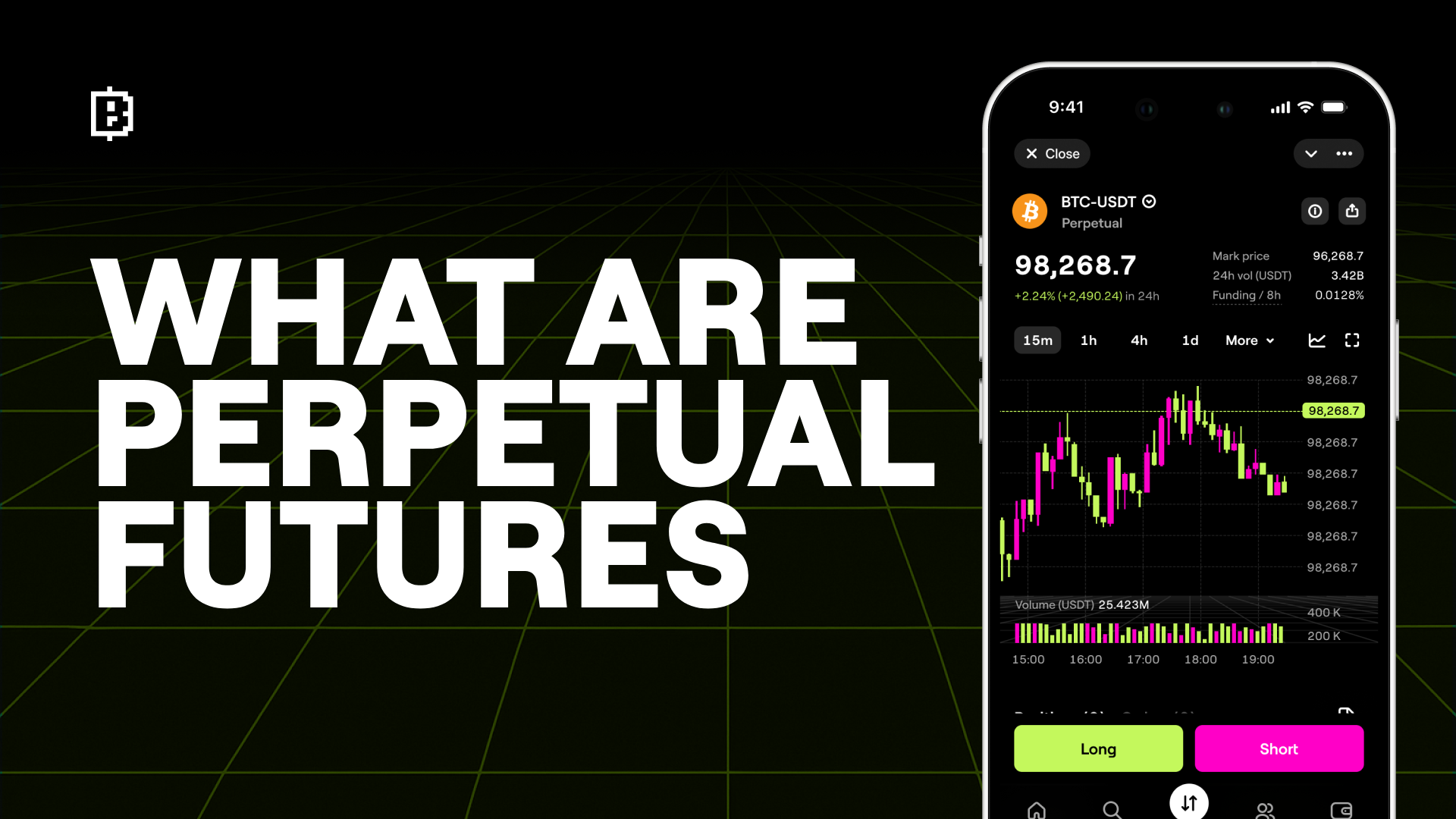
To protect against market manipulation and sudden “flash crashes,” perp platforms use two different prices. The Index Price is the average price of the asset across several major exchanges. The Mark Price is a calculated value used to determine liquidations and unrealized PnL (Profit and Loss). By using the Mark Price, platforms ensure that a single “fat finger” trade on one exchange doesn’t trigger a mass liquidation event for perp holders.
Why Traders Choose Perps: Benefits and Potential Pitfalls
For many in the “Money” and investing niche, perps have replaced spot trading as the primary method of market participation. However, the high-reward nature of these instruments comes with high-stakes risks.
Capital Efficiency and Liquidity
The most significant benefit of perps is capital efficiency. Because of leverage, a trader can hedge their entire portfolio or speculate on market direction using only a small portion of their total net worth. This frees up the rest of their capital for other income-generating activities, such as yield farming, staking, or traditional investments. Furthermore, perp markets often have higher liquidity than spot markets, meaning traders can enter and exit large positions with minimal “slippage” (the difference between the expected price and the executed price).
Managing Risk: Liquidation and Slippage
The “downside” of perps is the very thing that makes them attractive: leverage. In a volatile market, a 5% move against a 20x leveraged position results in a 100% loss of the initial collateral. This makes risk management—such as setting “Stop Loss” orders and monitoring funding rates—essential for anyone using perps as a financial tool.
Additionally, during times of extreme market stress, “slippage” can increase, and the cost of funding can become prohibitively expensive for those on the wrong side of a trend. A long position in a raging bull market might find itself paying significant daily fees just to stay open, eating into the overall profitability of the trade.
The Ecosystem: Where and How to Trade Perps
As the demand for perps has grown, the infrastructure supporting them has split into two primary camps: Centralized Exchanges (CEXs) and Decentralized Exchanges (DEXs).
Centralized Exchanges (CEXs)
Platforms like Binance, Bybit, and OKX pioneered the perp market. These exchanges offer high-speed execution and deep liquidity. They act as the “custodian” of your funds, meaning you trust the exchange to secure your assets. For many professional traders, CEXs are the preferred venue due to their advanced user interfaces and institutional-grade trading engines.
The Rise of On-Chain Perpetual Protocols (DEXs)
The most exciting development in the “Money” niche over the last few years has been the migration of perps to the blockchain. Decentralized protocols like GMX, dYdX, and Hyperliquid allow users to trade perps directly from their digital wallets.
Trading perps on a DEX offers several advantages:
- Self-Custody: You maintain control of your private keys; the exchange never “holds” your money.
- Transparency: All trades and funding rate calculations are handled by open-source smart contracts on the blockchain.
- Global Access: These platforms are often permissionless, allowing anyone with an internet connection and a wallet to participate in global markets.
Strategic Outlook: Incorporating Perps into a Professional Investment Strategy
Perps are not just for high-frequency speculators; they are increasingly used by wealth managers and savvy individual investors for sophisticated financial maneuvering.
Hedging Against Market Volatility
If an investor holds a large amount of a specific asset (like Ethereum) but expects a short-term market downturn, they don’t necessarily want to sell their holdings and trigger a taxable event. Instead, they can open a “short” perp position of equal value. If the price drops, the profit from the short perp will offset the loss in the value of their physical holdings. This “delta-neutral” strategy is a cornerstone of professional risk management.
Speculation and Directional Betting
Of course, the most common use of perps remains directional speculation. Because perps allow for easy shorting (betting the price will go down), they provide a way to profit in “bear markets” just as easily as in “bull markets.” In traditional finance, shorting can be complex and involve “borrowing” assets; in the perp market, it is as simple as clicking a button.
Summary: The Role of Perps in Modern Wealth Building
The “perp” has moved from a niche crypto experiment to a cornerstone of modern financial strategy. By eliminating the expiry dates of traditional futures and introducing the balancing act of funding rates, perpetual swaps offer a flexible, liquid, and capital-efficient way to navigate the markets. Whether used for aggressive speculation or prudent hedging, understanding the perp is essential for anyone looking to master the modern “Money” landscape. As with all leveraged instruments, the key to success lies not just in understanding the tool, but in the discipline of managing the risks associated with it.
aViewFromTheCave is a participant in the Amazon Services LLC Associates Program, an affiliate advertising program designed to provide a means for sites to earn advertising fees by advertising and linking to Amazon.com. Amazon, the Amazon logo, AmazonSupply, and the AmazonSupply logo are trademarks of Amazon.com, Inc. or its affiliates. As an Amazon Associate we earn affiliate commissions from qualifying purchases.