
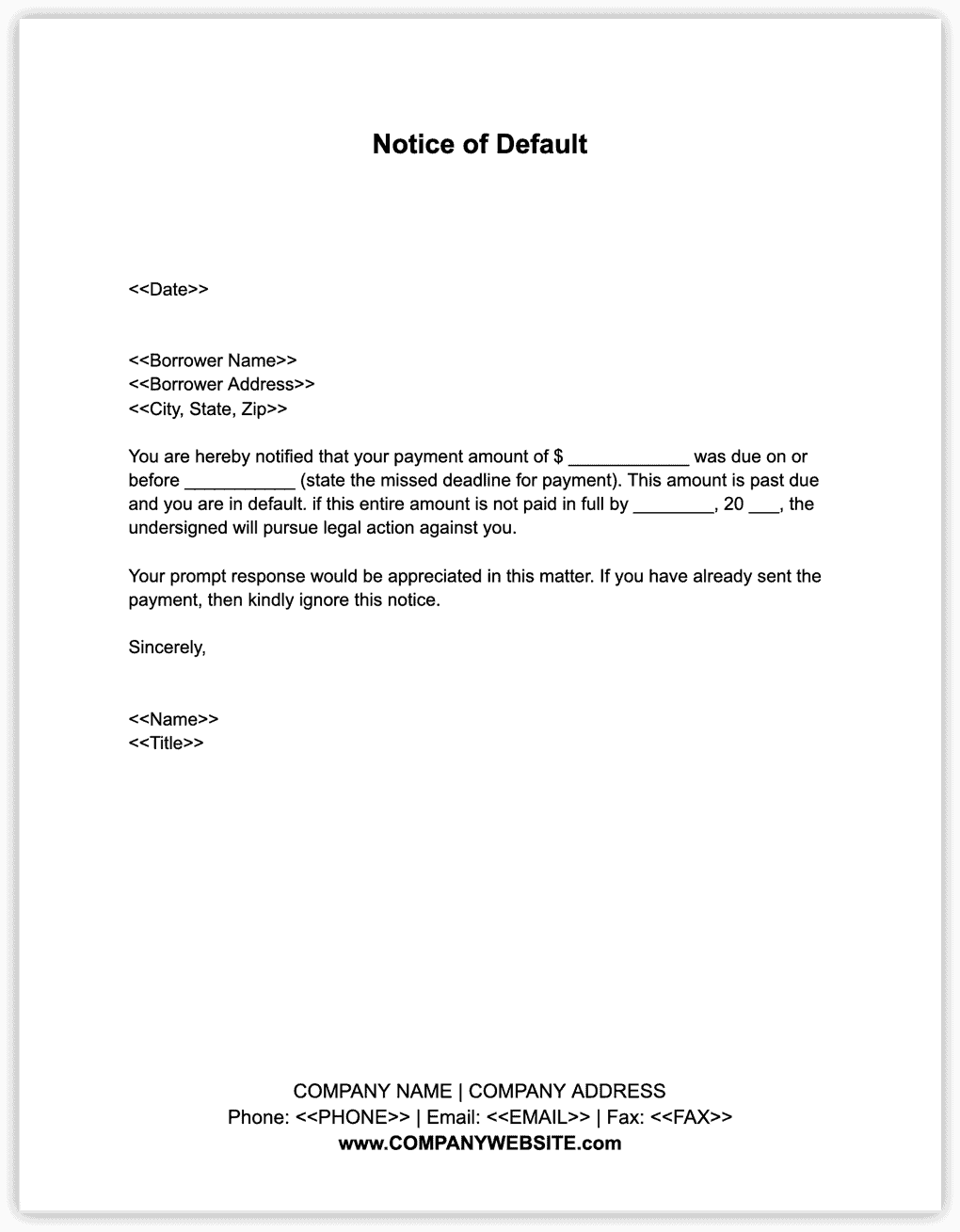
For many, the phrase “notice of default” evokes a sense of dread and uncertainty, often signaling the beginning of a difficult financial journey. In the realm of personal finance and business finance, understanding what a Notice of Default (NOD) is, its implications, and the options available when one is issued is crucial. It’s a formal legal declaration that a borrower has failed to meet the terms of a loan agreement, most commonly associated with mortgages. While it represents a serious juncture, an NOD is not necessarily the final word, but rather a critical warning shot, initiating a specific legal process and providing a window of opportunity for borrowers to remedy their situation. This article will delve into the intricacies of an NOD, explaining its role in the foreclosure process, its impact on borrowers, and the strategies one can employ to navigate this challenging period.
Understanding the Foreclosure Process and the Role of an NOD
A Notice of Default is a pivotal step in the foreclosure process, a legal procedure by which a lender takes possession of a property when a borrower fails to make loan payments. It’s part of a structured sequence of events designed to give both the borrower a chance to rectify the situation and the lender a mechanism to recover their investment.
The Initial Stages: Missed Payments and Delinquency
Before an NOD is ever issued, a borrower typically experiences a period of delinquency, characterized by missed payments. When a mortgage payment is not made on its due date, it is considered late. Most loan agreements include a grace period, usually 10 to 15 days, during which a payment can still be made without incurring late fees. If the payment remains unpaid after the grace period, the loan officially becomes delinquent. Lenders will usually begin to contact the borrower through calls, letters, and emails, attempting to understand the situation and encourage payment. These communications serve as early warnings, often detailing the amount owed, including late fees, and outlining potential consequences if the default continues. While unsettling, these initial notices are not legal filings but rather attempts at collection and communication. This stage can last anywhere from 30 to 90 days, during which lenders may offer forbearance options or repayment plans to help the borrower catch up.
When and Why an NOD is Issued
An NOD marks a significant escalation from a simple delinquency notice. It is a formal, public declaration that the borrower is in serious breach of the loan agreement. For mortgage loans, an NOD is typically issued after the borrower has been delinquent for a specific period, often 90 to 120 days, depending on state laws and the type of loan (e.g., FHA, VA, conventional). The purpose of an NOD is multifaceted:
-
Formal Legal Notice: It serves as official legal notification to the borrower that they are in default and that the lender intends to proceed with foreclosure if the default is not cured.
-
Commencement of Foreclosure Timeline: In many states, especially those with “non-judicial” foreclosure processes, the NOD starts a legally defined clock for the borrower to resolve the default before the property can be sold at auction.
-
Public Record: The NOD is recorded with the county recorder’s office where the property is located. This makes it a public record, alerting potential buyers, investors, and credit reporting agencies to the property’s distressed status.
The NOD is issued by the lender or their designated representative, such as a trustee or an attorney, and its issuance is a clear signal that the lender is moving beyond collection efforts to formal legal action.
Contents and Delivery of an NOD
The content and delivery methods of an NOD are governed by state law and the terms of the loan agreement. Generally, an NOD will contain critical information:
-
Borrower and Lender Information: Names and addresses of both parties.
-
Loan Details: The loan number, original loan amount, and the property address.
-
Nature of the Default: A clear statement that the borrower is in default on the loan agreement.
-
Amount Owed: The specific amount required to “cure the default,” which includes all missed principal and interest payments, late fees, accumulated interest, and often the lender’s costs and legal fees incurred up to that point.
-
Cure Period: The timeframe within which the borrower must pay the outstanding amount to avoid further foreclosure proceedings. This period varies by state but is typically 90 days from the date of recording the NOD.
-
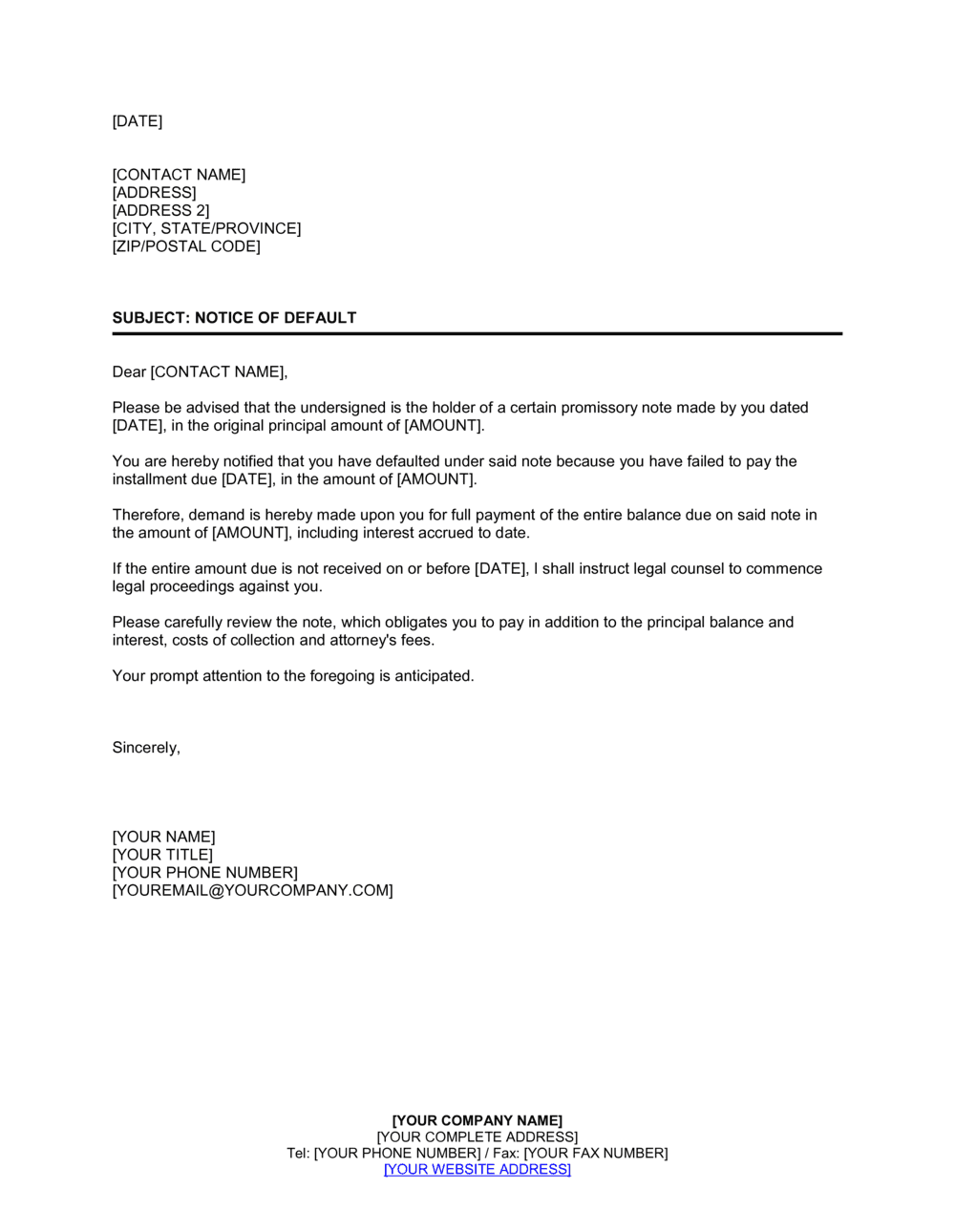
Consequences of Failure to Cure: A warning that if the default is not cured within the specified period, the property will be subject to a Notice of Sale, leading to eventual foreclosure and loss of the property.
Delivery of the NOD is also prescribed by law. It is typically sent to the borrower via certified mail, ensuring proof of delivery. In some jurisdictions, it may also be required to be posted on the property itself and/or published in a local newspaper of general circulation. The recording of the NOD with the county recorder’s office is a universal requirement, establishing it as a public record.
Implications and Ramifications for Borrowers
Receiving a Notice of Default is undoubtedly a distressing event, carrying immediate and long-term consequences that can significantly impact a borrower’s financial stability and future. Understanding these ramifications is vital for responding effectively.
The Immediate Impact: Legal and Financial Stress
The moment an NOD is issued and recorded, several immediate changes occur:
-
Formal Commencement of Foreclosure: The NOD officially kickstarts the foreclosure timeline. While actual loss of the home is not immediate, the legal process has begun, creating a definitive countdown.
-
Psychological Toll: The receipt of such a serious legal document can cause immense stress, anxiety, and a feeling of helplessness for borrowers and their families.
-
Credit Score Damage: By the time an NOD is issued, the borrower’s credit score has likely already suffered due to multiple missed payments. However, the recording of an NOD further entrenches this damage. It becomes a public record indicating a severe financial setback, making it harder to secure credit in the future. Lenders, employers, and landlords often check public records, and an NOD will be a significant red flag.
The “Cure” Period: Opportunity to Resolve the Default
One of the most crucial aspects of an NOD is the “cure” period it initiates. This is a legally mandated timeframe, typically 90 days from the date the NOD is recorded, during which the borrower has the right to “cure the default.” To cure the default means to pay the lender all overdue amounts, including principal, interest, late fees, escrow advances (e.g., for property taxes or insurance), and any legal costs incurred by the lender up to that point.
-
If the Default is Cured: If the borrower successfully pays all outstanding amounts within the cure period, the NOD is rescinded or withdrawn, and the foreclosure process halts. The loan is reinstated, and the borrower continues with their regular payments, albeit with a marred credit history.
-
If the Default is Not Cured: If the borrower fails to cure the default within the specified period, the lender gains the legal right to proceed to the next stage of foreclosure, which is typically the scheduling and advertisement of a trustee sale or sheriff’s sale, where the property is auctioned off to the highest bidder.
Long-Term Consequences of an Uncured NOD
Failing to cure the default and subsequently losing the property to foreclosure carries severe and lasting consequences:
-
Foreclosure and Loss of Property: The most immediate and devastating outcome is the loss of the home, forcing the borrower to relocate and find new housing.
-
Credit Score Devastation: A foreclosure can severely damage a borrower’s credit score, often dropping it by hundreds of points. This negative mark can remain on credit reports for up to seven years, impacting future financial endeavors.
-
Difficulty Obtaining Future Loans: Obtaining new mortgages, car loans, personal loans, or even credit cards becomes significantly more challenging and expensive for years following a foreclosure. Lenders will view the borrower as a high-risk individual.
-
Potential for Deficiency Judgments: In some states, if the property sells at foreclosure for less than the outstanding loan balance, the lender can pursue a “deficiency judgment” against the borrower. This is a court order requiring the borrower to pay the difference between the sale price and the total debt. This can lead to wage garnishment, bank account levies, or liens on other assets.
-
Impact on Employment and Housing: A poor credit history, especially one marred by foreclosure, can affect employment opportunities (particularly in financial industries) and make it difficult to rent housing, as many landlords conduct credit checks.
Strategies and Options for Borrowers Facing an NOD
Receiving an NOD is a dire situation, but it is not a death sentence. There are various strategies and options available to borrowers, provided they act promptly and proactively. The key is to engage with the situation rather than ignore it.
Communication with Your Lender
The absolute first step upon receiving an NOD should be to contact your lender. Many borrowers avoid this out of fear or embarrassment, but open communication can unlock potential solutions. Lenders often prefer to avoid foreclosure, as it is a costly and time-consuming process for them as well. They may be willing to work with you to find a resolution:
-
Loss Mitigation Options: Lenders often have “loss mitigation” departments dedicated to helping borrowers avoid foreclosure. These options include:
-
Loan Modification: Permanently changing the terms of your mortgage to make payments more affordable (e.g., reducing the interest rate, extending the loan term, or even reducing the principal balance).
-
Forbearance: A temporary suspension or reduction of mortgage payments, usually for a few months, to give the borrower time to recover from a temporary hardship.
-
Repayment Plan: An agreement to pay an additional amount on top of your regular monthly payment for a set period to catch up on missed payments.
-
-
Benefits of a Cooperative Approach: Demonstrating a willingness to work with your lender, providing necessary documentation, and explaining your financial hardship can significantly improve your chances of securing a favorable outcome.
Seeking Professional Guidance
Navigating the complexities of an NOD and foreclosure laws can be overwhelming. Seeking professional guidance is highly recommended:
-
Housing Counselors (HUD-Approved): The Department of Housing and Urban Development (HUD) sponsors housing counseling agencies that provide free or low-cost advice to homeowners facing foreclosure. These counselors can explain your options, help you communicate with your lender, and guide you through the application process for loss mitigation programs.
-
Real Estate Attorneys: An attorney specializing in real estate or foreclosure law can provide legal advice, represent you in negotiations with the lender, and ensure your rights are protected throughout the process. They can review your loan documents and the NOD for any errors or legal loopholes.
-
Financial Advisors: A financial advisor can help you assess your overall financial situation, create a budget, and explore strategies to generate income or reduce expenses to make your mortgage payments.
-
Avoiding Foreclosure Scams: Be wary of companies or individuals who promise to “save your home” for an upfront fee, especially if they advise you to stop communicating with your lender or sign over your property deed. Always verify the legitimacy of any service provider.
Alternative Solutions to Avoid Foreclosure
If reinstating the loan or modifying it isn’t feasible, there are other strategies that can help you avoid the full negative impact of a foreclosure:
-
Short Sale: If you owe more on your mortgage than your home is worth (i.e., you are “underwater”), your lender might agree to a short sale. This allows you to sell the property for less than the outstanding loan balance, with the lender agreeing to accept the sale proceeds as full or partial satisfaction of the debt. While it still negatively impacts your credit, it is generally less damaging than a foreclosure.
-
Deed-in-Lieu of Foreclosure: This option involves voluntarily giving the deed to your property back to the lender. In exchange, the lender agrees to release you from the mortgage debt. This can be less damaging to your credit than a foreclosure and avoids the public auction process. It typically requires the property to be in good condition and free of other liens.
-
Refinancing: If your credit score is still relatively intact and you have some equity in your home, you might be able to refinance your mortgage into a new loan with more manageable terms. However, once an NOD is recorded, refinancing becomes extremely difficult.
-
Bankruptcy: Filing for bankruptcy (Chapter 7 or Chapter 13) can temporarily halt the foreclosure process through an “automatic stay.” Chapter 13 bankruptcy, in particular, allows individuals with regular income to create a repayment plan to catch up on missed mortgage payments over a period (usually 3 to 5 years) while maintaining ownership of the home. However, bankruptcy has its own significant long-term credit implications and should be considered a last resort after careful consultation with an attorney.
Distinguishing an NOD from Other Financial Notices
It’s crucial to understand that not all notices from your lender carry the same weight or legal implications as an NOD. Misinterpreting these notices can lead to either unnecessary panic or, more dangerously, complacency.
NOD vs. Delinquency Notice
The primary distinction lies in their legal standing and severity:
-
Delinquency Notice: This is an informal communication from your lender indicating that you have missed a payment or are behind on payments. It’s a reminder and a warning, typically sent within 30-60 days of a missed payment. While it may mention the possibility of foreclosure, it is not a legal filing that initiates the foreclosure process. Its purpose is to prompt payment and open communication.
-
Notice of Default (NOD): As discussed, this is a formal legal document, recorded with the county, that officially initiates the non-judicial foreclosure process. It comes after a prolonged period of delinquency (e.g., 90-120 days) and signals the lender’s intent to foreclose if the default is not cured within a specific timeframe. The NOD starts a legally binding clock.
NOD vs. Notice of Trustee Sale/Sheriff’s Sale
These notices represent different stages in the foreclosure timeline:
-
Notice of Default (NOD): This is the first formal step in the non-judicial foreclosure process, signaling that the borrower is in default and providing a “cure period.”
-
Notice of Trustee Sale/Sheriff’s Sale: This notice comes after the cure period outlined in the NOD has expired and the borrower has failed to remedy the default. It formally announces the date, time, and location of the public auction where the property will be sold to satisfy the debt. This notice is a clear indication that foreclosure is imminent, and the window for resolving the default (unless through a last-minute modification or bankruptcy) is closing rapidly.

NOD in Different Contexts (Beyond Mortgages)
While this article primarily focuses on mortgage-related Notices of Default due to their prevalence and significant impact, the concept of a “notice of default” applies to other types of secured loans as well. For instance:
-
Auto Loans: If you default on an auto loan, the lender may send a notice of default before repossessing the vehicle. The process and timelines will differ from real estate, but the underlying principle of notifying the borrower of their breach and the intent to repossess remains.
-
Business Loans: Businesses that default on secured loans (e.g., loans secured by equipment or inventory) may also receive an NOD, leading to the lender seizing collateral.
In all contexts, an NOD signifies a serious breach of contract and the initiation of legal remedies by the lender to recover their funds. The specific legal procedures and timelines, however, are dictated by the type of loan, the collateral, and the relevant state laws.
In conclusion, a Notice of Default is a critical document in the landscape of personal and business finance, particularly concerning secured debts like mortgages. It serves as a stark warning and the official commencement of the foreclosure process. While daunting, it is not an insurmountable hurdle. Understanding its implications, acting swiftly, and seeking professional guidance are paramount for borrowers facing an NOD. By exploring options such as loan modifications, short sales, or deeds-in-lieu, and engaging proactively with lenders and advisors, borrowers can often mitigate the most severe consequences and work towards a more stable financial future.
aViewFromTheCave is a participant in the Amazon Services LLC Associates Program, an affiliate advertising program designed to provide a means for sites to earn advertising fees by advertising and linking to Amazon.com. Amazon, the Amazon logo, AmazonSupply, and the AmazonSupply logo are trademarks of Amazon.com, Inc. or its affiliates. As an Amazon Associate we earn affiliate commissions from qualifying purchases.