
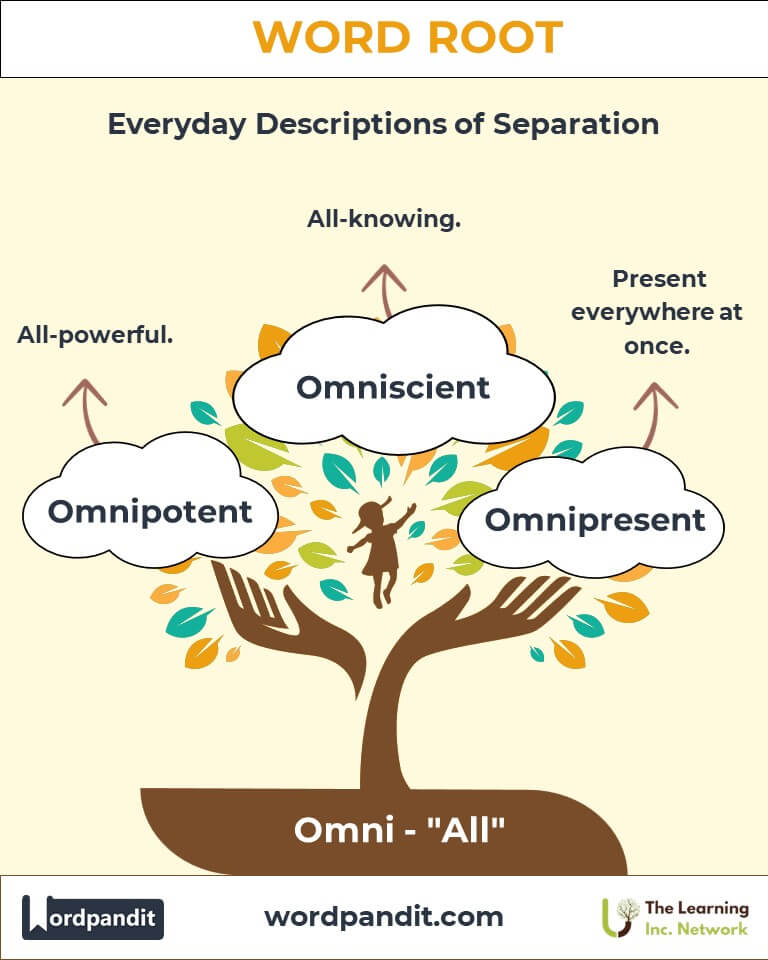
The word “omnipresent” conjures images of something vast, pervasive, and ceaselessly present, existing in every corner, at every moment. Derived from Latin roots – “omni” meaning “all” and “praesens” meaning “present” – it describes a quality of being universally and simultaneously present. While traditionally associated with theological or philosophical concepts of an all-encompassing force, the concept of omnipresence has found a remarkably tangible and transformative expression in the modern technological landscape. Today, omnipresence is not merely an abstract idea; it is the lived reality of our digital existence, where technology seamlessly weaves itself into the fabric of our daily lives, often operating invisibly in the background, yet profoundly shaping our experiences.

In the realm of technology, “omnipresent” signifies the pervasive integration of digital systems, devices, and data into virtually every aspect of human activity and environment. It’s about technology that is not just available but embedded – always on, always connected, and always interacting. From the smartphones in our pockets to the smart devices in our homes, the interconnected infrastructure of our cities, and the sophisticated algorithms guiding our online interactions, technology has achieved a state of near-ubiquitous presence. This article will delve into what omnipresence means within the technological sphere, exploring its evolution, its current manifestations, the challenges it presents, and its potential future trajectory.
The Dawn of Digital Omnipresence: From Ubiquitous Computing to IoT
The idea of omnipresent technology is not new; its theoretical roots stretch back decades, long before many of today’s technologies were even conceived. Understanding this lineage helps contextualize how we arrived at our current state of pervasive digital integration.
Early Visions: Mark Weiser’s Ubiquitous Computing
One of the most foundational concepts for digital omnipresence emerged in the late 1980s and early 1990s from Mark Weiser, a chief scientist at Xerox PARC. Weiser coined the term “ubiquitous computing,” envisioning a future where technology would recede into the background, becoming so integrated into our environment that it would disappear from conscious thought. His vision was of a world filled with countless small, networked computers – “tabs,” “pads,” and “boards” – embedded in everyday objects and spaces, intelligently assisting users without demanding their constant attention. Weiser predicted a shift from a “mainframe era” (many users, one computer) to a “PC era” (one user, one computer) and finally to a “ubiquitous computing era” (one user, many computers, often unseen). This concept laid the intellectual groundwork for what we now experience as pervasive, omnipresent technology, emphasizing invisibility and seamless interaction over overt engagement. His foresight was remarkable, predicting a future where computing was not a destination but an ever-present, interwoven aspect of reality.
The Rise of the Internet of Things (IoT): Devices as Digital Extensions
Weiser’s vision found its practical manifestation, in part, with the advent and proliferation of the Internet of Things (IoT). IoT refers to the vast network of physical objects — “things” — embedded with sensors, software, and other technologies for the purpose of connecting and exchanging data with other devices and systems over the internet. From smart home devices like thermostats and lighting systems to industrial sensors monitoring machinery, wearable fitness trackers, and autonomous vehicles, IoT devices represent the tangible embodiment of digital omnipresence. These devices are designed to collect data, communicate with each other, and respond to their environments, often without direct human intervention. They extend our digital footprint into the physical world, making our homes, workplaces, and even our bodies part of a larger, interconnected digital ecosystem. This constant data flow and interconnectedness create a reality where digital insights and actions are omnipresent, influencing everything from energy consumption to personal health management.
Cloud Computing and Edge Computing: Infrastructure for Pervasiveness
The sheer scale of data generated by omnipresent devices and the need for seamless access and processing demand robust infrastructural support. This is where cloud computing and, more recently, edge computing play pivotal roles. Cloud computing provides on-demand availability of computer system resources, especially data storage and computing power, without direct active management by the user. It allows applications and data to be accessed from any device, anywhere, at any time, making services themselves omnipresent. Whether it’s streaming media, collaborating on documents, or accessing enterprise software, the cloud ensures that our digital tools and data are always within reach. Edge computing complements the cloud by processing data closer to its source – the “edge” of the network – reducing latency and conserving bandwidth. This is crucial for real-time applications like autonomous driving or industrial automation, where instantaneous decision-making is vital. Together, cloud and edge computing form the distributed, always-on infrastructure that underpins and enables the omnipresent nature of modern technology, ensuring that computing power and data accessibility are as ubiquitous as the devices themselves.
AI and Software: The Intelligent Fabric of Our Lives
Beyond the physical hardware and underlying infrastructure, the intelligence that powers omnipresent technology comes from artificial intelligence (AI) and sophisticated software systems. These elements provide the adaptive and responsive capabilities that make technology truly integrated and often predictive.
AI Everywhere: Smart Assistants, Personalized Experiences
Artificial intelligence is perhaps the most significant driver of pervasive technological integration. AI algorithms are no longer confined to specialized research labs; they are embedded in virtually every digital interaction we have. From the smart assistants like Siri, Alexa, and Google Assistant that respond to our voice commands, controlling our devices and providing information, to the recommendation engines on streaming platforms and e-commerce sites that personalize our content and shopping experiences, AI is omnipresent. It learns from our preferences, anticipates our needs, and adapts to our behavior, making technology feel more intuitive and integrated. In navigation apps, AI analyzes real-time traffic data to suggest optimal routes; in healthcare, it assists in diagnosing diseases and personalizing treatment plans. This seamless integration of AI transforms raw data into actionable insights and intelligent responses, creating a responsive digital environment that subtly guides and enhances our daily lives.
Software as a Service (SaaS) and API Economy: Invisible Integrations
The ubiquity of software, often operating invisibly, is another hallmark of omnipresent technology. Software as a Service (SaaS) models have revolutionized how we access and use applications. Instead of installing software on individual machines, users subscribe to services hosted in the cloud, accessible via web browsers or dedicated apps. This model ensures that software tools – from productivity suites to customer relationship management (CRM) systems – are always up-to-date, always accessible, and always consistent across devices, fostering a truly omnipresent work and communication environment. Complementing SaaS is the Application Programming Interface (API) economy. APIs allow different software systems to communicate and integrate with each other, creating powerful, interconnected ecosystems. When you book a flight through a travel aggregator, pay with a digital wallet, or share content from one app to another, APIs are working in the background, stitching together disparate services. This invisible layer of software integration is fundamental to omnipresence, enabling a continuous flow of data and functionality across platforms, creating a digital world where services are deeply interwoven and always available, even if we don’t consciously see the code connecting them.
Data’s Omnipresence: The Fuel for Digital Intelligence
At the heart of omnipresent technology lies an equally omnipresent flow of data. Every interaction with a smart device, every search query, every online purchase, and every digital communication generates data. This data, often referred to as “big data,” is not just voluminous; it’s constantly collected, analyzed, and leveraged to fuel the intelligence of AI and refine the functionality of software. The omnipresence of data means that our digital footprint is continuously growing, providing the raw material for personalized experiences, predictive analytics, and automated decision-making. While the devices and algorithms might be the visible or invisible agents of omnipresence, it is the ceaseless generation and utilization of data that truly powers this pervasive digital existence. This data forms a continuous feedback loop, making technology smarter, more responsive, and more deeply integrated into our lives with each passing moment.
Omnipresent Connectivity: Bridging Physical and Digital Worlds
The backbone of any omnipresent technological system is robust and continuous connectivity. It’s the circulatory system that allows data, commands, and experiences to flow freely between devices, people, and the digital cloud, effectively blurring the lines between our physical and virtual realities.
5G and Beyond: High-Speed, Low-Latency Networks

The evolution of wireless network technologies is critical for enabling true digital omnipresence. While previous generations like 3G and 4G brought mobile internet to the masses, 5G takes connectivity to an entirely new level, making it not just ubiquitous but also exceptionally fast and responsive. 5G networks promise significantly higher bandwidth, allowing for instantaneous downloads and seamless streaming of high-definition content, and ultra-low latency, which is crucial for applications requiring real-time responsiveness, such as autonomous vehicles, remote surgery, and augmented reality. Beyond 5G, future network generations are already in development, aiming for even greater speeds, lower energy consumption, and the capacity to connect trillions of devices. These advanced networks are the essential conduits that ensure omnipresent technology can operate without lag, making digital interactions feel as immediate and natural as physical ones, regardless of location or device. They are the invisible threads that tie together our increasingly digital world.
Wearable Technology and Augmented Reality: Blurring the Lines
Omnipresent technology isn’t just in our environment; it’s increasingly on and around us. Wearable technology, such as smartwatches, fitness trackers, and smart glasses, brings computing directly to our bodies, seamlessly integrating digital information and functionalities into our personal space. These devices monitor our health, provide notifications, facilitate communication, and even enable contactless payments, making digital assistance a constant companion. Augmented Reality (AR) further blurs the lines between the physical and digital. Unlike Virtual Reality (VR), which creates entirely immersive digital worlds, AR overlays digital information, images, and experiences onto our view of the real world. Whether it’s navigating with digital arrows projected onto a street, trying on virtual clothes, or visualizing furniture in your living room before you buy it, AR integrates digital content directly into our immediate physical environment. These technologies represent a more intimate form of omnipresence, where the digital realm is not just accessible but becomes an integrated layer of our perception and interaction with the physical world.
The Metaverse and Web3: Towards Immersive Digital Spaces
Looking ahead, concepts like the Metaverse and Web3 represent the next frontier in omnipresent digital experience. The Metaverse envisions a persistent, shared, and interconnected 3D virtual space where users can interact with each other, digital objects, and AI avatars in real-time. It’s not just a single app or platform but a network of interconnected virtual worlds, akin to how the internet connects websites. In this vision, digital presence would become truly omnipresent, allowing individuals to move seamlessly between work, social, and entertainment spaces within an expansive virtual domain. Web3, often associated with decentralized technologies like blockchain, aims to build a more open, transparent, and user-controlled internet. Combined, these concepts suggest a future where digital interactions are not only everywhere but also more immersive, persistent, and foundational to our sense of reality. They promise a future where digital omnipresence evolves from merely being “around us” to being “a part of us,” offering new ways to work, play, socialize, and exist within interconnected digital realms.
Challenges and Ethical Considerations of an Omnipresent Tech Landscape
While the benefits of omnipresent technology – convenience, efficiency, connectivity, and personalization – are undeniable, its pervasive nature also introduces significant challenges and ethical dilemmas that demand careful consideration and proactive solutions.
Privacy and Data Security: The Double-Edged Sword of Pervasiveness
The continuous collection and analysis of data, which fuels omnipresent technology, inherently raise profound privacy concerns. With every smart device, every online interaction, and every connected service, individuals leave a digital footprint that can be aggregated to create detailed profiles of their habits, preferences, and even their physical movements. The sheer volume and granularity of this data make it a lucrative target for malicious actors, leading to increased risks of data breaches, identity theft, and surveillance. Ensuring robust data security measures, implementing strong encryption, and fostering a culture of privacy-by-design are critical. Moreover, striking the right balance between the utility derived from personalized services and an individual’s right to privacy remains a central ethical challenge. As technology becomes more omnipresent, the need for transparent data practices, user control over personal information, and stringent regulatory frameworks becomes paramount to protect individuals from potential misuse or exploitation.
Digital Divide and Accessibility: Ensuring Inclusive Omnipresence
Another critical challenge posed by omnipresent technology is the exacerbation of the digital divide. While technology permeates much of the developed world, significant portions of the global population still lack access to reliable internet connectivity, affordable devices, or the digital literacy required to fully participate in this interconnected landscape. This creates a growing chasm between those who can leverage the benefits of omnipresent technology and those who are left behind, further entrenching social and economic inequalities. Ensuring that omnipresent technology is truly inclusive requires addressing issues of accessibility, both in terms of physical access to infrastructure and devices, and in terms of designing technologies that are intuitive and usable for people of all abilities and backgrounds. Governments, corporations, and civil society organizations have a collective responsibility to invest in digital infrastructure, promote digital education, and develop accessible technologies to ensure that the advantages of omnipresence are shared equitably across all communities.
Cognitive Load and Digital Wellbeing: Managing Constant Connectivity
The constant presence of technology, while offering unparalleled convenience, also presents challenges to human cognitive load and mental wellbeing. The incessant stream of notifications, the pressure to be always-on and always-responsive, and the endless availability of digital content can lead to information overload, reduced attention spans, and increased stress and anxiety. The lines between work and personal life blur when our devices keep us connected around the clock, potentially leading to burnout. Furthermore, excessive screen time and reliance on digital interactions can impact physical health and social skills. Addressing these concerns requires a mindful approach to technology design and usage. Encouraging digital detox, promoting features that support wellbeing (e.g., focus modes, notification management), and educating users on healthy technology habits are essential. As technology becomes more deeply integrated, understanding and mitigating its potential negative impacts on human cognition and wellbeing will be crucial for fostering a truly beneficial omnipresent digital environment.
The Future of Omnipresent Technology: Seamless Integration and Human-Centric Design
The trajectory of omnipresent technology is towards an even more seamless, intuitive, and anticipatory integration into our lives. The focus is shifting from simply having technology everywhere to having it operate intelligently and responsibly to serve human needs.
Proactive and Predictive Intelligence: Tech That Anticipates Our Needs
The future of omnipresent technology will be characterized by an even greater degree of proactive and predictive intelligence. Current AI often reacts to explicit commands or observed patterns. Future systems, fueled by advanced machine learning and vast datasets, will anticipate our needs and offer solutions or information before we even realize we require them. Imagine smart homes that pre-adjust lighting and temperature based on your schedule and mood, personalized health companions that detect subtle physiological changes and recommend interventions, or urban infrastructures that intelligently manage traffic flow and resource allocation based on real-time and predictive demand. This proactive omnipresence will aim to make technology truly invisible, blending so deeply into our environment and routines that its assistance feels less like an interaction with a machine and more like an effortless extension of our own capabilities and foresight.
Sustainable Tech and Ethical AI: Building a Responsible Future
As technology becomes more pervasive, the imperative for sustainability and ethical considerations grows exponentially. The immense energy consumption of data centers, the environmental impact of device manufacturing and disposal, and the ethical implications of powerful AI systems are significant concerns. The future of omnipresent technology must therefore be rooted in sustainable practices, emphasizing energy-efficient hardware, renewable energy sources for data infrastructure, and circular economy principles for device lifecycle management. Concurrently, the development of Ethical AI frameworks will be paramount. This includes ensuring AI systems are fair, transparent, accountable, and free from bias, with human oversight embedded in critical decision-making processes. Building a responsible omnipresent future means actively designing technologies that not only serve humanity but also protect the planet and uphold fundamental human values.
Hyper-Personalization and Ambient Computing: The Next Frontier
The ultimate evolution of omnipresent technology points towards hyper-personalization delivered through ambient computing. Hyper-personalization will move beyond simple recommendations to creating uniquely tailored experiences and environments that adapt continuously to an individual’s context, mood, and long-term goals. This will be facilitated by ambient computing, where intelligence is distributed throughout the environment, responding intuitively and subtly to users. Instead of interacting with discrete devices, we will inhabit spaces that are themselves intelligent – rooms that adjust acoustics for a call, cars that optimize for a relaxed drive after a stressful day, or smart cities that personalize public services based on individual citizen needs and preferences. This future envisions a world where technology is so perfectly attuned to human requirements and so seamlessly integrated into the environment that it becomes an almost imperceptible, yet profoundly empowering, omnipresent force, dedicated to enhancing human potential and experience.
In conclusion, “omnipresent” in the technological context defines a state of pervasive integration where digital systems are woven into the very fabric of our lives. From the theoretical visions of ubiquitous computing to the tangible realities of IoT, AI, and global connectivity, technology has achieved a level of constant presence that was once unimaginable. As we navigate this increasingly intelligent and interconnected landscape, understanding its meaning, harnessing its potential, and addressing its challenges with foresight and ethical responsibility will be crucial for shaping a future where omnipresent technology serves humanity effectively and equitably.
aViewFromTheCave is a participant in the Amazon Services LLC Associates Program, an affiliate advertising program designed to provide a means for sites to earn advertising fees by advertising and linking to Amazon.com. Amazon, the Amazon logo, AmazonSupply, and the AmazonSupply logo are trademarks of Amazon.com, Inc. or its affiliates. As an Amazon Associate we earn affiliate commissions from qualifying purchases.