
In an era dominated by smartphones, high-performance laptops, and cloud-based computing, the humble handheld calculator remains a cornerstone of the technical world. However, not all calculators are created equal. Within the ecosystem of mathematical hardware, the distinction between “programmable” and “non-programmable” is perhaps the most critical technical boundary. For students, engineers, and financial professionals, understanding what a non-programmable calculator is—and why it remains an indispensable gadget—is vital for navigating both academic integrity and professional certification.
A non-programmable calculator is a discrete electronic device designed to perform mathematical calculations without the ability to store user-defined text, formulas, or custom scripts in a permanent or semi-permanent memory. Unlike their programmable counterparts, which function similarly to miniature computers, non-programmable units are fixed-function tools. Their logic is hardwired or etched into their firmware, ensuring that every user starts from a “clean slate” every time the device is powered on.
The Technical Architecture of Non-Programmable Devices
To understand what makes a calculator non-programmable, one must look at the underlying hardware and memory management systems. In the world of technology, “programmability” refers to the user’s ability to input a sequence of instructions that the device can later execute autonomously.
Volatile vs. Non-Volatile Memory
The primary technical differentiator is the type of memory used. Programmable calculators feature significant amounts of Non-Volatile Random Access Memory (NVRAM) or Flash memory, allowing users to save programs, custom functions, and even text notes that remain on the device even after it is turned off.
In contrast, a non-programmable calculator utilizes Read-Only Memory (ROM) for its internal operations and a very limited amount of volatile memory for its “Answer” or “Memory” keys (like M+ or M-). This volatile memory typically clears when the device is reset or the power source is removed. These devices lack the file systems, directory structures, and data ports (such as USB or infrared) required to transfer or store external data.
Fixed Firmware and Hardwired Logic
The functionality of a non-programmable scientific calculator is determined entirely by its factory firmware. When you press a button for a trigonometric function like “sin” or “cos,” the device executes a pre-defined algorithm stored in its ROM. The user cannot modify how these functions work, nor can they create a new “shortcut” that combines multiple steps into a single keystroke. This lack of customization is a deliberate design choice, ensuring the device remains a pure calculation tool rather than a data storage or processing hub.
Why Non-Programmable Calculators are Essential in Tech and Education
The persistence of non-programmable calculators in the market isn’t due to a lack of innovation; rather, it is a response to the need for standardized, secure, and reliable computing environments.
Academic Integrity and Standardized Testing
The most common reason for the use of non-programmable calculators is the strict regulatory environment of global education. Standardized testing bodies, such as those overseeing the SAT, ACT, AP exams, and international GCSEs/A-Levels, have stringent rules regarding the hardware allowed in examination halls.
Because programmable calculators can store text and complex formulas, they present a significant risk for academic dishonesty. A student could theoretically store an entire textbook’s worth of notes within a programmable graphing calculator. Non-programmable calculators mitigate this risk entirely. By stripping away the ability to store text or custom code, testing bodies ensure that the student is being tested on their mathematical proficiency rather than their ability to retrieve stored data.
Professional Certification and Engineering Standards
The need for non-programmable hardware extends far beyond the classroom. For professional engineers, the Fundamentals of Engineering (FE) and Principles and Practice of Engineering (PE) exams—conducted by the NCEES in the United States—require the use of specific, approved non-programmable models.
In these high-stakes environments, the tech must be “dumb” enough to prevent cheating but powerful enough to handle complex engineering mathematics. Professionals rely on these devices because they are fast, reliable, and compliant. A non-programmable scientific calculator can handle complex numbers, matrix algebra, and statistics without the “bloat” of a programmable OS, which could potentially crash or lag during a critical calculation.

Key Features and Functional Categories
Non-programmable calculators are generally divided into two categories: Basic (or four-function) and Scientific. While both are non-programmable, their technological capabilities vary significantly.
Basic Four-Function Calculators
These are the simplest forms of digital calculation tech. They are designed for arithmetic: addition, subtraction, multiplication, and division. Some may include a square root key or a percentage key. These are often found in retail environments or elementary education. Their internal circuitry is incredibly simple, often powered by a single small solar cell, and they possess almost no internal memory beyond a single “Memory” register.
Non-Programmable Scientific Calculators
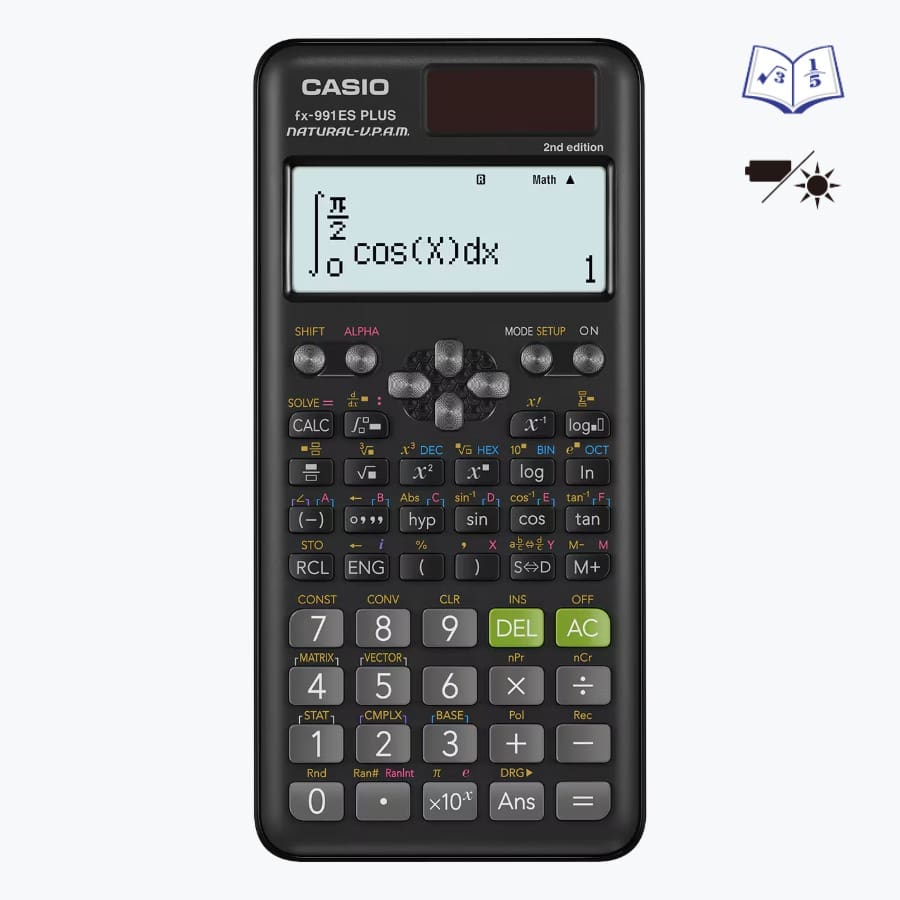
This is where the tech becomes truly impressive. Modern non-programmable scientific calculators, such as the Casio ClassWiz series or the Texas Instruments TI-36X Pro, offer a massive array of features while staying within the “non-programmable” boundary.
-
Equation Solvers: Many can solve quadratic and cubic equations numerically.
-
Matrix and Vector Calculations: They can perform operations on matrices up to 4×4 or 3D vectors.
-
Natural Display Technology: High-resolution LCD screens allow the device to display fractions, radicals, and exponents exactly as they appear in a textbook (often called “Natural V.P.A.M.” or “WriteView”).
-
Statistical Analysis: Capability to perform regressions, standard deviations, and probability distributions.
The “tech” here is in the efficiency of the algorithms. These devices must perform complex calculus (numerical integration and derivatives) using very limited processing power compared to a smartphone, requiring highly optimized software.
Comparing Top Models in the Market
When selecting a non-programmable calculator, the choice often comes down to the user interface (UI) and the specific logic system used by the manufacturer.
Texas Instruments (TI-30X and TI-36X Pro)
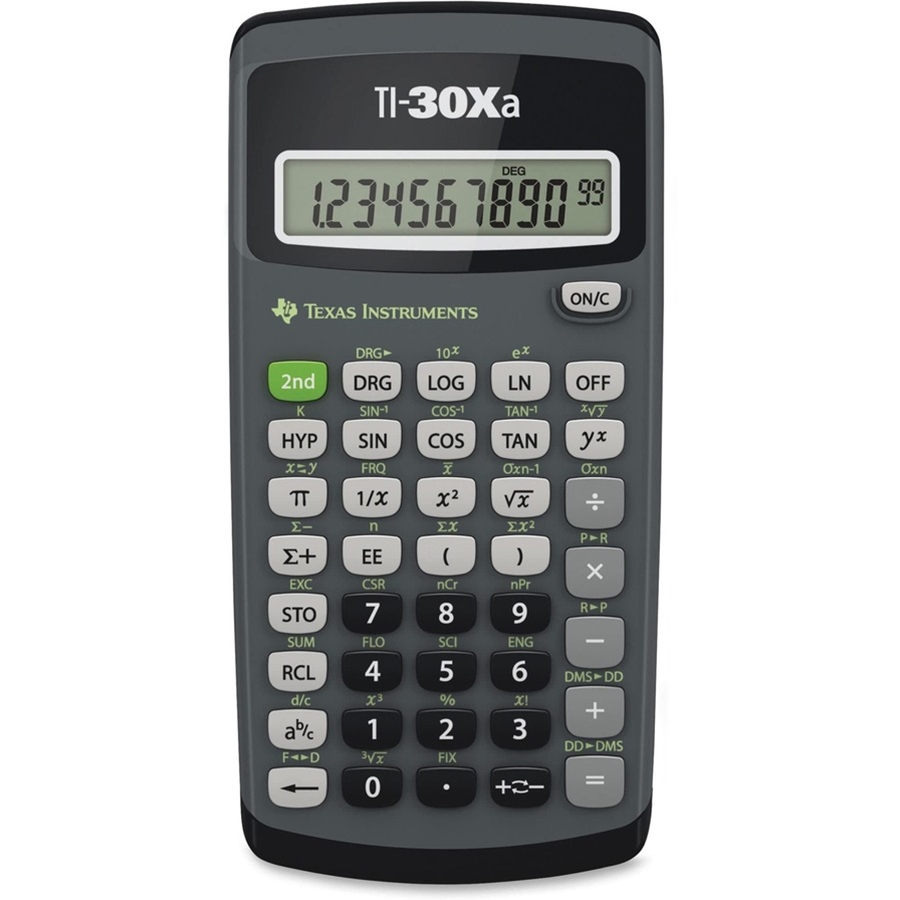
Texas Instruments has long been a leader in the North American educational market. The TI-30X IIS is a staple of middle-school math, known for its ruggedness and dual power (solar/battery). However, the TI-36X Pro is the “powerhouse” of the non-programmable world. It mimics the functionality of a graphing calculator—offering derivative and integral calculations—without the programmable memory that would get it banned from exams. Its menu-based system is intuitive for those used to the TI-84 ecosystem.
Casio (fx-991EX and fx-991CW ClassWiz)
Casio has pushed the boundaries of what non-programmable hardware can do. The ClassWiz series introduced high-resolution displays that can generate QR codes. While the calculator itself cannot connect to the internet, the QR code can be scanned by a smartphone to visualize data or graphs on a web browser—a clever bridge between “offline” hardware and “online” analysis. The fx-991 series is often cited as the fastest non-programmable calculator in terms of processing speed for complex operations.
HP (HP 35s and RPN Logic)
For the true tech enthusiast or seasoned engineer, the HP 35s represents a different branch of calculator evolution. It is famous for utilizing Reverse Polish Notation (RPN), a logic system that removes the need for parentheses and can be significantly faster for complex string calculations once mastered. While the HP 35s actually has limited programmability, it is often grouped with professional non-graphing tools and remains a cult favorite for its tactile “clicky” buttons and historical pedigree.
The Future of Dedicated Mathematical Hardware
In a world of apps like WolframAlpha and Desmos, one might wonder why non-programmable calculators still exist. The answer lies in the intersection of focus and reliability.
Distraction-Free Computing
The “feature set” of a non-programmable calculator is defined as much by what it cannot do as what it can. Because it lacks an internet connection, social media, and notifications, it serves as a distraction-free environment. This is a critical technological advantage for students and professionals who need to maintain “deep work” states. The device is a tool with a single purpose, making it ergonomically and cognitively superior for mathematical tasks.
Reliability and Longevity
Modern consumer electronics are often designed with planned obsolescence in mind. In contrast, a high-quality non-programmable scientific calculator is often a decade-long investment. With dual-power systems (solar and long-life lithium batteries), these devices are always “on” and ready. They do not require firmware updates, they don’t have glass screens that shatter easily, and they are built to withstand the rigors of a backpack or a construction site.
The non-programmable calculator is a masterclass in “appropriate technology.” It provides exactly the amount of power needed for its specific use case without the vulnerabilities or complexities of more advanced systems. Whether it’s the Casio fx-85GT or the TI-36X Pro, these devices prove that in the world of technology, sometimes less is more. They remain the gold standard for security, the engine of engineering exams, and a testament to the enduring power of specialized hardware.
aViewFromTheCave is a participant in the Amazon Services LLC Associates Program, an affiliate advertising program designed to provide a means for sites to earn advertising fees by advertising and linking to Amazon.com. Amazon, the Amazon logo, AmazonSupply, and the AmazonSupply logo are trademarks of Amazon.com, Inc. or its affiliates. As an Amazon Associate we earn affiliate commissions from qualifying purchases.