
In the hyper-connected landscape of the 21st century, the phrase “NIS” has evolved from a technical acronym used by systems administrators into a cornerstone of international law and digital resilience. While it historically referred to the Network Information Service—a directory service protocol developed by Sun Microsystems—today’s tech environment recognizes NIS primarily as Network and Information Security. Specifically, it refers to the robust frameworks and systems designed to protect the critical infrastructure that keeps our global economy functional.
As cyber threats become more sophisticated, moving from simple malware to state-sponsored espionage and complex ransomware-as-a-service (RaaS) models, understanding what a NIS represents is no longer optional for technology professionals. It is the architectural blueprint for how we secure the servers, wires, and data that define modern life.

The Evolution of Network and Information Systems
To understand NIS in its current tech context, one must first appreciate the infrastructure it aims to protect. A Network and Information System is defined as an electronic communications network, any device or group of interconnected devices which perform automatic processing of digital data, or the digital data stored, processed, retrieved, or transmitted by them.
From Local Directories to Global Infrastructures
In the early days of computing, “NIS” (Network Information Service) was a specific software tool used to distribute system configuration data, such as user and host names, between computers on a network. It functioned like a digital “Yellow Pages” for Unix systems. However, as the internet decentralized and expanded, the scope of the term shifted. We transitioned from managing small clusters of computers to managing sprawling, global networks that facilitate everything from energy distribution to high-frequency trading. Today, when we discuss NIS, we are talking about the holistic integrity of these systems.
Core Components of a Modern NIS
A robust Network and Information System is comprised of three primary layers:
- Hardware Layer: This includes the physical routers, switches, servers, and fiber-optic cables that facilitate data movement.
- Software Layer: The operating systems, applications, and protocols (like TCP/IP) that dictate how data is processed and shared.
- Data Layer: The actual information being transmitted, which requires confidentiality, integrity, and availability (the CIA triad).
The synergy between these layers determines the “security” of the system. If any one layer is compromised, the entire NIS is at risk, leading to potential systemic failures across entire industries.
The Regulatory Landscape: Unpacking the NIS Directive
In the realm of digital security and tech governance, the most significant development regarding NIS has been the European Union’s NIS Directive. This was the first piece of EU-wide legislation on cybersecurity, and it set a global precedent for how nations should manage their digital defenses.
The Shift from NIS to NIS2
The original NIS Directive, adopted in 2016, focused on increasing the cybersecurity capabilities of member states and improving cross-border cooperation. However, as tech evolved, the directive needed an upgrade. Enter NIS2, which came into force recently to address the vulnerabilities exposed by an increasingly digitized society.
NIS2 expands the scope of the original directive significantly. It is no longer just about big banks or energy companies; it now encompasses “essential” and “important” entities across sectors like space, waste management, and even the manufacturing of critical tech products. This shift reflects a fundamental tech reality: in a networked world, a vulnerability in a small software supplier can bring down a multinational corporation.
Who is Covered? Essential vs. Important Entities
The NIS2 framework categorizes organizations based on their criticality to society:
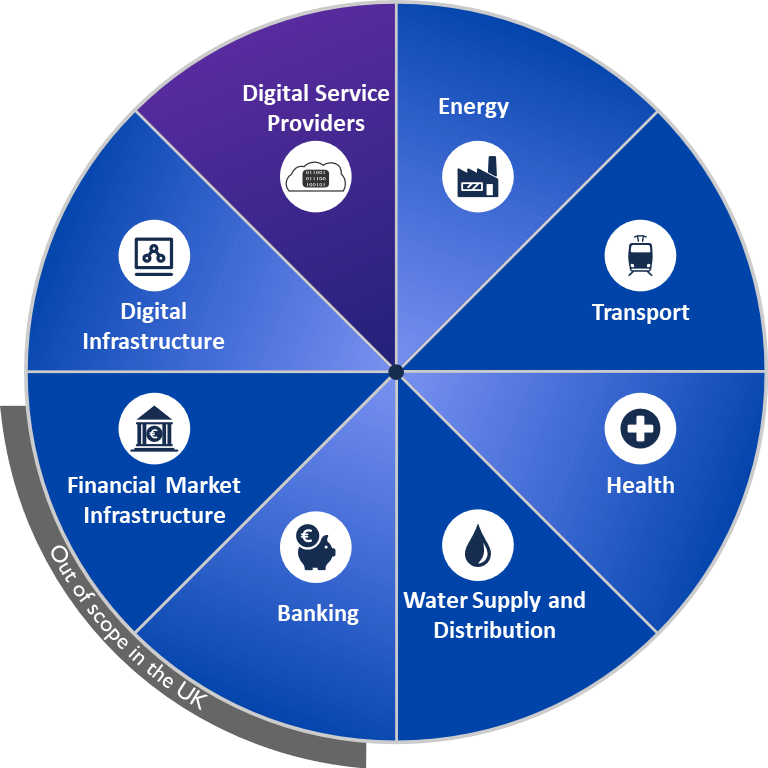
- Essential Entities: These are organizations in sectors like energy, transport, banking, and health. A failure in their NIS would cause catastrophic societal or economic disruption. They are subject to proactive supervision and stricter enforcement.
- Important Entities: This includes postal services, food production, and digital providers like online marketplaces and social networking platforms. While their failure is significant, it is deemed less immediately “catastrophic” than a power grid failure.

For tech leaders, this means that compliance is now a core part of the software development lifecycle (SDLC) and network architecture design.
Technical Implementation and Cybersecurity Frameworks
Understanding what a NIS is involves looking “under the hood” at the technical controls required to secure these systems. It is not enough to have a firewall; a true NIS requires a multi-layered defense-in-depth strategy.
Risk Management and Incident Handling
At the heart of any NIS is a rigorous risk management protocol. This involves identifying assets, assessing vulnerabilities, and implementing controls to mitigate those risks.
- Zero Trust Architecture (ZTA): Modern NIS implementation often relies on the principle of “never trust, always verify.” Every user and device, whether inside or outside the network perimeter, must be authenticated and authorized before gaining access to data.
- Automated Incident Response: With the volume of data moving through modern networks, manual monitoring is impossible. Security Orchestration, Automation, and Response (SOAR) tools are now integral to NIS, allowing systems to automatically isolate infected nodes or block suspicious IP addresses in milliseconds.
Supply Chain Security in the NIS Framework
One of the most critical technical challenges in NIS today is supply chain security. As software becomes more modular, organizations rely on third-party libraries, APIs, and cloud service providers. A vulnerability in an open-source library (like the infamous Log4j incident) can compromise the NIS of thousands of companies simultaneously. Technical teams must now implement “Software Bill of Materials” (SBOMs) to track every component within their digital ecosystem, ensuring that the NIS is secure from the ground up.
The Future of NIS: AI and Quantum Resilience
The definition of a “secure” Network and Information System is not static. As we look toward the next decade, two major technological shifts are poised to redefine the boundaries of NIS: Artificial Intelligence and Quantum Computing.
Automating Compliance with AI Tools
AI is a double-edged sword for NIS. On one hand, threat actors are using AI to craft more convincing phishing attacks and develop polymorphic malware that can bypass traditional antivirus software. On the other hand, defenders are using machine learning to detect anomalies in network traffic that would be invisible to the human eye.
The future of NIS will likely involve “Self-Healing Networks.” These are systems that use AI to identify a breach, determine the entry point, patch the vulnerability, and restore lost data—all without human intervention. This level of automation is essential as the speed of cyberattacks continues to accelerate.
Preparing for Post-Quantum Cryptography
Perhaps the most significant looming threat to Network and Information Systems is the advent of viable quantum computing. Current encryption standards, which protect everything from bank transfers to government secrets, could theoretically be cracked by a quantum computer in a matter of hours.
Tech innovators are already working on “Post-Quantum Cryptography” (PQC). Integrating these new cryptographic algorithms into existing NIS frameworks is a massive undertaking that requires updating hardware and software protocols globally. This transition will be the “Y2K” of the 2020s and 2030s, requiring a total overhaul of how we think about data confidentiality within our networks.
Conclusion: The Strategic Importance of NIS
In summary, a NIS—Network and Information System—is the central nervous system of the modern digital world. Whether we are discussing the legacy protocols of the past or the sweeping regulatory frameworks of the present like NIS2, the core objective remains the same: ensuring that the technology we rely on remains resilient, secure, and available.
For those in the tech industry, NIS represents the intersection of engineering excellence and strategic governance. It requires a deep understanding of hardware, a mastery of secure coding practices, and a forward-looking approach to emerging threats. As we move deeper into the era of AI and hyper-connectivity, the strength of our Network and Information Systems will determine the stability of our digital civilization. By investing in robust NIS frameworks today, we are not just protecting data; we are securing the future of global innovation.
aViewFromTheCave is a participant in the Amazon Services LLC Associates Program, an affiliate advertising program designed to provide a means for sites to earn advertising fees by advertising and linking to Amazon.com. Amazon, the Amazon logo, AmazonSupply, and the AmazonSupply logo are trademarks of Amazon.com, Inc. or its affiliates. As an Amazon Associate we earn affiliate commissions from qualifying purchases.