
The influence of a father figure is foundational to the development of a child’s identity, self-worth, and behavioral patterns. When that figure operates within the framework of narcissistic personality traits, the legacy left behind is one of conditional love, psychological manipulation, and emotional scarcity. In the context of personal branding—the conscious effort to build, maintain, and project a reputation—the narcissistic father represents a case study in the construction of an “idealized persona” at the expense of authentic connection. Understanding this dynamic is essential for those who seek to separate their own professional and personal identities from the narratives projected upon them by such figures.

The Brand of the Narcissistic Father: Constructing the False Self
In the world of strategic branding, an image is crafted to elicit specific perceptions, often concealing the underlying reality to maintain a competitive edge. A narcissistic father operates similarly; his life is a curated brand designed to secure admiration, obedience, and status.
The Performance of Superiority
The narcissistic father views his family members not as independent individuals, but as “brand ambassadors” or assets meant to bolster his public image. He treats his home life like a corporate PR campaign, where the objective is to project an aura of perfection, success, and moral rectitude. Every family event, academic achievement, or social interaction is scrutinized through the lens of how it reflects upon him. If a child performs well, the father claims the success as a validation of his own “brand,” effectively monopolizing the narrative of the accomplishment.
The Duality of Public and Private Messaging
A core component of brand strategy is consistency, but the narcissistic father masters the art of incongruity. In public, he may be the charismatic, charming, and highly respected provider. In private, the mask slips, revealing a volatile, critical, and self-centered individual. This discrepancy creates a “brand dissonance” for the children. They grow up confused, forced to reconcile the hero their community sees with the tyrant they experience behind closed doors. This teaches the child that identity is fluid, manipulative, and dependent on the audience—a lesson that often requires intense unlearning in adulthood.
Tactical Manipulation: Marketing Tactics within the Home
When we analyze corporate strategies, we look for methods used to influence consumer behavior. The narcissistic father employs remarkably similar tactical maneuvers to maintain control over his “market”—his household.
Gaslighting as a Revisionist Strategy
Gaslighting is a form of psychological re-branding. By denying past events or questioning the reality of his children’s experiences, the narcissistic father rewrites history to protect his personal image. If a child confronts him about a hurtful remark, he may frame it as “a joke” or “a misunderstanding,” effectively rebranding his abuse as a benign or even positive interaction. This tactic is designed to make the child doubt their own judgment, ensuring they remain reliant on his interpretation of reality—the ultimate form of market capture.
The Triangulation Method
In marketing, triangulation involves leveraging third-party entities to validate a brand’s claims. In a narcissistic household, the father often pits family members against one another. By sharing secrets or favoring one sibling over another, he ensures that the “competitors” within the family are too busy fighting each other to question his authority. This creates a closed loop where he remains the final arbiter of truth and the sole provider of approval, effectively neutralizing any threats to his position of power.
The Impact on Professional Identity and Self-Branding
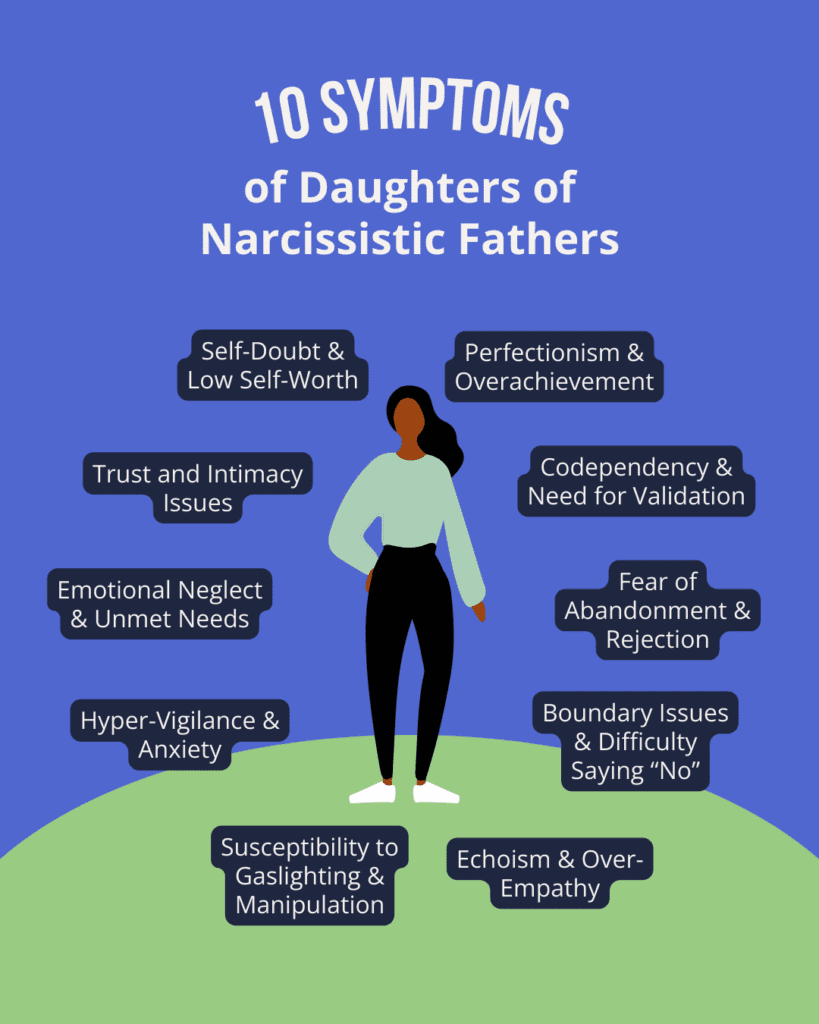
The children of narcissistic fathers often find that their upbringing has significantly impacted their ability to develop an authentic professional identity. The psychological legacy of this environment acts as a barrier to honest self-presentation in the marketplace.
The Struggle with “Imposter Syndrome”
Because the narcissistic father equates love with performance and achievement, his children often struggle to separate their self-worth from their output. In the workplace, this manifests as a chronic, debilitating fear of being “found out” as a fraud. If their internal narrative is that they are only worthy when they are perfect, they will inevitably feel like imposters when they inevitably fail or experience normal human limitations.
Over-compensation and the Perfectionist Trap
Many individuals raised by narcissists become hyper-achievers, driven by the desire to earn the validation they never received as children. While this can lead to professional success, it is often built on an unstable foundation. They may curate a personal brand that is overly polished, rigid, and defensive. They avoid vulnerability because, in their childhood, vulnerability was a “design flaw” that was exploited by the father. Moving past this requires a radical re-branding process—one that prioritizes internal integrity over external appraisal.
Navigating the Legacy: Toward Authentic Personal Branding
Reclaiming one’s identity from the influence of a narcissistic father is essentially a process of brand rehabilitation. It involves stripping away the layers of false narrative imposed by the parent and establishing a new, authentic set of values.
Setting Boundaries as Brand Guidelines
Just as a brand needs strict guidelines to protect its integrity, an individual must establish clear, non-negotiable boundaries. For someone raised by a narcissist, this means learning to say “no” to the father’s intrusive demands and refusing to participate in his narrative-spinning. Establishing these boundaries is not an act of hostility; it is a necessary functional requirement for maintaining one’s own psychological stability and professional reputation.
The Shift from Approval-Seeking to Value-Driven Identity
True personal branding is not about getting the world to admire you; it is about clearly defining what you stand for and acting in alignment with those principles. The child of a narcissistic father must learn to seek internal validation. This involves identifying their own core values—separate from the father’s ego-driven criteria—and using those values as the “North Star” for their personal and career decisions. When your brand is built on internal truth rather than a reaction to parental criticism, you become immune to the manipulations of those who wish to leverage your identity for their own gain.

Investing in Psychological Capital
The final stage of this transition is acknowledging that the most valuable asset you possess is your own mental clarity. Just as businesses invest in R&D to stay relevant, adults recovering from toxic parenting must invest in therapy, self-reflection, and supportive social networks. By treating your own mental health as a long-term investment, you create a buffer against the cycle of narcissism. You move from being a character in your father’s play to being the author of your own life, capable of building a brand that is sustainable, authentic, and entirely your own.
The narcissistic father relies on a fragile, externalized version of reality. By understanding the mechanisms he uses to exert control, you gain the agency to dismantle those structures. Your personal brand, your career, and your life belong to you alone. The process of separation is the ultimate act of reclaiming the narrative, turning the trauma of the past into the foundation of a genuinely empowered, autonomous future.
aViewFromTheCave is a participant in the Amazon Services LLC Associates Program, an affiliate advertising program designed to provide a means for sites to earn advertising fees by advertising and linking to Amazon.com. Amazon, the Amazon logo, AmazonSupply, and the AmazonSupply logo are trademarks of Amazon.com, Inc. or its affiliates. As an Amazon Associate we earn affiliate commissions from qualifying purchases.