
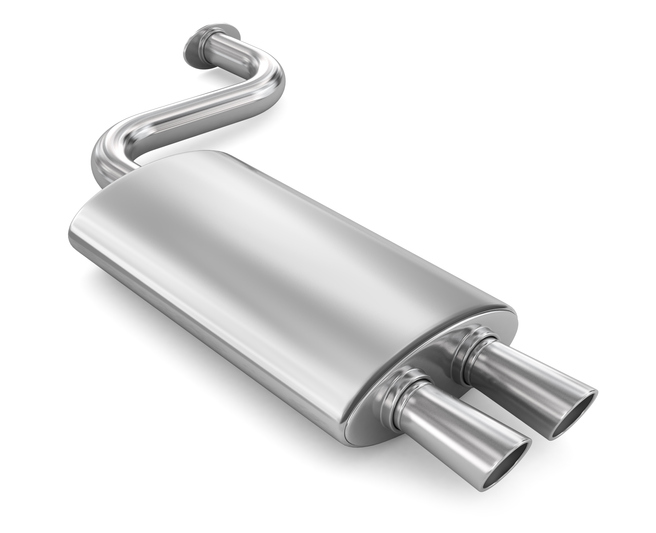
In the realm of automotive engineering, the internal combustion engine is a marvel of thermodynamic efficiency and mechanical precision. However, it is also a source of extreme auditory violence. Without intervention, the series of rapid-fire explosions required to propel a vehicle would produce a deafening cacophony. Enter the muffler—a sophisticated piece of acoustic technology designed to harmonize the chaotic pressure waves of an engine into a manageable, civilized hum.
While often viewed as a simple metal canister, the modern muffler is a masterclass in physics and material science. It represents a critical intersection of fluid dynamics, acoustics, and mechanical engineering. To understand what a muffler is for a car is to understand the technological journey of managing sound energy and exhaust flow.

The Physics of Sound Suppression: How a Muffler Works
At its core, a muffler is a device used to reduce the noise emitted by the exhaust of an internal combustion engine. However, the “how” involves complex acoustic engineering. When an exhaust valve opens, a high-pressure pulse of burnt gas is released into the exhaust system. These pulses reach our ears as sound. To silence them, engineers utilize two primary technological methods: destructive interference and absorption.
Destructive Interference: The Core Mechanic
The most “high-tech” aspect of a standard muffler is the use of destructive interference. Inside the muffler’s steel casing lies a series of precisely engineered chambers and perforated tubes. As sound waves enter the muffler, they are forced to reflect off the internal walls.
Engineers design these chambers so that the reflected sound waves collide with incoming waves. When the “peak” of one wave meets the “trough” of another, they cancel each other out. This is the same principle used in high-end noise-canceling headphones, but achieved through mechanical architecture rather than digital processing. By manipulating the length of the internal tubes and the volume of the chambers, manufacturers can target specific frequencies to eliminate “drone” while maintaining a pleasant engine note.
Chamber Design and Baffle Systems
Within the muffler, a series of “baffles” or walls act as a labyrinth for the exhaust gases. This maze-like structure serves two purposes: it slows down the velocity of the gas and provides more surfaces for sound wave reflection. The technology here must be carefully balanced. If the baffles are too restrictive, they create “backpressure,” which forces the engine to work harder to push exhaust out, thereby reducing fuel efficiency and horsepower. Modern CAD (Computer-Aided Design) allows engineers to simulate these gas flows to find the “sweet spot” between silence and performance.
Absorption vs. Reflection
While some mufflers rely on reflection (chambers), others utilize absorption. These “glasspack” or “absorptive” mufflers use a straight-through perforated pipe wrapped in sound-deadening material, such as fiberglass or steel wool. As the pressure waves pass through the pipe, the packing material absorbs the high-frequency energy and converts it into a small amount of heat. This technology is often preferred in performance-oriented vehicles where minimizing backpressure is more critical than total silence.
Material Science and Component Anatomy
A muffler operates in one of the most hostile environments in a vehicle. It must withstand internal temperatures exceeding 1,000 degrees Fahrenheit, external exposure to road salt and water, and constant vibration. The technology behind the materials used is what determines a muffler’s longevity and efficiency.
Stainless Steel vs. Aluminized Steel
Most OEM (Original Equipment Manufacturer) mufflers today are constructed from 409 or 304-grade stainless steel. This material technology is essential because exhaust gases contain water vapor and acidic byproducts of combustion. Without advanced alloys, a muffler would rust from the inside out within months. Performance mufflers often utilize T304 stainless steel, which contains higher levels of chromium and nickel, offering superior resistance to the thermal cycling that occurs when a car is driven and then parked.
The Resonator vs. The Muffler
Technologically, the muffler is often paired with a “resonator.” While a muffler reduces the overall volume (decibels), the resonator is a secondary acoustic tool used to “tune” the sound. Think of the resonator as a pre-filter that targets specific harsh frequencies before they even reach the main muffler. By using a resonator, engineers can eliminate the high-pitched “rasp” typical of smaller engines, ensuring the final output is smooth and premium.

Thermal Management in Exhaust Systems
Modern mufflers are often equipped with heat shields made of aluminum or specialized ceramic coatings. This is not just for safety; it is a technological requirement to protect surrounding components—such as fuel lines and electronic sensors—from the immense radiant heat generated by the exhaust system. Advancements in thin-film heat shielding have allowed for more compact muffler designs in modern, aerodynamically optimized vehicles.
Technological Evolution: From Simple Pipes to Smart Exhausts
The automotive industry is currently undergoing a digital transformation, and exhaust systems are not being left behind. We are moving away from passive mechanical components toward “smart” exhaust technology.
Active Noise Cancellation (ANC) in Exhausts
In a fascinating crossover between software and hardware, some luxury and performance manufacturers have experimented with Active Noise Cancellation within the exhaust system itself. This technology involves placing microphones near the exhaust manifold to detect engine frequencies and then using speakers located near the tailpipe to emit “anti-noise.” This allows the vehicle to be whisper-quiet during highway cruising while still meeting strict environmental noise regulations.
Variable Valve Technology and Performance Tuning
Perhaps the most significant tech trend in modern mufflers is the “Active Valve.” Using electronic actuators controlled by the car’s ECU (Engine Control Unit), these mufflers can physically change their internal routing.
- In “Quiet Mode,” the valves remain closed, forcing exhaust through the restrictive, baffled chambers.
- In “Sport Mode,” the valves open, allowing the exhaust to bypass the baffles for a straight-through flow.
This allows a single piece of hardware to offer two distinct personalities: a refined daily driver and a high-performance machine, all managed via software presets on the dashboard.
The Integration of Emissions Controls
Technologically, the muffler is part of a larger ecosystem that includes the catalytic converter and the Oxygen (O2) sensors. In modern vehicles, the muffler is designed to work in harmony with the catalytic converter to maintain the backpressure necessary for the engine’s sensors to read data accurately. This integration is crucial for the “closed-loop” systems that modern cars use to minimize their carbon footprint and maximize fuel atomization.
The Future of Muffler Technology in a Post-ICE World
As the automotive industry shifts toward Electric Vehicles (EVs), the traditional muffler is facing obsolescence. However, the technology of acoustics is evolving into something entirely new.
Synthetic Sound Generation (AVAS)
EVs are inherently silent at low speeds, which poses a safety risk to pedestrians. Consequently, “Acoustic Vehicle Alerting Systems” (AVAS) are becoming the new “mufflers.” Instead of suppressing sound, engineers are now tasked with creating it. This involves sophisticated digital sound processors and external weather-resistant speakers that generate a synthetic hum. The engineering challenge has shifted from mechanical dampening to digital sound design.
Advanced Lightweight Composites
For the internal combustion engines that remain, weight reduction is the primary technological frontier. Engineers are experimenting with titanium and even carbon-fiber-reinforced mufflers. While expensive, these materials offer incredible strength-to-weight ratios, helping manufacturers meet increasingly stringent fuel economy standards by shedding every possible pound from the chassis.
Sustainability and Circular Engineering
The future of muffler tech also involves “circularity.” Modern exhaust components are increasingly designed for 100% recyclability. The precious metals found in catalytic converters and the high-grade steel in mufflers are being tracked through digital “material passports” to ensure that at the end of the vehicle’s life, these specialized alloys can be reclaimed and reused in the next generation of transport technology.
Conclusion
The muffler is far more than a “silencer.” It is a sophisticated acoustic filter, a protector against corrosive chemistry, and an integral component of a vehicle’s performance profile. From the mastery of destructive interference to the implementation of software-controlled valves, the technology of the muffler reflects the broader evolution of the automobile itself: a transition from raw mechanical force to refined, intelligent engineering. Whether we are muffling the roar of a V8 or digitally designing the safety hum of an EV, the goal remains the same—leveraging technology to create a more harmonious relationship between our machines and the environments they inhabit.
aViewFromTheCave is a participant in the Amazon Services LLC Associates Program, an affiliate advertising program designed to provide a means for sites to earn advertising fees by advertising and linking to Amazon.com. Amazon, the Amazon logo, AmazonSupply, and the AmazonSupply logo are trademarks of Amazon.com, Inc. or its affiliates. As an Amazon Associate we earn affiliate commissions from qualifying purchases.