
In the modern digital landscape, the volume of data generated every second is staggering. From social media interactions and e-commerce transactions to sensor readings from the Internet of Things (IoT), the “Big Data” phenomenon has transformed how businesses and researchers operate. However, the challenge has never just been about collecting this data; it has been about processing it efficiently. Traditional database systems and single-server architectures often buckle under the weight of petabytes of information. This is where MapReduce comes into play—a foundational programming model that revolutionized distributed computing and paved the way for the modern data science era.

Originally popularized by Google in a 2004 research paper, MapReduce provides a framework for processing massive datasets across clusters of hundreds or thousands of computers. By breaking down complex tasks into smaller, manageable pieces, it allows for high-speed computation that was previously thought impossible. In this article, we will explore the intricate architecture of MapReduce, its core advantages, and its evolving role in the contemporary tech ecosystem.
The Architecture of MapReduce: How It Works
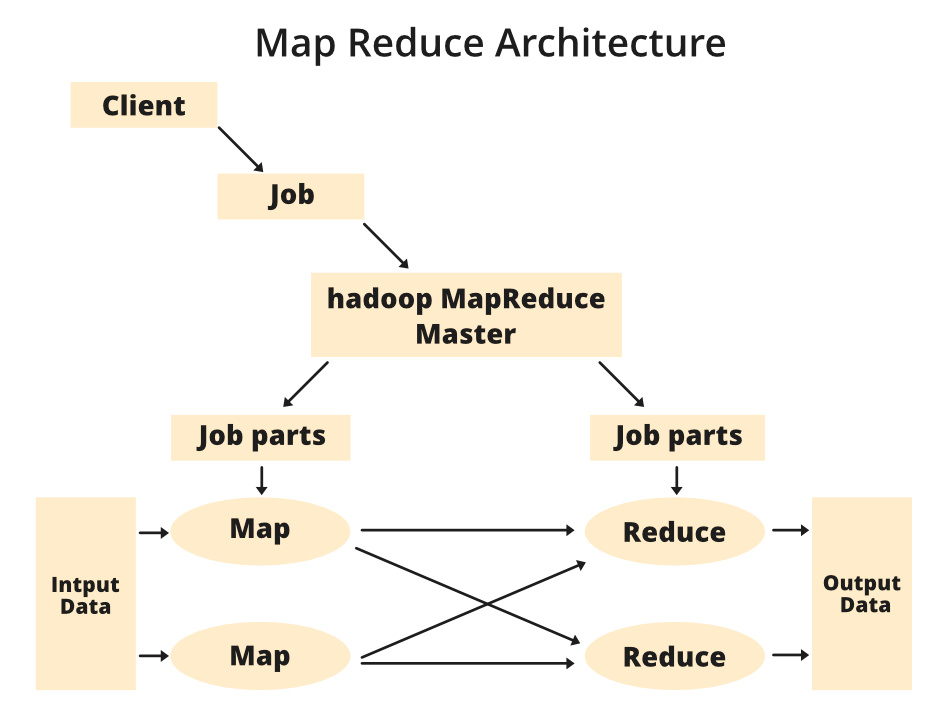
At its heart, MapReduce is a “divide and conquer” strategy. Instead of a single powerful machine attempting to process a massive file, the workload is distributed across a “cluster” of commodity hardware. The process is divided into several distinct phases, primarily the Map phase and the Reduce phase, with a crucial intermediary step known as Shuffling and Sorting.
The Map Phase: Filtering and Sorting
The journey begins with the Map phase. In this stage, the input data—which could be anything from raw server logs to unstructured text—is divided into smaller chunks. Each chunk is assigned to a “Mapper” (a specific process on a node in the cluster).
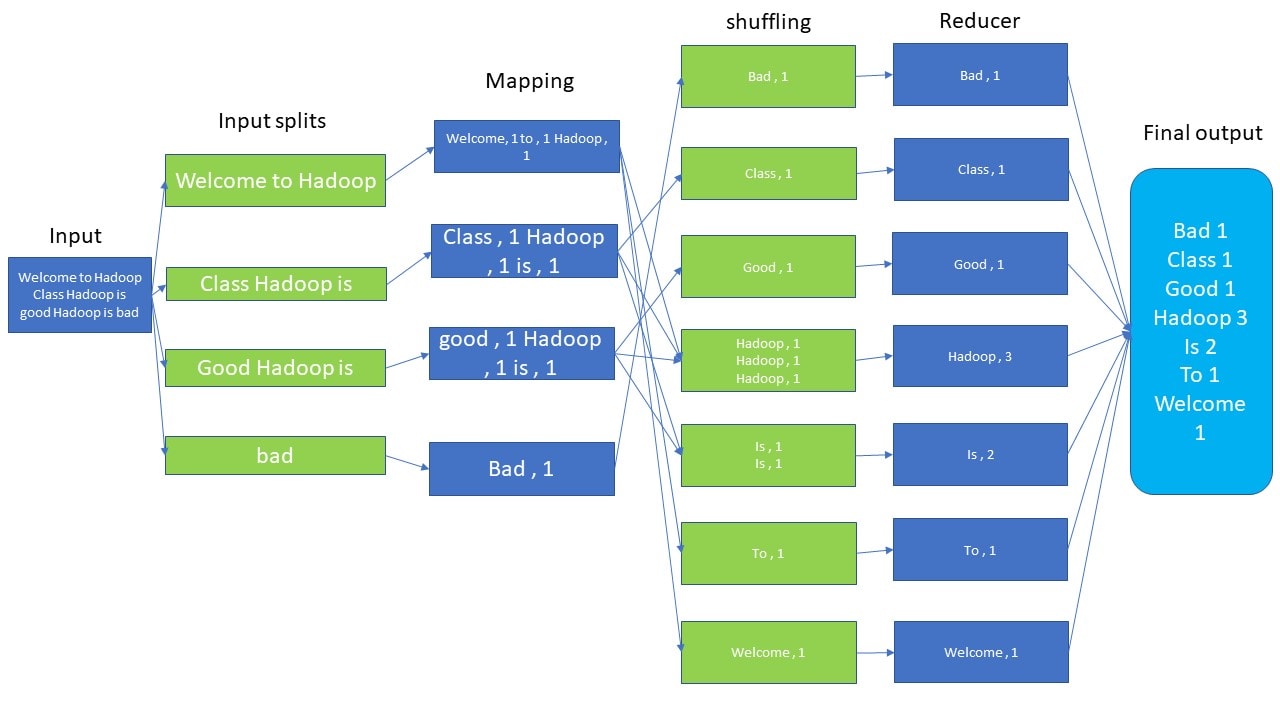
The Mapper’s job is to process the data and convert it into a series of intermediate “key-value pairs.” For example, if we were counting the frequency of words in a massive library of digital books, the Map phase would take a sentence and produce pairs like (word, 1). The primary goal here is filtering and categorizing. Because these operations happen in parallel across many machines, the time required to scan the data is reduced from days to minutes.
The Shuffle and Sort Phase: Orchestrating Data
Once the Mappers have finished their work, the system enters the Shuffle and Sort phase. This is often described as the “magic” of MapReduce. The framework automatically gathers all the intermediate key-value pairs generated by the Mappers and organizes them so that all values associated with the same key are grouped together.
If our word count example produced multiple (apple, 1) pairs across different machines, the Shuffle phase ensures that all “apple” keys are sent to the same destination. This orchestration is critical because it prepares the data for the final aggregation. It requires significant network bandwidth and efficient sorting algorithms to ensure that data flows seamlessly across the cluster without bottlenecks.
The Reduce Phase: Aggregation and Final Output
The final stage is the Reduce phase. Here, a “Reducer” takes the grouped key-value pairs and performs a summary operation. In our word count scenario, the Reducer would take the collection of (apple, 1), (apple, 1), (apple, 1) and aggregate them into a single result: (apple, 3).
The output of the Reducer is the final processed data, which is then written to a distributed file system. This structured output is now ready for analysis, visualization, or further processing by other applications. By decoupling the processing (Map) from the aggregation (Reduce), the framework allows for immense flexibility in how data is handled.
Why MapReduce Revolutionized Modern Computing
Before MapReduce, processing large datasets required specialized, expensive supercomputers. If a system failed mid-calculation, the entire process often had to be restarted. MapReduce changed the paradigm by prioritizing three key technical pillars: scalability, fault tolerance, and cost-effectiveness.
Scalability Across Distributed Clusters
The most significant advantage of MapReduce is its linear scalability. In a traditional system, adding more data eventually leads to a performance plateau. With MapReduce, if your data doubles, you can simply double the number of nodes in your cluster to maintain the same processing speed.
This horizontal scaling allows organizations to handle datasets of virtually any size. Whether a company is processing gigabytes or zettabytes, the programming model remains the same. The developer does not need to worry about the complexities of networking or thread management; the framework handles the distribution of tasks automatically.
Fault Tolerance and Data Resilience
In a cluster of 1,000 inexpensive servers, it is a statistical certainty that one or more servers will fail during a long-running job. In a standard computing environment, a hardware failure would crash the task. MapReduce is designed with the expectation of failure.
The framework’s “Master Node” constantly monitors the health of the “Worker Nodes.” If a node stops responding or suffers a hardware failure, the Master Node identifies which pieces of the data that worker was processing and reassigns those tasks to other healthy nodes. This self-healing capability ensures that massive computational jobs can complete successfully even in the face of hardware instability.
Cost-Effectiveness on Commodity Hardware
MapReduce was built to run on “commodity hardware”—standard, off-the-shelf servers rather than high-end, proprietary hardware. This drastically lowered the barrier to entry for Big Data analytics. Companies no longer needed to invest millions in specialized mainframes; they could build powerful clusters using standard rack-mounted servers. This democratization of data processing power catalyzed the growth of tech giants and startups alike, allowing them to leverage data as a core strategic asset.
Practical Applications and Use Cases
While the theory behind MapReduce is rooted in computer science, its practical applications are what make it indispensable in the tech industry. It serves as the backbone for various high-level functions that we interact with daily.
Log Analysis and Web Indexing
One of the earliest and most famous uses of MapReduce was by Google for indexing the World Wide Web. To provide search results, Google needs to crawl billions of pages and create an “inverted index.” MapReduce allows the system to parse these pages in parallel, identifying keywords and their locations across the entire internet. Similarly, large tech companies use MapReduce to analyze petabytes of server logs to identify security threats, monitor system health, and understand user behavior.
Machine Learning and Data Mining
Many machine learning algorithms require iterative processing of vast datasets. MapReduce can be used to perform the heavy lifting of feature extraction and data normalization. For instance, a recommendation engine for a streaming service might use MapReduce to process the viewing history of millions of users to find patterns and similarities. By reducing the raw data into manageable profiles, the system can then suggest the next “must-watch” show with high accuracy.
Financial Risk Modeling
In the financial sector, MapReduce is used for complex risk assessment and fraud detection. Banks process millions of transactions per hour. By using distributed processing, they can run sophisticated models to identify anomalous patterns that might indicate credit card fraud or money laundering. The speed provided by the MapReduce model allows these institutions to react to threats in near-real-time, protecting both the bank and its customers.
The Ecosystem: Hadoop and Beyond
To talk about MapReduce is to inevitably talk about Apache Hadoop. Hadoop is the open-source implementation of the MapReduce model, and for over a decade, it was the gold standard for Big Data. However, as technology has evolved, the ecosystem has expanded to include newer, faster alternatives.
The Relationship with HDFS
MapReduce does not work in a vacuum; it requires a storage layer. In the Hadoop ecosystem, this is the Hadoop Distributed File System (HDFS). HDFS breaks files into blocks and distributes them across the cluster, providing the high-throughput access that MapReduce needs. The synergy between HDFS (storage) and MapReduce (processing) created a robust environment where data was stored locally on the same nodes that processed it, minimizing the need to move massive amounts of data across the network.
Comparing MapReduce with Apache Spark
In recent years, Apache Spark has emerged as a popular alternative to the traditional MapReduce model. The primary difference lies in how they handle data. MapReduce is disk-based; it writes the results of every step to the physical disk. While this is great for reliability, it is slow.
Spark, on the other hand, performs “in-memory” processing. By keeping data in the RAM, Spark can be up to 100 times faster for certain applications, particularly those involving iterative algorithms like machine learning. However, MapReduce remains the preferred choice for massive, long-running batch jobs where the data is too large to fit into memory or where absolute fault tolerance is the highest priority.
The Future of Batch Processing in a Real-Time World
As we move toward a world of “real-time” analytics, the role of batch processing frameworks like MapReduce is evolving. While stream processing (handling data as it arrives) is becoming more common through tools like Apache Kafka and Flink, MapReduce continues to serve as the foundation for historical data analysis.
The tech industry is moving toward “Lambda Architectures,” which combine the speed of real-time processing with the comprehensive accuracy of batch processing. In this hybrid world, MapReduce and its successors remain vital tools for any organization that wants to turn raw data into actionable intelligence. Understanding MapReduce is not just about learning an old tool; it is about understanding the fundamental principles of how the modern internet scales to meet the demands of a data-driven world.
aViewFromTheCave is a participant in the Amazon Services LLC Associates Program, an affiliate advertising program designed to provide a means for sites to earn advertising fees by advertising and linking to Amazon.com. Amazon, the Amazon logo, AmazonSupply, and the AmazonSupply logo are trademarks of Amazon.com, Inc. or its affiliates. As an Amazon Associate we earn affiliate commissions from qualifying purchases.