
In the vast ecosystem of modern technology, from the intricate workings of a robotic arm to the robust infrastructure supporting cloud computing, unseen heroes maintain the structural integrity and operational reliability of countless systems. Among these, the lock nut stands as a fundamental yet critically important component, engineered specifically to resist loosening under conditions that would cause standard nuts to fail. Far from being a mere fastener, a lock nut represents a sophisticated solution to a persistent engineering challenge, safeguarding performance and preventing catastrophic failures in an array of tech applications.
The Engineering Imperative: Preventing Loosening in Technology
The dynamic environments in which contemporary technology operates—characterized by constant vibration, thermal expansion and contraction, rotational forces, and dynamic loads—pose a significant threat to the stability of bolted joints. A standard nut, despite being tightened to specification, can gradually lose its preload, leading to joint separation, component misalignment, and ultimately, system failure. This vulnerability is not merely an inconvenience; in high-tech machinery, aerospace applications, or critical digital infrastructure, a loose fastener can compromise safety, data integrity, and operational continuity.

The Persistent Challenge of Vibrational Loosening
Vibration, originating from motors, moving parts, or external disturbances, is a primary culprit behind fastener loosening. It induces microscopic relative motion between the mating threads of a nut and a bolt, leading to a phenomenon known as “self-loosening” or “fatigue loosening.” As the peaks and valleys of the threads experience repetitive stress cycles, the frictional forces that hold the joint together diminish. This gradual relaxation of the clamp load can lead to catastrophic consequences in systems where precision and unwavering stability are paramount. For instance, in automated manufacturing robotics, even a minor shift in a joint due to a loose fastener can throw off calibration, resulting in defective products or machinery damage. In consumer electronics, loosened screws can lead to rattling, reduced lifespan, and eventual failure of components.
Critical Applications Across Tech Sectors
The robust design of lock nuts provides an essential line of defense against these forces, making them indispensable across various high-tech industries. In aerospace engineering, where structural integrity under extreme G-forces and vibrations is non-negotiable, lock nuts are critical for securing engine components, airframe structures, and internal systems. Their failure could lead to catastrophic events.
In advanced manufacturing and robotics, lock nuts ensure the precise alignment and stable operation of robotic arms, CNC machines, and assembly lines. The repeatability and accuracy of these automated systems depend entirely on the unyielding stability of their mechanical joints. Similarly, in automotive technology, especially in electric vehicles and autonomous driving systems, lock nuts secure critical components from battery packs and motor mounts to sensor arrays and steering mechanisms, where reliability directly impacts safety and performance.
Even in renewable energy technologies like wind turbines, which endure constant wind loads and structural vibrations, specialized lock nuts are vital for maintaining the integrity of colossal blades and tower structures. Their application prevents costly downtime and ensures efficient energy production.
Dissecting Locking Mechanisms: A Look at Lock Nut Technologies
The fundamental principle behind a lock nut is to create additional resistance that prevents the nut from rotating loose, even when subjected to significant vibrational or dynamic loads. This resistance is achieved through various ingenious engineering designs, each suited to specific application requirements.
Mechanical Interference
This category of lock nuts relies on physically interfering with the bolt threads to create a prevailing torque—a rotational resistance that must be overcome to loosen the nut.
-
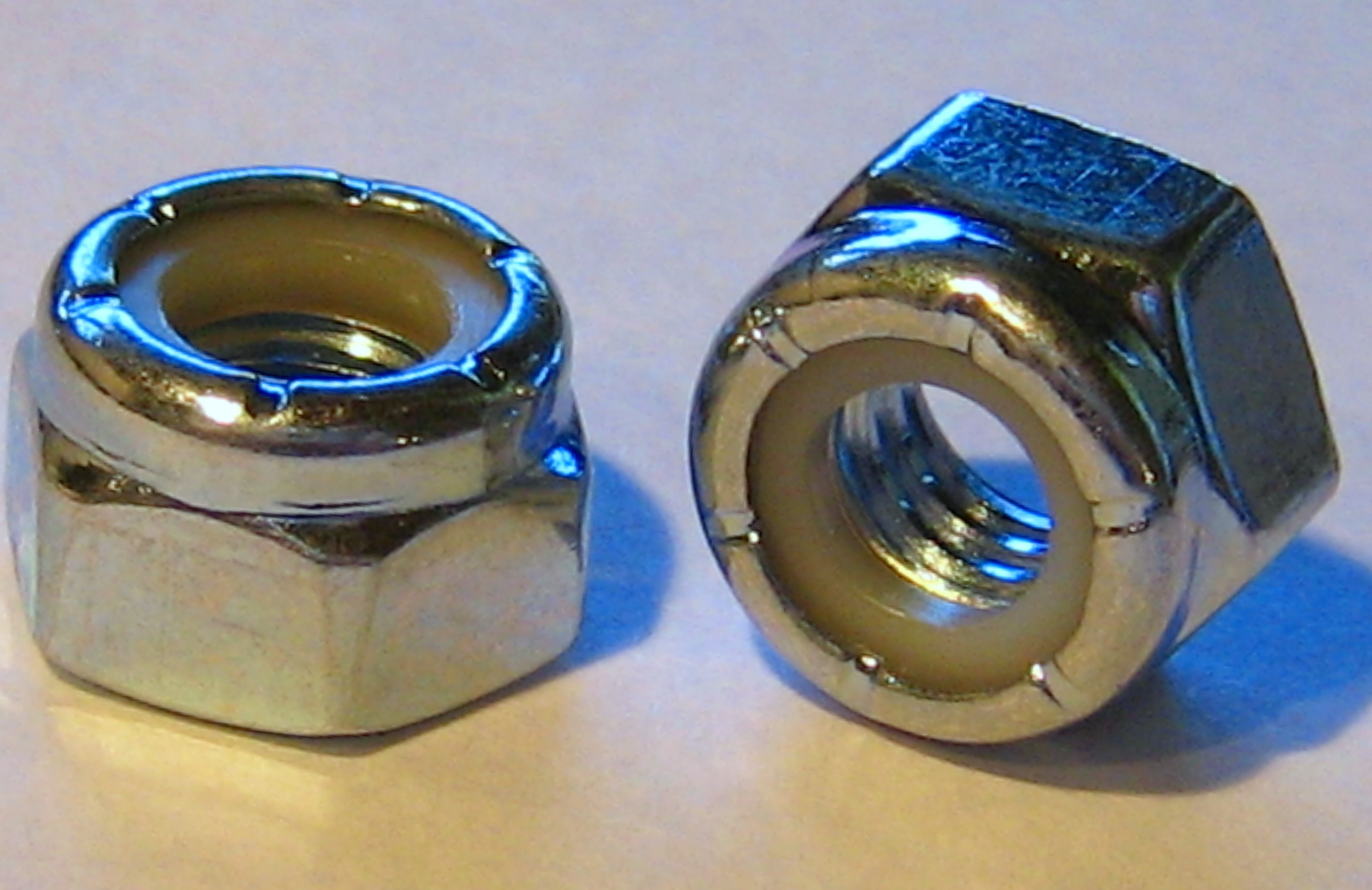
Nylon Insert Lock Nuts (Nyloc Nuts): These are perhaps the most common type. They feature a collar made of a polymer, typically nylon, embedded in one end of the nut. When threaded onto a bolt, the bolt’s threads cut into the softer nylon, creating a tight, frictional grip that resists loosening. This mechanism provides excellent vibration resistance and can withstand moderate temperatures, making them popular in general machinery, automotive applications, and certain electronic enclosures. However, their polymer insert means they are not ideal for high-temperature environments or situations requiring repeated removal and reinstallation, as the nylon can degrade or lose its locking properties.
-
Distorted Thread Lock Nuts (All-Metal Prevailing Torque Nuts): These nuts have their threads intentionally distorted or deformed at one or more points. This deformation causes the nut to grip the bolt’s threads tightly as it’s tightened, creating continuous friction. Unlike nylon insert nuts, these are all-metal, making them suitable for high-temperature applications where polymer inserts would melt or degrade. Examples include center-lock nuts and top-lock nuts, often found in heavy machinery and industrial equipment where heat is a factor. They offer good vibration resistance and can sometimes be reused, though their prevailing torque may decrease over time.
-
Jam Nuts: While not a true “lock nut” in the sense of having an integrated locking mechanism, jam nuts are used in pairs to create a locking effect. A thinner jam nut is tightened against a standard nut (or another jam nut) on the same bolt. The two nuts clamp the bolt threads between them, generating opposing forces that prevent loosening. This technique is often seen in adjustments and mechanical linkages where precise positioning needs to be maintained.
Chemical Adhesion as a Complementary Technology
While not a lock nut itself, thread-locking compounds are a chemical solution frequently used in conjunction with or as an alternative to lock nuts to prevent loosening. These anaerobic adhesives cure in the absence of air when confined between close-fitting metal surfaces, such as the threads of a nut and bolt. They fill the microscopic gaps between threads, effectively bonding the nut and bolt together.
- Threadlockers: Available in various strengths (low, medium, high), threadlockers offer different levels of locking and ease of disassembly. Low-strength variants are used for small screws in electronics where occasional removal is expected, while high-strength compounds create a permanent bond, often requiring heat or special tools for removal. In tech applications, threadlockers are invaluable for securing miniature components in gadgets, preventing screws in circuit boards from vibrating loose, or adding an extra layer of security in critical mechanical assemblies where space or design constraints preclude the use of traditional lock nuts.
Washer-Based Solutions
Certain washer designs also contribute to preventing loosening, often working in tandem with standard nuts.
- Split Lock Washers: These washers have a single helical cut that gives them a spring-like action. When compressed under a nut, the spring force is intended to maintain friction and resist loosening. However, their effectiveness in high-vibration environments is often debated, and they are generally considered less reliable than true lock nuts for critical applications.
- Serrated Lock Washers (Star Washers): These feature teeth that bite into both the nut and the mating surface, creating a mechanical lock that resists rotation. They are effective against loosening, especially when embedded into softer materials, but can damage surfaces and are typically not reusable.
- Wedge-Locking Washers (e.g., Nord-Lock): These innovative washers consist of a pair of identical washers with cams on one side and radial serrations on the opposite side. When tightened, the serrations grip the nut and the mating surface, while the cam surfaces oppose each other. Any tendency for the nut to loosen causes the cams to ride up, increasing the clamping force and thus preventing rotation. These are highly effective in severe vibration environments and are increasingly popular in high-performance tech applications.
The Role of Lock Nuts in Digital Infrastructure and Hardware Reliability
Beyond the purely mechanical realm, the stability provided by lock nuts is indirectly critical to the reliability of digital systems. In the context of large-scale digital infrastructure, the physical integrity of hardware directly impacts data flow, processing power, and overall system security.
Securing Server Racks and Network Equipment
Data centers house vast arrays of servers, switches, routers, and storage devices. These components are typically mounted within metal racks, and the stability of these racks and the secure mounting of individual units are paramount. Vibrations from cooling systems, adjacent machinery, or even minor seismic activity can subtly affect rack alignment or loosen mounting hardware. Lock nuts are often employed to secure critical structural elements of server racks and to fasten heavy power supplies, uninterruptible power supplies (UPS), and network switches, preventing movement that could lead to intermittent connectivity, power fluctuations, or outright hardware failure. A secure physical foundation is a prerequisite for robust digital performance.
Ensuring Integrity in IoT Devices and Sensors
The burgeoning Internet of Things (IoT) ecosystem relies on millions of small, distributed devices operating in diverse and often harsh environments. From smart city sensors exposed to traffic vibrations to industrial IoT modules monitoring heavy machinery, these devices must maintain their structural and electrical integrity. Lock nuts, often in miniature forms, play a crucial role in securing the casings of these devices, internal circuit boards, and sensory components, ensuring that environmental stresses do not compromise their functionality or data transmission capabilities.
High-Performance Computing and Component Stability
In high-performance computing (HPC) clusters and specialized workstations designed for demanding tasks like AI training or scientific simulations, heat and vibration are constant challenges. While cooling systems manage thermal loads, lock nuts help maintain the stable mounting of heavy graphics processing units (GPUs), liquid cooling blocks, and other critical components. Ensuring these parts remain rigidly fixed prevents stress on delicate solder joints, maintains optimal thermal contact, and preserves the electrical pathways necessary for error-free, high-speed computation. Any loosening could introduce micro-fractures, reduce heat dissipation efficiency, and lead to system instability or premature component failure.
Selecting the Right Lock Nut Technology for Specific Tech Applications
The choice of lock nut is not trivial and depends heavily on the specific demands of the technological application. Engineers must consider a multitude of factors to ensure optimal performance and reliability.
Environmental Factors and Material Science
The operational environment dictates material selection. High temperatures, corrosive atmospheres, vacuum environments, or exposure to specific chemicals require lock nuts made from specialized alloys (e.g., stainless steel, superalloys) that retain their mechanical properties and corrosion resistance. For sensitive electronic equipment, non-magnetic materials might be necessary. The lock nut’s material must also be compatible with the bolt’s material to prevent galvanic corrosion.
Load Bearing and Vibrational Resistance
The magnitude and nature of the applied loads (static, dynamic, cyclic) and the intensity of expected vibrations are critical. For severe vibration, wedge-locking washers or high-performance prevailing torque nuts might be necessary. For applications requiring precise preload maintenance, specific types of lock nuts designed for high clamp load retention are chosen. The ability of the nut to maintain its clamping force over time is paramount.
Cost-Benefit Analysis for Reliability
While lock nuts generally cost more than standard nuts, their use is an investment in reliability and safety. Engineers must weigh the initial component cost against the potential costs of failure—downtime, repairs, warranty claims, reputational damage, or even catastrophic accidents. In critical tech applications, the slight additional cost of a high-quality lock nut is often negligible compared to the expense of a system failure.
Future Trends in Fastener Technology
The evolution of fastening technology continues, driven by the increasing demands of advanced technology.
Smart Fasteners for Predictive Maintenance
Emerging “smart fasteners” incorporate sensors (e.g., piezoelectric, strain gauges) that can wirelessly monitor and report their preload and health in real-time. This allows for predictive maintenance, where potential loosening can be detected and addressed before it leads to failure, particularly in remote or inaccessible tech infrastructure like wind turbines or large-scale industrial IoT deployments.

Additive Manufacturing and Custom Fastener Solutions
Advances in additive manufacturing (3D printing) are opening new avenues for creating customized fasteners with complex geometries and integrated features. This could lead to bespoke lock nut designs optimized for highly specific, unique tech applications, offering unprecedented levels of locking performance and material efficiency.
In conclusion, while often overlooked, the lock nut is a testament to the ingenuity of engineering, providing crucial stability and reliability across the entire spectrum of modern technology. From securing the smallest electronic components to fortifying massive industrial machinery, its role in preventing loosening and ensuring the integrity of bolted joints makes it an indispensable element in the pursuit of robust, high-performing, and safe technological systems.
aViewFromTheCave is a participant in the Amazon Services LLC Associates Program, an affiliate advertising program designed to provide a means for sites to earn advertising fees by advertising and linking to Amazon.com. Amazon, the Amazon logo, AmazonSupply, and the AmazonSupply logo are trademarks of Amazon.com, Inc. or its affiliates. As an Amazon Associate we earn affiliate commissions from qualifying purchases.