
In the rapidly evolving landscape of Educational Technology (EdTech), data is the currency of progress. As developers and engineers seek to create more personalized learning experiences, the need for standardized, objective metrics has never been greater. One of the most influential metrics in this space is the Lexile Framework for Reading. Far from being a simple grading system, the Lexile Framework is a sophisticated data-driven tool designed to measure both text complexity and a reader’s ability on a single, developmental scale.
To understand what a Lexile is within the context of technology, one must view it as an algorithmic standard—a bridge between human cognitive capability and digital content delivery. By quantifying the relationship between a reader and a text, the Lexile Framework enables software platforms to deliver “just-right” content, optimizing the user experience and accelerating learning outcomes.

The Architecture of Lexile: Data-Driven Literacy Standards
At its core, the Lexile Framework is a scientific approach to measuring reading. Developed by MetaMetrics, the framework uses a proprietary algorithm to analyze the characteristics of a text and assign it a numerical value, typically ranging from below 0L to above 2000L. This “L” (Lexile) represents a data point that allows for the precise matching of learners to materials.
Semantic and Syntactic Calculus
The algorithm behind a Lexile measure doesn’t “read” a book the way a human does; instead, it performs a complex calculus based on two primary variables: semantic difficulty and syntactic complexity.
Semantic difficulty refers to the frequency of words within a text. The Lexile analyzer utilizes a massive corpus—a digital library of billions of words—to determine how common or rare a word is. Rare words, or “low-frequency” words, increase the Lexile measure because they are statistically less likely to be known by the average reader.
Syntactic complexity focuses on sentence length. From a computational perspective, longer sentences generally contain more clauses and more complex grammatical structures, placing a higher cognitive load on the reader’s short-term memory. By analyzing these two features across a digital text file, the Lexile software generates a score that serves as a universal standard for text difficulty.
The Role of Machine Learning in Text Complexity Analysis
While the foundational Lexile algorithm was built on traditional statistical models, the modern EdTech environment has seen the integration of machine learning to refine these measurements. Engineers now use large language models (LLMs) and natural language processing (NLP) to better understand the nuances of text that older algorithms might miss.
For instance, modern text analysis tools can now account for “cohesion”—how well ideas flow from one sentence to the next. In the tech space, this means that Lexile measures are becoming increasingly accurate, allowing EdTech platforms to categorize massive amounts of digital content—from news articles to technical manuals—instantaneously and with high precision. This automated classification is essential for the scalability of digital libraries and learning management systems (LMS).
Integrating Lexile into the EdTech Ecosystem
In the world of software development, a metric is only as good as its implementation. The Lexile Framework has become a staple of the EdTech ecosystem because of its interoperability. It functions as a common language that allows different software tools—assessment platforms, digital libraries, and student information systems—to communicate with one another.
Software Interoperability and API Standards
For a tech company building a reading app, integrating Lexile measures is a strategic technical decision. MetaMetrics provides APIs (Application Programming Interfaces) that allow developers to pull Lexile data directly into their applications. This ensures that if a student takes a reading assessment on one platform, their score (their “Lexile reader measure”) can be used by another platform to recommend books or articles.
This level of interoperability is crucial for creating a “unified learner profile.” When data silos are broken down, the technology can provide a seamless experience where the student’s progress is tracked across multiple digital touchpoints. From a developer’s perspective, the Lexile measure acts as a standardized metadata tag, making content searchable and filterable based on precise user requirements.
Real-Time Performance Tracking and Predictive Analytics
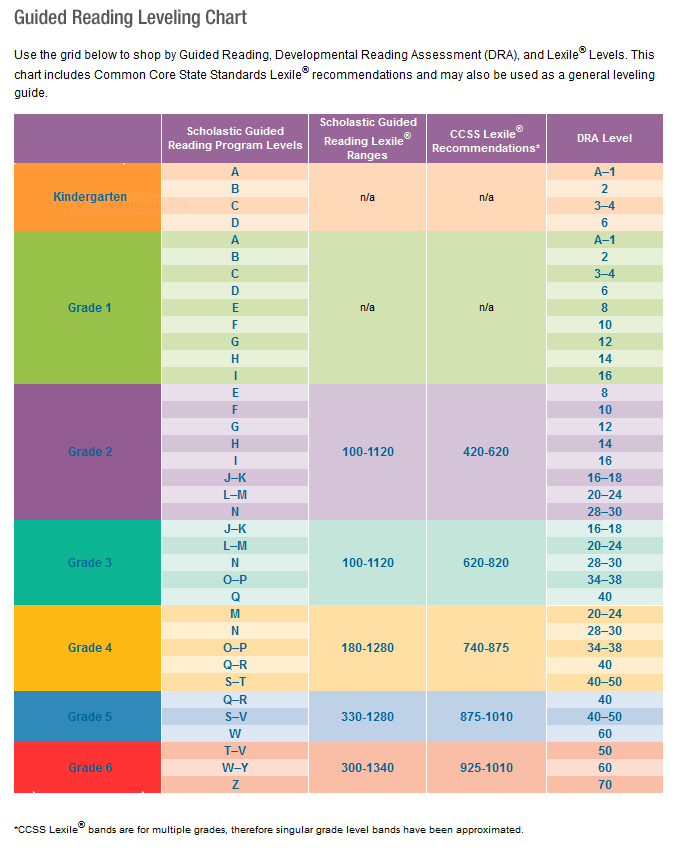
One of the most powerful applications of Lexile data in technology is predictive analytics. Because the Lexile scale is developmental and continuous, it allows software to track a student’s growth over time and project future performance.
EdTech dashboards use Lexile data to visualize “growth trajectories.” By applying regression models to a series of Lexile scores, these platforms can predict whether a student is on track to meet college and career readiness benchmarks. This is not just a reporting feature; it is an actionable insight. If the algorithm detects a plateau in a student’s Lexile growth, the system can automatically trigger interventions or adjust the difficulty of the content, demonstrating the power of automated, data-driven instruction.
The Digital Transformation of Reading Assessment
The transition from paper-and-pencil testing to digital assessment has fundamentally changed how Lexile measures are calculated and used. In the past, a Lexile score was a static snapshot taken once or twice a year. Today, technology allows for a dynamic, “always-on” assessment environment.
Moving Beyond Grade-Level Metrics to Adaptive Learning
Traditional “grade-level” metrics are often too broad to be useful in a digital environment. A “fifth-grade” reading level encompasses a wide range of abilities. In contrast, the Lexile Framework provides a granular, 1000-point scale that is far more suited for Computer Adaptive Testing (CAT).
In a CAT environment, the software adjusts the difficulty of the questions in real-time based on the user’s previous answers. If a student answers a 800L question correctly, the next question might be 850L. This iterative process allows the system to home in on the student’s precise Lexile measure much faster and more accurately than a linear test. This efficiency is a hallmark of modern EdTech, reducing “test fatigue” and providing more reliable data for the underlying algorithms.
User Experience (UX) and Personalized Content Delivery
From a UX design perspective, Lexile data is used to reduce friction. If a digital platform presents a user with content that is significantly above their Lexile range (the “frustration level”), the user is likely to disengage. Conversely, content that is too easy (the “boredom level”) fails to promote growth.
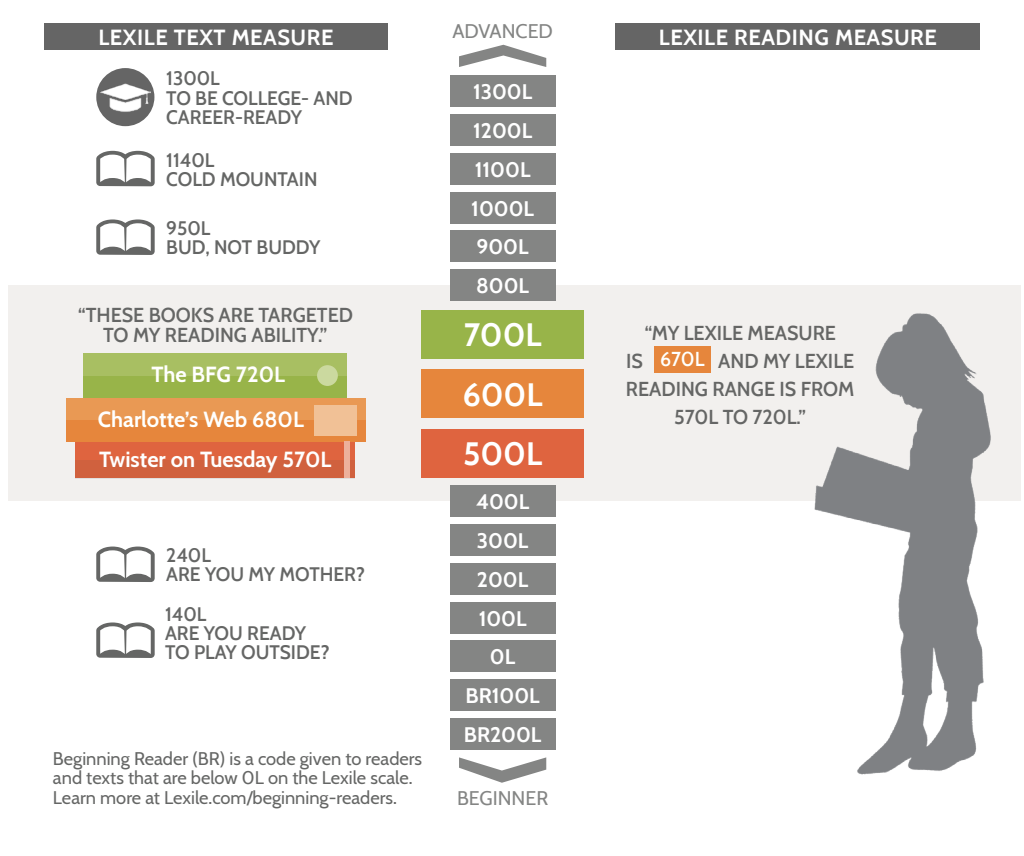
The goal of EdTech UX is to find the “Goldilocks zone”—typically defined as text that is 100L below to 50L above the reader’s current Lexile measure. By using Lexile metadata to power recommendation engines (similar to how Netflix or Spotify suggest content), EdTech platforms can ensure that users are always challenged but never overwhelmed. This personalization is what transforms a simple reading app into a powerful cognitive tool.
Future Trends: AI and the Evolution of the Lexile Framework
As we look toward the future of technology in education, the Lexile Framework is poised to evolve alongside advancements in Artificial Intelligence. The intersection of generative AI and literacy metrics opens up new frontiers for how we consume and interact with text.
Natural Language Processing (NLP) Advancements
The next generation of Lexile-integrated tech will likely leverage advanced NLP to provide deeper insights into why a text is difficult. Beyond just sentence length and word frequency, AI can analyze thematic complexity, cultural context, and abstract reasoning requirements.
For developers, this means the ability to create “adaptive text.” Imagine a digital news platform where a single article can be rewritten in real-time by an AI to match the specific Lexile measure of the reader. By leveraging the Lexile scale as a target parameter, generative AI can democratize information, making complex technical or scientific data accessible to readers at any level without losing the core meaning of the content.
Expanding Beyond Text: The Challenge of Multimodal Media
As digital consumption shifts toward video, podcasts, and interactive media, the tech industry faces the challenge of quantifying the “readability” of non-textual content. We are already seeing the emergence of “Lexile for Listening,” which applies similar algorithmic principles to audio content.
The technical challenge here involves high-accuracy speech-to-text transcription and the analysis of auditory processing loads. As these tools mature, the Lexile Framework will move beyond the printed word, becoming a universal metric for information processing across all digital mediums. In an era of information overload, the ability to technologically filter and match content to human cognitive capacity—via the Lexile measure—will be more critical than ever.
In conclusion, a Lexile is not merely a score on a report card; it is a sophisticated piece of educational technology infrastructure. It provides the algorithmic foundation for personalization, the data standard for interoperability, and the metric for predictive success in the digital age. For anyone working at the intersection of technology and learning, understanding the Lexile Framework is essential for building the next generation of intelligent, responsive, and effective educational tools.
aViewFromTheCave is a participant in the Amazon Services LLC Associates Program, an affiliate advertising program designed to provide a means for sites to earn advertising fees by advertising and linking to Amazon.com. Amazon, the Amazon logo, AmazonSupply, and the AmazonSupply logo are trademarks of Amazon.com, Inc. or its affiliates. As an Amazon Associate we earn affiliate commissions from qualifying purchases.