
The maritime disaster of the RMS Titanic remains etched in collective memory, a stark reminder of human ambition and vulnerability colliding with the unforgiving forces of nature. While the popular narrative often focuses on the speed, the warnings, and the human element, a critical lens applied through the realm of technology reveals a fascinating, albeit somber, exploration of design, engineering, and the evolution of safety protocols. This article delves into a hypothetical scenario: what if the Titanic had struck the iceberg head-on? From a technological standpoint, such an impact would have presented a fundamentally different, yet arguably no less catastrophic, set of challenges, ultimately highlighting the limitations of contemporary engineering and the subsequent advancements that have reshaped maritime safety.
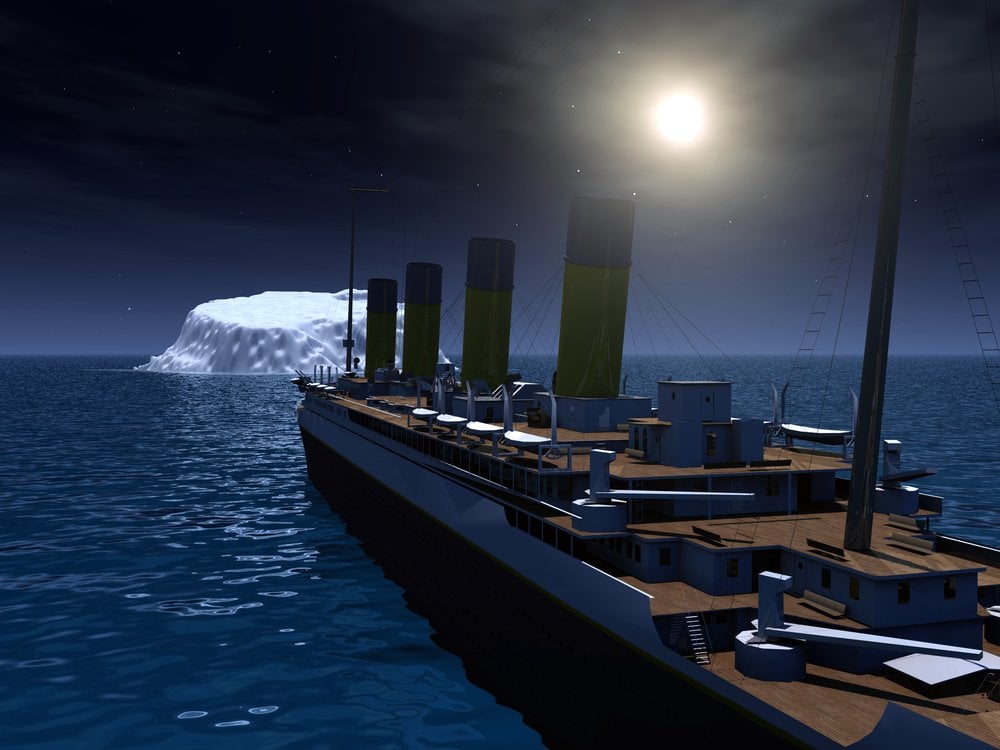
The Limits of 20th-Century Naval Architecture: A Collision of Design Philosophies
The Titanic’s design, hailed as a pinnacle of Edwardian engineering, was a testament to the era’s confidence in its technological prowess. However, the ship’s hull construction and compartment design, while revolutionary for their time, contained inherent vulnerabilities that a head-on impact would have exposed in starkly different ways.
The “Unsinkable” Myth: A Structural Flaw Under Scrutiny
The White Star Line famously marketed the Titanic as “practically unsinkable.” This claim was based on its innovative watertight compartment system, designed to keep the vessel afloat even if several compartments were breached. The ship was divided into 16 watertight compartments, with bulkheads extending high into the ship. The theory was that if up to four of these compartments flooded, the ship would remain buoyant. However, the bulkheads did not extend all the way to the top deck. They were solid up to a certain height, and above that, they were open. This meant that if enough adjacent compartments flooded, water could spill over the tops of the bulkheads and flood subsequent compartments, effectively negating the watertight integrity.
A glancing blow, as historically occurred, allowed for progressive flooding, where the damage was localized enough that the ship could maintain some degree of buoyancy. A head-on collision, however, would have subjected the bow to immense, concentrated stress. Instead of a ripping or tearing motion along the hull, a direct impact would have likely caused a significant crumpling and buckling of the forward sections.
Impact Dynamics: Force Distribution and Hull Integrity
The physics of a head-on impact are significantly different from a glancing blow. In the latter, the force is distributed along the length of the hull, with the iceberg acting as a wedge. This led to the infamous series of punctures and breaches along the starboard side. In a head-on scenario, the bow would have absorbed the brunt of the kinetic energy. The steel plates of the hull, while strong, were not designed to withstand the sheer force of deforming and collapsing under such direct impact. It is highly probable that the bow section would have been severely crushed, potentially compromising multiple forward compartments simultaneously in a way that the original design could not have accounted for. The rivets, a known point of contention among some modern engineers who cite them as weaker than modern welding, might have been stressed to their breaking point under such extreme, direct compression.
Compartment Breach: A Cascade of Failure
While the Titanic had watertight compartments, the extent of damage in a head-on collision would have been far more extensive and immediate. The bow section would have likely penetrated and breached several compartments in rapid succession. Imagine the immense pressure of the iceberg pushing directly into the forward sections, tearing and mangling the steel. The watertight bulkheads, designed to withstand localized breaches, would have been overwhelmed. Water would have surged into the forwardmost compartments with incredible force, far exceeding the calculated capacity of the system. The progressive flooding that occurred historically, while ultimately fatal, allowed for a degree of controlled ingress. A head-on collision would have been a rapid, cascading failure of the primary safety feature.
The Role of Navigation Technology: Early Warnings and Automation’s Absence
The Titanic’s navigational capabilities, while state-of-the-art for 1912, were rudimentary by today’s standards. The absence of advanced sensing technologies and automated systems played a crucial role in the historical tragedy and would have been even more critical in a head-on impact scenario.
Radar and Sonar: The Missing Eyes and Ears
Modern ships are equipped with sophisticated radar and sonar systems that provide a comprehensive picture of the surrounding environment, even in conditions of low visibility. Radar can detect large objects like icebergs at significant distances, allowing navigators to plot a safe course or initiate evasive maneuvers well in advance. Sonar, while primarily used for underwater object detection, can also contribute to situational awareness.
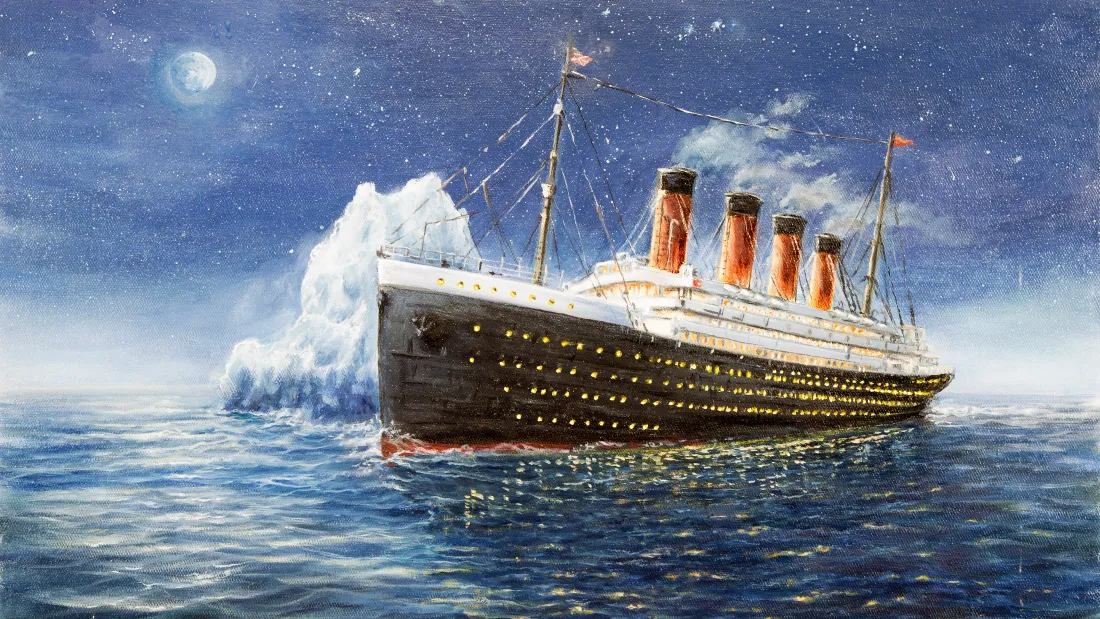
Had the Titanic possessed even early forms of radar, the chances of detecting the iceberg in time to avoid a direct impact would have been significantly higher. The historical accounts suggest that the lookout spotted the iceberg too late to effectively steer the ship away. Radar would have provided that crucial extra time, transforming a potential disaster into a near-miss or at least a less severe glancing blow. The absence of these technologies meant that visual observation, limited by fog and darkness, was the primary means of detection.
Automated Collision Avoidance: The Untapped Potential
Beyond detection, modern vessels benefit from increasingly sophisticated automated collision avoidance systems. These systems can analyze the trajectory of nearby vessels and potential obstacles, calculating risks and even autonomously initiating steering adjustments or braking maneuvers in critical situations. While full autonomy was unthinkable in 1912, the lack of even basic automated alerts meant that the entire responsibility for avoiding danger rested on the human crew. In a high-speed, low-visibility scenario, even the most alert crew could be overwhelmed. A head-on scenario, with its compressed reaction times, would have amplified this dependency on human vigilance to a perilous degree.
Voyage Data Recorders: The Unwritten History of a Hypothetical Disaster
One of the most significant technological advancements in maritime safety since the Titanic’s era is the mandatory implementation of Voyage Data Recorders (VDRs), often referred to as “black boxes.” These devices meticulously record a wide range of data, including ship’s speed, heading, engine orders, bridge communications, and alarm status.
In the hypothetical head-on collision, a VDR would have provided invaluable, objective data to reconstruct the events leading up to the impact. It would have documented the exact speed, the crew’s actions (or inactions), and any attempts at course correction. This information would have been crucial for understanding the precise dynamics of the collision and for identifying any technological or procedural shortcomings that contributed to the outcome, even in this altered scenario. The lack of such a device meant that our understanding of the historical event is largely reliant on survivor testimonies and subsequent investigations, which, while comprehensive, can be subject to human memory biases.
The Legacy of Technology: Lessons Learned and Future Safeguards
The sinking of the Titanic, a tragedy amplified by the technological limitations of its time, served as a profound catalyst for change in maritime safety. The hypothetical scenario of a head-on collision underscores the areas where technological advancements have made the most significant impact.
Enhanced Hull Design and Material Science
The very nature of hull construction has evolved dramatically. Modern ships utilize advanced steel alloys that are more resistant to fracture and deformation. Welding techniques have largely replaced riveting, providing stronger and more reliable hull integrity. Furthermore, sophisticated computer modeling and simulations, powered by advanced computational fluid dynamics (CFD) and finite element analysis (FEA), allow engineers to meticulously simulate various collision scenarios, including head-on impacts, and to design hulls that can better absorb and dissipate impact forces. This enables the creation of vessels that are not only more robust but also designed to contain damage and maintain buoyancy even in the face of catastrophic breaches.
Improved Watertight Integrity and Damage Control
The lessons learned from the Titanic’s compartment design have led to more advanced watertight systems. Modern ships feature improved bulkhead designs, often extending to the uppermost decks, and employ more sophisticated sealing mechanisms. Crucially, the development of advanced damage control systems, including automated bilge pumping and compartment flooding alerts, significantly enhances a vessel’s ability to manage damage and maintain stability. In the event of a breach, these systems can quickly identify the affected compartments, activate pumps, and alert the crew, providing critical time to implement further mitigation strategies.
The Rise of Global Maritime Communication and Safety Regulations
The tragedy spurred the establishment of international maritime safety regulations, most notably the first International Convention for the Safety of Life at Sea (SOLAS) in 1914. This convention, and its subsequent revisions, mandated a range of safety measures that have fundamentally transformed maritime travel.
Advanced Communication Systems and Ice Patrols
Modern ships are equipped with robust satellite communication systems that ensure constant connectivity, enabling rapid reporting of emergencies and coordination with rescue services. The International Ice Patrol, established in the aftermath of the Titanic disaster, continues to monitor iceberg regions and disseminate vital information to mariners, utilizing advanced satellite imagery and data analysis. This global network of communication and surveillance is a far cry from the limited radio capabilities of the Titanic.

The Era of Digital Navigation and Autonomous Systems
The future of maritime technology points towards even greater integration of digital systems and automation. Autonomous navigation systems, enhanced by AI and machine learning, are being developed to further improve situational awareness and decision-making. While full autonomy for large vessels is still in its nascent stages, the trend is clear: technology is playing an increasingly proactive role in ensuring the safety of sea travel. The hypothetical head-on collision with the Titanic, viewed through the lens of modern technology, serves not as a prophecy of doom, but as a potent illustration of how far we have come in mitigating the risks inherent in venturing across the vast and unpredictable oceans. The ghost of the Titanic, in this technological exploration, becomes a silent testament to human ingenuity and the relentless pursuit of safety.
aViewFromTheCave is a participant in the Amazon Services LLC Associates Program, an affiliate advertising program designed to provide a means for sites to earn advertising fees by advertising and linking to Amazon.com. Amazon, the Amazon logo, AmazonSupply, and the AmazonSupply logo are trademarks of Amazon.com, Inc. or its affiliates. As an Amazon Associate we earn affiliate commissions from qualifying purchases.