
When planning for the future, the terminology of the financial world can often feel like a barrier to entry. Among the most common yet frequently misunderstood terms is the “IRA savings account.” To the uninitiated, it might sound like a standard savings account with a different name, but in reality, it is one of the most powerful tools available for building long-term wealth and securing financial independence.
An Individual Retirement Account (IRA) is not a specific type of investment itself; rather, it is a “wrapper” or a tax-advantaged bucket that holds various assets. When people refer to an “IRA savings account,” they are typically describing an IRA held at a bank or credit union that earns interest, much like a traditional savings account or a Certificate of Deposit (CD), but with the added tax benefits provided by the Internal Revenue Service (IRS). Understanding how these accounts function, the different types available, and how they fit into a broader financial strategy is essential for anyone looking to optimize their personal finance journey.

Understanding the Fundamentals of the IRA
At its core, an IRA is designed to encourage individuals to save for retirement by offering significant tax incentives. While a standard savings account at a bank requires you to pay taxes on the interest earned every year, an IRA allows that money to grow either tax-deferred or tax-free, depending on the type of account you choose.
The distinction between a standard savings account and an IRA is primarily one of purpose and regulation. A standard savings account is liquid, meaning you can withdraw funds at any time without penalty (though you may lose interest). An IRA, however, is a long-term commitment. Because the government provides tax breaks for these accounts, they come with strict rules regarding when you can withdraw the money and how much you can contribute each year.
The Mechanism of Tax Advantage
The true power of an IRA lies in the way it handles taxes. In a taxable brokerage or savings account, “drag” is created every time you are taxed on dividends or interest. Over several decades, this tax drag can significantly reduce the total value of your savings. By using an IRA, you eliminate or defer this drag, allowing the full power of compound interest to work on your behalf. Even a modest interest rate in an IRA savings account can outperform a slightly higher rate in a taxable account over a long enough time horizon because of this efficiency.
Who Is Eligible?
Generally, anyone who has “earned income”—money made from a job or self-employment—is eligible to contribute to an IRA. There is no age limit for making contributions as long as you are still working, making it a viable tool for both young professionals and those working later in life.
The Primary Types of IRA Savings Accounts
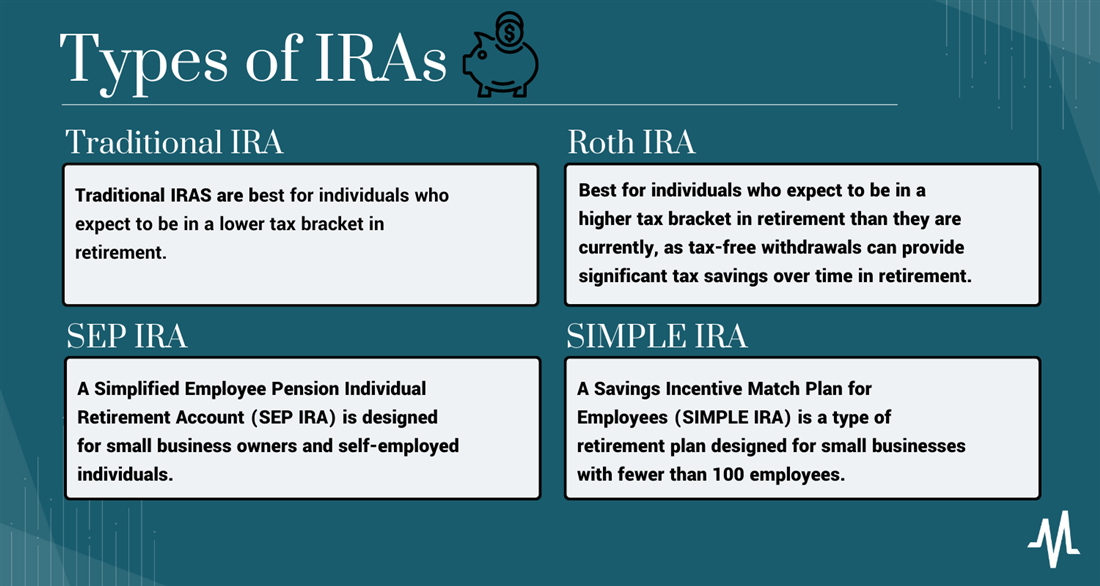
Choosing the right IRA is perhaps the most critical decision in the process. The two most common forms are the Traditional IRA and the Roth IRA. While they share the same contribution limits, their tax treatments are diametrically opposed.
The Traditional IRA: Tax-Deferred Growth
With a Traditional IRA, your contributions are often tax-deductible in the year you make them. For example, if you earn $60,000 a year and contribute $6,000 to a Traditional IRA, the IRS may view your taxable income as only $54,000. This provides an immediate financial benefit by lowering your current tax bill.
The money inside the account grows tax-deferred. You do not pay taxes on interest or gains as they accrue. However, when you reach retirement age and begin taking distributions, those withdrawals are taxed as ordinary income. The Traditional IRA is often preferred by individuals who believe they are currently in a higher tax bracket than they will be during retirement.
The Roth IRA: Tax-Free Growth
The Roth IRA operates on a “pay now, play later” philosophy. Contributions to a Roth IRA are made with after-tax dollars, meaning you do not get a tax deduction today. However, the trade-off is immense: the money grows tax-free, and qualified withdrawals in retirement are completely tax-free.
For many, the Roth IRA is the “holy grail” of retirement accounts. If you start a Roth IRA savings account in your 20s and let the interest compound for 40 years, every penny of that growth is yours to keep, regardless of how high tax rates might be in the future. There are, however, income limits for Roth IRAs. If you earn above a certain threshold, your ability to contribute directly to a Roth IRA may be phased out or eliminated.
SEP and SIMPLE IRAs
While Traditional and Roth IRAs are the most common for individuals, small business owners and self-employed individuals may utilize SEP (Simplified Employee Pension) or SIMPLE (Savings Incentive Match Plan for Employees) IRAs. These function similarly to Traditional IRAs but allow for much higher contribution limits, making them excellent tools for entrepreneurs to build their own “corporate” style retirement structures.
IRA Savings vs. IRA Investing

One of the most important distinctions to make is the difference between an IRA held at a bank (an IRA savings account) and an IRA held at a brokerage (an IRA investment account).
The Security of Savings
An IRA savings account is typically housed at a banking institution. The funds are often placed in high-yield savings vehicles, money market accounts, or CDs. The primary advantage here is safety. These accounts are usually insured by the FDIC (Federal Deposit Insurance Corporation) or the NCUA (National Credit Union Administration) up to $250,000. For an individual nearing retirement or someone with an extremely low risk tolerance, the guaranteed interest and protection of principal are the main draws.
The Growth Potential of Investing
Conversely, an IRA investment account allows the owner to buy stocks, bonds, mutual funds, and ETFs. While these carry the risk of market volatility, they also offer much higher potential returns over the long term. A bank-based IRA savings account might offer a 4% interest rate, whereas the stock market has historically returned an average of 7-10% annually over long periods.
Choosing between “savings” and “investing” within an IRA depends entirely on your time horizon and risk appetite. Many savvy savers use a combination, keeping some funds in a stable IRA savings account for immediate post-retirement needs while keeping the bulk of their wealth in an IRA investment account for long-term growth.
Contribution Limits and Rules
The IRS sets annual limits on how much you can contribute to your IRAs. These limits apply to the total amount contributed across all your IRAs (Traditional and Roth combined). As of 2024, the limit is $7,000 for those under age 50, and $8,000 for those aged 50 and older. The extra $1,000 is known as a “catch-up contribution,” designed to help those closer to retirement age bolster their savings.
The Penalty for Early Withdrawal
Because IRAs are specifically for retirement, the government discourages using the money as an emergency fund. Generally, if you withdraw funds from an IRA before age 59½, you will face a 10% early withdrawal penalty in addition to any income taxes owed.
However, there are exceptions. For instance, the Roth IRA allows you to withdraw your contributions (but not the earnings) at any time without penalty, because you have already paid taxes on that money. Additionally, exceptions exist for first-time home purchases (up to $10,000), qualified higher education expenses, and certain medical emergencies.
Required Minimum Distributions (RMDs)
For Traditional IRAs, the government eventually wants its tax money. You are required to start taking distributions (RMDs) once you reach age 73 (this age has increased recently due to the SECURE Act 2.0). If you fail to take these distributions, the penalties are steep. Notably, Roth IRAs do not have RMDs during the original owner’s lifetime, allowing the money to stay in the account and continue growing indefinitely.
Strategic Planning: Why You Need an IRA Savings Account
Incorporating an IRA into your personal finance strategy is about more than just “saving money.” It is about tax optimization and wealth preservation.
Supplementing Employer Plans
Many people believe that if they have a 401(k) or 403(b) through their employer, they don’t need an IRA. This is a misconception. An IRA can supplement an employer plan, providing an additional “bucket” of tax-advantaged savings. Furthermore, IRAs often offer a wider range of investment choices than employer-sponsored plans, which are frequently limited to a small selection of funds.
The Role of Compounding
The most significant factor in the success of an IRA savings account is time. Consider two individuals: one starts contributing $5,000 a year at age 25, and another starts at age 35. By the time they reach 65, the individual who started ten years earlier will have a significantly larger nest egg—not just because of the extra $50,000 they contributed, but because of the extra decade of compounding interest on every dollar.
Choosing Your Institution
When opening an IRA savings account, it pays to shop around. Look for banks or credit unions offering the highest APY (Annual Percentage Yield) on their IRA-eligible CDs or savings accounts. Be mindful of fees, such as maintenance fees or transfer fees, which can eat into your returns over time. In the digital age, online banks often provide higher rates than traditional brick-and-mortar institutions because of their lower overhead costs.
Conclusion
An IRA savings account is a cornerstone of a sound financial life. It bridges the gap between the security of a traditional bank account and the strategic tax planning required for a comfortable retirement. Whether you choose the immediate tax break of a Traditional IRA or the long-term tax-free bounty of a Roth IRA, the act of opening and consistently contributing to these accounts is one of the most impactful decisions you can make for your future self. By understanding the rules, limits, and types of accounts available, you can move beyond simple saving and begin the process of intentional, strategic wealth building.
aViewFromTheCave is a participant in the Amazon Services LLC Associates Program, an affiliate advertising program designed to provide a means for sites to earn advertising fees by advertising and linking to Amazon.com. Amazon, the Amazon logo, AmazonSupply, and the AmazonSupply logo are trademarks of Amazon.com, Inc. or its affiliates. As an Amazon Associate we earn affiliate commissions from qualifying purchases.