
The transition from natural evergreens to artificial substitutes was once a matter of mere convenience, but in the modern era, it has become a showcase of mechanical engineering and material science. When consumers ask, “What is a hinged Christmas tree?” they are often looking for a simple setup guide. However, from a technical perspective, a hinged tree represents a significant evolution in consumer hardware design, moving away from the primitive “hook-on” systems of the 20th century toward an integrated, modular, and often electronically sophisticated appliance.
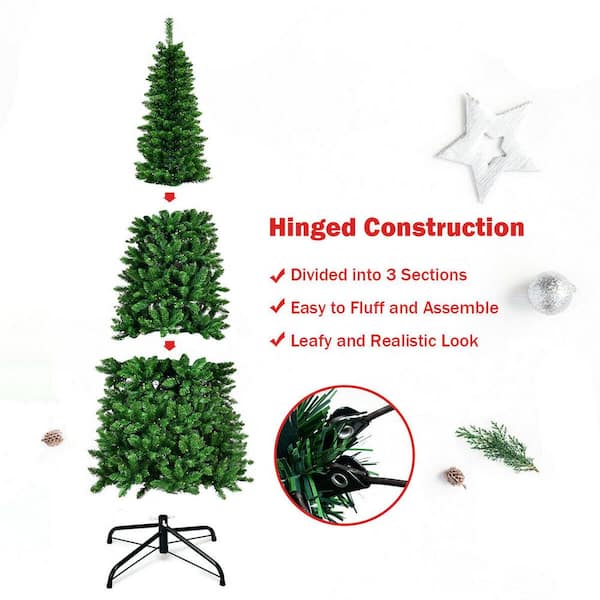
A hinged Christmas tree is an artificial conifer where the branches are permanently attached to the center pole via metal or high-impact plastic pivot points. Unlike older models that required the manual insertion of individual color-coded branches into a central trunk, hinged trees utilize gravity and mechanical tension to deploy. This article explores the technical architecture, material components, and integrated systems that define this dominant category of holiday technology.
The Mechanics of the Hinged System: From Manual to Automatic
At the heart of the hinged Christmas tree is a simple but effective mechanical assembly designed to optimize deployment speed and structural stability. The shift from “hook-in” to “hinged” technology was driven by the need for ergonomic efficiency and the reduction of mechanical wear on the central “trunk” of the unit.
Pivot Points and Gravity-Fed Deployment
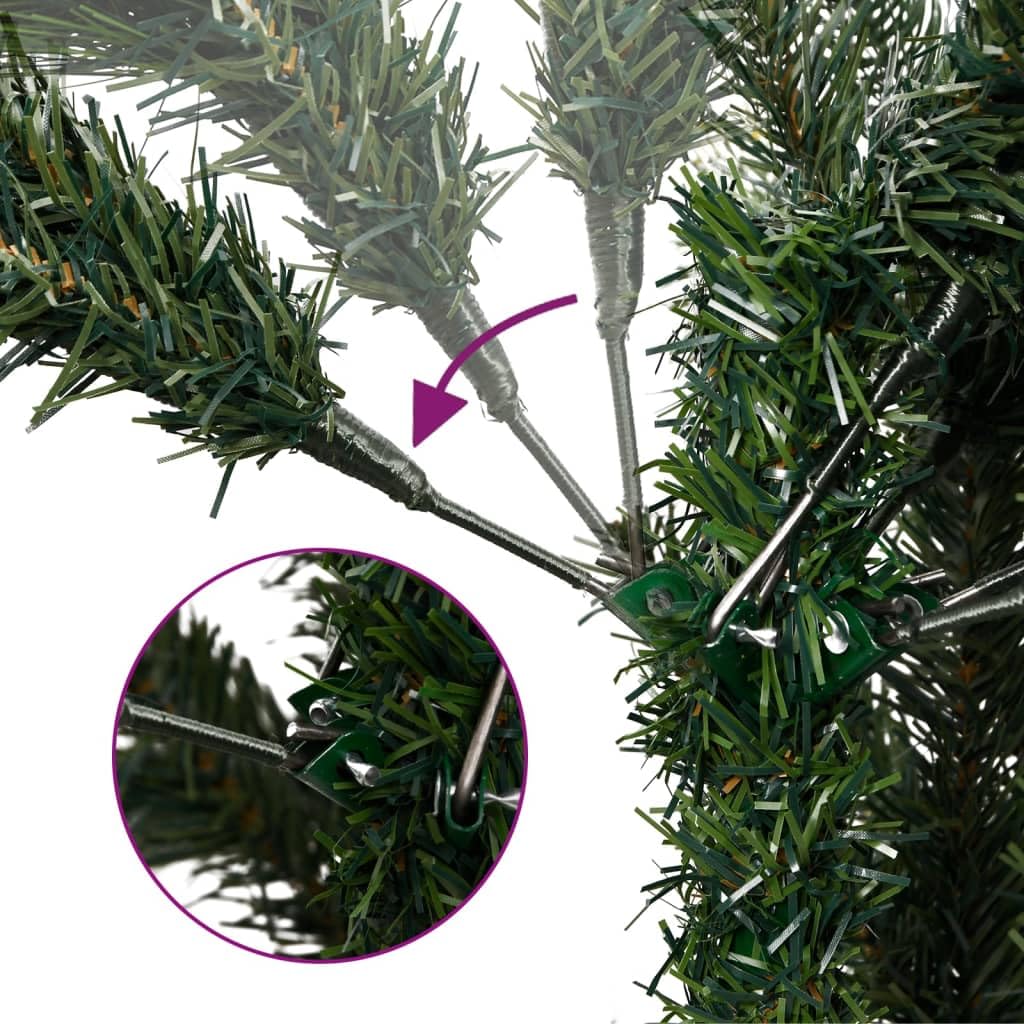
The defining feature of these trees is the hinge mechanism itself. Each tier of branches is attached to a circular bracket welded or molded onto the central pole. These hinges allow the branches to fold upward toward the pole for storage and drop down into a fixed horizontal position for display.
From a mechanical standpoint, this is a “gravity-fed” system. High-quality hinged trees are engineered with specific tolerances in the pivot pin to ensure that branches do not wobble or sag over time. The geometry of the hinge usually includes a “stop” mechanism—a physical protrusion that prevents the branch from dropping below a certain angle, typically 90 degrees or a slight upward tilt to mimic natural growth patterns.
Structural Integrity and Stress Distribution
A primary technical challenge in hinged tree design is load-bearing capacity. Because the branches are permanently fixed, the hinge must support not only the weight of the artificial foliage but also the cumulative weight of ornaments and lighting systems.
Engineers utilize stress-distribution analysis to determine the gauge of the steel wire used in the branch arms. In premium models, the “trunk” is constructed from reinforced steel tubing, and the hinges are reinforced with metal rivets rather than friction-fit plastic pins. This prevents “mechanical fatigue,” a common failure point where the repeated opening and closing of the tree leads to the warping or snapping of the hinge assembly.
Materials Science in Artificial Foliage
While the hinge provides the structure, the “tech” of a hinged tree is most visible in its foliage. Modern manufacturing has moved beyond simple plastics into sophisticated polymer blends that offer both aesthetic realism and functional durability.
PVC vs. PE: The Battle of Polymers
The two primary materials used in hinged trees are Polyvinyl Chloride (PVC) and Polyethylene (PE).
- PVC (Classic Tech): PVC branches are made by cutting thin sheets of plastic into fringe-like needles, which are then twisted between two wires. This creates a flat, “tinsel-like” appearance. From a technical view, PVC is valued for its fire-retardant properties and low production cost.
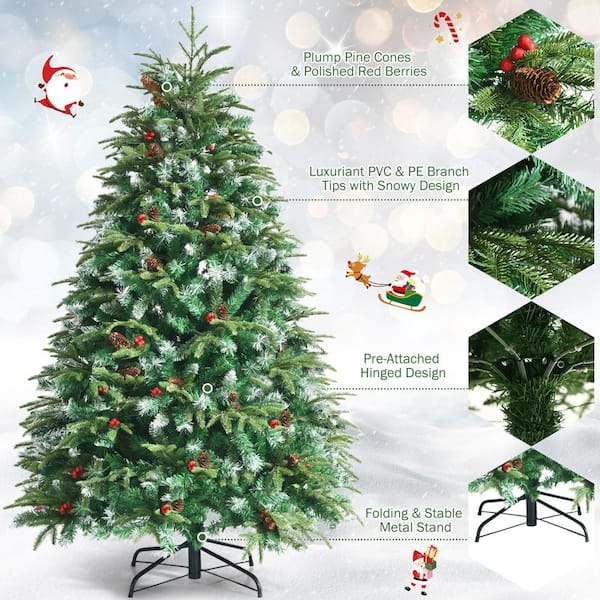
- PE (Advanced Injection Molding): PE technology represents the current “state-of-the-art.” These needles are created using injection molding, where liquid plastic is poured into molds cast from real tree branches. This allows for 3D needle structures that are indistinguishable from biological matter at a distance. PE is more durable and maintains its “memory” (the ability to return to its original shape) better than PVC.
Fire Retardancy and UV Stabilization
Technical specifications for high-end hinged trees often include certifications for fire retardancy. This involves infusing the polymer resins with chemical flame inhibitors during the extrusion process. Furthermore, to prevent the “yellowing” or fading of the green pigment—a process known as photodegradation—manufacturers add UV stabilizers. These chemical additives absorb or screen out UV radiation, ensuring the tree’s chemical structure remains stable over years of exposure to indoor lighting and sunlight.
The Integration of Smart Lighting and Connectivity
The modern hinged tree is no longer just a static sculpture; it is an integrated electronic device. The evolution of “Pre-Lit” technology has transformed the internal column of the tree into a power distribution hub.
Through-the-Pole Power Distribution
One of the most significant technical hurdles in holiday decor was the “tangle of wires.” Engineers solved this through “Power Pole” or “Quick Set” technology. In this system, the electrical circuit is built directly into the central trunk.
Each section of the hinged tree features a male or female connector within the pole’s interlocking joints. When the sections are stacked, the electrical connection is completed automatically. This requires precise machining of the contact points—usually using copper or brass for high conductivity—and robust insulation to prevent short circuits. This “plug-and-play” architecture eliminates the need for external extension cords between the tree’s tiers.
Addressable LEDs and IoT Integration
As we move into the era of the “Smart Home,” hinged trees are increasingly outfitted with addressable LEDs. Unlike traditional incandescent bulbs wired in a series (where one failure breaks the circuit), addressable LEDs are controlled by a central microprocessor.
These systems use Pulse Width Modulation (PWM) to control color mixing and brightness, allowing for millions of color combinations. Many modern hinged trees now feature Wi-Fi or Bluetooth controllers, enabling users to synchronize light patterns with music or integrate the tree into broader IoT (Internet of Things) ecosystems like Amazon Alexa or Google Home.
Durability Engineering and Lifecycle Analysis
A hinged tree is an investment in long-term hardware. To ensure a lifecycle of 10 to 20 years, manufacturers apply various engineering principles to combat environmental and mechanical degradation.
Metal Alloy Composition and Corrosive Resistance
The central pole and branch wires are typically made of carbon steel. However, since trees are often stored in non-climate-controlled environments like attics or basements, oxidation (rust) is a major concern. To mitigate this, the metal components undergo a powder-coating process. This electrostatically applied coating provides a hard, abrasion-resistant finish that protects the underlying alloy from moisture and oxygen, extending the mechanical life of the hinges.
Storage Optimization and Compression Physics
The “hinge” is essentially a solution for data—or in this case, physical—compression. The engineering goal is to achieve the maximum “fullness” (foliage density) with the minimum “storage volume.”
Manufacturers use “memory wire” in the branches of hinged trees. This high-tensile wire is designed to be compressed into a box for 11 months of the year and “spring” back into place with minimal manual “fluffing.” The physics of this involves calculating the elastic limit of the wire—the point at which it can be bent without permanent deformation. A well-engineered hinged tree balances branch density with the ability to compress without damaging the integrated LED wiring.
The Future of the “Smart” Tree
As technology progresses, the definition of a hinged Christmas tree continues to expand. We are currently seeing the emergence of features that were once considered science fiction in the holiday decor space.
Automated Self-Expansion Mechanisms
The next frontier in hinged tree technology is the motorized “self-growing” tree. Using a series of internal actuators and sensors, these trees can expand from a compressed cylinder to a full-sized conifer at the touch of a button. This involves complex robotics, where small motors at the hinge points work in synchronization to deploy the branches, ensuring the center of gravity remains stable during the transition.
Sustainability in Synthetic Manufacturing
Finally, the “Tech” of the hinged tree is turning toward green chemistry. As global regulations on plastics tighten, R&D departments are exploring bio-plastics and recycled ocean polymers for needle construction. The challenge lies in maintaining the fire-retardant and “shape memory” characteristics of traditional PE/PVC while using biodegradable or fully circular materials.
In summary, a hinged Christmas tree is a sophisticated marriage of mechanical assembly, advanced polymer science, and integrated electronics. From the pivot points that allow for rapid deployment to the “power-pole” systems that drive smart LEDs, these trees represent a pinnacle of seasonal engineering designed for efficiency, durability, and a high-tech holiday experience.
aViewFromTheCave is a participant in the Amazon Services LLC Associates Program, an affiliate advertising program designed to provide a means for sites to earn advertising fees by advertising and linking to Amazon.com. Amazon, the Amazon logo, AmazonSupply, and the AmazonSupply logo are trademarks of Amazon.com, Inc. or its affiliates. As an Amazon Associate we earn affiliate commissions from qualifying purchases.