
Modern construction standards have shifted dramatically over the past two decades. As we strive for greater energy efficiency, homes have become increasingly airtight. By sealing gaps, insulating walls, and utilizing high-performance windows, we have successfully created “thermal envelopes” that prevent conditioned air from escaping. However, this progress comes with a technical challenge: if a home is sealed like a thermos, indoor air quality suffers. Pollutants, moisture, and carbon dioxide become trapped inside. This is where the Heat Recovery Ventilator (HRV) comes into play as a critical piece of modern residential technology.
Understanding the Core Technology of HRVs
At its simplest level, a Heat Recovery Ventilator is a mechanical ventilation system designed to provide a constant supply of fresh outdoor air while simultaneously exhausting stale indoor air. Unlike a standard exhaust fan, which simply blows expensive, conditioned air outside, an HRV acts as an energy exchange engine.

The Mechanics of the Heat Exchanger
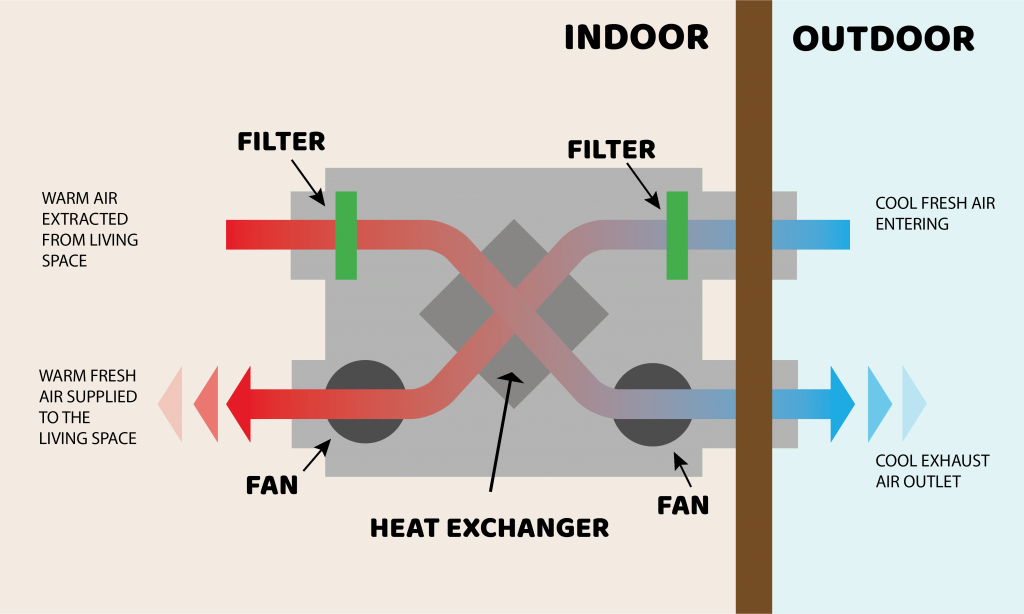
The heart of an HRV is the heat exchange core. This component is typically constructed from a series of thin, thermally conductive plates—often aluminum or specialized polymers. As the two air streams—the warm, stale indoor air exiting the house and the cool, fresh outdoor air entering it—pass through the core, they never actually mix. Instead, the heat from the outgoing air is transferred through the plate walls and absorbed by the incoming air stream.
In the winter, this means that if your indoor temperature is 70°F and the outdoor temperature is 20°F, the HRV can pre-warm the incoming air to perhaps 60°F before it ever reaches your furnace or air handler. This process effectively recovers up to 80% or more of the thermal energy that would otherwise be lost to the environment.
The Balancing Act
An HRV is inherently a “balanced” system. It utilizes two separate blowers: one for supply and one for exhaust. By ensuring that the amount of air leaving the house exactly matches the amount of air entering it, the HRV maintains neutral pressure within the building. This is crucial for preventing back-drafting of combustion appliances and maintaining the structural integrity of the home’s moisture management system.
The Role of HRVs in Modern Smart Home Ecosystems
The integration of HRVs into the broader landscape of residential technology marks a significant evolution in how we manage our living environments. We are no longer just heating or cooling a box; we are managing a complex, integrated system.
Integration with HVAC Controls
Modern HRVs are increasingly becoming part of the smart home automation suite. Advanced HRV units can now communicate with smart thermostats and building management systems (BMS). When the CO2 sensors in the home detect a spike—perhaps during a dinner party or when many people are in a room—the system automatically increases the ventilation rate. When the home is empty, the system scales back to save power, demonstrating the intersection of passive building technology and active digital optimization.
Filtration and Air Quality Analytics
Beyond thermal regulation, the HRV acts as the primary filtration hub for the home. Because all incoming air is forced through the unit’s intake filters before being distributed through the ductwork, the HRV serves as the first line of defense against pollen, dust, and particulate matter. Smart integration allows users to monitor filter health via mobile apps, alerting homeowners precisely when maintenance is required based on actual airflow resistance rather than arbitrary time-based estimates. This data-driven approach to maintenance is a hallmark of current smart home trends.
Efficiency, Performance, and Design Considerations
Choosing the right HRV requires an understanding of both climate and building load. Not all units are created equal, and the technological specifications often dictate the long-term ROI of the installation.
HRV vs. ERV: Navigating the Technical Specs
A common point of confusion in the HVAC market is the distinction between an HRV (Heat Recovery Ventilator) and an ERV (Energy Recovery Ventilator). While both recover heat, the ERV is designed to also transfer moisture. In climates with high humidity, an ERV is often the superior choice because it prevents outdoor humidity from entering the home during the summer. Conversely, in very cold, dry climates where indoor humidity control is a struggle, the HRV is usually preferred. Making the right choice requires a technical assessment of local humidity levels and specific building requirements.
Installation and Ducting Strategies
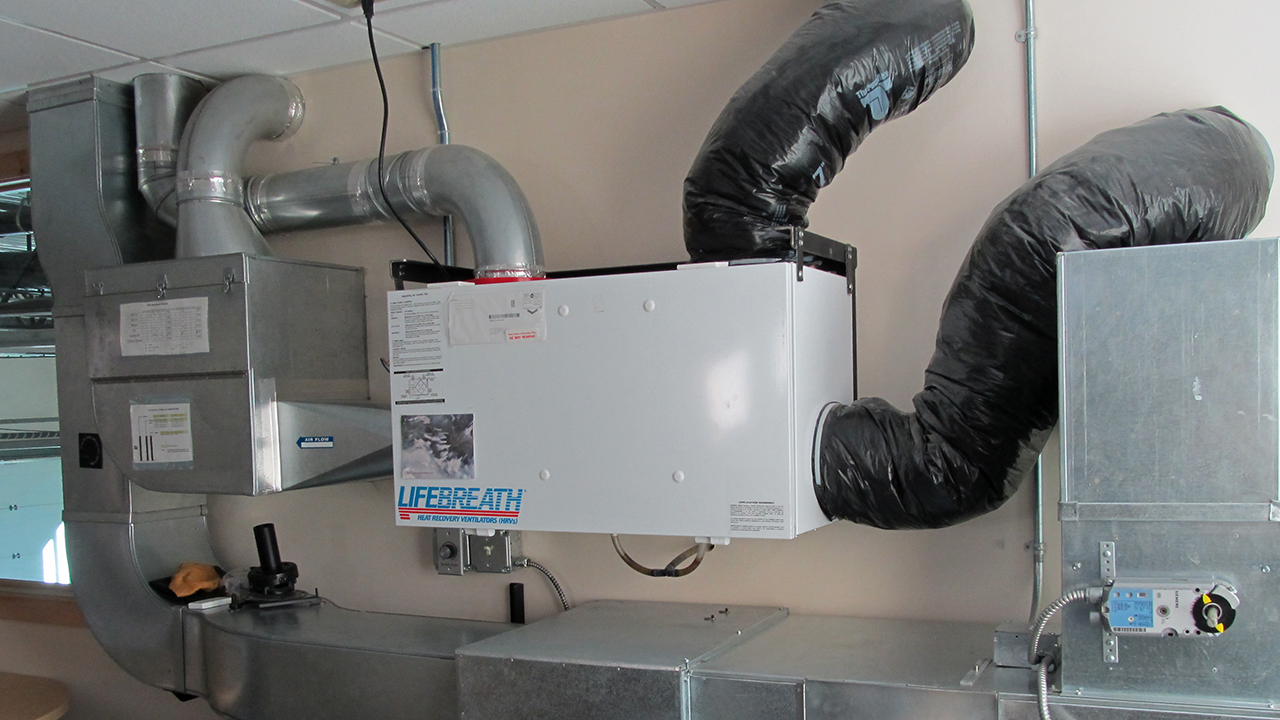
The effectiveness of an HRV is highly dependent on its integration with the existing ductwork. In a “dedicated” installation, the HRV has its own independent set of supply and exhaust ducts. In a “fully integrated” installation, the HRV connects directly to the home’s furnace ductwork. The latter is often more cost-effective but requires precise airflow balancing to ensure that the fresh air is properly distributed throughout the home without interfering with the furnace’s operation.
Engineers now use CFD (Computational Fluid Dynamics) modeling to determine the optimal placement of intake and exhaust ports to prevent “short-circuiting,” where fresh air is pulled back out of the house before it has a chance to circulate through living areas.
The Long-Term Value Proposition
Investing in an HRV is a move toward future-proofing a property. As energy codes become more stringent and the focus on indoor air quality (IAQ) intensifies, the HRV is evolving from a luxury add-on to a standard requirement.
Reducing Operational Costs
While the HRV consumes a small amount of electricity to power its fans, the energy saved on heating and cooling far outweighs the operational cost. By reducing the load on the furnace and air conditioner, the HRV extends the lifespan of the primary HVAC system. Furthermore, by maintaining optimal indoor humidity and oxygen levels, it mitigates the need for secondary gadgets like portable dehumidifiers or excessive air purifiers, simplifying the home’s mechanical ecosystem.
Health and Productivity Impacts
The impact of ventilation on human cognitive function and health is well-documented in modern architectural research. High levels of CO2 and Volatile Organic Compounds (VOCs) are linked to decreased concentration, poor sleep quality, and respiratory issues. An HRV ensures that the home acts as a sanctuary, constantly flushing out the “invisible” pollutants generated by cleaning products, cooking, and building materials. This is an invisible upgrade, yet it is one of the most significant technology investments a homeowner can make in terms of daily quality of life.
The Path Forward
As we look toward the future of residential design, the focus remains firmly on the “High-Performance Home.” We are reaching a point where the distinction between the building structure and the mechanical systems is blurring. The HRV is the quintessential tool of this era. It transforms the home from a static object into a dynamic, responsive machine capable of maintaining a perfect internal climate regardless of external weather extremes.
Whether you are retrofitting an older home to meet modern insulation standards or designing a new passive-house build from the ground up, the Heat Recovery Ventilator is the engine room of the modern home. It is a testament to the fact that efficiency does not have to come at the expense of comfort; rather, when implemented correctly, technology creates a more sustainable, healthier, and technologically advanced living environment. As smart sensors and AI-driven predictive maintenance continue to be integrated into these units, the HRV will remain at the forefront of the technological evolution of the home.
aViewFromTheCave is a participant in the Amazon Services LLC Associates Program, an affiliate advertising program designed to provide a means for sites to earn advertising fees by advertising and linking to Amazon.com. Amazon, the Amazon logo, AmazonSupply, and the AmazonSupply logo are trademarks of Amazon.com, Inc. or its affiliates. As an Amazon Associate we earn affiliate commissions from qualifying purchases.