
In the rapidly evolving landscape of the twenty-first century, the phrase “grey area” has become a cornerstone of technological discourse. While the binary nature of computing relies on the clear distinction between 0 and 1, the human application of technology is rarely so distinct. In the tech sector, a grey area refers to a space where innovation outpaces existing legislation, ethical frameworks, or societal norms. It is the jurisdictional vacuum where a new tool or software exists before the world has decided whether it is a force for progress or a liability.
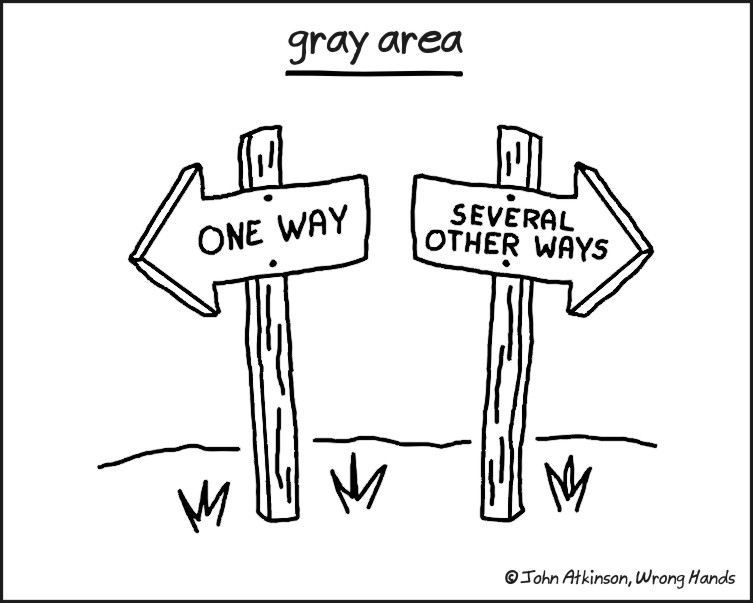
As we integrate artificial intelligence, pervasive data collection, and complex software ecosystems into the fabric of daily life, understanding these ambiguous zones is no longer just for developers and lawyers. For tech professionals, stakeholders, and users alike, identifying a grey area is the first step toward building more resilient, ethical, and secure digital futures. This article explores the most pressing grey areas in the technology niche, from the ethics of generative models to the precarious world of digital security.
The Ethics of Artificial Intelligence and Algorithmic Bias
The most prominent grey area in contemporary technology is undoubtedly the development and deployment of Artificial Intelligence (AI). AI operates in a realm where the “how” is often buried within deep neural networks, making accountability difficult to pin down. When an algorithm makes a decision that affects a human life, the line between technical error and systemic bias becomes blurred.
Training Data Ownership and Fair Use
One of the most contentious grey areas in software development today involves the data used to train Large Language Models (LLMs) and generative image AI. Developers argue that “scraping” the public internet constitutes fair use, much like a human learning from looking at art or reading books. However, creators and copyright holders view this as industrial-scale intellectual property theft. Because global copyright laws were written long before machines could “learn,” there is currently no universal consensus on whether training a model on protected data is a violation of law or a revolutionary new form of transformative use.
Accountability in Automated Decision-Making
When a self-driving car is involved in an accident or a predictive policing tool erroneously flags an individual, where does the blame lie? This is a classic “black box” grey area. Is the fault with the original software engineer, the data scientists who curated the training set, the corporation that deployed the tool, or the machine itself? Currently, our legal systems are designed to assign liability to human entities. However, as AI systems become more autonomous, the gap between human oversight and machine execution creates a liability vacuum that the tech industry has yet to fill.
The Nuance of Algorithmic Neutrality
There is a common misconception that software is inherently neutral because it is built on math. The grey area lies in the fact that algorithms reflect the biases of their creators and the datasets they are fed. If a recruitment software prioritizes candidates based on historical hiring data, it may inadvertently perpetuate past discriminations. The tech industry struggles to define “fairness” in mathematical terms, leading to a landscape where companies claim neutrality while their software produces biased outcomes.
Data Privacy and the Surveillance Economy
In the digital age, data is often compared to oil—a raw resource that powers the economy. However, the methods used to extract and utilize this data frequently fall into a grey area between “user personalization” and “unwarranted surveillance.” While regulations like GDPR and CCPA have attempted to draw boundaries, the technical reality remains highly ambiguous.
The Fine Line Between Personalization and Intrusion
Every modern app aims to provide a “seamless” experience. To do this, software must track user behavior, location, and preferences. The grey area emerges when the benefit to the user is outweighed by the loss of privacy. For instance, a navigation app needs your location to function, which is a clear “white” area of utility. However, if that app continues to track your location when it is closed to sell “anonymized” movement patterns to advertisers, it enters a grey zone. The technical justification is “product improvement,” but the ethical reality is often data harvesting.
Dark Patterns in UI/UX Design
Software design itself contains significant grey areas, specifically regarding “dark patterns.” These are user interface designs intended to trick or manipulate users into doing things they didn’t intend to do, such as signing up for a recurring subscription or sharing more data than necessary. While not always illegal, dark patterns are ethically dubious. They exist in the space between persuasive design (good marketing) and psychological manipulation (exploitative tech). Tech companies often defend these practices as “optimizing for conversion,” highlighting a disconnect between business metrics and user-centric ethics.
Data Brokerage and Regulatory Loopholes
Even when a user consents to a privacy policy, the journey of their data is rarely transparent. Data brokers operate in a massive technological grey area, aggregating bits of information from disparate sources to create “digital twins” of consumers. Because these brokers often don’t have a direct relationship with the consumer, users are frequently unaware they even exist. The technology used to stitch these profiles together is sophisticated and legal, yet the lack of transparency makes it a primary concern for digital security and personal autonomy.
Intellectual Property in the Age of Open Source and Generative Media
The concept of “ownership” is being fundamentally reshaped by software and digital tools. As code becomes more modular and AI becomes more capable of creation, the boundaries of intellectual property (IP) have become increasingly porous.
Derivative Works vs. Copyright Infringement
In the world of software development, “standing on the shoulders of giants” is the norm. Open-source repositories like GitHub allow developers to build upon existing code. However, the grey area arises when proprietary software incorporates open-source components without adhering to specific license requirements (like GPL or MIT). Furthermore, with AI-generated code, the question of who “authored” the software becomes a headache for legal departments. If a developer uses a suggestion from an AI co-pilot that was trained on a competitor’s private repo, is the resulting software truly theirs?
The Legal Status of AI-Generated Content
Beyond code, the tech world is grappling with the IP status of AI-generated media. Current US copyright law, for example, requires “human authorship” for a work to be protected. This creates a massive grey area for companies using AI to generate marketing copy, game assets, or software documentation. If the output cannot be copyrighted, it exists in the public domain the moment it is created, leaving the company with no legal recourse if a competitor steals those assets. The tech industry is currently navigating this “ownership-less” vacuum while waiting for the courts to catch up.
Dual-Use Software and Corporate Responsibility
Dual-use software refers to technology that can be used for both legitimate and malicious purposes. For example, encryption tools protect journalists and activists, but they also protect criminals. Similarly, penetration testing tools are essential for digital security professionals but are also the primary weapons of hackers. The grey area for tech companies lies in their responsibility for how their tools are used. If a company develops a high-end surveillance tool meant for “government law enforcement” and it is used to target dissidents, the company often claims neutrality, yet the ethical weight remains a point of heavy contention.
Digital Security and the Ethics of the “Grey Hat”
Cybersecurity is perhaps the most binary of all tech fields—either a system is secure, or it is not. Yet, the human element of security is fraught with ambiguity. The term “Grey Hat” hacker perfectly encapsulates the grey area of digital security.
Vulnerability Disclosure: Heroism or Liability?
When an independent security researcher finds a flaw in a major software system, they enter a legal and ethical grey area. If they report it to the company (Responsible Disclosure), they might be rewarded with a “bug bounty.” However, if the company chooses to view the discovery as an unauthorized intrusion, the researcher could face criminal charges under the Computer Fraud and Abuse Act (CFAA). This ambiguity often discourages researchers from reporting flaws, leaving the internet less secure. The grey area lies in the intent: at what point does “probing for weaknesses” become “attempted hacking”?
The Ethics of “Hacking Back”
As cyberattacks become more frequent and damaging, some tech firms have explored the idea of “hacking back”—deploying offensive measures to disable an attacker’s infrastructure. This is a profound grey area in digital security. While it may seem like digital self-defense, it often involves accessing third-party servers that the attacker is using as a proxy. This risks collateral damage to innocent systems and can escalate digital conflicts beyond the control of any single actor.
The Trade-off Between Security and Accessibility
There is a persistent grey area in how companies balance security protocols with user experience. Implementing “Zero Trust” architecture or mandatory Multi-Factor Authentication (MFA) increases security but can alienate less tech-savvy users or hinder workflow. Tech leaders must constantly navigate the grey zone of “acceptable risk.” There is no objective formula for how much security is “enough,” making it a subjective decision that can have catastrophic consequences if the balance is misjudged.

Conclusion: Living in the Grey
The technological “grey area” is not a bug in the system; it is a feature of a world in transition. As long as humans continue to innovate at a pace that exceeds our ability to regulate and codify, these zones of ambiguity will persist. For those in the tech niche, the challenge is to navigate these areas with a commitment to transparency and ethical foresight.
Whether it is the development of AI, the handling of user data, or the securing of digital infrastructure, the “correct” path is rarely marked with a clear signpost. Instead, it requires a constant dialogue between engineers, ethicists, and the public. By acknowledging and analyzing these grey areas today, we can ensure that the technology of tomorrow is built on a foundation of clarity, safety, and mutual respect. In the end, the goal of modern tech should be to turn the grey into white—creating a digital world that is as beneficial as it is innovative.
aViewFromTheCave is a participant in the Amazon Services LLC Associates Program, an affiliate advertising program designed to provide a means for sites to earn advertising fees by advertising and linking to Amazon.com. Amazon, the Amazon logo, AmazonSupply, and the AmazonSupply logo are trademarks of Amazon.com, Inc. or its affiliates. As an Amazon Associate we earn affiliate commissions from qualifying purchases.