
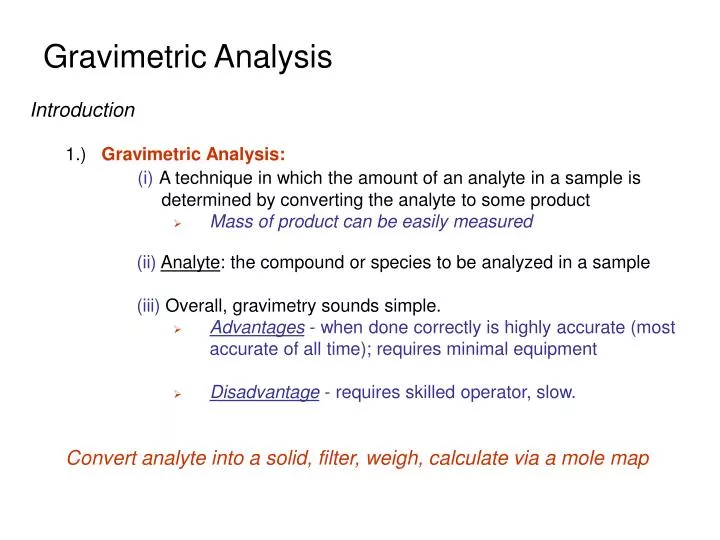
In the realm of analytical science and high-precision technology, gravimetric analysis stands as a cornerstone methodology. While it is rooted in fundamental chemistry, its modern application is a marvel of technological integration, involving sophisticated software, high-precision hardware, and rigorous digital data management. At its core, gravimetric analysis is a quantitative method used to determine the amount of an analyte based on its mass. In an era dominated by rapid electronic sensors and spectroscopy, the “tech stack” behind gravimetry remains the absolute gold standard for accuracy and calibration.
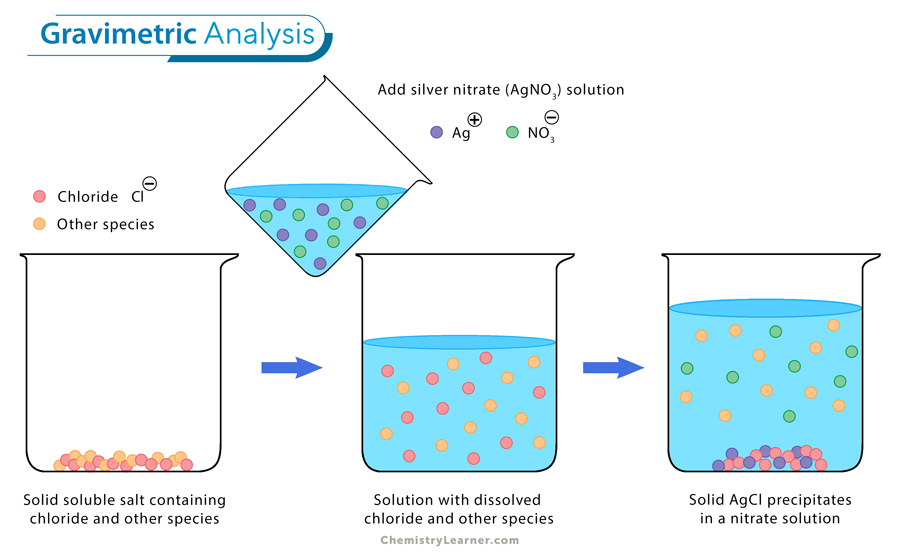
To understand gravimetric analysis in a modern tech context, one must look beyond the simple act of weighing. It is an intricate process of physical separation, thermal processing, and digital recording that ensures the materials powering our world—from semiconductor alloys to pharmaceutical compounds—meet exact specifications.
The Evolution of Gravimetric Analysis in the Digital Age
The history of gravimetric analysis is, in many ways, the history of measurement technology itself. Before the advent of digital sensors, scientists relied on mechanical beam balances. Today, the field has been transformed by digital signal processing and micro-electromechanical systems (MEMS).
From Manual Balances to Automated Sensors
Traditional gravimetric methods were labor-intensive and prone to human error. However, the integration of electronic analytical balances has revolutionized the niche. Modern balances utilize magnetic force restoration technology. When a sample is placed on the pan, an electromagnetic force is generated to return the pan to its original position. The electrical current required to achieve this equilibrium is measured and converted into a digital signal. This shift from mechanical movement to electromagnetic measurement represents a significant technological leap, allowing for a level of precision down to the microgram (0.000001 g).
The Role of Digital Signal Processing
A modern gravimetric setup is rarely a standalone piece of hardware. It is part of a digital ecosystem. Digital Signal Processing (DSP) filters out environmental noise—such as building vibrations or air currents—that would otherwise destabilize a reading. Advanced algorithms within the scale’s firmware analyze the stability of the mass in real-time, only “locking in” a measurement when the digital signature indicates absolute equilibrium. This ensures that the data fed into the laboratory software is clean and reliable.
Core Methodologies and the Software Powering Them
Gravimetric analysis is not a monolithic process; it is a suite of techniques tailored to specific technological needs. The choice of method often dictates the type of software and hardware interface required for the task.
Precipitation Gravimetry and Micro-Analytical Software
Precipitation gravimetry is perhaps the most well-known form. It involves converting a liquid-state analyte into a solid precipitate. The technology here lies in the precision of the separation. Modern labs use automated filtration systems and programmed centrifuges to ensure that every milligram of the precipitate is captured. Software suites now track the stoichiometry of these reactions, calculating theoretical yields and comparing them against the measured mass to identify impurities or process inefficiencies.
Volatilization and Thermogravimetric Analysis (TGA)
One of the most tech-heavy branches of this field is Thermogravimetric Analysis (TGA). This method involves measuring the change in a sample’s mass as it is heated, cooled, or held at a constant temperature in a controlled atmosphere.
TGA instruments are high-tech furnaces equipped with internal microbalances. The software interface for TGA provides real-time “thermal curves.” As the temperature rises, the software records mass loss (due to decomposition or evaporation) or mass gain (due to oxidation). This data is critical in material science for testing the thermal stability of polymers, coatings, and electronic components.
Electrogravimetry: The Intersection of Hardware and Software
Electrogravimetry uses electrochemical reactions to deposit a metal onto an electrode, which is then weighed. This requires a sophisticated “Potentiostat/Galvanostat”—a device that controls the voltage or current with extreme precision. The integration of this hardware with specialized software allows technicians to automate the deposition process, ensuring that only the target metal is isolated, thereby maintaining the integrity of the analysis.
Critical Technological Components: Hardware and Tools
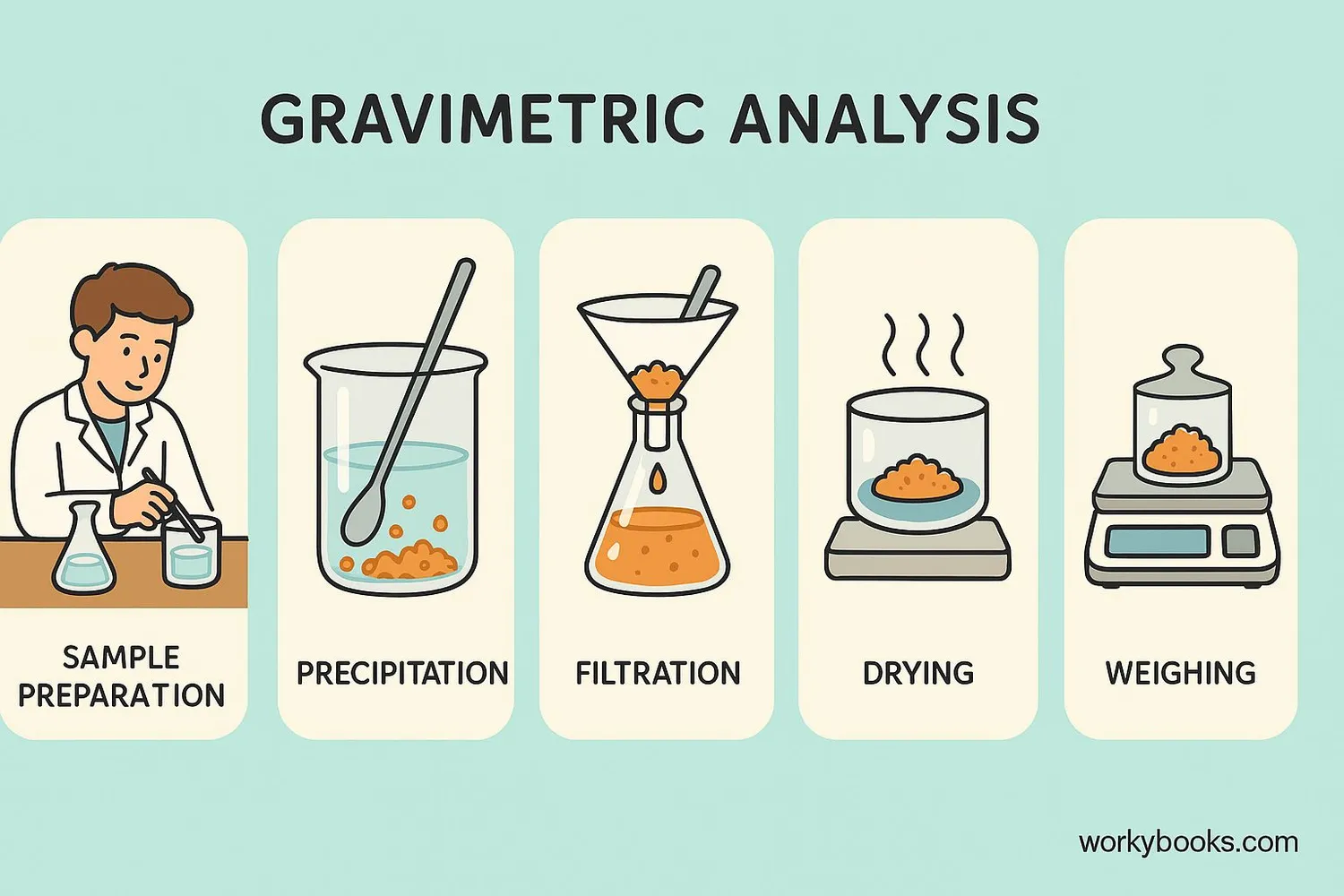
To perform a successful gravimetric analysis, a suite of specialized hardware must work in harmony. The reliability of the results is only as good as the weakest link in this technological chain.
High-Precision Analytical Balances
The “CPU” of the gravimetric process is the analytical balance. These devices are housed in draft shields to prevent interference and often feature “Internal Calibration Technology.” This allows the device to calibrate itself using internal weights at set intervals or when it detects a change in ambient temperature. For high-end tech manufacturing, these balances are often connected via RS-232 or USB interfaces directly to a centralized computer system to eliminate manual data entry errors.
Laboratory Information Management Systems (LIMS)
In modern industry, the mass measured on a balance is immediately transmitted to a Laboratory Information Management System (LIMS). A LIMS is a software-based solution that manages laboratory data, including sample tracking, instrument integration, and data exchange.
When a gravimetric measurement is taken, the LIMS records the timestamp, the instrument ID, the environmental conditions, and the technician’s digital signature. This digital thread is essential for quality control in industries like aerospace and medical device manufacturing, where traceability is a legal requirement.
Industrial Applications and Future Tech Trends
Gravimetric analysis is far from an obsolete “old-school” science; it is currently being integrated into the next generation of industrial technology, including the Internet of Things (IoT) and Artificial Intelligence (AI).
Environmental Monitoring and IoT
Gravimetry is the definitive method for measuring particulate matter (PM10 and PM2.5) in the atmosphere. Modern environmental “smart stations” use gravimetric filters that are periodically collected and analyzed. Newer prototypes are incorporating IoT sensors that can estimate mass changes in real-time using oscillating microbalances, sending data to cloud-based platforms for global air quality monitoring.
The Rise of AI and Machine Learning in Gravimetric Data
As labs generate massive amounts of TGA and precipitation data, Machine Learning (ML) is being used to analyze these datasets. AI algorithms can recognize patterns in decomposition curves that might be invisible to the human eye, predicting the lifespan of materials or identifying the presence of trace contaminants in a chemical batch. This predictive capability is transforming gravimetry from a reactive measurement tool into a proactive quality-assurance technology.
Ensuring Security and Integrity in Analytical Data
In an era of high-stakes corporate espionage and regulatory scrutiny, the “digital security” aspect of gravimetric analysis has become paramount. The data generated is often the proof of a product’s purity or a patent’s validity.
Digital Security and Audit Trails
Modern gravimetric software must comply with rigorous data integrity standards, such as the FDA’s 21 CFR Part 11. This means that every piece of data must have a secure, computer-generated, time-stamped audit trail.
If a weight is recorded and then edited, the software must keep a log of the original value, the new value, the person who made the change, and the reason for the change. Encryption protocols ensure that the data sent from the analytical balance to the LIMS cannot be intercepted or altered. This level of digital security transforms a simple physical measurement into a legally defensible piece of intellectual property.
Automated Calibration and Remote Diagnostics
The latest trend in gravimetric tech is the move toward “Smart Calibration.” High-end balances can now perform remote diagnostics, where the manufacturer’s service team can log in via a secure cloud connection to check the health of the internal sensors. This minimizes downtime and ensures that the precision of the analysis is never compromised by hardware fatigue.
By viewing gravimetric analysis through the lens of technology, we see a field that is constantly evolving. It is a perfect marriage of the physical laws of the universe and the digital precision of modern computing. Whether it is ensuring the safety of the water we drink or the durability of the smartphones in our pockets, gravimetric analysis remains the silent, high-tech guardian of measurement integrity.
aViewFromTheCave is a participant in the Amazon Services LLC Associates Program, an affiliate advertising program designed to provide a means for sites to earn advertising fees by advertising and linking to Amazon.com. Amazon, the Amazon logo, AmazonSupply, and the AmazonSupply logo are trademarks of Amazon.com, Inc. or its affiliates. As an Amazon Associate we earn affiliate commissions from qualifying purchases.