
In the rapidly evolving landscape of artificial intelligence, the ability to process data in its most natural form has become a hallmark of technical advancement. For years, deep learning achieved its most significant breakthroughs in domains characterized by regular, grid-like structures—think of images as grids of pixels or text as sequences of words. However, much of the world’s most valuable data does not fit into these neat boxes. Social networks, molecular structures, supply chains, and recommendation engines are inherently irregular. They are represented as graphs.
A Graph Convolutional Network (GCN) is a specialized class of deep learning architecture designed to operate directly on these graph structures. By combining the power of convolutional neural networks (CNNs) with the mathematical rigors of graph theory, GCNs have unlocked the ability to extract patterns from relational data, leading to a revolution in fields ranging from drug discovery to cybersecurity.
The Shift from Grid Data to Graph Structures
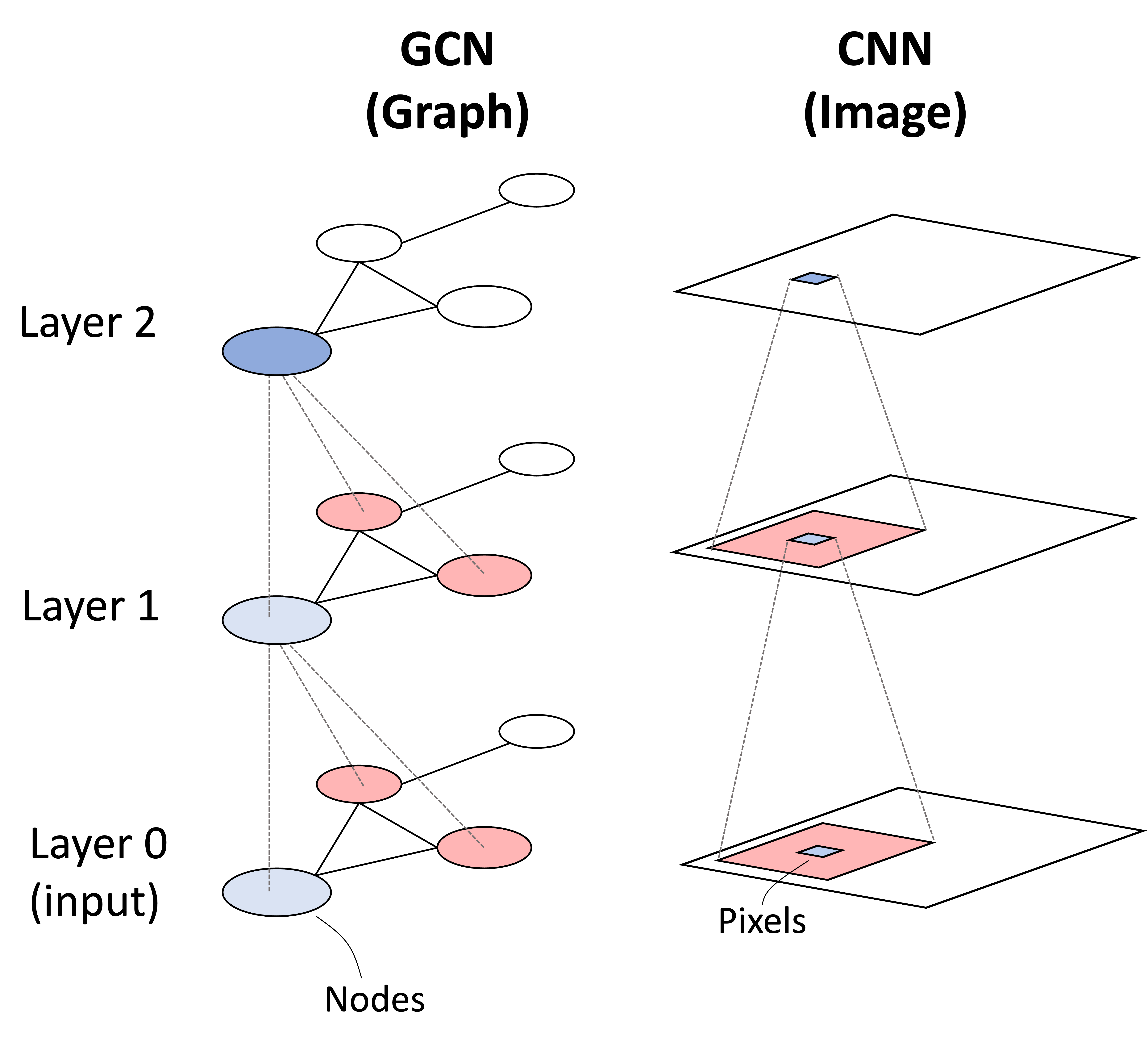
To understand why GCNs are necessary, one must first recognize the limitations of traditional neural networks when faced with non-Euclidean data. Most conventional machine learning models are built for “Euclidean” data. An image is a perfect example: every pixel has a fixed number of neighbors, and the spatial relationship between those pixels is consistent across the entire dataset. This regularity allows a Convolutional Neural Network (CNN) to slide a filter across the image to detect edges, textures, and objects.
The Euclidean Constraint
In Euclidean space, the concepts of “up,” “down,” “left,” and “right” are constant. When we apply a 3×3 convolution kernel to an image, we are essentially looking at a localized neighborhood that always has the same shape. This structural consistency is what makes CNNs so efficient at image recognition. However, if you try to apply that same logic to a social network, the system breaks down. In a graph, one node (a user) might have two connections, while another might have two thousand. There is no fixed “grid,” and the concept of spatial orientation is replaced by topological relationships.
Representing Relational Data
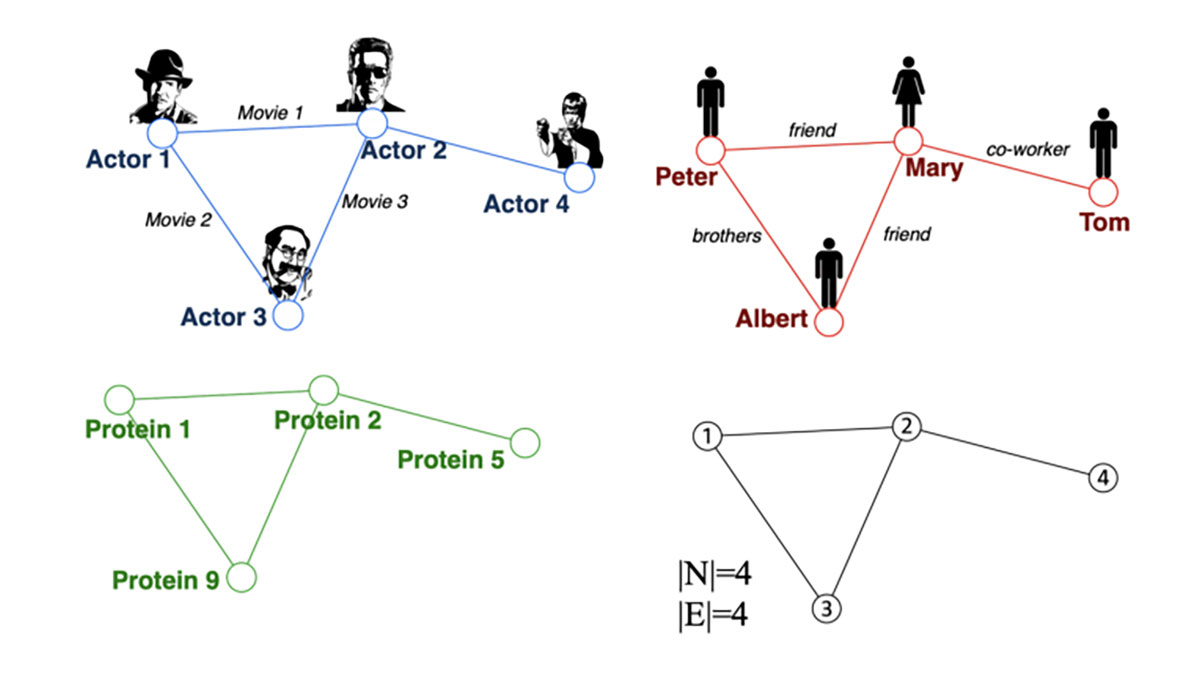
Graphs consist of two primary components: nodes (vertices) and edges (links). Nodes represent entities—such as people, proteins, or computers—while edges represent the relationships between them. These relationships can be directed, undirected, weighted, or unweighted.
A GCN’s primary objective is to learn a numerical representation, or “embedding,” for each node that captures both the node’s own features and the structural context of its neighborhood. For example, in a financial network, a GCN doesn’t just look at a single transaction; it looks at the entire web of connections surrounding that transaction to determine if it is fraudulent.
The Mechanics of a Graph Convolutional Network
The core innovation of the GCN, popularized by Thomas Kipf and Max Welling in 2017, is the adaptation of the “convolution” operation for graph-structured data. While the underlying mathematics involves linear algebra and spectral graph theory, the conceptual framework can be understood through the lens of feature aggregation.
Feature Aggregation and Message Passing
The fundamental operation of a GCN layer is the “message passing” mechanism. In each layer of the network, every node “listens” to its neighbors. It collects the feature vectors (data points) from its surrounding nodes, aggregates them (usually through a weighted average or sum), and then updates its own state.
Imagine a group of people in a room. To understand the general “vibe” of the room, each person talks to their immediate friends and updates their own opinion based on what they heard. If this process happens once, everyone knows what their direct friends think. If it happens twice, everyone knows what their friends’ friends think. This is exactly how GCN layers work. Each additional layer allows the network to incorporate information from a wider neighborhood, effectively “smoothing” the features across the graph topology.
The Propagation Rule
Mathematically, the GCN uses an adjacency matrix to represent the connections between nodes and a feature matrix to represent the data within those nodes. The propagation rule typically involves multiplying the feature matrix by a normalized version of the adjacency matrix. This normalization is crucial; without it, nodes with a high number of connections (high degree) would exert an overwhelming influence on the network’s gradients, leading to numerical instability during training.
The output of a GCN layer is a new set of node embeddings that are “context-aware.” These embeddings can then be used for various tasks, such as node classification (labeling a user as a bot or human), link prediction (suggesting a new friend on a social app), or graph classification (determining if a chemical molecule is toxic).
Spectral vs. Spatial Convolutions
Technically, GCNs are often divided into two categories: spectral and spatial.
- Spectral GCNs approach the problem through the lens of signal processing. They use the Laplacian matrix of the graph to transform the data into the frequency domain (the “spectrum”), apply a filter, and then transform it back. While mathematically elegant, spectral methods are often computationally expensive and difficult to scale to very large graphs.
- Spatial GCNs operate directly on the graph’s physical structure by aggregating features from local neighborhoods. Most modern production-level GCNs lean toward the spatial approach because it is more intuitive and scales more efficiently to massive datasets like the global web or large-scale social platforms.
Industry Use Cases: Transforming AI with Relational Context
GCNs have moved rapidly from academic research into the core infrastructure of major technology companies. Their ability to model complex dependencies makes them indispensable for any platform where the relationship between entities is as important as the entities themselves.
Drug Discovery and Molecular Chemistry
One of the most profound applications of GCNs is in the pharmaceutical industry. Molecules are essentially graphs where atoms are nodes and chemical bonds are edges. Traditional AI models struggled to predict the properties of new drugs because they treated molecules as strings of text or 3D shapes. GCNs, however, can process the actual “graph” of a molecule to predict its solubility, toxicity, or effectiveness against a specific disease. This has significantly accelerated the “lead optimization” phase of drug discovery, saving years of lab work and millions of dollars.
Fraud Detection and Cybersecurity
Financial institutions utilize GCNs to identify sophisticated money laundering schemes. Traditional rule-based systems might miss a series of small, seemingly unrelated transactions. A GCN can analyze the entire transaction graph, identifying suspicious “clusters” or “cycles” where money is moved through multiple accounts to obscure its origin. Similarly, in cybersecurity, GCNs are used to map network traffic and identify anomalies that indicate a lateral movement by an attacker within a corporate network.
Recommendation Engines and E-commerce
Companies like Pinterest, Alibaba, and Amazon have pioneered the use of GCNs to improve product recommendations. Pinterest’s “PinSage” algorithm, for instance, uses a highly scalable GCN to learn embeddings for billions of “pins” based on how they are organized into boards by users. By understanding the visual and contextual relationship between items, the GCN can recommend content that is much more aligned with a user’s aesthetic preferences than traditional collaborative filtering ever could.
Challenges and Evolving Architectures
Despite their success, Graph Convolutional Networks are not without their hurdles. As the technology matures, researchers are focusing on solving specific limitations inherent to graph-based learning.
The Oversmoothing Problem
One of the most well-known issues in GCNs is “oversmoothing.” In a standard CNN, you can add dozens or even hundreds of layers to increase the model’s depth and complexity. In a GCN, adding too many layers often causes the node embeddings to converge. Because each layer aggregates information from neighbors, after many iterations, every node in the graph starts to look exactly like every other node. This loss of distinctiveness renders the model useless. Current research is focused on techniques like “skip connections,” “drop-edge” methods, and normalization layers that allow for deeper graph architectures without losing feature resolution.
Scalability and Large-Scale Graphs
Graphs in the real world can be gargantuan. Processing a graph with billions of nodes and trillions of edges—such as the Google Search index or the Facebook social graph—requires immense computational resources. Standard GCNs require the entire graph to be loaded into memory, which is often impossible for industrial-scale applications. To combat this, developers use “GraphSAGE” (Graph Sample and Aggregate) or “Cluster-GCN,” which utilize sampling techniques to process small batches of the graph at a time, making it feasible to run these models on distributed cloud infrastructure.

The Future of Graph-Based Learning
The rise of Graph Convolutional Networks represents a fundamental shift in how we approach machine learning. We are moving away from treating data as isolated points and toward treating it as a web of interconnected influences.
As we look forward, the integration of GCNs with other AI trends is inevitable. We are already seeing “Graph Transformers” that combine the relational power of GCNs with the attention mechanisms of Large Language Models (LLMs). Furthermore, the development of Temporal GCNs is allowing us to model graphs that change over time, such as traffic patterns in a smart city or the evolving connections in a dynamic marketplace.
For tech professionals and organizations, understanding the “what” and “why” of GCNs is no longer optional. In a world defined by connectivity, the most powerful insights are hidden not in the data points themselves, but in the links that bind them together. GCNs provide the mathematical bridge to reach those insights, turning complex relational data into actionable intelligence.
aViewFromTheCave is a participant in the Amazon Services LLC Associates Program, an affiliate advertising program designed to provide a means for sites to earn advertising fees by advertising and linking to Amazon.com. Amazon, the Amazon logo, AmazonSupply, and the AmazonSupply logo are trademarks of Amazon.com, Inc. or its affiliates. As an Amazon Associate we earn affiliate commissions from qualifying purchases.