
In the ever-evolving landscape of technology, understanding the fundamental building blocks is crucial for anyone looking to grasp the inner workings of software, AI, and the digital world. Among these foundational concepts, the “function” stands out as a cornerstone of computer science. You might have encountered the term in various contexts, perhaps when discussing programming languages, algorithms, or even the capabilities of a specific app. But what exactly is a function in computer science?
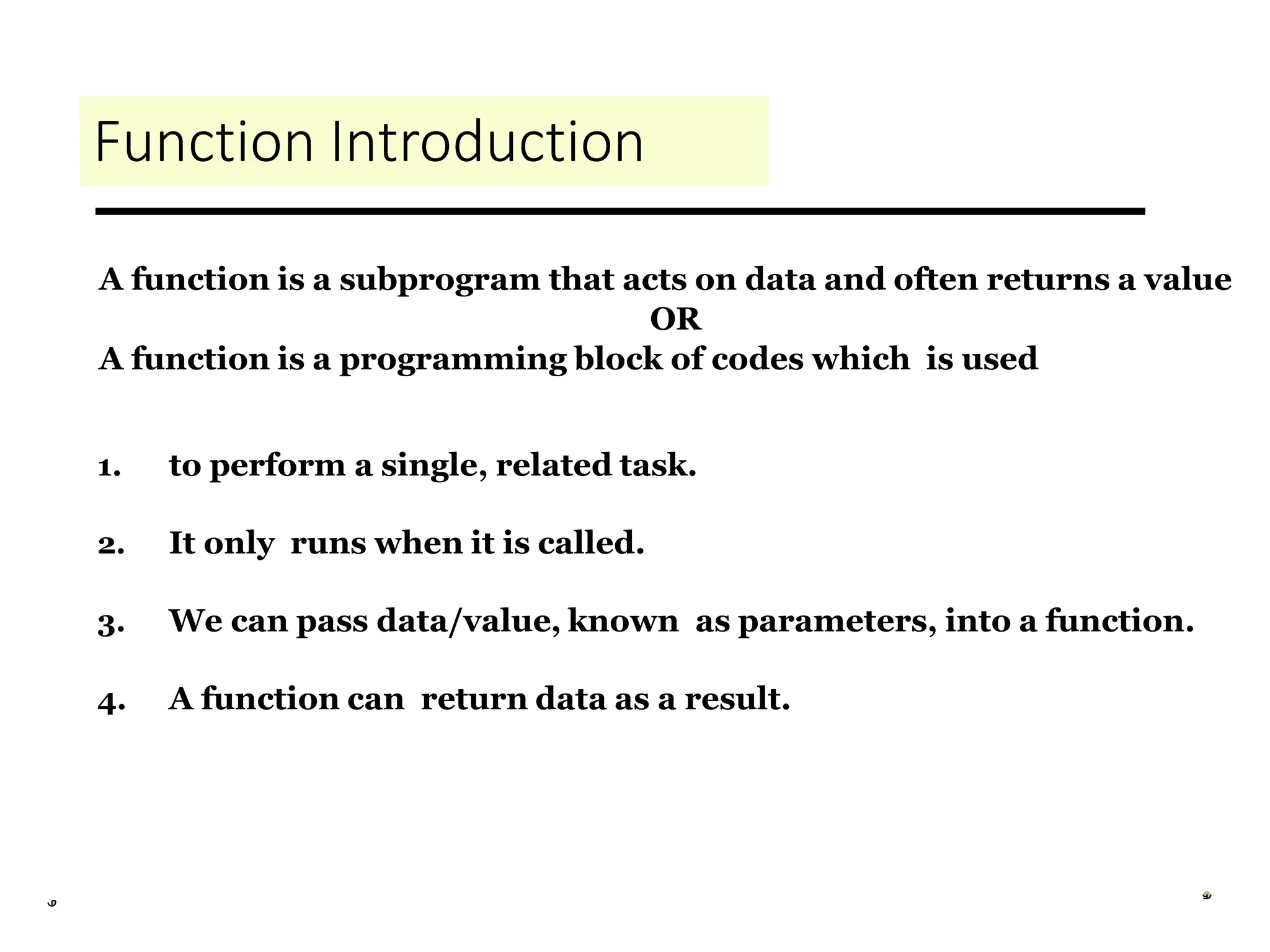
At its core, a function in computer science is akin to a recipe or a mini-program. It’s a self-contained block of code designed to perform a specific task. Think of it as a tool in a programmer’s toolbox, ready to be picked up and used whenever that particular job needs to be done. This modularity and reusability are central to how complex software is built and managed.
The concept of functions is not limited to the realm of software development; its principles resonate across other domains like brand strategy and finance. Just as a well-defined brand function helps a company achieve specific marketing goals, or a financial function streamlines a budgeting process, a computer science function brings order and efficiency to computational tasks. This article will delve into the essence of functions in computer science, exploring their structure, purpose, and the significant impact they have on the technology that shapes our lives.
The Building Blocks of Computational Logic
Functions are fundamental to how computers process information and execute commands. Without them, programs would be monolithic, unmanageable masses of code. Let’s break down the essential components and characteristics of a function.
Inputs, Processes, and Outputs: The Functional Flow
Every function, at its most basic, follows a predictable pattern: it takes some input, performs a series of operations (the process), and then produces an output.
-
Inputs (Parameters/Arguments): These are the pieces of data that a function needs to do its work. Imagine a function designed to calculate the area of a rectangle. It would need two inputs: the length and the width of the rectangle. In programming, these inputs are often referred to as “parameters” when defining the function and “arguments” when calling it. The types of data a function can accept can vary widely, from simple numbers and text strings to more complex data structures.
-
Process (Function Body): This is the heart of the function, where the actual work is done. It’s a sequence of instructions or statements that manipulate the input data according to the function’s purpose. For our rectangle area example, the process would be a simple multiplication: length multiplied by width. This section can be as simple as a single operation or as complex as a series of logical steps, conditional statements, and loops.
-
Outputs (Return Value): After completing its task, a function often produces a result, which is then “returned” to the part of the program that called it. In our rectangle area example, the output would be the calculated area. Not all functions are required to return a value. Some might be designed solely for their side effects, such as printing a message to the screen or modifying a global variable. However, functions that perform calculations or transformations typically have a return value.
Naming Conventions and Scope: Clarity and Control
Just as a recognizable brand name helps consumers understand a product’s offering, a well-chosen function name is crucial for code readability and maintainability.
-
Descriptive Naming: Functions should be named in a way that clearly indicates their purpose. Instead of a generic name like
process_data, a more descriptive name likecalculate_user_ageorfetch_product_detailsimmediately tells other developers (or your future self) what the function does. This adheres to best practices similar to how strong brand messaging clearly communicates value. -
Scope: The scope of a function refers to where in the program it can be accessed and used. Functions defined within a specific part of a program might only be visible and usable within that section (local scope), while others might be accessible from anywhere (global scope). Understanding scope is vital for preventing naming conflicts and ensuring that data is only accessed and modified by authorized parts of the program, much like managing brand assets to maintain corporate identity.
The Power of Abstraction and Reusability
One of the most significant benefits of functions is their ability to abstract complexity and promote reusability.
-
Abstraction: Functions allow programmers to hide the intricate details of how a specific task is performed. A user of a function doesn’t need to know the exact mathematical operations or logical steps involved; they only need to know what inputs the function expects and what output it will provide. This is analogous to how a consumer uses a smartphone app without needing to understand the underlying code. The app provides a user-friendly interface that abstracts the complex technology.
-
Reusability: Once a function is written, it can be called and executed multiple times throughout a program, or even in different programs, without needing to be rewritten. This dramatically speeds up development, reduces the chance of errors, and makes code more organized. Imagine a company that develops a robust “customer authentication” function. This function can be used across their website, mobile app, and internal tools, saving significant development effort and ensuring a consistent security experience. This mirrors the concept of building reusable brand elements for consistent corporate identity across various marketing materials.
Functions in Action: Practical Applications and Analogies
The concept of a function permeates various aspects of computer science and can be understood through relatable analogies.
From Math to Code: The Mathematical Foundation
The computer science concept of a function is directly inspired by its mathematical counterpart. In mathematics, a function is a rule that assigns to each element in a set (the domain) exactly one element in another set (the codomain).
- Example: Consider the mathematical function $f(x) = x^2$. If you input $x=3$, the function returns $9$. If you input $x=5$, it returns $25$. The input is $x$, the process is squaring it, and the output is $x^2$.

Computer science functions mirror this: they take inputs, perform operations, and produce outputs. This mathematical foundation is why functions are so powerful for solving problems that can be expressed through logical and numerical relationships.
Beyond Calculations: Functions for Diverse Tasks
While mathematical operations are a common use case, functions in computer science are incredibly versatile.
-
User Interface (UI) Interactions: When you click a button on a website, a function is triggered to handle that click event. This function might then call other functions to display a new page, open a modal window, or send data to a server. This is where the “Apps” and “Productivity” aspects of your website’s focus come into play – each interactive element often relies on underlying functions.
-
Data Manipulation: Functions are used extensively for transforming, filtering, and organizing data. For instance, a function might be designed to sort a list of customer names alphabetically, extract specific information from a large dataset, or format numbers into a currency representation. This directly relates to the “Money” aspect of your website, where functions could be used in financial tools for calculations, data analysis, and reporting.
-
AI and Machine Learning: In AI, functions are the bedrock of algorithms. Machine learning models are essentially complex functions that learn from data to make predictions or decisions. For example, an AI tool designed to recognize images might use a function that takes an image as input and outputs a label (e.g., “cat,” “dog”). This is a direct manifestation of the “AI Tools” topic.
-
System Operations: Even the operating system of your computer relies heavily on functions to manage hardware, run applications, and handle file operations. When you save a document, a series of system functions are invoked to write the data to your hard drive. This touches upon “Digital Security” and the underlying infrastructure that keeps our digital lives running smoothly.
The Strategic Importance of Functions in Technology and Business
The principles of functions extend beyond just code; they inform strategic thinking in technology and business, impacting everything from product development to brand messaging.
Functions as Microservices: Scaling and Specialization
In modern software architecture, the concept of “microservices” draws a direct parallel to functions. Microservices are small, independent services that perform specific business functions.
-
Scalability: By breaking down a large application into smaller, manageable functions or microservices, businesses can scale individual components as needed. If a particular feature (and thus its associated functions) experiences high demand, only that part needs to be scaled up, leading to greater efficiency and cost-effectiveness. This is a key consideration in “Technology Trends.”
-
Specialization: Each microservice, like each function, is designed to do one thing well. This allows teams to specialize in developing and maintaining specific parts of the system, fostering expertise and improving overall quality. This specialization in software development mirrors the focus and expertise required in “Brand Strategy” to excel in a niche.
Functions in Brand Building: Consistent Messaging and Identity
While not literal code, the concept of a “function” in a brand context refers to the specific role or purpose a brand element serves.
-
Brand Identity: A logo, a tagline, or a color palette all have a “function” in contributing to a brand’s overall identity. The logo’s function is recognition; the tagline’s function is to communicate a core value proposition. A well-defined brand strategy ensures these elements perform their intended functions consistently across all touchpoints.
-
Marketing Campaigns: Each element of a marketing campaign, from a social media post to a print advertisement, has a specific function: to inform, to persuade, to drive traffic, or to build awareness. Understanding these functions helps in creating more effective and targeted campaigns, aligning with the “Marketing” and “Reputation” aspects of your website.
Functions in Personal Productivity and Online Income
The principles of functions can even be applied to personal organization and the pursuit of online income.
-
Productivity Tools: Many productivity apps are built around the idea of discrete functions. A task management app helps you “organize tasks” (function), a calendar app helps you “schedule events” (function), and a note-taking app helps you “capture ideas” (function). By mastering the functions of these tools, individuals can become more efficient.
-
Side Hustles: When developing a side hustle or online income stream, identifying the core “functions” of your business is critical. Are you offering a service to “write blog posts” (function)? Or perhaps an e-commerce store that “sells handmade crafts” (function)? Understanding these core functions helps in defining your target audience, marketing efforts, and operational processes, directly relating to “Online Income” and “Side Hustles.”

Conclusion: The Ubiquitous and Indispensable Function
In essence, a function in computer science is a fundamental construct that empowers programmers to break down complex problems into smaller, manageable, and reusable pieces. It’s the bedrock of structured programming, enabling the creation of everything from simple scripts to sophisticated operating systems and cutting-edge AI.
The principles of input, process, and output, combined with the power of abstraction and reusability, make functions indispensable. They are the building blocks that allow for efficiency, maintainability, and scalability in software development. Furthermore, the underlying logic and strategic thinking behind functions can be observed and applied across diverse fields, from crafting a compelling brand identity to optimizing personal productivity and building successful online ventures. As technology continues to advance, a firm understanding of what a function is and how it operates will remain a critical asset for anyone seeking to navigate and contribute to the digital world.
aViewFromTheCave is a participant in the Amazon Services LLC Associates Program, an affiliate advertising program designed to provide a means for sites to earn advertising fees by advertising and linking to Amazon.com. Amazon, the Amazon logo, AmazonSupply, and the AmazonSupply logo are trademarks of Amazon.com, Inc. or its affiliates. As an Amazon Associate we earn affiliate commissions from qualifying purchases.