
A freight class, at its core, is a standardized classification system designed to provide a uniform pricing structure for all Less-Than-Truckload (LTL) freight shipments. Administered by the National Motor Freight Traffic Association (NMFTA) and defined by the National Motor Freight Classification (NMFC) tariff, this system assigns each commodity a specific class code ranging from 50 to 500. Understanding freight class is not merely an operational detail; it is a critical component of logistics finance that directly impacts shipping costs, profit margins, and overall business profitability. For businesses engaged in shipping goods, accurately determining freight class is fundamental to managing transportation expenses and avoiding costly financial penalties.
The Financial Impact of Freight Classification
The freight classification system exists to simplify the complex process of pricing LTL shipments, which inherently involve diverse commodities with varying characteristics. Without a standardized system, carriers would face immense challenges in equitably assigning costs. However, for shippers, the financial implications of this system are profound. Incorrect classification can lead to significant financial repercussions, including unexpected surcharges, delayed payments, and eroded profit margins.
How Freight Class Influences Shipping Costs
The primary objective of freight class is to provide a common language and framework for LTL pricing. Carriers base their shipping rates largely on a combination of distance, weight, and freight class. Generally, a higher freight class indicates that a commodity is more difficult or costly to transport, resulting in a higher per-pound shipping rate. For instance, a commodity classified as Class 50, typically dense and easily transportable, will have a much lower per-pound rate than a fragile, irregularly shaped item classified as Class 400. This direct correlation means that every decision in packaging, product design, and material selection can indirectly influence the final shipping cost through its impact on the item’s freight class. Over time, even small differences in classification can accumulate into substantial financial savings or losses.
Avoiding Costly Misclassifications
Misclassifying freight is a common and financially detrimental error. If a shipper declares a lower freight class than appropriate, the carrier will typically reclassify the shipment upon inspection at a terminal. This reclassification, often termed an “inspection charge” or “balance due,” can result in unexpected additional charges. These charges are often higher than the original difference would have been, as they may include administrative fees, penalties, and a higher rate from the carrier’s standard tariff, rather than the potentially discounted rate the shipper initially secured. Repeated misclassifications can also damage a shipper’s relationship with carriers, potentially leading to less favorable rates or even refusal of service in the long run. Proactive measures, such as investing in proper training for logistics staff, utilizing accurate weighing and measuring equipment, and consulting freight class guides, are essential financial controls to mitigate these risks.
Deciphering the Factors of Freight Class
The NMFTA uses four key transportation characteristics to determine a commodity’s freight class. Each of these factors contributes to the overall “transportability” of an item, and consequently, its associated cost to the carrier. Understanding how these factors interrelate provides shippers with leverage to potentially optimize their product design, packaging, and loading strategies for more favorable financial outcomes.
Density and Its Role in Pricing
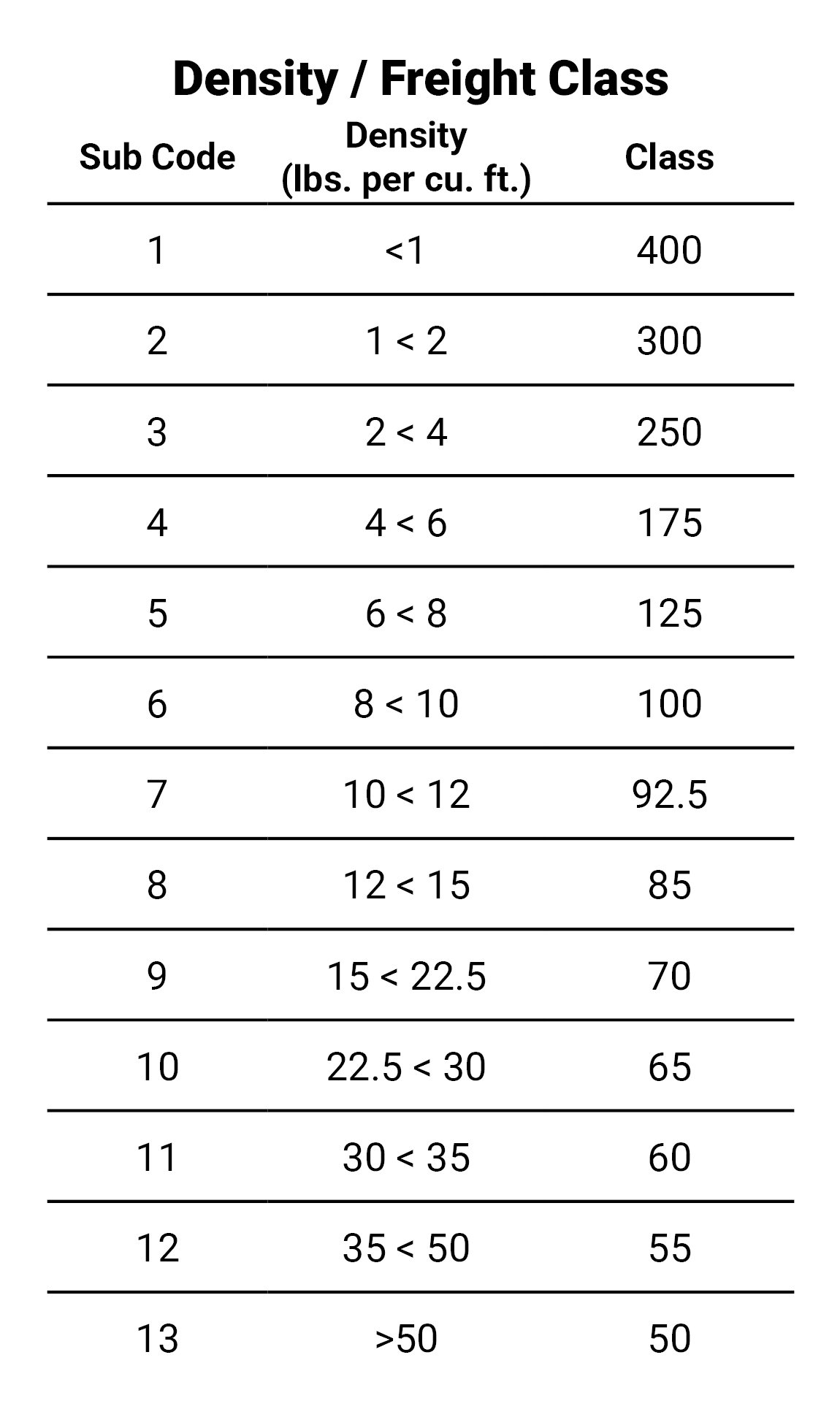
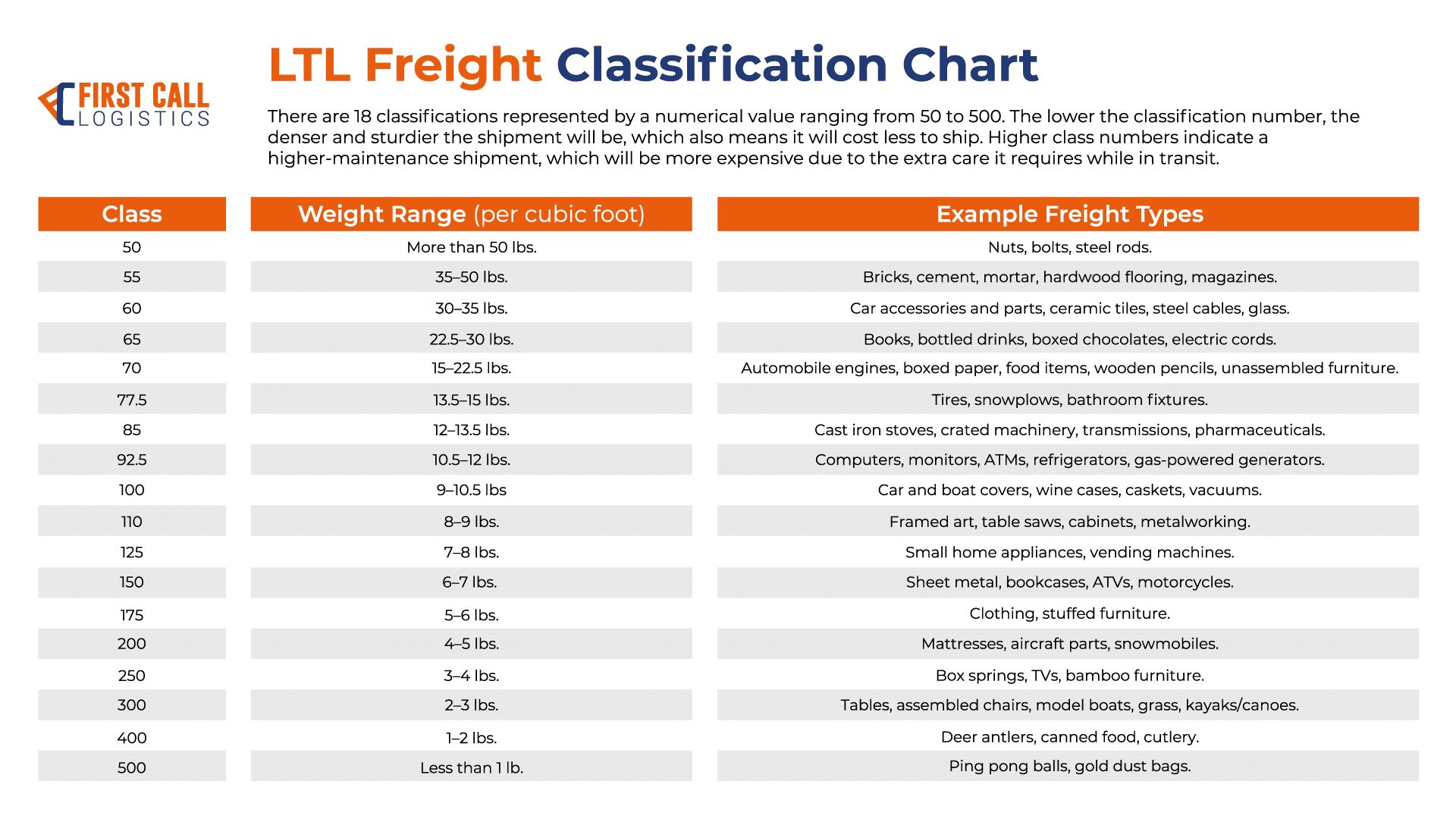
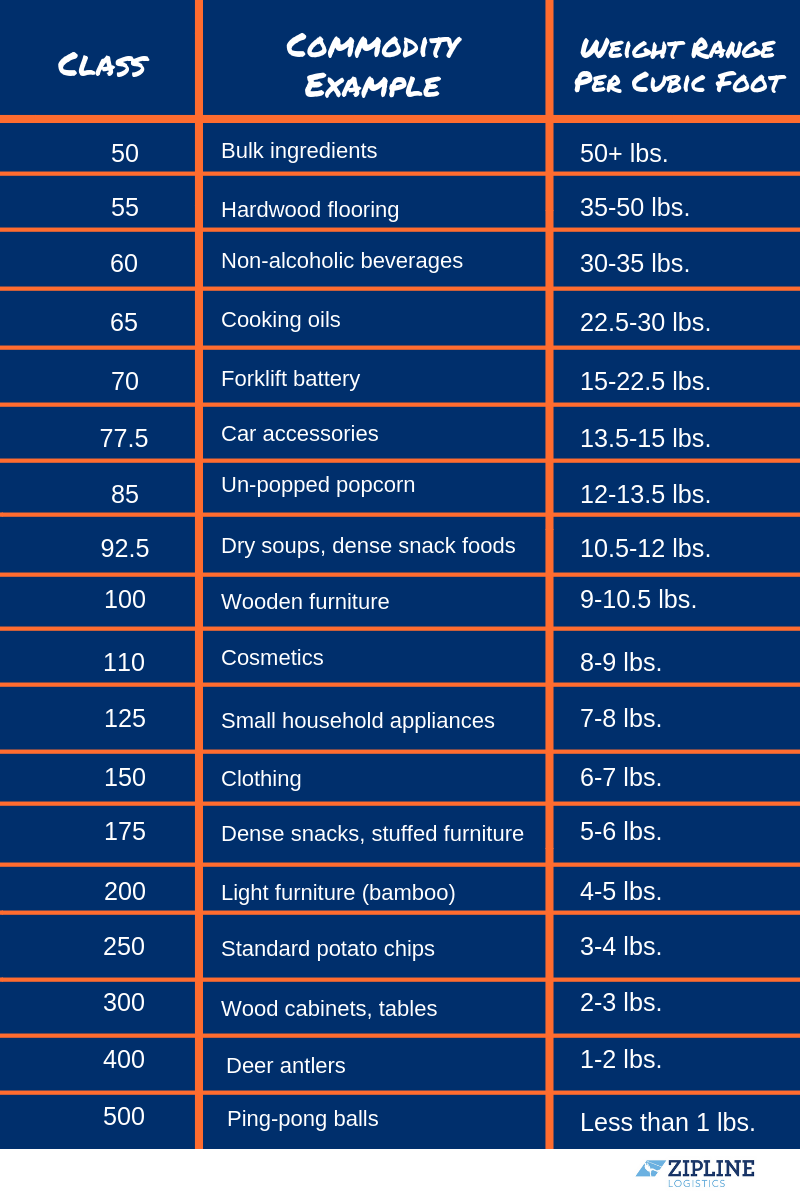
Density, calculated as pounds per cubic foot (lbs/cu ft), is arguably the most significant factor influencing freight class. It measures how much an item weighs relative to the space it occupies. High-density items, such as bricks or steel, occupy less space per pound, making them more efficient to transport because carriers can fit more weight into a single trailer. These items typically receive lower freight classes (e.g., Class 50-92.5). Conversely, low-density items, like lightweight plastic furniture or insulation, take up considerable space without much weight, making them less efficient for carriers. These items are assigned higher freight classes (e.g., Class 250-500) due to their “cubing out” a trailer before it “weights out.” From a financial perspective, maximizing the density of shipments through compact packaging or collapsible product designs can lead to substantial savings by qualifying for lower freight classes.
Stowability: Maximizing Space, Minimizing Cost
Stowability refers to how easily an item can be loaded and transported with other freight. Products that are irregular in shape, excessively long, fragile, or possess characteristics that prevent them from being stacked or loaded efficiently with other goods often receive a higher freight class. Examples include items with projections, sharp edges, or those requiring special handling or isolation due to hazardous properties. These items reduce the carrier’s ability to maximize trailer space or require specialized equipment, incurring higher operational costs that are passed on to the shipper. Financially, designing products or packaging to be more stackable, uniform, or less prone to damage can significantly improve stowability, leading to lower freight costs.
Handling: Labor, Equipment, and Expenses
The handling characteristic considers the ease or difficulty of moving freight. Items that are oversized, extremely heavy, fragile, oddly shaped, or require specialized equipment (like cranes or multiple personnel) for loading, unloading, or terminal handling will generally be assigned a higher freight class. The more labor-intensive or equipment-dependent a shipment is, the higher the carrier’s operational costs. For businesses, this translates to increased shipping expenses. Implementing robust packaging that reduces fragility, breaking down large items into manageable components, or palletizing goods to allow for forklift handling can mitigate these handling complexities and potentially reduce the assigned freight class, leading to financial savings.
Liability: Risk, Insurance, and Value
Liability pertains to the likelihood of freight theft, damage, or damage to other freight. Commodities that are inherently valuable, prone to damage, or easily stolen represent a higher financial risk to the carrier. For instance, electronics, fine art, or highly specialized machinery typically fall into higher liability categories. These items often necessitate increased security measures, specialized handling, or command higher insurance premiums for the carrier, all of which contribute to higher transportation costs. Understanding the liability factor means shippers must consider the value and fragility of their goods. Investing in superior protective packaging, utilizing tracking technology, or purchasing supplemental cargo insurance can indirectly influence the carrier’s perception of risk and, in some cases, mitigate the impact on freight class, thereby controlling costs.
The National Motor Freight Traffic Association (NMFTA) and NMFC Codes
The National Motor Freight Traffic Association (NMFTA) is the organization responsible for establishing and maintaining the National Motor Freight Classification (NMFC) tariff. This tariff contains descriptions of commodities and the rules, regulations, and packaging requirements governing their transport. Each unique commodity description in the NMFC is assigned a specific NMFC item number, which then correlates to a freight class. Understanding the NMFTA’s role and the structure of NMFC codes is paramount for any business aiming for financial prudence in its LTL shipping operations.
Standardizing Rates for Transparency
The NMFTA’s primary function in setting NMFC codes and freight classes is to provide a standardized, transparent system that allows both carriers and shippers to determine appropriate pricing for LTL shipments. This standardization helps prevent arbitrary pricing and ensures that the cost of shipping is directly related to the actual burden the freight places on the carrier’s resources. For shippers, this transparency allows for better budgeting, more accurate cost forecasting, and the ability to compare quotes from different carriers on an apples-to-apples basis. Without this standardized system, the LTL market would be significantly more opaque, making cost management and financial planning far more challenging. Access to the NMFC database, typically through a subscription, is an invaluable tool for logistics and finance professionals.
The Role of Freight Brokers in Class Optimization
Freight brokers often play a crucial role in helping shippers navigate the complexities of freight classification. With their extensive experience and access to the latest NMFC updates, brokers can assist businesses in accurately classifying their goods. This expertise is particularly valuable for companies shipping a diverse range of products or those with limited in-house logistics resources. A skilled freight broker can help identify potential misclassifications, suggest packaging improvements that could lead to a lower class, and leverage their carrier relationships to negotiate more favorable rates based on accurate classifications. For many businesses, the cost of utilizing a freight broker is outweighed by the financial savings achieved through optimized freight classification and reduced reclassification charges.
Strategizing for Cost-Effective Freight Shipping
Beyond simply understanding freight class, businesses can implement strategic measures to leverage this knowledge for significant financial benefits. Proactive planning and consistent oversight are key to transforming freight classification from a mere operational necessity into a powerful tool for cost management and profit enhancement.
Packaging for Optimal Classification
One of the most direct ways to influence freight class, and thus shipping costs, is through strategic packaging. For many products, the dimensions and robustness of the packaging are directly tied to the item’s density, stowability, and handling characteristics. Investing in packaging that is compact, durable, and stackable can significantly reduce an item’s cubic volume, increase its density, and improve its stowability. For example, using custom-fit inserts to reduce empty space within boxes, opting for corrugated materials that allow for higher stacking, or choosing collapsible containers for return logistics can all lead to a more favorable freight class. A thorough financial analysis of packaging material costs versus the potential savings from lower freight classes is essential for making informed decisions. This might involve an upfront investment in packaging design that yields substantial long-term savings on transportation expenses.
Auditing Freight Bills
Regularly auditing freight bills is a critical financial control practice. Even with careful classification, errors can occur, or carriers might reclassify a shipment without full justification. By meticulously reviewing each freight invoice against the original bill of lading and the actual shipment characteristics, businesses can identify discrepancies, such as incorrect freight classes applied by the carrier, inaccurate weight calculations, or duplicate charges. Recovering these overcharges can amount to significant savings over time. Many third-party logistics (3PL) providers and specialized auditing services offer expertise in this area, often working on a contingency basis, meaning they only charge a percentage of the savings they recover. This makes freight bill auditing a low-risk, high-reward financial strategy.
Leveraging Technology for Accuracy and Savings
Modern logistics technology offers powerful tools to enhance freight classification accuracy and drive cost savings. Sophisticated Transportation Management Systems (TMS) can integrate NMFC data, automatically calculate density, and suggest optimal freight classes based on detailed product information. These systems can also automate the generation of bills of lading, minimizing manual errors that often lead to misclassification. Furthermore, advanced freight spend analytics tools provide deep insights into shipping patterns, allowing businesses to identify trends in classification errors, opportunities for consolidation, or areas where product design changes could lead to lower freight classes. The initial investment in such technology often pays dividends through reduced shipping costs, improved compliance, and enhanced financial oversight of the entire logistics operation.
aViewFromTheCave is a participant in the Amazon Services LLC Associates Program, an affiliate advertising program designed to provide a means for sites to earn advertising fees by advertising and linking to Amazon.com. Amazon, the Amazon logo, AmazonSupply, and the AmazonSupply logo are trademarks of Amazon.com, Inc. or its affiliates. As an Amazon Associate we earn affiliate commissions from qualifying purchases.