
Understanding the 8-K: The “Current Report”
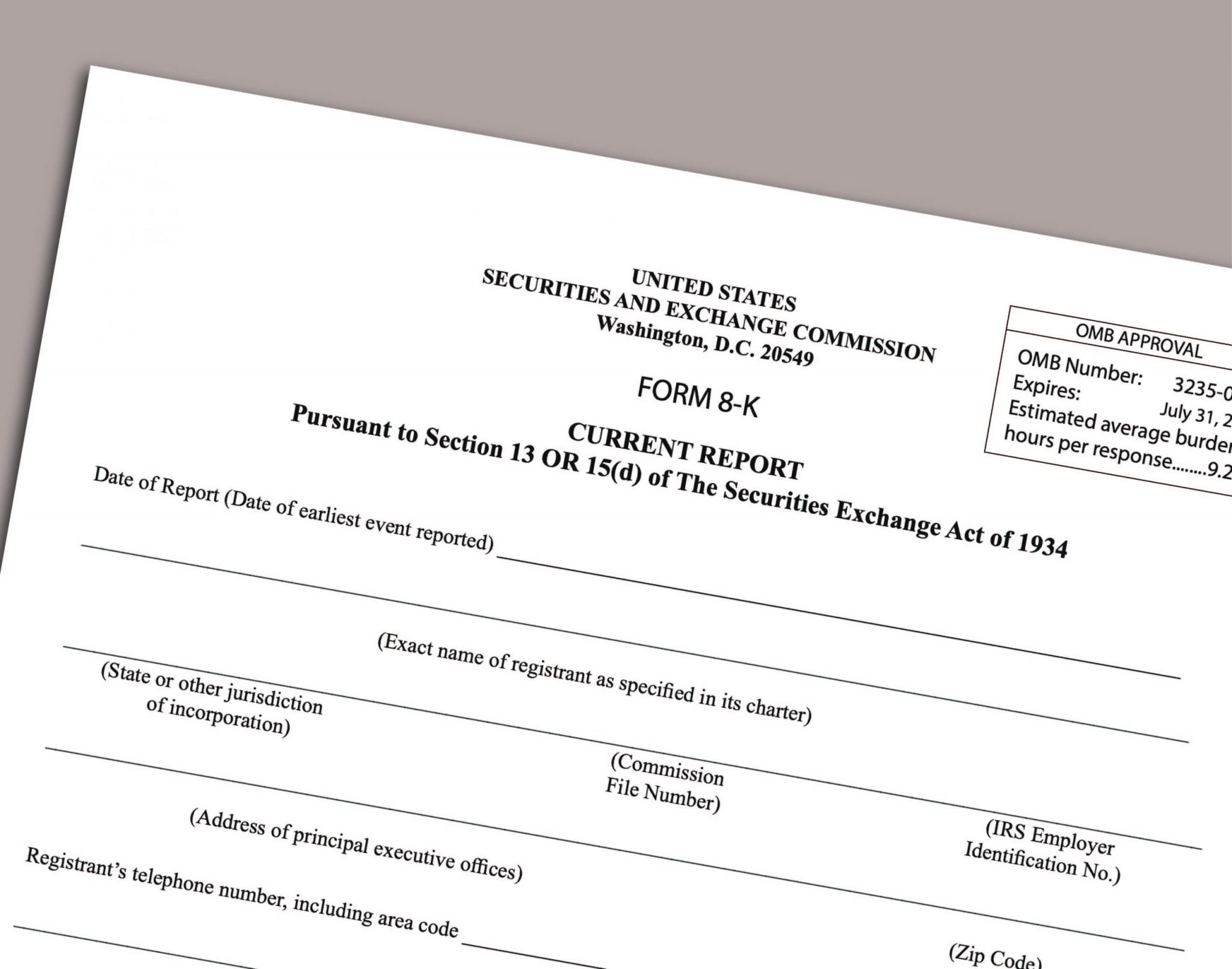
In the intricate world of finance and investing, transparency is paramount. For publicly traded companies, the U.S. Securities and Exchange Commission (SEC) mandates a rigorous reporting framework designed to ensure that investors have access to timely and material information. Among the various filings required, the Form 8-K stands out as a critical mechanism for real-time disclosure, often referred to as a “current report.”
A Mandate for Transparency
The SEC, established to protect investors, maintain fair, orderly, and efficient markets, and facilitate capital formation, requires public companies to make periodic disclosures. While quarterly (Form 10-Q) and annual (Form 10-K) reports provide comprehensive financial and operational updates, they are by nature retrospective. The Form 8-K, however, serves a distinct purpose: to alert the investing public to significant, often unexpected, events that could materially affect the company’s financial condition, operations, or shareholder value as they happen. This timely disclosure is crucial for preventing informational asymmetry and allowing investors to make informed decisions based on the most current data. Without such a mechanism, insider information could unfairly influence market movements, undermining the integrity of public markets.

Who Files and When?
Any company whose securities are registered under the Securities Exchange Act of 1934 and are thus publicly traded on a stock exchange is obligated to file Form 8-K. This includes virtually all companies that trade on major exchanges like the NYSE or Nasdaq. The filing requirement is triggered by specific events deemed “material” by the SEC. Once such an event occurs, the company generally has a tight window—typically four business days—to file the Form 8-K with the SEC. This swift turnaround underscores the immediate relevance of the information contained within these filings. There are some exceptions, such as certain voluntary disclosures (like earnings releases provided under Item 2.02, which might have earlier announcements via press releases), but the core principle remains one of prompt public notification.
Why Form 8-K Matters for Investors and Businesses
The Form 8-K is more than just a regulatory hurdle; it’s a vital communication tool that underpins market efficiency and fosters trust between companies and their stakeholders. Its impact reverberates across both the investment community and corporate boardrooms.
Investor Protection and Informed Decision-Making
For investors, the 8-K is an indispensable resource. It provides a real-time pulse on a company’s health and trajectory, offering early insights into developments that could significantly alter its risk profile or growth prospects. A sudden change in leadership, a major acquisition or divestiture, a bankruptcy filing, or a significant change in financial reporting standards can all have profound implications for a stock’s valuation. By quickly disseminating this information, 8-Ks allow investors to react promptly, whether by adjusting their portfolio allocations, re-evaluating their investment theses, or initiating further due diligence. Financial analysts and institutional investors closely monitor 8-K filings as they often contain “market-moving” information that can lead to rapid price adjustments and shifts in market sentiment. Understanding these disclosures is a cornerstone of prudent investment strategy, helping to protect capital and seize opportunities.
Corporate Governance and Compliance
From a business perspective, diligent 8-K filing is a cornerstone of strong corporate governance and regulatory compliance. It demonstrates a company’s commitment to transparency and accountability, which are vital for maintaining investor confidence and a positive market reputation. Failing to file an 8-K in a timely manner, or omitting material information, can lead to severe consequences. These can include SEC enforcement actions, substantial fines, delisting from exchanges, and costly shareholder lawsuits. Beyond the legal ramifications, such lapses erode trust, making it harder for companies to raise capital, attract talent, or maintain favorable relationships with suppliers and customers. Therefore, public companies invest significant resources in establishing robust internal controls and legal frameworks to ensure accurate and timely identification and reporting of 8-K triggering events.
Key Events Triggering an 8-K Filing
The SEC specifies a comprehensive list of events that necessitate an 8-K filing, categorized to cover a broad spectrum of corporate activities. These categories are defined by specific “items” within the Form 8-K structure.
Financial and Business Operations Changes
- Item 1.01 Entry into a Material Definitive Agreement: When a company signs a significant contract, such as a major supply agreement, licensing deal, or merger agreement.
- Item 1.02 Termination of a Material Definitive Agreement: The cancellation of such a significant agreement.
- Item 1.03 Bankruptcy or Receivership: Any event related to a company’s insolvency or restructuring under bankruptcy laws.
- Item 2.01 Completion of Acquisition or Disposition of Assets: When a company buys or sells a significant asset, business segment, or another company.
- Item 2.02 Results of Operations and Financial Condition: While often disclosed in press releases, companies may also file an 8-K to furnish earnings announcements and other financial performance updates.
- Item 2.03 Creation of a Direct Financial Obligation or an Obligation under an Off-Balance Sheet Arrangement: For instance, incurring significant new debt or guaranteeing another entity’s debt.
- Item 2.04 Triggering Events That Accelerate or Increase a Direct Financial Obligation: Events that cause existing debt to become immediately due or increase its cost.
- Item 2.05 Costs Associated with Exit or Disposal Activities: When a company announces plans for significant layoffs, plant closures, or other restructuring efforts.
- Item 2.06 Material Impairments: Recognising a significant reduction in the value of assets.
Changes in Management and Corporate Governance
- Item 5.01 Changes in Control of Registrant: Any event resulting in a change of who controls the company.
- Item 5.02 Departure of Directors or Principal Officers; Election of Directors; Appointment of Principal Officers: The resignation, retirement, death, or appointment of key executives or board members.
- Item 5.03 Amendments to Articles of Incorporation or Bylaws; Change in Fiscal Year: Any changes to the company’s foundational governing documents.
- Item 5.04 Temporary Suspension of Trading Under Registrant’s Employee Benefit Plans: Restrictions on employees trading company stock.
Securities and Market Matters
- Item 3.01 Notice of Delisting or Failure to Satisfy a Continued Listing Rule: When a company is at risk of being removed from a stock exchange.
- Item 3.02 Unregistered Sales of Equity Securities: Issuance of new stock without a public registration statement, such as through private placements.
- Item 3.03 Material Modifications to Rights of Security Holders: Changes affecting the rights of shareholders or other security holders.
Other Material Events
- Item 4.01 Change in Registrant’s Certifying Accountant: The engagement or dismissal of the company’s independent auditing firm.
- Item 4.02 Non-Reliance on Previously Issued Financial Statements or a Related Audit Report: This is a critical item, indicating that prior financial reports cannot be trusted due to errors or fraud.
- Item 5.05 Amendments to the Registrant’s Code of Ethics, or Waiver of a Provision of the Code of Ethics: Significant changes or waivers granted to the company’s ethical guidelines.
- Item 8.01 Other Events: This is a catch-all for any other material event that the company believes is important for investors to know, even if not specifically covered by other items.
Navigating the 8-K: How to Access and Interpret Filings
For investors and financial professionals, knowing how to efficiently access and accurately interpret Form 8-K filings is a valuable skill. It allows for swift extraction of critical data and contextual understanding of corporate developments.
Accessing 8-K Filings
The primary and most authoritative source for all SEC filings, including Form 8-K, is the SEC EDGAR database (Electronic Data Gathering, Analysis, and Retrieval system). This public database is free to use and provides a complete archive of all regulatory disclosures. Users can search by company name, ticker symbol, or filing type. Additionally, virtually every public company maintains an “Investor Relations” section on its corporate website, where it posts its SEC filings, often in a more user-friendly format. Financial news outlets, brokerage platforms, and specialized financial data providers also aggregate and disseminate 8-K information, often with additional analysis and alerts.
What to Look For: Key Sections and Data Points
When reviewing an 8-K, start by identifying the “Item” numbers at the beginning of the document. These numerically correspond to the categories of events described above (e.g., Item 2.01 for an acquisition, Item 5.02 for executive changes). Understanding which item is being reported immediately tells you the nature of the news.
While 8-Ks can contain legalistic language, companies often include plain English summaries, especially for complex events. Look for the narrative describing the event, its effective date, and any material terms or conditions. For financial events (e.g., acquisitions, debt issuance), pay attention to reported dollar amounts, valuations, and any impact on existing financial obligations. If the filing refers to an exhibit, such as a definitive agreement, reviewing that exhibit can provide granular details that are critical for a full understanding. Finally, be mindful of forward-looking statements and associated risk factors, which often accompany these disclosures, as they offer management’s perspective on future implications but are subject to uncertainty.
Strategic Implications and Compliance
The robust framework surrounding Form 8-K filings carries significant strategic weight for businesses and offers substantial advantages for discerning investors.
For Businesses: Proactive Disclosure and Reputation Management
Successfully navigating 8-K requirements demands a proactive and integrated approach from public companies. This involves establishing robust internal controls capable of identifying material events as they occur, ensuring that relevant information is escalated to legal, financial, and executive teams promptly. Timely and accurate filing isn’t just about avoiding penalties; it’s a critical component of reputation management. Companies that consistently provide transparent and clear disclosures build trust with investors, analysts, and the wider market. This trust can translate into a lower cost of capital, stronger shareholder loyalty, and a more resilient stock price during periods of market volatility. Furthermore, by anticipating and clearly articulating the implications of an event in an 8-K, companies can shape the narrative and mitigate potential negative market reactions.
For Investors: Developing an Information Advantage
For investors, mastering the art of consuming 8-K filings can provide a significant information advantage. Rather than relying solely on mainstream news headlines, which often summarize or simplify complex events, direct engagement with the original 8-K allows for a nuanced understanding. Savvy investors integrate 8-K reviews into their routine due diligence, cross-referencing information with a company’s 10-K and 10-Q reports, analyst reports, and broader economic indicators. For example, an 8-K detailing an executive departure (Item 5.02) might prompt a deeper dive into management stability, while an acquisition announcement (Item 2.01) could lead to an analysis of the strategic fit and financial implications for the acquiring company. By understanding the specific item categories and the typical boilerplate language, investors can quickly pinpoint critical information and identify potential risks or opportunities before they are fully priced into the market.

The Cost of Non-Compliance
The SEC maintains a vigilant watch over 8-K compliance. The cost of non-compliance can be steep and multi-faceted. On the regulatory front, companies face SEC enforcement actions, which can range from public censures and cease-and-desist orders to substantial monetary penalties. Failure to disclose material information or filing inaccurate reports can lead to charges of fraud, damaging a company’s standing and incurring significant legal fees. Beyond regulatory sanctions, non-compliance severely damages a company’s reputation, eroding investor confidence and potentially leading to a depressed stock valuation. Furthermore, it can open the door to class-action lawsuits from disgruntled shareholders who claim they were harmed by misleading or omitted information. Therefore, stringent adherence to 8-K rules is not merely a formality but a fundamental aspect of operating as a public company in a highly regulated financial landscape.
aViewFromTheCave is a participant in the Amazon Services LLC Associates Program, an affiliate advertising program designed to provide a means for sites to earn advertising fees by advertising and linking to Amazon.com. Amazon, the Amazon logo, AmazonSupply, and the AmazonSupply logo are trademarks of Amazon.com, Inc. or its affiliates. As an Amazon Associate we earn affiliate commissions from qualifying purchases.