
In the vast landscape of computer science and discrete mathematics, few concepts are as foundational—yet as practically influential—as the Eulerian circuit. While the term might sound like an abstract relic of 18th-century mathematics, it serves as the invisible backbone for much of the software and networking technology we rely on today. From the routing of data packets across the internet to the complex sequencing of the human genome, the Eulerian circuit provides a mathematical framework for traversing networks with maximum efficiency and zero redundancy.
Understanding what a Eulerian circuit is, and how it differs from other graph-theory concepts, is essential for software engineers, data scientists, and network architects. This article explores the technical nuances of Eulerian logic, its algorithmic implementations, and its critical role in modern technology trends.
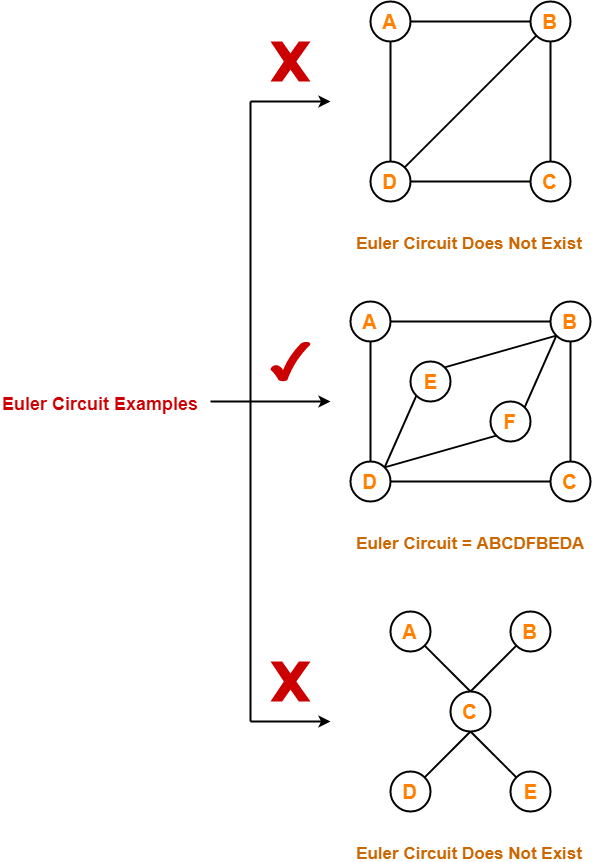
1. The Mathematical Origins of Connectivity
The story of the Eulerian circuit begins not in a computer lab, but in the city of Königsberg, Prussia, in 1736. The city was divided by the Pregel River and featured seven bridges. Residents wondered if it was possible to walk through the city by crossing each bridge exactly once and returning to the starting point. Leonhard Euler, a Swiss mathematician, proved it was impossible, and in doing so, he birthed the field of graph theory.
Defining the Eulerian Circuit in Tech Terms
In modern technical terms, we represent a system as a “graph” consisting of “vertices” (nodes) and “edges” (the links between them).
- Eulerian Path: A trail in a graph that visits every edge exactly once.
- Eulerian Circuit: An Eulerian path that starts and ends on the same vertex.
For a computer scientist, the Eulerian circuit represents the “perfect” traversal. If you are designing an algorithm to map a territory or inspect a fiber-optic network, an Eulerian circuit ensures that every segment is covered without the computational or physical waste of backtracking.
The Criteria for Existence
Not every network supports an Eulerian circuit. In the world of software engineering, we use “Euler’s Theorem” to determine if a graph is Eulerian before attempting to run a traversal algorithm. For an undirected graph to have an Eulerian circuit, it must meet two strict conditions:
- Connectivity: All vertices with a non-zero degree must belong to a single connected component.
- Even Degrees: Every single vertex in the graph must have an “even degree.” This means every node must have an even number of edges connected to it.
In a directed graph (where edges have a specific direction, like one-way streets or data streams), the condition is that for every vertex, the “in-degree” (incoming connections) must equal the “out-degree” (outgoing connections).
2. Core Properties and Technical Classifications
To implement Eulerian logic in software or AI tools, one must distinguish it from its more famous—and more difficult—cousin: the Hamiltonian cycle. While the Eulerian circuit focuses on visiting every edge (connection) exactly once, the Hamiltonian cycle focuses on visiting every vertex (node) exactly once.
Eulerian vs. Hamiltonian: Computational Complexity
From a developer’s perspective, the difference is massive. Detecting an Eulerian circuit can be done in “polynomial time” ($O(E)$, where $E$ is the number of edges). This makes it computationally “easy” and highly scalable for large-scale data applications. Conversely, finding a Hamiltonian cycle is an “NP-complete” problem, which is computationally expensive and often requires heuristic approaches or AI approximations for large datasets.
Variations in Directed and Undirected Graphs
In technology, we rarely deal with simple undirected lines. Most software systems utilize directed graphs (Digraphs) or multigraphs (where multiple edges exist between nodes).
- Digraphs: Essential for web crawling and state machine transitions.
- Multigraphs: Common in telecommunications where multiple cables connect two data centers.
Eulerian logic scales across these variations, provided the fundamental balance of “entry and exit” points remains intact.

3. Algorithmic Implementation: From Theory to Code
Knowing that a circuit exists is only half the battle; a software engineer must be able to compute the path. There are two primary algorithms used in modern software development to find an Eulerian circuit.
Fleury’s Algorithm
Fleury’s algorithm is the more intuitive, “greedy” approach. It works by following a simple rule: “Don’t cross a bridge unless you have to.” In graph theory, a “bridge” is an edge that, if removed, would disconnect the graph.
While conceptually simple, Fleury’s algorithm is less efficient for massive datasets because it requires constant checking for bridges, leading to a time complexity of $O(E^2)$. In modern high-performance computing, this is often too slow.
Hierholzer’s Algorithm: The Efficient Standard
For modern applications, Hierholzer’s algorithm is the gold standard. It operates by finding a simple cycle, then finding another cycle starting from a node in the first cycle, and “splicing” them together.
- Start at any vertex and follow a trail of edges until you return to the start.
- If there are unused edges, find a vertex on your current path that has an unused edge and start a new cycle from there.
- Join the cycles.
Hierholzer’s runs in linear time, $O(E)$, making it the preferred choice for real-time routing software and large-scale AI pathfinding.
4. Real-World Applications in Software and AI
The Eulerian circuit is not just a mathematical curiosity; it is a workhorse of the digital age. Its ability to solve the “Route Inspection Problem” makes it indispensable across several tech niches.
Network Routing and Telecommunications
In the physical layer of the internet, data is sent across fiber optic cables. When a network provider needs to inspect the integrity of their lines or synchronize data across a specific topology, Eulerian circuits allow the diagnostic software to cover every single link in the network without redundant travel. This minimizes “latency” and maximizes the efficiency of the diagnostic tool.
Bioinformatics and DNA Sequencing
One of the most innovative uses of Eulerian circuits is in the field of genomics. When scientists sequence DNA, they cannot read a whole chromosome at once. Instead, they break it into millions of small overlapping fragments (k-mers). Software then constructs a “de Bruijn graph” where these fragments are edges. To reconstruct the original DNA sequence, the software finds an Eulerian path through the graph. This application is a cornerstone of modern biotechnology and personalized medicine.
Robotics and Autonomous Systems
For autonomous drones or self-driving street sweepers, efficiency is tied directly to battery life. If a robot is programmed to clean a set of streets or inspect the blades of a wind farm, the software uses Eulerian logic to ensure that every “edge” of the task is completed without crossing the same path twice. This optimization is critical for the commercial viability of autonomous service robots.
Digital Circuit Design
In VLSI (Very Large Scale Integration) design, engineers must lay out the physical connections on a microchip. Minimizing the “crossover” of wires and ensuring that the etching process is continuous can sometimes be modeled as an Eulerian problem. By optimizing the path of the laser or the deposition tool, manufacturers can increase yield and reduce production time.
5. The Future of Eulerian Logic in Digital Security and AI
As we look toward the future of technology, the principles of graph traversal are evolving to meet the challenges of cybersecurity and advanced Artificial Intelligence.
Cybersecurity and Intrusion Detection
Modern digital security tools use graph theory to model the flow of traffic within a corporate network. By identifying the “normal” Eulerian-like flow of data packets, AI-driven security systems can detect anomalies. If a data packet takes a path that violates the expected graph symmetry—such as “exfiltrating” data through a node that should only be a receiver—the system flags it as a potential breach.
AI and Neural Network Optimization
In the training of Large Language Models (LLMs) and deep neural networks, “sparsity” is becoming a major trend. Instead of every neuron connecting to every other neuron, developers are creating specialized, sparse graphs. Eulerian principles help in understanding how information “flows” through these sparse architectures, ensuring that there are no “dead ends” in the neural pathways and that the gradient descent process is as efficient as possible.

Conclusion: The Enduring Power of the Edge
The Eulerian circuit represents a perfect marriage of simplicity and power. In a world where data is becoming increasingly complex, the ability to find a clear, efficient, and non-redundant path through a network is more valuable than ever. Whether it is a software developer optimizing a routing algorithm, a bioinformatician mapping the building blocks of life, or a network architect securing a global cloud infrastructure, the legacy of Leonhard Euler continues to drive the frontiers of technology. By mastering these ancient mathematical truths, we continue to build a more efficient and connected digital future.
aViewFromTheCave is a participant in the Amazon Services LLC Associates Program, an affiliate advertising program designed to provide a means for sites to earn advertising fees by advertising and linking to Amazon.com. Amazon, the Amazon logo, AmazonSupply, and the AmazonSupply logo are trademarks of Amazon.com, Inc. or its affiliates. As an Amazon Associate we earn affiliate commissions from qualifying purchases.