
The evolution of the Pokémon franchise has always been intrinsically linked to the hardware capabilities of the platforms it inhabits. From the monochromatic sprites of the Game Boy to the sprawling open worlds of the Nintendo Switch, each generation introduces a flagship “gimmick” that pushes the boundaries of game design and technical implementation. Among these, the “Dynamax” phenomenon introduced in Pokémon Sword and Shield—and recently integrated into the mobile powerhouse Pokémon GO—stands as a fascinating case study in game engine scaling, network synchronization, and visual asset management.

To the casual player, a Dynamax Pokémon is simply a creature that grows to a gargantuan size. However, from a technical perspective, Dynamaxing represents a complex interplay of graphical rendering, statistical algorithms, and server-side architecture designed to maintain competitive balance while delivering a high-fidelity visual spectacle.
The Mechanics of Virtual Scale: How Game Engines Process Dynamaxing
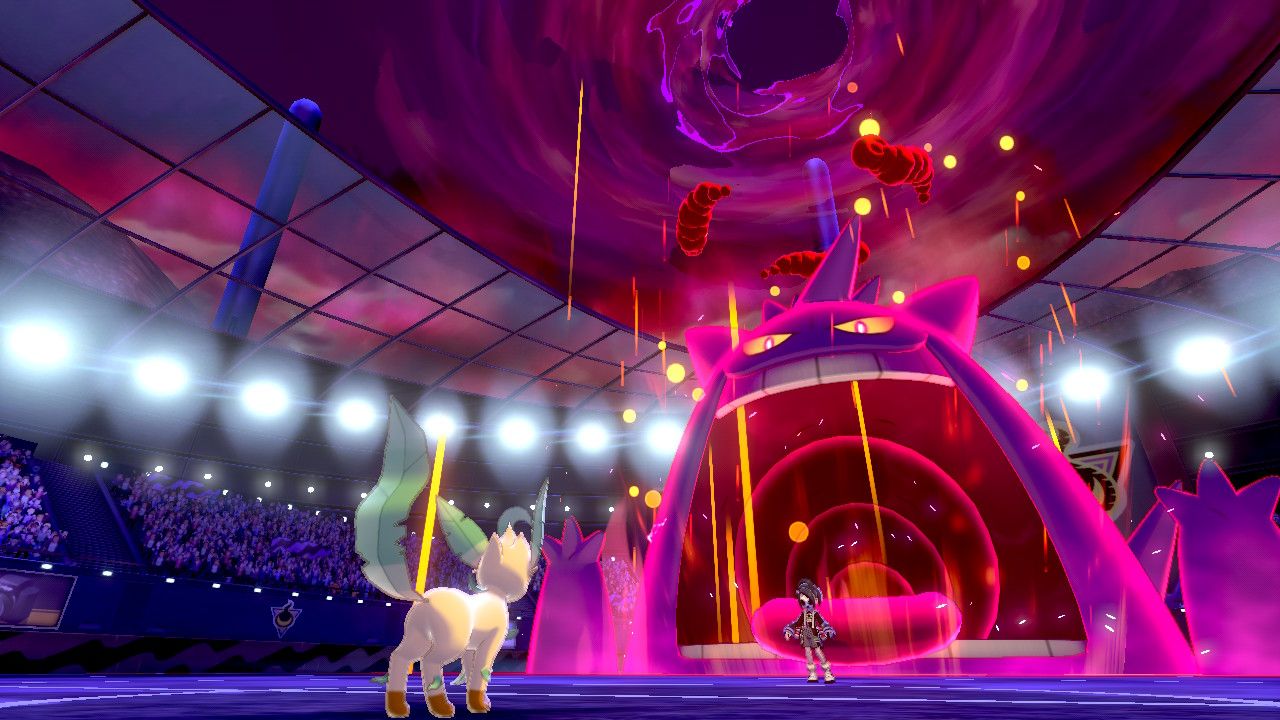
At its core, the Dynamax mechanic is an exercise in dynamic asset manipulation. When a player triggers the Dynamax command, the game engine must handle a rapid transition in scale, lighting, and environmental interaction without compromising the frame rate or causing “clipping” issues.
Scaling and Model Swapping
In traditional 3D game design, simply increasing the scale of a 3D model (the “transform” properties) can lead to unintended consequences, such as texture stretching or pixelation. To combat this, the developers at Game Freak and Niantic utilize a combination of high-resolution textures and procedural shaders. When a Pokémon Dynamaxes, the engine doesn’t just “embiggen” the existing model; it often swaps the standard model for a version optimized for large-scale rendering.
Furthermore, the “Gigantamax” sub-category introduces entirely new meshes. These are not merely larger versions of the base Pokémon but unique 3D assets with additional geometry and complex particle effects—such as the swirling red clouds and lightning that circle the creature’s head. Managing these assets requires efficient VRAM (Video RAM) allocation to ensure the hardware can render these massive entities alongside three other trainers and the environment.
Collision Detection and Environmental Interaction
One of the most significant technical hurdles in implementing giant characters is collision detection. In the “Max Raid Dens” of the Galar region, the environment is specifically designed to accommodate a static, oversized entity. However, in more dynamic environments, the engine must calculate the “hitboxes” of these giants.
The tech behind Dynamaxing involves a “nested” hitbox system where the creature’s interactable area expands proportionally. This ensures that move animations—specifically the “Max Moves”—align correctly with the target’s coordinates. The game must also calculate the “camera frustum” (the field of vision) to ensure that the player can actually see the battle when one participant takes up 80% of the screen.
Network Infrastructure and Multiplayer Syncing in Max Raid Battles
The Dynamax feature was the catalyst for the introduction of “Max Raid Battles,” a cooperative multiplayer mode that allows four players to challenge a single, powerful entity. This required a robust shift in how the Pokémon series handles network synchronization and state management.
Real-Time Synchronization Across Devices
In a standard turn-based battle, the amount of data transmitted between players is minimal—mostly just move selections and RNG seeds. However, Dynamax battles introduce complex status shifts, such as “Max Guard” barriers and multi-hit shield mechanics. The server must maintain a “Single Source of Truth” to ensure that all four players see the same shield HP and the same animation cycles simultaneously.
This is achieved through a “lock-step” synchronization protocol. Before an animation plays, all four clients must acknowledge the state of the turn. If one player experiences high latency, the tech must decide whether to stall the animation for everyone or utilize “interpolation” to predict the missing data packets, ensuring the visual experience remains smooth even on suboptimal connections.
Latency Management and Turn Logic
To maintain the professional standard of competitive play, the technical backend for Dynamaxing must account for “Max Move” effects. Unlike standard moves, Max Moves often have secondary effects that change the weather or terrain for the entire field. The server must process these environmental variables in real-time and push the updates to all connected clients. This transition from a 1v1 data stream to a 1v4 broadcast model represented a significant upgrade in the franchise’s proprietary networking code, paving the way for the even more complex “Tera Raid” systems seen in later iterations.
Integrating Dynamax into Pokémon GO: AR and Geospatial Tech
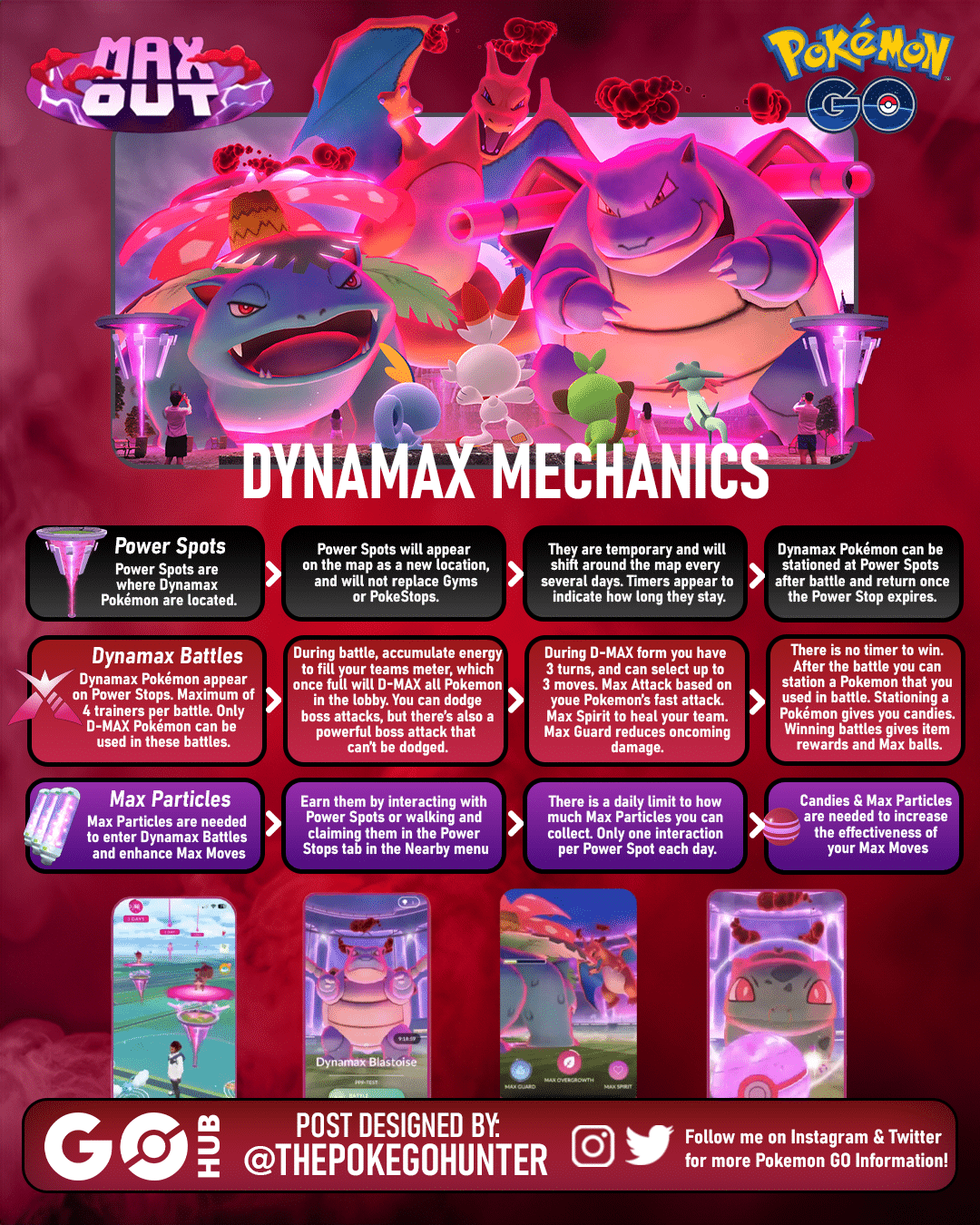
The recent integration of Dynamax Pokémon into Pokémon GO presents a different set of technical challenges, primarily centered around Augmented Reality (AR) and Niantic’s Lightship platform. Unlike the controlled environment of a console game, the mobile experience must render giant Pokémon against the backdrop of the real world.
Power Spots and Map Integration
The technical foundation of Dynamax in Pokémon GO relies on “Power Spots.” These are temporary geospatial anchors that leverage Niantic’s Real-World Map technology. Unlike traditional Gyms or PokéStops, Power Spots are designed to be more fluid and numerous. The backend uses a specialized algorithm to distribute these spots based on population density and local map data, ensuring that “Max Particles”—the resource required to Dynamax—are accessible to players without cluttering the UI.
The Transition to the Lightship Platform
Niantic utilizes its Lightship ARDK (AR Development Kit) to handle the visual rendering of Dynamax Pokémon. This involves “Occlusion” technology, which allows the digital giant to appear as though it is actually standing behind real-world buildings or trees.
The tech also involves “Semantic Segmentation,” where the phone’s camera identifies what is “ground” and what is “sky.” This is crucial for Dynamax Pokémon, as their sheer size means their models often intersect with the horizon. By using AI-driven depth sensing, the software ensures that the Dynamax Pokémon looks grounded in the physical space rather than floating precariously over the camera lens.
The Algorithmic Balance: Using Data to Refine the Meta
From a technical standpoint, Dynamaxing isn’t just a visual upgrade; it is a massive shift in the game’s underlying data structures. Every Pokémon’s base stats are recalculated the moment they transform, a process that requires a seamless transition in the game’s logic engine.
Statistical Scaling and Move Modification
When a Pokémon Dynamaxes, its HP is multiplied by a factor ranging from 1.5 to 2.0. This isn’t a simple visual bar growth; the engine must re-index the Pokémon’s current health percentage and apply it to the new “Dynamax Level” stat. Simultaneously, the entire move pool of the Pokémon is swapped for “Max Moves.”
This requires a “look-up table” (LUT) within the game’s code that maps every one of the nearly 900 standard moves to its corresponding Max Move equivalent. The tech must also calculate the base power of these moves dynamically, based on the original move’s strength, all while maintaining the integrity of the turn-based logic.
Post-Release Patching and Meta-Analysis
In the professional competitive circuit (VGC), Dynamaxing was one of the most polarizing mechanics ever introduced. The developers at The Pokémon Company International (TPCi) used telemetry data to monitor how Dynamaxing affected win rates. This “Big Data” approach allowed them to identify which Pokémon became “broken” when scaled up.
By analyzing millions of battle logs, developers could adjust the “Max Move” effects in subsequent patches or seasonal rulesets. This iterative process of using player data to balance technical mechanics is a hallmark of modern “Games as a Service” (GaaS) architecture, ensuring that the technology serves the gameplay rather than overshadowing it.
Conclusion: The Future of Scaling Tech in Gaming
What is a Dynamax Pokémon? Beyond the lore of the Galar region, it is a sophisticated marriage of graphical scaling, network engineering, and geospatial data. It represents the moment the Pokémon series embraced the “spectacle” of high-definition gaming, moving away from static battles into dynamic, large-scale cinematic experiences.
As we look toward the future of the franchise and the broader tech landscape, the lessons learned from Dynamaxing—how to handle massive assets, how to sync multi-user raid environments, and how to integrate giant models into AR—will undoubtedly influence the next generation of digital entertainment. Whether it is through more refined AR glasses or more powerful cloud-based consoles, the technology of the “giant” is here to stay, continuing to bridge the gap between our world and the vast, digital world of Pokémon.
aViewFromTheCave is a participant in the Amazon Services LLC Associates Program, an affiliate advertising program designed to provide a means for sites to earn advertising fees by advertising and linking to Amazon.com. Amazon, the Amazon logo, AmazonSupply, and the AmazonSupply logo are trademarks of Amazon.com, Inc. or its affiliates. As an Amazon Associate we earn affiliate commissions from qualifying purchases.