
In the era of rapid urbanization and the proliferation of “Smart Cities,” the technology we use to manage our basic resources is undergoing a digital and structural revolution. While terms like “cloud computing” and “blockchain” dominate the headlines, some of the most critical technological advancements are happening beneath our feet. One such component, often overlooked but technologically vital, is the drywell.
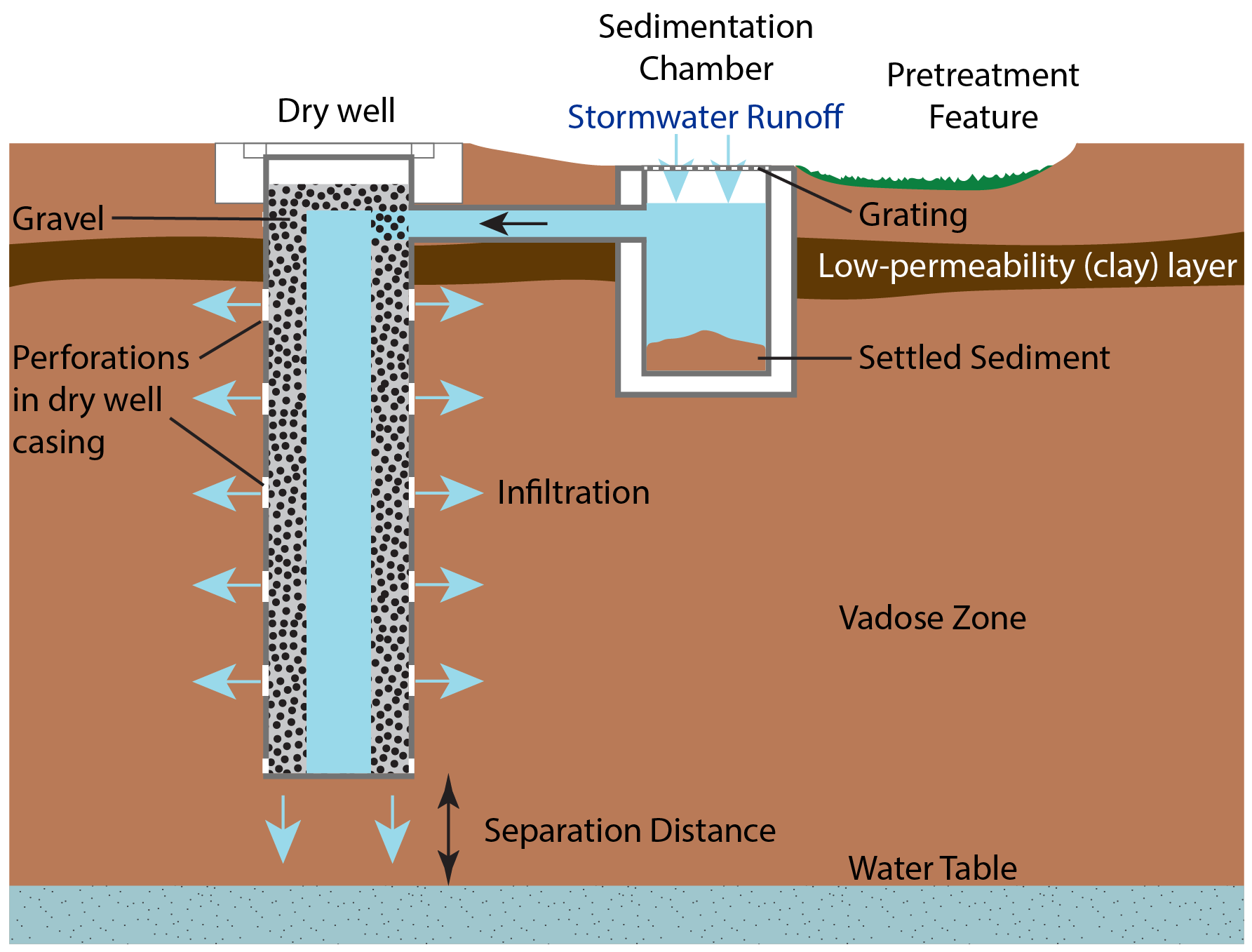
A drywell is an underground structure that disposes of unwanted water, most commonly stormwater runoff, by dissipating it into the ground, where it merges with the local groundwater. While the concept has existed for centuries, modern engineering has transformed the drywell into a sophisticated piece of sustainable technology. Today, drywells are integrated into complex urban IoT (Internet of Things) networks, designed with advanced polymers, and modeled using AI to prevent catastrophic flooding and manage the thermal footprint of large-scale tech campuses.

Understanding the Architecture of Modern Drywell Technology
To understand what a drywell is in a contemporary context, one must look past the image of a simple hole filled with rocks. Modern drywell technology is a feat of civil engineering and material science, designed to handle the high-velocity runoff generated by non-porous urban surfaces like asphalt and concrete.
From Ancient Engineering to High-Density Polyethylene (HDPE)
Historically, drywells were “blind wells”—simple pits lined with stone or brick. However, the modern tech iteration utilizes high-density polyethylene (HDPE) and modular plastic chambers. These materials are chosen for their high strength-to-weight ratio and resistance to chemical degradation. The evolution from masonry to advanced polymers has allowed for greater “void space”—the volume within the structure available to hold water—increasing the efficiency of the tech without expanding its physical footprint.
The Mechanics of Subsurface Infiltration Systems
The primary “operating system” of a drywell is gravity-fed subsurface infiltration. Unlike a septic tank, which holds waste for treatment, a drywell is designed to be a temporary buffer. When a storm event occurs, water is funneled into the drywell chamber. The tech relies on “percolation rates,” a metric calculated using geological software to ensure the surrounding soil can absorb the water at a specific rate. If the infiltration tech fails, the result is surface flooding, making the precision of these calculations a critical aspect of urban structural design.
The Role of IoT and Smart Sensors in Drywell Management
The most significant shift in drywell technology is the integration of digital monitoring. We are moving away from “passive” infrastructure toward “active” or “smart” infrastructure. By embedding sensors within these underground units, municipalities and private tech firms can monitor hydraulic performance in real-time.
Real-Time Monitoring of Water Tables
Modern drywell installations often feature ultrasonic level sensors and pressure transducers. These IoT devices transmit data to a centralized dashboard, allowing engineers to see exactly how much water is entering the system and how quickly it is dissipating. This data is crucial for maintenance; if a drywell is draining slower than usual, the system can automatically flag a “siltation event,” notifying a crew that the internal filters or the surrounding soil are clogged and require servicing.

Predictive Analytics for Urban Flood Prevention
When drywells are networked across a city, they become part of a larger “Digital Twin”—a virtual model of the city’s physical assets. Using predictive analytics, software can simulate how a predicted five-inch rainfall will impact the drywell network. By analyzing historical data and current saturation levels, AI-driven management systems can divert water through automated sluice gates to drywells with more capacity, effectively “load-balancing” the city’s drainage system much like a server load-balancer manages web traffic.
Sustainable Tech: Why Drywells are Essential for Green Data Centers
As the demand for AI and cloud storage grows, the tech industry faces a dual challenge: managing the physical footprint of massive data centers and adhering to strict ESG (Environmental, Social, and Governance) standards. Drywells have become a secret weapon in the sustainable tech arsenal, particularly for managing “thermal runoff” and land use.
Managing Thermal Runoff and Cooling Systems
Data centers generate immense amounts of heat, often requiring liquid cooling systems. When these systems or the surrounding climate control units discharge water, or when rainwater hits the heat-sink surfaces of a massive data center roof, the water can be significantly warmer than the local ecosystem can handle. Drywells allow this water to be filtered and cooled by the earth’s natural temperature as it infiltrates back into the aquifer, preventing “thermal shock” to local streams and rivers.
Integrating Low-Impact Development (LID) into Tech Campuses
Tech giants like Google, Apple, and Microsoft have pioneered the use of Low-Impact Development (LID) in their corporate headquarters. Instead of massive, unsightly retention ponds, these campuses use “distributed drywell arrays.” This allows the land above the drywell to be used for green space, parking lots, or even outdoor server modules. By utilizing subsurface tech, companies can maximize their high-value real estate while remaining compliant with environmental regulations that require onsite stormwater management.
The Future of Urban Hydrology: AI and Automated Drainage
Looking forward, the “drywell” is set to become even more integrated into the software-defined world. We are entering an era of “Automated Urban Hydrology,” where the management of water is as digitized as the management of data.
Algorithmic Modeling for Dynamic Stormwater Routing
The next generation of drywells will be managed by algorithms that account for more than just rainfall. By integrating weather API data, soil moisture sensors, and satellite imagery, these systems will become “proactive.” For instance, if the software knows a major storm is 24 hours away, it can trigger automated pumps to empty existing drywell reservoirs or clear pre-filtration systems to ensure 100% capacity. This is the application of “Just-in-Time” logic, borrowed from manufacturing tech, applied to environmental safety.
Decentralized Water Tech and the Circular Economy
Finally, we are seeing a trend toward “decentralized water management.” In the same way that edge computing moves data processing closer to the user, drywells move water management closer to the source of the runoff. This reduces the burden on aging, centralized sewer systems. In a “Circular Economy” model, future drywell tech may even include integrated filtration systems that clean stormwater to a high enough standard that it can be extracted elsewhere for industrial use or irrigation, turning a waste product (runoff) into a valuable resource (reclaimed water).
Conclusion
What is a drywell? It is no longer just a hole in the ground. In the context of modern technology, it is a sophisticated, data-driven component of sustainable infrastructure. As we continue to build upward and digitize inward, the tech that manages our physical environment—like the modern drywell—will be the foundation upon which our smart cities stand. By combining material science, IoT connectivity, and AI-driven analytics, drywells ensure that our technological progress does not come at the expense of our environmental stability. For the tech-forward architect or city planner, the drywell is an essential tool in creating a resilient, efficient, and invisible network that protects our digital world from the unpredictable forces of nature.
aViewFromTheCave is a participant in the Amazon Services LLC Associates Program, an affiliate advertising program designed to provide a means for sites to earn advertising fees by advertising and linking to Amazon.com. Amazon, the Amazon logo, AmazonSupply, and the AmazonSupply logo are trademarks of Amazon.com, Inc. or its affiliates. As an Amazon Associate we earn affiliate commissions from qualifying purchases.