
In the realm of computer science, data structures, and algorithms, graphs are fundamental abstract models used to represent relationships between objects. They are ubiquitous, underpinning everything from social networks and the internet to logistics and artificial intelligence. Within the broad category of graphs, a crucial distinction exists: discrete graphs versus continuous graphs. This article will delve into the nature of discrete graphs, exploring their definition, characteristics, applications, and the underlying mathematical principles that make them so powerful in the digital age.
Understanding the Core Concept of Discrete Graphs
At its heart, a discrete graph is a mathematical structure consisting of a set of vertices (also known as nodes) and a set of edges. These edges connect pairs of vertices. The “discrete” aspect refers to the fact that both the vertices and the edges are distinct, separate entities. There are no intermediate points between vertices, and edges are not continuous lines that can exist at infinitely many positions between two connected points. Think of it as a collection of points with defined lines connecting some of them, rather than a smooth, unbroken curve.
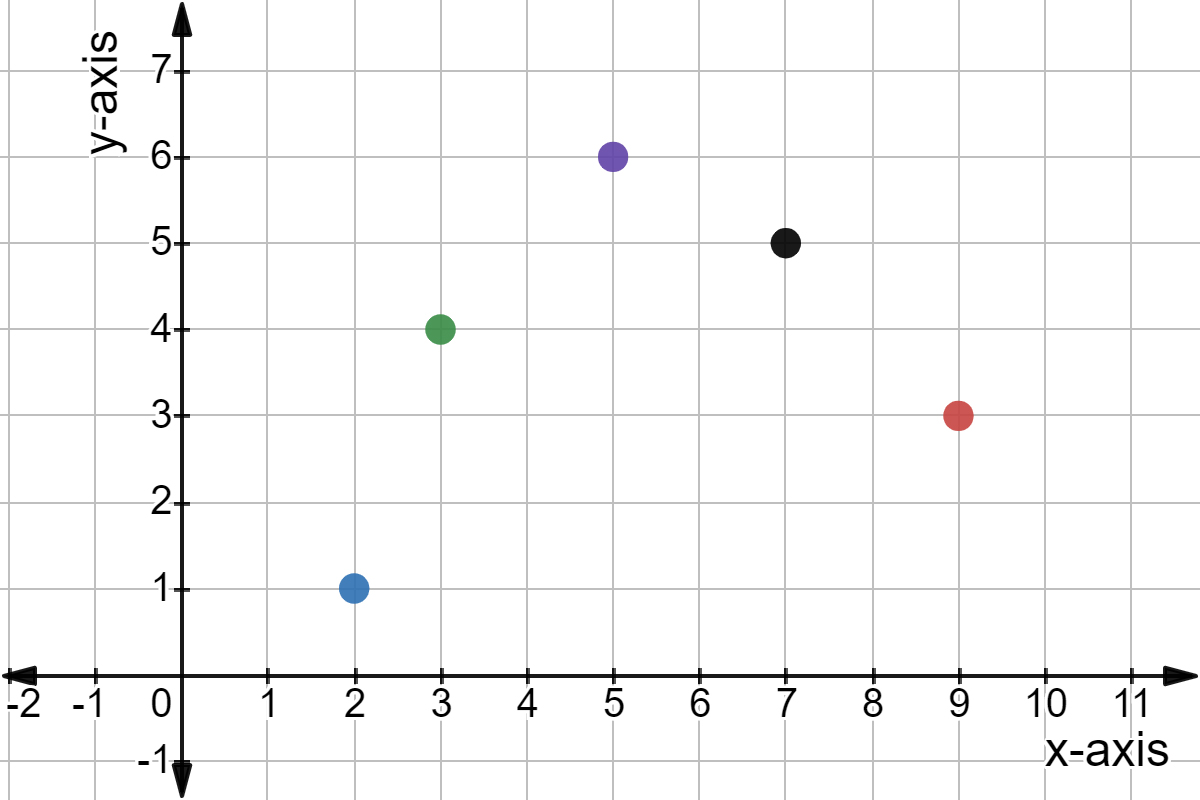
Vertices and Edges: The Building Blocks
Vertices (Nodes): These represent the individual entities or objects within the graph. In a social network, vertices might represent people. In a road map, they could be cities or intersections. In a computer network, they might be devices like routers or servers. Each vertex is a unique, identifiable element.
Edges (Links): These represent the relationships or connections between vertices. If two vertices are connected by an edge, it signifies that there is some form of association between them. In a social network, an edge could represent a friendship. On a road map, it would signify a road connecting two cities. In a computer network, it might represent a physical cable or wireless link.
Properties Differentiating Discrete Graphs
The discrete nature of these components gives rise to several defining properties:
- Finite or Countable: While theoretically graphs can be infinite, in practical computational contexts, discrete graphs are typically finite. This means there’s a specific, countable number of vertices and edges. This finiteness is crucial for algorithmic analysis and implementation. Even in theoretical discussions of infinite graphs, the concept remains about discrete, distinct elements, not continuous functions.
- No Intermediate Points: An edge connects one vertex directly to another. There are no points on the edge that are considered vertices themselves unless explicitly defined as such. This is in stark contrast to continuous representations where a line segment can be seen as containing an infinite number of points.
- Defined Relationships: The existence or absence of an edge between two vertices is a binary condition – either they are connected or they are not. This clear-cut definition simplifies analysis and allows for precise representation of relationships.
- Types of Edges and Connections: Discrete graphs can be further classified based on the nature of their edges and connections:
- Undirected Graphs: Edges have no direction. If vertex A is connected to vertex B, then vertex B is also connected to vertex A. This is represented by a simple line segment between them.
- Directed Graphs (Digraphs): Edges have a direction, indicating a one-way relationship. An edge from vertex A to vertex B does not necessarily imply an edge from vertex B to vertex A. This is often represented by an arrow pointing from the source vertex to the target vertex.
- Weighted Graphs: Edges are assigned a numerical value, or “weight,” representing a cost, distance, capacity, or other metric associated with the connection. For example, the weight of an edge between two cities might represent the distance or travel time.
- Unweighted Graphs: Edges do not have associated weights. The presence of an edge simply signifies a connection.
- Simple Graphs: These graphs do not contain loops (edges connecting a vertex to itself) or multiple edges between the same pair of vertices.
- Multigraphs: These allow for multiple edges between the same pair of vertices, or loops.
The Mathematical Foundation and Computational Significance
The study of discrete graphs is a cornerstone of Graph Theory, a branch of mathematics that originated with Leonhard Euler’s work on the Königsberg bridge problem in the 18th century. Modern graph theory is deeply intertwined with computer science, providing the theoretical underpinnings for many computational problems and data structures.
Graph Representation in Computing
The abstract definition of a discrete graph needs to be translated into concrete data structures that computers can process. The most common ways to represent graphs in computer memory are:
- Adjacency Matrix: This is a square matrix where the rows and columns represent the vertices of the graph. An entry
matrix[i][j]is typically 1 (or a weight) if there’s an edge from vertexito vertexj, and 0 otherwise. For undirected graphs, the matrix is symmetric. While simple to understand, adjacency matrices can be memory-intensive for sparse graphs (graphs with relatively few edges compared to the number of vertices), as they require O(V^2) space, where V is the number of vertices. - Adjacency List: This representation uses a collection of lists, where each list corresponds to a vertex. The list for a vertex
vcontains all the vertices that are adjacent tov(i.e., the vertices connected tovby an edge). This is generally more memory-efficient for sparse graphs, requiring O(V + E) space, where E is the number of edges. For directed graphs, the list for vertexuwould contain all verticesvsuch that there is an edge fromutov. - Edge List: This is a simple list of all the edges in the graph, where each edge is represented as a pair (or triplet, if weighted) of vertices. This is often used as an intermediate representation or for algorithms that primarily iterate over edges.
Algorithmic Applications of Discrete Graphs
The discrete nature of graphs makes them perfectly suited for algorithmic analysis and problem-solving. Many fundamental algorithms are designed specifically to operate on graph structures:
- Graph Traversal Algorithms: These algorithms systematically visit every vertex in a graph.
- Breadth-First Search (BFS): Explores the graph level by level, finding the shortest path in terms of the number of edges in unweighted graphs.
- Depth-First Search (DFS): Explores as far as possible along each branch before backtracking. Useful for tasks like cycle detection and topological sorting.
- Shortest Path Algorithms: Find the path with the minimum total weight between two vertices in a weighted graph.
- Dijkstra’s Algorithm: Finds the shortest path from a single source vertex to all other vertices in a graph with non-negative edge weights.
- Bellman-Ford Algorithm: Can handle graphs with negative edge weights and detect negative cycles.
- Floyd-Warshall Algorithm: Finds the shortest paths between all pairs of vertices in a graph.
- Minimum Spanning Tree (MST) Algorithms: Find a subset of edges that connects all vertices together, without any cycles and with the minimum possible total edge weight.
- Prim’s Algorithm: Starts with an arbitrary vertex and grows the MST by adding the cheapest edge that connects a vertex in the MST to a vertex outside it.
- Kruskal’s Algorithm: Sorts all edges by weight and adds them to the MST if they don’t form a cycle with already added edges.
- Network Flow Algorithms: Analyze the maximum amount of “flow” that can be sent from a source vertex to a sink vertex in a capacitated network (a directed graph where edges have capacities). Algorithms like Ford-Fulkerson are key here.
Real-World Applications in Technology
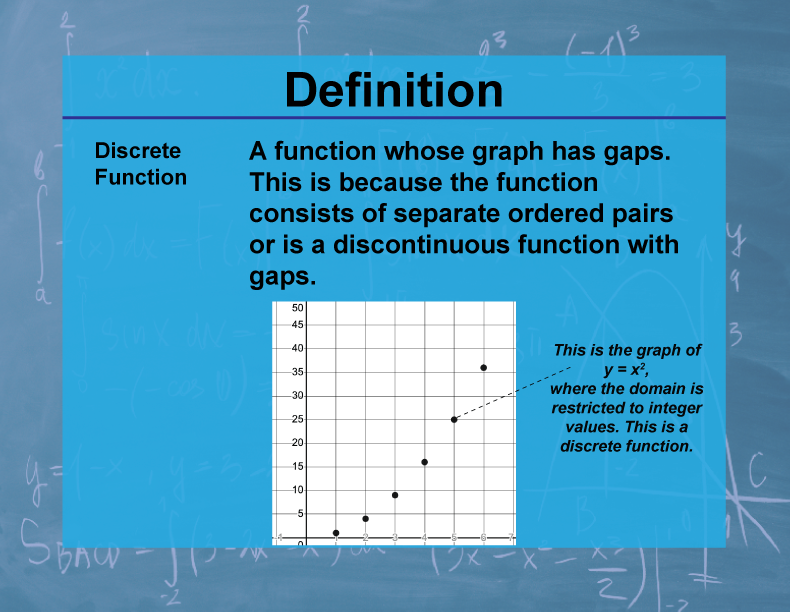
Discrete graphs are not merely abstract mathematical constructs; they are the backbone of numerous technologies we interact with daily. Their ability to model complex relationships makes them indispensable in various technological domains.
Social Networks and Relationship Mapping
Perhaps one of the most intuitive applications of discrete graphs is in social networking platforms. Each user is a vertex, and friendships, followers, or connections are represented by edges. Algorithms can then analyze these graphs to:
- Suggest friends: Identifying individuals with many common connections.
- Identify communities: Grouping users with strong interconnections.
- Analyze influence: Determining key individuals or nodes within the network.
- Detect fake accounts or bots: By analyzing unusual connection patterns.
The Internet and World Wide Web
The internet itself can be modeled as a massive graph. Web pages are vertices, and hyperlinks between them are directed edges. This graph structure is fundamental to:
- Search engines: Algorithms like Google’s PageRank (historically) analyze the link structure of the web to determine the importance and relevance of web pages.
- Web crawling: Bots systematically traverse the web by following links, building an index of web content.
- Network routing: Graph algorithms are used to find the most efficient paths for data packets to travel across the internet.
Logistics and Transportation Networks
The optimization of movement and resource allocation heavily relies on discrete graphs. Cities, airports, or distribution centers can be vertices, and roads, flight paths, or shipping routes are edges, often with weights representing distance, time, or cost. This enables:
- Route planning: Finding the shortest or fastest path for delivery trucks, ride-sharing services, or personal navigation.
- Supply chain management: Optimizing the flow of goods from manufacturers to consumers.
- Airline scheduling: Determining optimal flight routes and schedules.
- Public transportation systems: Designing and managing bus and train routes.
Computer Networks and Infrastructure
The interconnectedness of devices in computer networks is a prime example of discrete graphs. Computers, servers, routers, and switches are vertices, and network cables or wireless connections are edges. This is crucial for:
- Network topology design: Understanding how devices are connected.
- Troubleshooting connectivity issues: Identifying bottlenecks or broken links.
- Optimizing data flow: Ensuring efficient communication between devices.
- Cybersecurity: Analyzing network traffic patterns to detect anomalies and potential threats.
Artificial Intelligence and Machine Learning
Discrete graphs play a vital role in various AI applications:
- Knowledge Representation: Knowledge graphs use vertices to represent entities (people, places, concepts) and edges to represent the relationships between them. This allows AI systems to reason and infer new information.
- Recommender Systems: Similar to social networks, user-item interactions can be modeled as a bipartite graph to suggest products or content.
- Natural Language Processing (NLP): Sentence structures and dependencies can be represented as graphs, aiding in understanding grammar and meaning.
- Graph Neural Networks (GNNs): A specialized type of neural network designed to operate directly on graph-structured data, achieving state-of-the-art results in areas like drug discovery, social network analysis, and recommendation systems.
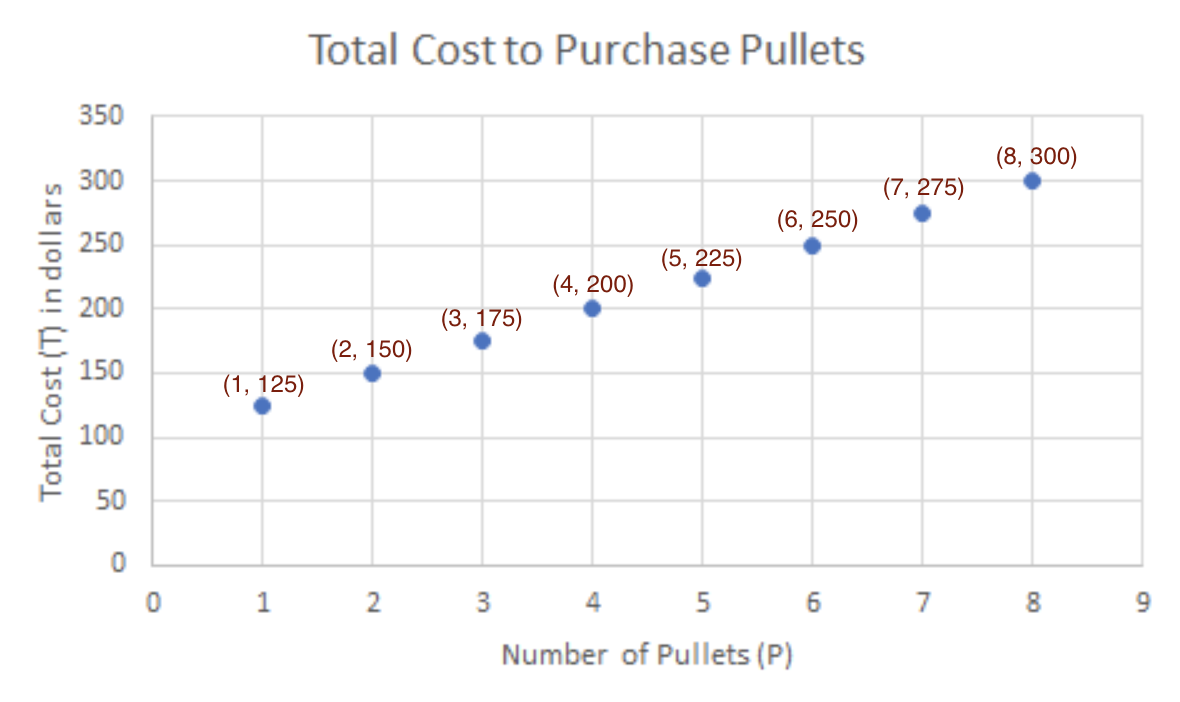
Conclusion: The Enduring Power of Discrete Graph Structures
Discrete graphs, with their simple yet powerful framework of vertices and edges, provide a fundamental language for describing relationships and connections. From the intricate webs of social interactions and the vast expanse of the internet to the efficient movement of goods and the intelligent processing of information, their influence is pervasive across the technological landscape.
The mathematical rigor of graph theory, combined with efficient computational representations and algorithms, allows us to model, analyze, and solve complex problems that would otherwise be intractable. As technology continues to evolve, the importance of discrete graphs will only grow, underpinning new advancements in fields like AI, big data analytics, and complex systems engineering. Understanding what a discrete graph is, and how it functions, is therefore not just an academic pursuit but a crucial step in comprehending the architecture of our digital world.
aViewFromTheCave is a participant in the Amazon Services LLC Associates Program, an affiliate advertising program designed to provide a means for sites to earn advertising fees by advertising and linking to Amazon.com. Amazon, the Amazon logo, AmazonSupply, and the AmazonSupply logo are trademarks of Amazon.com, Inc. or its affiliates. As an Amazon Associate we earn affiliate commissions from qualifying purchases.