
When changing jobs or retiring, managing your retirement savings is one of the most critical financial decisions you will face. Among the various methods for moving retirement funds, the direct rollover stands out as the most efficient and safest path. Understanding how this process works—and why it is often preferred over an indirect rollover—can save you thousands of dollars in avoidable taxes and penalties.
A direct rollover is the process of transferring funds directly from one retirement plan, such as a 401(k), to another qualified retirement plan, such as an Individual Retirement Account (IRA) or a new employer’s 401(k), without the money ever touching your personal bank account. By keeping the funds within the tax-advantaged environment of a retirement vehicle, you maintain your account’s tax-deferred status and avoid the complexities of the Internal Revenue Service (IRS) withholding requirements.

The Mechanics of a Direct Rollover
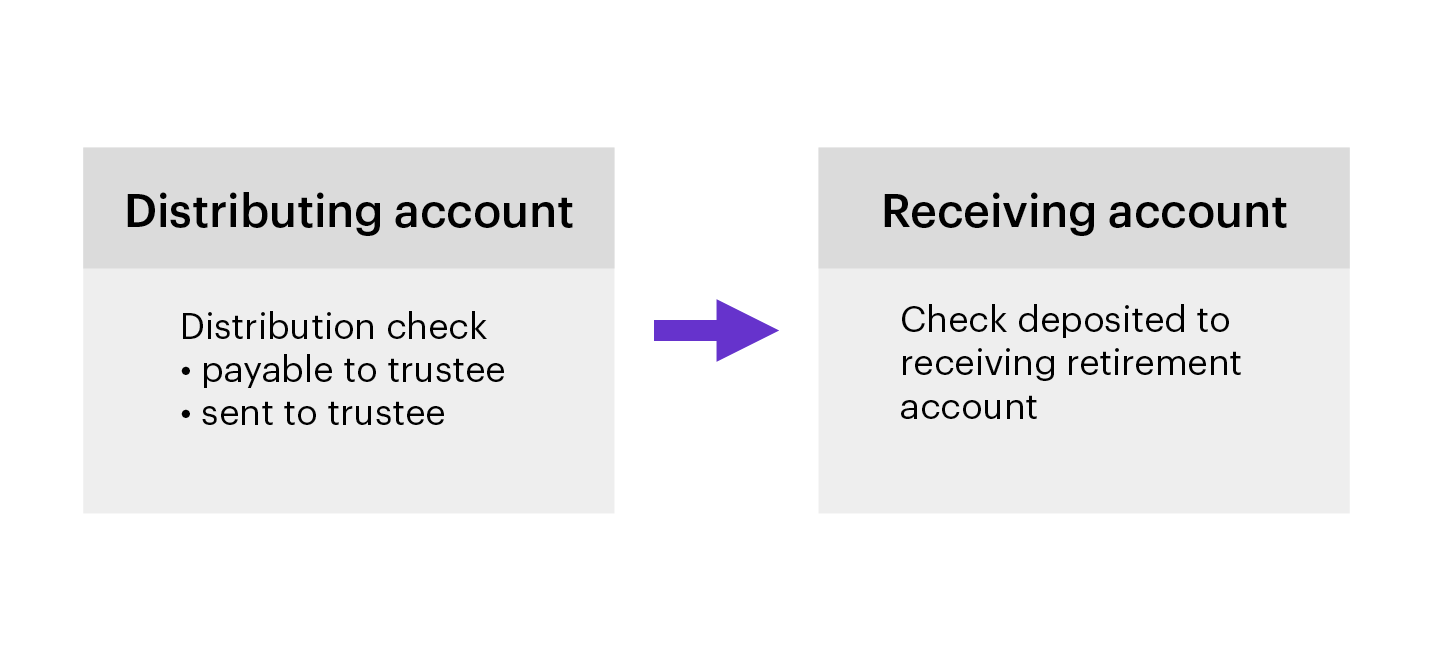
At its core, a direct rollover is a trustee-to-trustee transfer. Because the money is moving directly from one financial institution to another, the IRS does not view this as a distribution. Consequently, no taxes are withheld, and no early withdrawal penalties are triggered, regardless of your age.
Trustee-to-Trustee Transfer
In a direct rollover, you act as the bridge between your old plan administrator and the new one. You initiate the process by contacting the financial institution holding your old 401(k) or 403(b). You provide them with the information for your new account—the receiving custodian’s name, your account number, and the mailing address for the check. The old custodian then issues a check made payable directly to the new custodian for the benefit of your account.
Because the check is not made payable to you, you never take possession of the funds. This is the primary reason the transaction is not classified as taxable income. It is the cleanest way to move assets because it eliminates the risk of human error in depositing funds or accidentally spending a portion of the distribution.
The Paperwork Involved
While the process is designed to be seamless, it does require coordination. You will typically need to complete a “Distribution Request Form” from your former plan administrator. It is vital to ensure that the form specifically requests a “direct rollover” to an “eligible retirement plan.” Even if you are moving the money to an IRA, the institution must be informed that the funds are coming from a qualified employer plan so that they can properly code the incoming deposit as a rollover rather than a personal contribution.
Direct Rollover vs. Indirect Rollover
Many individuals confuse a direct rollover with an indirect rollover (often called a 60-day rollover). The two processes are fundamentally different and carry vastly different risk profiles.
The Hazards of the Indirect Rollover
In an indirect rollover, the plan administrator issues a check made payable to you. When this happens, the IRS generally requires the employer to withhold 20% of the account balance for federal income taxes. Even though you are required to deposit the full amount of your previous account—including the 20% that was withheld—into a new retirement account within 60 days, you are essentially forced to come up with the 20% “missing” cash from your own pocket to complete the rollover.
If you fail to replace the withheld 20%, that amount is treated as a taxable distribution. If you are under the age of 59½, you will also be hit with a 10% early withdrawal penalty on that portion. While you can technically claim the withheld 20% back when you file your taxes the following year, the direct rollover avoids this cash-flow strain and bureaucratic headache entirely.
Why Direct Is Always Better
The direct rollover removes the 60-day deadline, the tax withholding, and the risk of missing the deposit window. Life is unpredictable; if you move the money yourself and face an emergency that prevents you from completing the deposit within the 60-day period, the entire amount could be deemed a distribution, resulting in a massive, unexpected tax bill. By choosing the direct route, you shift the responsibility of the transfer to the financial institutions, providing a level of security that the indirect method simply cannot match.
Strategic Considerations for Your Rollover
Moving your retirement funds isn’t just a administrative task—it’s an opportunity to optimize your investment strategy. When you transition from a workplace plan to an IRA or a new employer plan, you should evaluate your financial goals.
Consolidating for Simplicity
One of the most significant benefits of a direct rollover is the ability to consolidate multiple retirement accounts. Many professionals hold several 401(k) accounts from previous employers. These “stranded” accounts can become difficult to track, and managing multiple portfolios makes rebalancing your assets across your total net worth almost impossible. A direct rollover allows you to consolidate these assets into a single IRA, giving you a centralized view of your investments and making it easier to maintain an appropriate asset allocation.
Investment Choices and Fees
Workplace 401(k) plans often limit your investment choices to a pre-selected menu of mutual funds, some of which may have high expense ratios. By rolling over your assets into an IRA, you gain access to a vastly wider universe of investment options, including individual stocks, bonds, ETFs, and lower-cost index funds. Before you execute a direct rollover, take the time to compare the administrative fees of your current plan against the prospective receiving account. Lowering your investment costs is one of the most effective ways to ensure your retirement savings compound more effectively over time.
Potential Drawbacks to Consider
While a direct rollover to an IRA is usually beneficial, there are rare cases where keeping funds in a workplace plan is preferable. For instance, if you are still working at age 55 or older, you might be eligible to access your current 401(k) funds penalty-free if you leave your job, whereas IRA funds generally remain locked until age 59½. Furthermore, 401(k) plans offer robust protection from creditors under federal ERISA law, which in some states is stronger than the protection offered to IRAs. Always consult with a financial advisor to determine if moving your assets is the right tactical move for your specific situation.
Executing the Rollover Safely
To ensure your direct rollover goes smoothly, follow these best practices to maintain compliance and security.
Verify the Receiving Account
Before you request the transfer, ensure that your receiving account is officially open and ready to accept rollovers. If you are rolling over into an IRA, verify with the brokerage that they are set up to receive direct transfers from your specific former employer’s plan.
Keep Detailed Records
Even though a direct rollover is a “non-taxable event,” it is essential to keep a permanent file of your transaction. Retain the distribution statement from your old plan and the confirmation of receipt from your new plan. These documents serve as your proof to the IRS that the funds were moved correctly and are not subject to income tax or penalties. If you ever have to prove that a large deposit into your account was a tax-advantaged rollover, having these records readily available will make the process painless.

Professional Oversight
If your rollover involves a significant sum of money, consider involving a tax professional or a financial advisor. They can help you navigate the nuances of moving assets, especially if your retirement portfolio includes complex holdings like company stock. If you hold “Net Unrealized Appreciation” (NUA) on company stock within your 401(k), a direct rollover to an IRA could actually be a disadvantage, as it may strip away favorable capital gains tax treatment. A direct rollover is a powerful tool, but it should be used with a clear understanding of your entire financial picture.
By prioritizing the direct rollover, you protect your retirement nest egg from unnecessary taxes, penalties, and administrative risks. It remains the professional standard for wealth management during career transitions, ensuring that your long-term financial security remains uninterrupted and fully optimized for the future.
aViewFromTheCave is a participant in the Amazon Services LLC Associates Program, an affiliate advertising program designed to provide a means for sites to earn advertising fees by advertising and linking to Amazon.com. Amazon, the Amazon logo, AmazonSupply, and the AmazonSupply logo are trademarks of Amazon.com, Inc. or its affiliates. As an Amazon Associate we earn affiliate commissions from qualifying purchases.