
In the world of professional audio, whether on a sprawling festival stage or within the dampened walls of a high-end recording studio, there is a small, often unassuming device that acts as the unsung hero of signal integrity. This device is the Direct Injection box, or more commonly, the “DI box.” While it may look like a simple metal brick with a few jacks, the technology inside serves a critical function in the modern tech ecosystem of sound reinforcement and digital recording.
To the uninitiated, a direct box might seem redundant in an era of digital interfaces and software modeling. However, for engineers and tech enthusiasts, the DI box is a fundamental tool for impedance matching, signal balancing, and noise reduction. Understanding how this technology works is essential for anyone looking to master the technical side of audio production.

1. The Science of Signal: Understanding Impedance and Balancing
At its core, a direct box is a transformer or an electronic circuit designed to solve a specific physics problem in audio transmission. To understand why we need a DI box, we must first understand the two primary technical hurdles it addresses: impedance mismatch and unbalanced signals.
High-Z vs. Low-Z: The Impedance Bridge
In electrical engineering, impedance (Z) is the measure of opposition that a circuit presents to a current when a voltage is applied. Most musical instruments with passive pickups, such as electric guitars and basses, produce a “High-Z” (high impedance) signal. Conversely, professional audio equipment like mixing consoles and microphone preamplifiers are designed to receive “Low-Z” (low impedance) signals.
If you attempt to plug a high-impedance guitar directly into a low-impedance microphone input, the result is a “loading” effect. This technical mismatch causes a significant loss in high-frequency clarity and signal strength, leaving the audio sounding dull and thin. The DI box acts as an impedance bridge, converting the High-Z signal from the instrument into a Low-Z signal that the mixer can handle efficiently.
Balanced vs. Unbalanced Signals
Most instruments use unbalanced cables (TS or “tip-sleeve” cables), which consist of a single signal wire and a ground shield. While effective for short distances, unbalanced cables act as antennas, picking up electromagnetic interference (EMI) and radio frequency interference (RFI) from lights, monitors, and power cables.
A DI box takes this unbalanced signal and converts it into a “balanced” signal using an XLR output. A balanced signal uses two wires for the audio (one with inverted polarity) and a separate ground. When the signal reaches the destination, any noise picked up along the cable is cancelled out through a process called Common Mode Rejection. This is the technology that allows professional audio crews to run cables hundreds of feet from a stage to a mixing desk without introducing unbearable hum and buzz.
2. Types of Direct Boxes: Passive vs. Active Circuitry
Not all direct boxes are created equal. In the tech world of audio, the choice between a passive DI and an active DI is dictated by the specific electronic properties of the source instrument.
Passive DI Boxes: The Power of Transformers
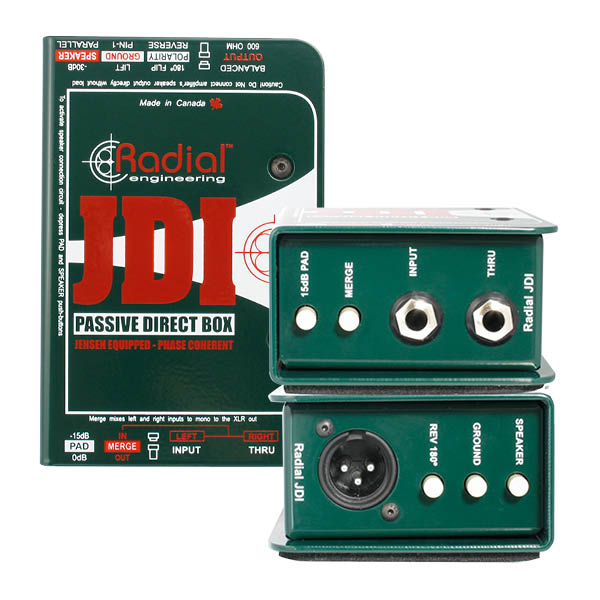
A passive direct box requires no external power source. Its internal “engine” is a high-quality transformer. This transformer uses electromagnetic induction to convert the signal. Because there are no amplifiers or active components inside, passive DIs are incredibly durable and can handle very high signal levels without distorting.
From a technical standpoint, passive DIs are ideal for “hot” signals, such as those coming from electronic keyboards, active basses, or digital DJ gear. One unique technological advantage of a high-quality passive DI is “transformer saturation.” When pushed, a transformer can add a subtle, pleasing harmonic distortion that digital plugins often struggle to replicate accurately.
Active DI Boxes: Buffered Precision
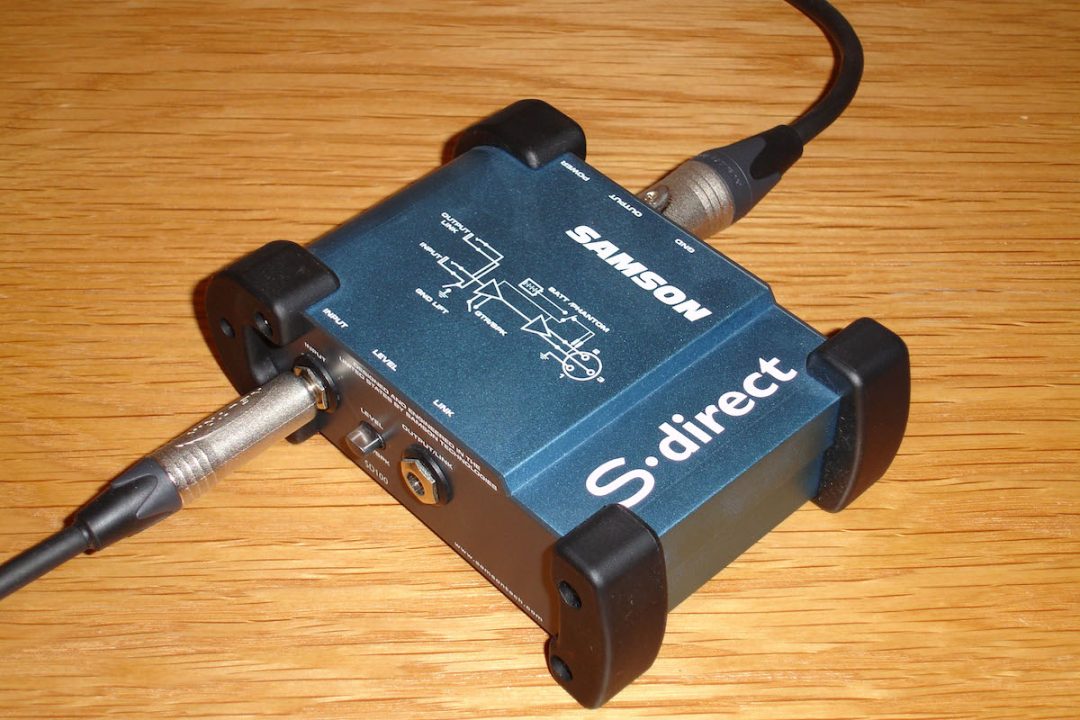
An active direct box includes a preamplifier circuit and requires power—typically provided by a 9V battery or “Phantom Power” (+48V) sent from the mixing console. Because they contain active electronics, these boxes have a much higher input impedance than passive models.
Active DIs are the preferred tech for instruments with weak passive pickups, such as vintage electric guitars or piezo-equipped acoustic instruments. The internal buffer circuit ensures that the instrument’s signal is not “sucked dry” by the rest of the signal chain, maintaining the full frequency spectrum and transient response. However, because they are powered, active DIs have a “ceiling” or “headroom”; if the input signal is too loud, the active circuit will clip, resulting in harsh digital-like distortion.
3. Advanced Features and Technical Utility
Modern DI boxes are more than just converters; they are diagnostic and signal-routing tools equipped with several technical features that solve common problems in the field.
The Ground Lift Switch
One of the most valuable features on any DI box is the “Ground Lift.” In complex electrical setups, “ground loops” can occur when two pieces of equipment are connected to different ground references, resulting in a persistent 60Hz hum. The ground lift switch physically breaks the connection between the input ground and the output ground (Pin 1 on the XLR), instantly eliminating the hum while maintaining the integrity of the audio signal.
Throughput (Thru) Jacks
Standard DI boxes feature a “Thru” or “Link” jack. This is a parallel output that allows the original, unaffected signal to be sent to a secondary location. For example, a bass player might plug their instrument into the DI, send the balanced XLR output to the house PA system, and simultaneously use the “Thru” jack to send their signal to an on-stage amplifier for personal monitoring. This dual-signal path is a staple of professional stage tech.
Pad Switches and Polarity Reverse
High-end DI boxes often include a “Pad,” which is a circuit that attenuates (reduces) the input signal by a set amount, usually -15dB or -20dB. This is crucial when dealing with high-output devices that might otherwise overload the DI’s circuitry. Additionally, some DIs feature a polarity reverse switch (often mislabeled as “phase”), which can be used to correct wiring issues or align the timing of multiple signals in a studio environment.
4. The DI in the Digital Age: Studio and Software Integration
While the DI box originated in the analog era, its relevance has only increased with the rise of Digital Audio Workstations (DAWs) and software-based processing.
The Re-Amping Technique
Technological workflows in modern recording often involve “Re-amping.” This process involves recording a “dry” DI signal from a guitar or bass directly into a computer interface. Later, that clean signal is sent back out of the computer, through a specialized “Re-amp” box (which is essentially a DI box in reverse), and into a real guitar amplifier. This allows engineers to tweak the amplifier settings or change the tone entirely long after the musician has gone home, providing ultimate flexibility in the digital mixing process.
Virtual Instruments and Digital Clarity
Even for those working entirely “in the box,” the quality of the DI signal is paramount. Digital amp simulators (like Ampthill or Helix) require a pristine, high-impedance signal to function correctly. Using a high-quality active DI box before entering a digital interface ensures that the software “sees” the full range of the instrument, leading to more realistic and responsive digital processing.
Conclusion: Why the DI Box Remains Essential Tech
In an industry that moves toward wireless technology and integrated digital solutions, the direct box remains a steadfast requirement. It is the bridge between the analog world of vibrating strings and the digital world of binary processing. By managing the complex physics of impedance, shielding signals from environmental noise, and providing flexible routing options, the DI box ensures that the “tech” of music sounds as good in the speakers as it does in the artist’s head.
Whether you are a hobbyist building a home studio or a professional tech managing a stadium tour, the direct box is a critical investment. It is the silent protector of the signal path, ensuring that every nuance of a performance is captured with technical precision and professional clarity. In the hierarchy of audio gadgets, few tools provide as much utility and reliability as the humble, yet indispensable, direct box.
aViewFromTheCave is a participant in the Amazon Services LLC Associates Program, an affiliate advertising program designed to provide a means for sites to earn advertising fees by advertising and linking to Amazon.com. Amazon, the Amazon logo, AmazonSupply, and the AmazonSupply logo are trademarks of Amazon.com, Inc. or its affiliates. As an Amazon Associate we earn affiliate commissions from qualifying purchases.