
In an era increasingly defined by environmental consciousness and technological advancement, the internal combustion engine, particularly the diesel variant, has undergone a profound transformation. At the heart of this evolution for modern diesel vehicles lies a critical component: the Diesel Particulate Filter (DPF). Designed to capture harmful soot and particulate matter, the DPF plays an indispensable role in ensuring that diesel engines meet stringent global emission standards. However, like any filter, the DPF requires periodic cleaning to maintain its efficiency and prevent performance issues. This essential self-cleaning process is known as DPF regeneration.

Understanding DPF regeneration isn’t just a technical curiosity; it’s crucial for diesel vehicle owners, fleet managers, and anyone interested in the intersection of automotive technology, environmental regulation, and financial prudence. This article delves into the intricacies of DPF regeneration, exploring its different types, the sophisticated technology that orchestrates it, and the significant financial implications for vehicle maintenance and operation. We’ll also touch upon how this technology fits into broader discussions around innovation, brand reputation, and economic sustainability in the automotive sector.
The Diesel Particulate Filter (DPF): A Cornerstone of Modern Diesel Technology
To truly grasp DPF regeneration, one must first understand the Diesel Particulate Filter itself. Far from being a simple mesh, the DPF is a complex ceramic or metallic filter located in the exhaust system of most modern diesel vehicles manufactured after 2009 (and earlier in some regions). Its primary function is to trap harmful particulate matter, commonly known as soot, which is a byproduct of diesel combustion.
The Environmental Imperative: Why DPFs Exist
The drive behind the development and mandatory integration of DPFs stems directly from growing environmental concerns and increasingly strict emission regulations worldwide. Diesel engines, while known for their fuel efficiency and torque, historically produced significant amounts of particulate matter. These microscopic particles, if released into the atmosphere, contribute to air pollution, respiratory illnesses, and other public health issues. Governments and regulatory bodies, recognizing these hazards, introduced emission standards (such as Euro 5 and Euro 6 in Europe, and EPA standards in the U.S.) that mandated a dramatic reduction in particulate emissions.
The DPF emerged as the most effective technological solution to meet these standards. By physically capturing soot particles, it prevents them from escaping into the environment, making modern diesel vehicles significantly cleaner than their predecessors. This not only improves air quality but also allows diesel technology to remain a viable option for many applications, from passenger cars to heavy-duty trucks, by mitigating its environmental footprint.
How a DPF Works: Trapping Soot
A DPF typically consists of a honeycombed ceramic substrate with a series of small, alternating channels. Exhaust gas containing soot enters the filter, flows through the porous channel walls, and exits, leaving the solid soot particles trapped within the filter structure. Over time, as the vehicle operates, these trapped soot particles accumulate, gradually filling the DPF.
This accumulation is a natural and intended part of the DPF’s operation. However, if left unchecked, the DPF would eventually become completely clogged. A clogged DPF restricts exhaust flow, leading to increased back pressure, reduced engine performance, decreased fuel efficiency, and potentially costly damage to the engine or turbocharger. This is precisely where DPF regeneration becomes indispensable. Regeneration is the process by which this accumulated soot is burned off and converted into a much smaller, harmless ash residue, effectively cleaning the filter and restoring its functionality.
Unpacking DPF Regeneration: The Engine’s Self-Cleaning Mechanism
DPF regeneration is a sophisticated, often automated process designed to burn off the accumulated soot inside the filter. This process raises the temperature of the exhaust gas within the DPF to approximately 550-600°C (1022-1112°F), a temperature at which soot combusts and turns into ash. There are primarily three types of DPF regeneration, each triggered under different operational conditions.
Passive Regeneration: Everyday Efficiency
Passive regeneration is the most desirable and fuel-efficient form of DPF cleaning because it happens almost imperceptibly during normal driving. It occurs when the vehicle operates at higher speeds and sustained engine loads, such as during highway driving. Under these conditions, the exhaust gas temperature naturally reaches the threshold (around 350-500°C) required to slowly oxidize the soot inside the DPF.
Many modern DPF systems also incorporate a catalyst coating (often platinum or palladium) on the filter walls. This catalyst helps to lower the soot ignition temperature, allowing passive regeneration to occur more frequently and effectively at lower exhaust temperatures. For drivers who regularly undertake longer journeys at steady speeds, passive regeneration is often sufficient to keep the DPF clean, requiring minimal active intervention from the vehicle’s engine management system.
Active Regeneration: Intelligent Intervention
When driving conditions do not allow for sufficient passive regeneration (e.g., frequent short trips, city driving, or extended idling), soot accumulation can reach a predefined limit. At this point, the vehicle’s Engine Control Unit (ECU) initiates an “active regeneration” cycle. This is a deliberate, computer-controlled process designed to raise the exhaust temperature artificially to trigger soot combustion.
The ECU achieves this in several ways:
- Fuel Post-Injection: Small amounts of fuel are injected into the exhaust stroke, which then combusts in the exhaust system, significantly raising the exhaust gas temperature before it enters the DPF.
- Throttle Valve Adjustment: The throttle valve might be partially closed to increase engine load and thus exhaust temperature.
- Glow Plug Activation: Glow plugs might be activated even after starting the engine to help maintain higher combustion temperatures.
During an active regeneration cycle, drivers might notice a slight change in engine sound, a temporary increase in fuel consumption, or even a different smell from the exhaust. Some vehicles may also display an indicator light on the dashboard, advising the driver to continue driving until the process is complete. It’s crucial not to interrupt an active regeneration cycle, as repeatedly doing so can lead to an incomplete burn, further soot buildup, and ultimately, a clogged DPF.
Forced or Manual Regeneration: When Professional Help is Needed
If passive and active regeneration cycles are consistently interrupted or cannot be completed (e.g., due to a fault, excessive soot buildup, or prolonged short-distance driving), the DPF can become severely clogged. In such cases, the vehicle may enter “limp mode” (reduced power) and display a DPF warning light, indicating that professional intervention is required.
A “forced” or “manual” regeneration is a service procedure performed by a qualified mechanic using specialized diagnostic tools. The mechanic connects a diagnostic scanner to the vehicle’s ECU and initiates a regeneration cycle while the vehicle is stationary. This process raises the engine’s RPMs and exhaust temperature for an extended period, allowing the DPF to clean itself. Forced regeneration is often a last resort before DPF replacement, as it requires specific conditions and monitoring to ensure safety and effectiveness. It underscores the importance of proper driving habits and timely maintenance to avoid such an intervention.
The Technological Core: Sensors, Software, and System Management
The seemingly simple act of burning soot within a DPF is, in fact, orchestrated by a highly sophisticated technological ecosystem. Modern vehicles are essentially computers on wheels, and the DPF system is a prime example of advanced automotive engineering that integrates hardware, software, and sensor technology to ensure compliance and optimal performance.
The Brain of the Operation: ECU and Sensor Networks
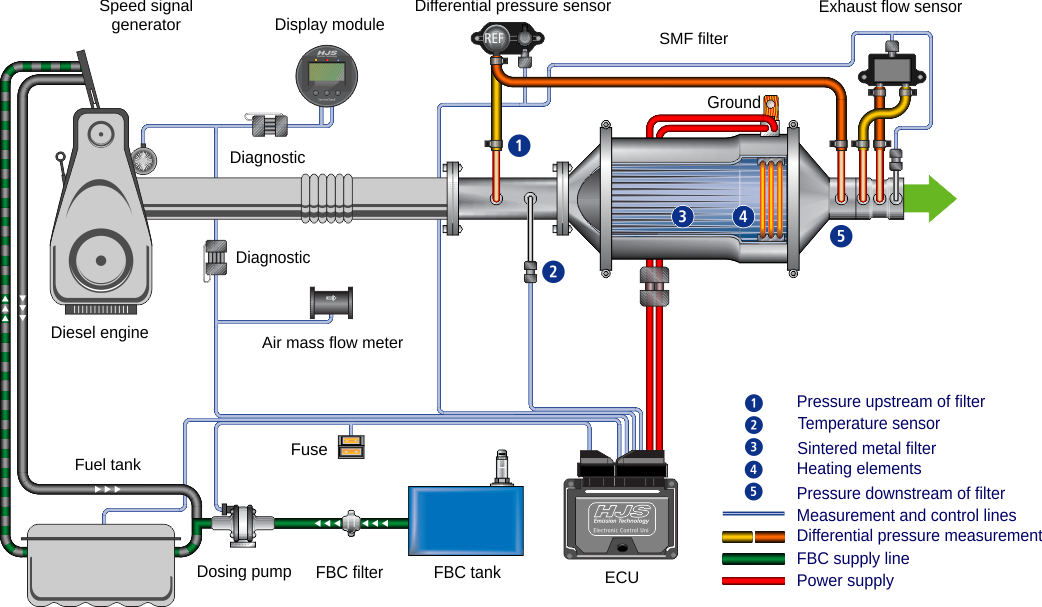
At the heart of DPF management is the Engine Control Unit (ECU). This sophisticated computer continuously monitors various engine and exhaust parameters to determine the DPF’s soot loading level and decide when regeneration is necessary. The ECU relies on a network of sensors strategically placed throughout the exhaust system:
- Differential Pressure Sensor: This crucial sensor measures the pressure difference across the DPF. A higher pressure difference indicates a greater accumulation of soot and therefore a more clogged filter. This is the primary indicator for triggering regeneration.
- Temperature Sensors: Multiple temperature sensors (pre-DPF and post-DPF) monitor the exhaust gas temperature. These are vital for determining if passive regeneration conditions are met and for controlling the heating process during active regeneration.
- Oxygen Sensors (Lambda Sensors): These sensors help the ECU adjust the air-fuel ratio to optimize combustion and exhaust gas composition, which is critical for efficient regeneration and emission control.
The ECU’s software algorithms process data from these sensors in real-time. Based on pre-programmed logic, it calculates soot accumulation models, predicts regeneration needs, and executes the appropriate regeneration strategy – whether it’s waiting for passive conditions or initiating an active cycle. This intricate dance of data collection and algorithmic decision-making highlights the “Tech” aspect of modern vehicle engineering.
Diagnostic Tools and Preventive Maintenance: A Tech-Driven Approach
The complexity of DPF systems also necessitates advanced diagnostic capabilities. When DPF issues arise, standard fault codes are stored in the ECU, which can be retrieved using specialized diagnostic scanning tools. These tools, which range from handheld OBD-II readers to sophisticated dealer-level software, allow technicians to:
- Read DPF soot load levels directly.
- Identify specific fault codes related to the DPF or associated sensors.
- Monitor DPF temperatures and pressures in real-time during operation.
- Initiate forced regeneration cycles.
- Reset DPF parameters after replacement or cleaning.
For vehicle owners, understanding the basics of DPF warning lights is a form of digital security and productivity. Recognizing these warnings early and consulting a professional can prevent minor issues from escalating into major, costly problems. Furthermore, some aftermarket apps and gadgets now offer rudimentary DPF monitoring capabilities, providing drivers with greater visibility into their vehicle’s health and enabling more proactive maintenance, aligning perfectly with trends in smart car technology and digital security for automotive systems.
The Economic Reality: Costs, Longevity, and Smart Management
While DPFs are indispensable for environmental compliance, they introduce a significant economic dimension to vehicle ownership. Managing DPF health has direct implications for personal finance, business finance (especially for fleets), and overall vehicle operating costs. Understanding these financial aspects is key to maximizing return on investment from a diesel vehicle.
The Financial Burden of DPF Issues
Neglecting DPF regeneration or experiencing persistent DPF problems can lead to substantial financial outlays:
- Fuel Consumption: Frequent active regeneration cycles, or a partially clogged DPF, will inevitably lead to increased fuel consumption. The additional fuel injected during active regeneration is not used for propulsion, directly impacting your wallet.
- Expensive Repairs: A severely clogged DPF that cannot be regenerated might need chemical cleaning, which is a service with its own cost. If cleaning is ineffective, the DPF may require full replacement. A new DPF unit can cost anywhere from $1,500 to $5,000 or even more for larger commercial vehicles, plus labor costs.
- Related Component Damage: A highly restricted DPF can cause excessive back pressure, potentially leading to damage to the turbocharger, exhaust gas recirculation (EGR) valve, or other engine components, multiplying repair costs significantly.
- Fines and Legal Issues: In many jurisdictions, removing or tampering with a DPF is illegal and can result in hefty fines, as it constitutes a violation of emission regulations.
These potential costs underscore why proper DPF maintenance is not just about compliance, but about sound financial management.
Strategies for Cost-Effective DPF Maintenance
Proactive maintenance and informed driving habits are the best defenses against expensive DPF-related problems:
- Regular Long Drives: As discussed, regular highway driving promotes passive regeneration, which is free and efficient. If your commute primarily involves short trips, consider taking a longer drive at highway speeds periodically to allow the DPF to regenerate.
- Use the Correct Engine Oil: Always use engine oil specified for DPF-equipped vehicles (often low-ash or “C3” rated oils). Using incorrect oil can lead to excessive ash buildup in the DPF, which cannot be burned off and will eventually necessitate replacement.
- Monitor Warning Lights: Pay immediate attention to any DPF warning lights. Ignoring them can turn a minor issue into a major repair.
- Quality Fuel and Additives: While not a magic bullet, using high-quality diesel fuel and reputable DPF cleaning additives (used as directed) can sometimes help keep the system cleaner, though the primary mechanism remains regeneration.
- Professional Servicing: Adhere to manufacturer-recommended service intervals. Mechanics can perform diagnostic checks and ensure the DPF system is functioning correctly.
For businesses operating diesel fleets, managing DPF health across multiple vehicles represents a significant aspect of business finance. Implementing robust maintenance schedules and training drivers on DPF-friendly driving practices can lead to substantial savings in fuel costs, repair bills, and downtime, directly impacting the bottom line.
DPFs and Your Vehicle’s Operating Expenses
The presence of a DPF fundamentally alters the financial landscape of owning and operating a diesel vehicle. While the initial purchase price might be higher due to the integrated emission control systems, the long-term operating costs are heavily influenced by how effectively the DPF is managed. This includes not only fuel and maintenance but also the depreciation factor. A vehicle with a well-maintained DPF will likely retain more value than one plagued by unresolved DPF issues. The ROI for proper DPF care is evident in extended component lifespan, reduced fuel consumption, and avoidance of catastrophic failures. This financial awareness is crucial for both individual consumers making purchasing decisions and businesses evaluating total cost of ownership (TCO) for their assets.
Beyond Regeneration: The Future of Diesel and DPFs
The journey of the diesel engine, from its early industrial applications to its current high-tech, low-emission form, is a testament to continuous innovation. DPF technology, while highly effective, is not static; it continues to evolve alongside broader trends in automotive engineering and environmental policy.
Evolving Emission Standards and Technological Advancements
Emission standards are not easing; they are becoming even more stringent. This pushes manufacturers to constantly refine DPF technology and integrate it more seamlessly with other emission control systems, such as Selective Catalytic Reduction (SCR) which uses Diesel Exhaust Fluid (DEF). Future DPFs might feature even more advanced materials, improved catalytic coatings, or entirely new regeneration strategies that are less dependent on specific driving cycles.
Research into alternative fuels and electric powertrains is also influencing the long-term outlook for diesel. However, for the foreseeable future, diesel engines will remain critical for heavy-duty applications, commercial transport, and certain passenger vehicle segments. This means DPFs and their regeneration processes will continue to be a vital area of technological focus, ensuring diesel remains a viable, environmentally responsible power source. The push for “clean diesel” is not just about meeting a standard; it’s about showcasing a commitment to sustainable technology, impacting a brand’s reputation and market appeal.

Consumer Confidence and Brand Responsibility
The DPF, while beneficial for the environment, has sometimes been a source of frustration for vehicle owners dueating to perceived reliability issues or unexpected maintenance costs. This has a direct impact on brand perception. Manufacturers that design robust, reliable DPF systems and effectively communicate maintenance requirements foster greater consumer confidence. Brands that provide clear guidance, support through dealerships, and innovate to make DPF operation as trouble-free as possible are often rewarded with stronger customer loyalty and a positive market reputation for their “clean diesel” offerings.
Conversely, issues with DPF longevity or regeneration can tarnish a brand’s image, leading to negative reviews and impacting sales. Thus, the effective management and continuous improvement of DPF technology are not merely engineering challenges but also strategic imperatives for automotive brands looking to maintain their market position and demonstrate corporate responsibility in an increasingly environmentally conscious world. The seamless integration of this complex technology, coupled with transparent communication about its care, is crucial for both technological progress and fostering trust between the brand and its customers.
In conclusion, DPF regeneration is a complex yet vital process for modern diesel vehicles. It represents a confluence of advanced technology, stringent environmental mandates, and significant financial considerations. By understanding how DPFs work and how to effectively manage their regeneration, vehicle owners and businesses can ensure their diesel vehicles operate efficiently, comply with emissions regulations, and avoid costly repairs, all while contributing to cleaner air.
aViewFromTheCave is a participant in the Amazon Services LLC Associates Program, an affiliate advertising program designed to provide a means for sites to earn advertising fees by advertising and linking to Amazon.com. Amazon, the Amazon logo, AmazonSupply, and the AmazonSupply logo are trademarks of Amazon.com, Inc. or its affiliates. As an Amazon Associate we earn affiliate commissions from qualifying purchases.