
In the rapidly evolving landscape of industrial technology, where the spotlight often shines on software and artificial intelligence, the hardware that powers our world remains rooted in sophisticated mechanical engineering. At the heart of modern mass production lies a process known as die casting, and at the center of that process is the “die.” To the uninitiated, a die might seem like a simple mold, but in the context of high-tech manufacturing, it is a masterpiece of precision engineering, material science, and thermal management.
A die in casting is a specialized, reusable tool used to shape molten metal into complex parts with high dimensional accuracy. It functions as the “stencil” or “template” for the physical world, allowing manufacturers to replicate intricate components—from smartphone chassis to high-performance automotive engine blocks—with micron-level consistency. Understanding the technology behind the die is essential to understanding how the hardware that defines our digital age is actually built.
The Anatomy of a Die: Engineering the Foundation of Modern Hardware
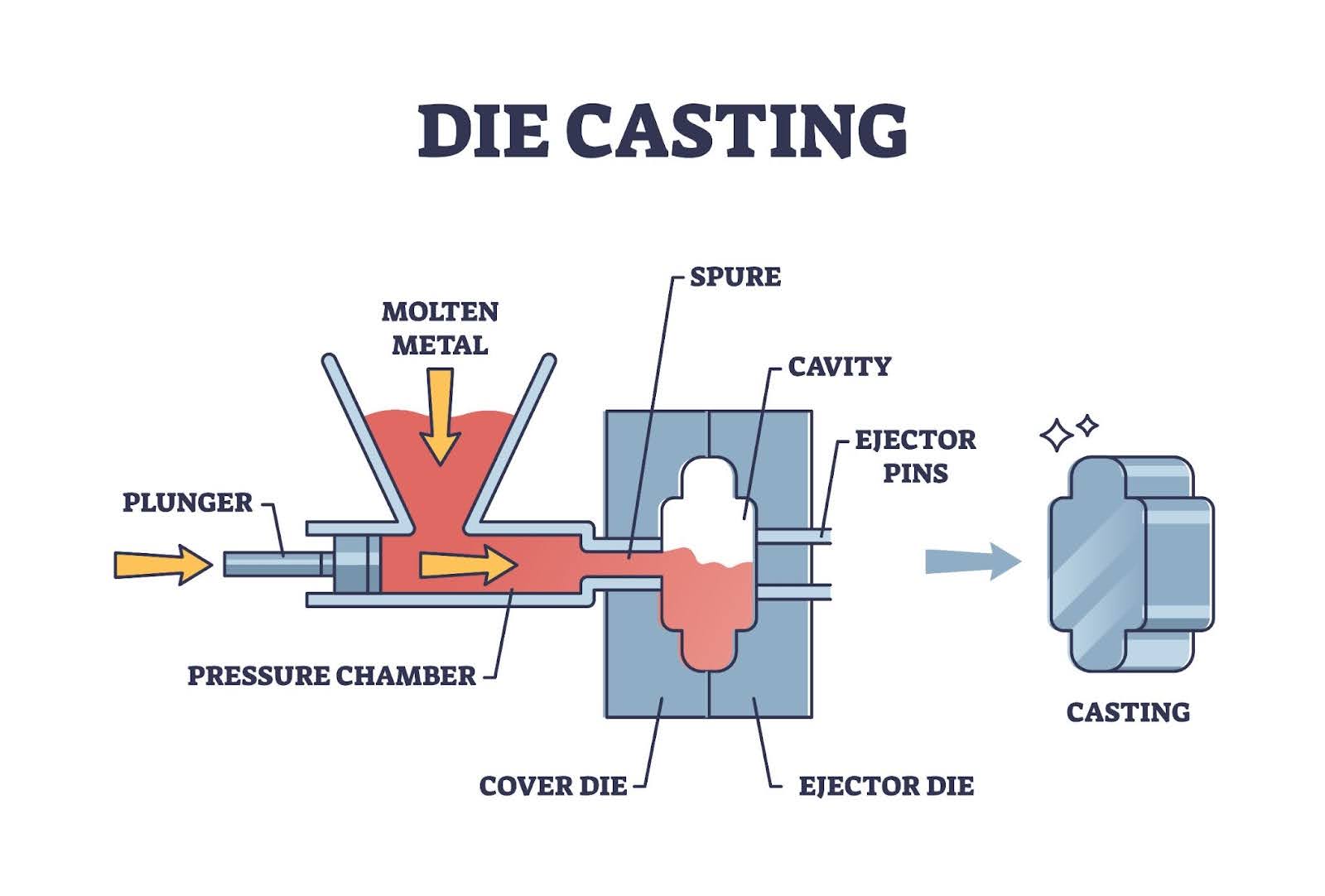
A die is far more than a hollowed-out block of metal. It is a complex assembly of moving parts, cooling channels, and sensors designed to withstand extreme thermal and mechanical stress. In high-pressure die casting (HPDC), the die must endure the impact of molten metal injected at high velocities and under immense pressure, often exceeding 10,000 psi.
The Material Science of Die Construction
Because the die is exposed to repetitive cycles of heating and cooling (thermal fatigue), the choice of material is a critical technological decision. Most modern dies are constructed from high-grade tool steels, such as H13 hot-work steel. These materials are chosen for their high “red hardness”—the ability to maintain structural integrity at elevated temperatures.
Advanced metallurgical treatments, including vacuum heat treatment and nitriding, are applied to the die surfaces. These processes enhance wear resistance and prevent “soldering,” a technical failure where the molten alloy chemically bonds with the die surface, ruining the part and potentially damaging the tool.
Precision Machining and CNC Integration
The creation of a die is a marvel of Computer Numerical Control (CNC) technology. To achieve the required tolerances, engineers use five-axis milling machines and Electrical Discharge Machining (EDM). EDM is particularly vital in die-tech; it uses electrical sparks to erode metal with surgical precision, allowing for the creation of deep, narrow cavities and sharp corners that traditional cutting tools cannot reach. This level of precision is what allows for the sleek, seamless edges found on modern consumer electronics.
The Die Casting Process: A Synergy of High-Pressure Technology
To understand the die, one must understand how it interacts with the casting machine. The die is typically split into two halves: the “cover die” (stationary) and the “ejector die” (movable). The technological sophistication of this system lies in how it manages the transition of metal from a liquid state to a solid, functional component in a matter of seconds.
Hot-Chamber vs. Cold-Chamber Tech
The technology used to inject metal into the die depends on the alloy’s melting point.
- Hot-Chamber Technology: Used for low-melting-point alloys like zinc. The injection mechanism is submerged in the molten metal, allowing for incredibly fast cycle times.
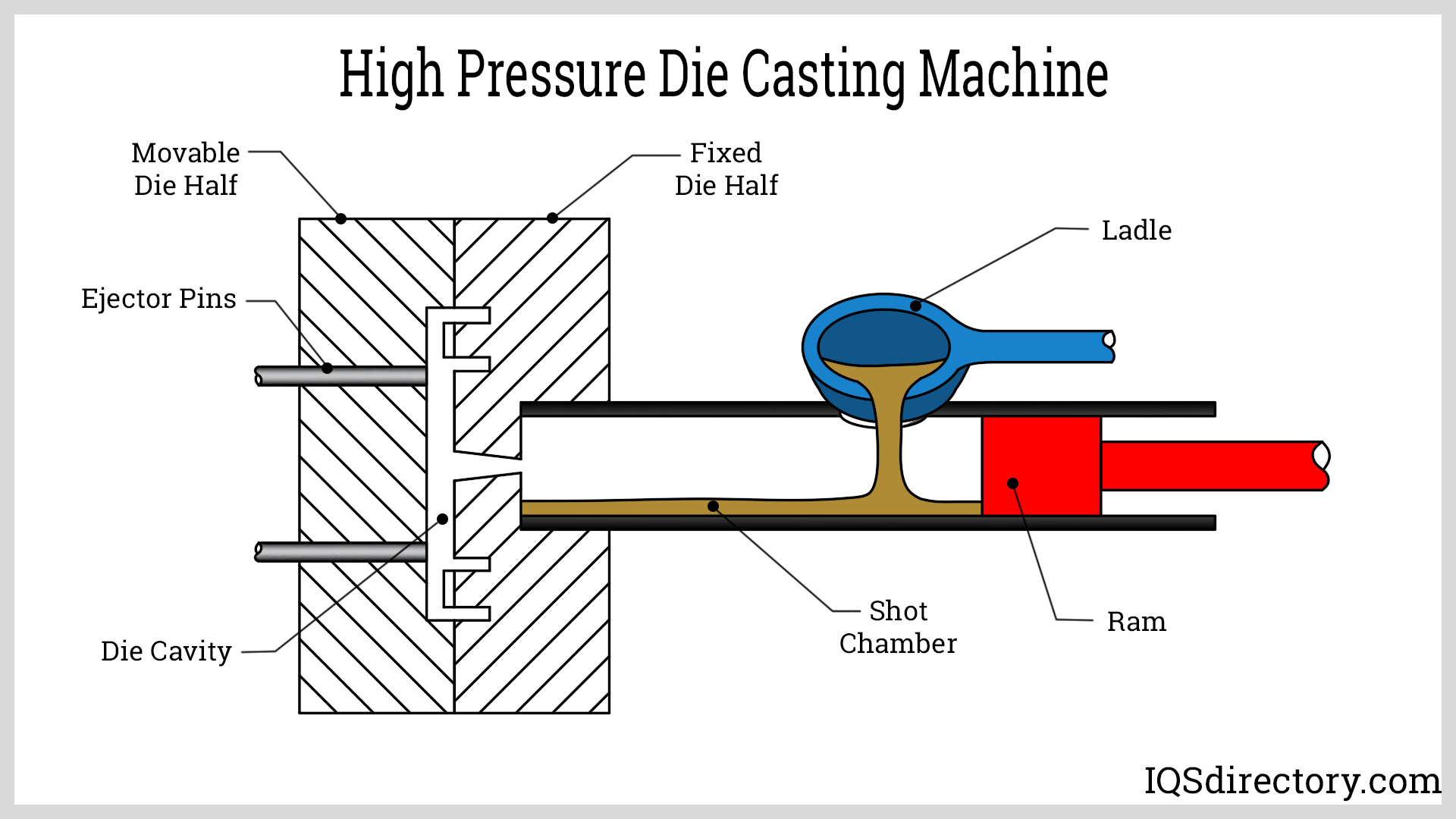
- Cold-Chamber Technology: Used for higher-melting-point alloys like aluminum and magnesium. Here, the metal is ladled into a shot sleeve before being forced into the die. This prevents the injection machinery from melting or corroding due to constant contact with high-heat alloys.
The precision of these systems is controlled by sophisticated hydraulic and servo-electric actuators that ensure the “shot” of metal happens in a controlled, multi-stage process to prevent air bubbles (porosity) from forming within the part.
Automation and IoT in the Casting Cycle
Modern die casting is increasingly defined by the Industrial Internet of Things (IIoT). Modern dies are often embedded with thermal sensors and pressure transducers. These sensors feed real-time data back to an AI-driven control system that can adjust the cooling flow or injection speed on the fly. This “smart casting” technology minimizes waste and ensures that every part produced meets the exact digital blueprint stored in the cloud.

Innovative Design and Simulation Software in Die Development
Before a single block of steel is cut, the die exists as a complex digital model. The tech stack used in die design has shifted from simple 2D drafting to high-fidelity 3D environments and physics-based simulations.
Computer-Aided Design (CAD) and CAM Optimization
Engineers utilize advanced CAD software to design the “gating system”—the network of channels through which the molten metal flows to reach the die cavity. This is a critical technological hurdle; if the metal cools too quickly or flows turbulently, the part will fail. Computer-Aided Manufacturing (CAM) software then translates these designs into G-code for CNC machines, ensuring that the physical tool is an exact replica of the digital design.
Predictive Analysis through Digital Twins
One of the most significant tech trends in manufacturing is the use of “Digital Twins.” Before the die is manufactured, designers run Computational Fluid Dynamics (CFD) simulations. These simulations predict how the molten metal will fill the die, where air might be trapped, and how the die will expand and contract due to heat. By solving these problems in a virtual environment, companies save millions in physical prototyping costs and reduce the “time-to-market” for new technological products.
The Die’s Role in Structural Integrity and Aesthetics
In the world of tech gadgets and high-end machinery, the die is responsible for two primary factors: how a product feels and how it performs. The “premium” feel of a magnesium-alloy laptop or a high-strength aluminum camera body is a direct result of the die’s surface finish.
Vacuum-Assisted Die Casting
A major technological breakthrough in this field is vacuum-assisted casting. By pulling a vacuum within the die cavity before injection, engineers can remove air that would otherwise cause structural weaknesses. This tech allows for the production of “structural” die castings—parts that are strong enough to be welded or heat-treated, which was previously impossible. This has revolutionized the EV (Electric Vehicle) industry, allowing for large, lightweight chassis components that extend battery range.
Micro-Casting and Miniaturization
As tech components shrink, the demand for micro-casting increases. Dies are now being engineered to produce parts so small they are measured in millimeters, yet they contain internal geometries as complex as their larger counterparts. This requires specialized “multi-slide” die technology, where the die opens in four or more directions rather than just two, allowing for incredible geometric freedom.
Future Trends: The Convergence of Die Casting and Additive Manufacturing
As we look toward the future of manufacturing technology, the line between traditional die casting and 3D printing is beginning to blur. This convergence is driving the next generation of “Die-Tech.”
3D Printing of Die Components
One of the most exciting developments is the use of metal 3D printing (DMLS) to create die inserts with “conformal cooling.” Traditional cooling channels are drilled in straight lines, which can leave “hot spots” in a complex die. With 3D printing, engineers can grow cooling channels that curve and twist around the cavity, following the exact contour of the part. This improves part quality and reduces cycle times by up to 30%, representing a massive leap in production efficiency.
Sustainable Tech and Energy Efficiency
The technology of the die is also evolving to meet sustainability goals. New “near-net-shape” casting techniques aim to produce parts that require zero post-processing or machining. This “one-and-done” tech reduces energy consumption and material waste. Furthermore, the development of new, eco-friendly die lubricants and release agents is reducing the environmental footprint of the casting floor.
Conclusion: The Die as the Silent Hero of Technology
While we often celebrate the silicon chips and the lines of code that run our world, we must recognize the physical vessels that house them. The “die” in casting is a sophisticated technological marvel that bridges the gap between digital imagination and physical reality. Through the integration of advanced metallurgy, CNC precision, AI-driven simulation, and additive manufacturing, die technology continues to push the boundaries of what is possible in hardware design.
As we move deeper into an era of EVs, aerospace exploration, and high-performance computing, the die will remain the indispensable tool of the trade—the master mold that shapes the future of technology, one high-pressure shot at a time.
aViewFromTheCave is a participant in the Amazon Services LLC Associates Program, an affiliate advertising program designed to provide a means for sites to earn advertising fees by advertising and linking to Amazon.com. Amazon, the Amazon logo, AmazonSupply, and the AmazonSupply logo are trademarks of Amazon.com, Inc. or its affiliates. As an Amazon Associate we earn affiliate commissions from qualifying purchases.