
In the modern digital landscape, security is a constant arms race between those attempting to protect data and those seeking to exploit it. Among the oldest and most persistent methods used by cybercriminals to breach accounts is the “dictionary attack.” While it may sound like a relic from the early days of the internet, the dictionary attack remains a potent threat due to the predictable nature of human behavior and the increasing power of automated hacking tools.
For individuals and organizations alike, understanding the mechanics of a dictionary attack is the first step toward building a robust defense. In this comprehensive guide, we will explore how these attacks work, why they remain effective in a world of advanced software, and the technical strategies you can implement to ensure your data remains secure.
1. Defining the Dictionary Attack: The Mechanics of the Hack
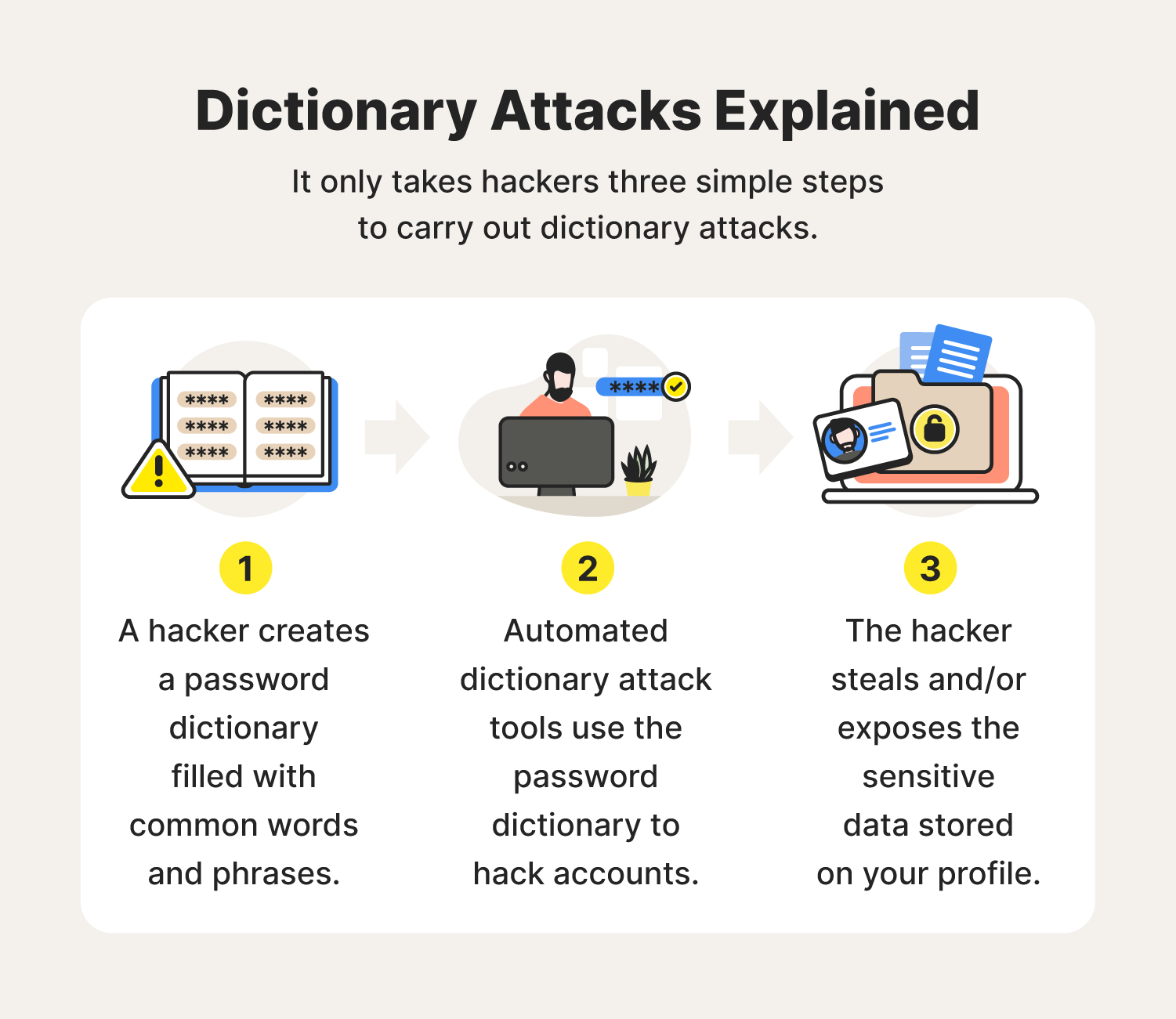
At its core, a dictionary attack is a form of password cracking that involves systematically testing every word in a pre-arranged list (a “dictionary”) to see if it matches a user’s password. Unlike other forms of hacking that might involve sophisticated malware or social engineering, a dictionary attack relies on the statistical probability that users will choose common words, phrases, or leaked credentials.
How It Works: The Automated Process
Modern dictionary attacks do not involve a human typing in one password at a time. Instead, hackers use automated software—such as John the Ripper, Hashcat, or Cain and Abel—that can process thousands of attempts per second. The software takes a list of common passwords and enters them into a login field or compares them against a database of “hashes” (encrypted versions of passwords).
If a user has set their password to “football” or “adventure,” the software will find a match almost instantly as it cycles through its list. These lists often include not just standard dictionary words, but also common number combinations, names, and even “leetspeak” variations (e.g., replacing ‘s’ with ‘5’).
Dictionary Attacks vs. Brute Force Attacks: Key Differences
It is common to confuse dictionary attacks with brute force attacks, but they operate on different logic. A brute force attack is an exhaustive trial-and-error method that attempts every possible combination of characters (e.g., aaa1, aaa2, aaa3). While guaranteed to work eventually, it is computationally expensive and slow for long passwords.
In contrast, a dictionary attack is targeted and efficient. It assumes the user has chosen something recognizable. Because it focuses on the most likely candidates rather than every possible combination, it can breach a simple password in a fraction of the time required for a brute force attack.
2. Why Dictionary Attacks Remain a Global Threat
One might assume that in an era of biometric sensors and facial recognition, the humble dictionary attack would be obsolete. However, several factors contribute to its continued success in the tech world.
The Human Element: Why We Choose Predictable Passwords
The primary reason dictionary attacks work is the human brain’s preference for memorability over security. Most users find it difficult to remember a 16-character string of random symbols. Consequently, they resort to words that have personal meaning or are easy to type.
Even when websites require “special characters,” users often follow predictable patterns, such as capitalizing the first letter and adding an exclamation point at the end (e.g., “Password123!”). Hackers are well aware of these patterns and include them in their specialized dictionaries, rendering these minor “security” adjustments ineffective against automated tools.
The Impact of Data Breaches and “RockYou.txt”
The effectiveness of dictionary attacks is amplified by the sheer volume of leaked data available on the dark web. When a major service suffers a data breach, millions of real-world passwords are exposed. These are then compiled into “wordlists.”
The most famous of these is the “RockYou.txt” list, derived from a 2009 breach. It contains over 14 million common passwords. Today, hackers use even larger databases containing billions of credentials. If you have reused a password from a breached site, it is likely already in a hacker’s dictionary, making your other accounts vulnerable to a “credential stuffing” dictionary attack.

3. Anatomy of a Successful Dictionary Attack
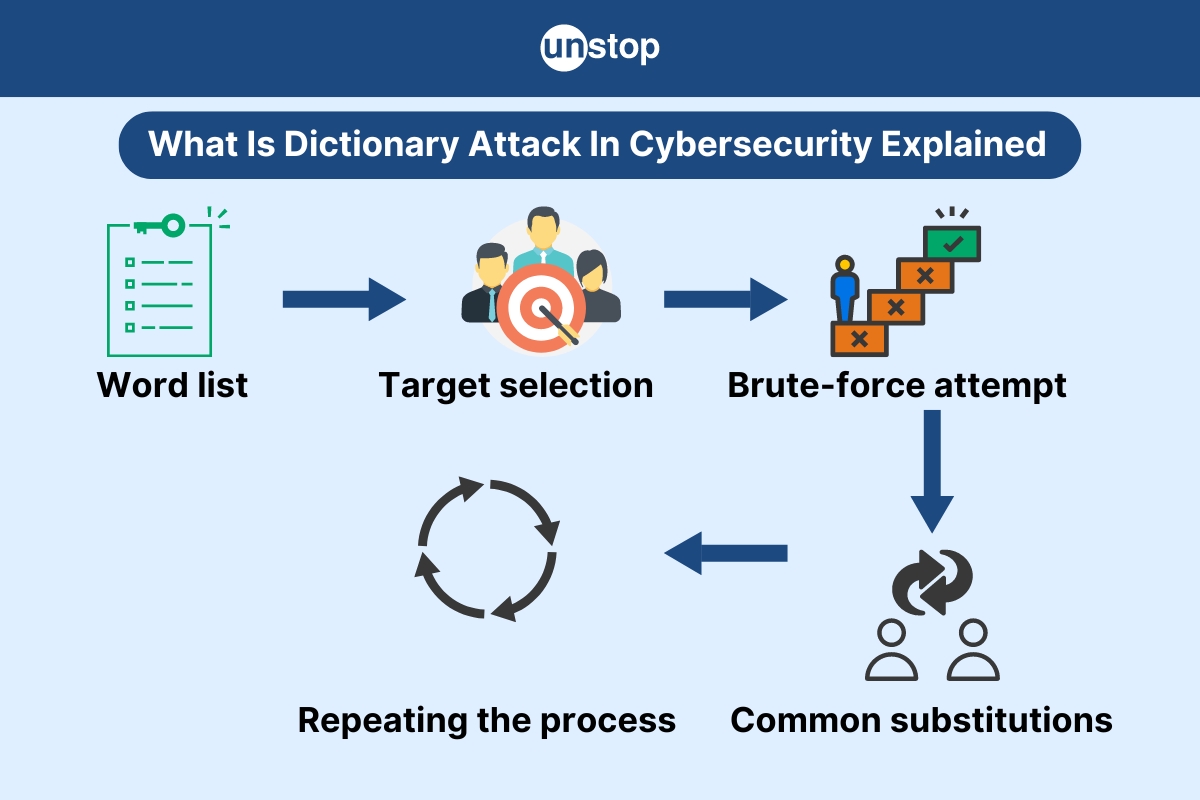
To better understand how to defend against these intrusions, it is helpful to look at the attack from the perspective of the threat actor. A dictionary attack usually follows a specific technical workflow.
Stage 1: Reconnaissance and Target Selection
The attacker identifies a target system. This could be a web portal, an SSH server, or an offline database of hashed passwords obtained from a previous breach. In an “offline” attack, the hacker has the hashed data and can run the attack on their own hardware without worrying about being blocked by the website’s security systems.
Stage 2: The Wordlist and Hashing
The software begins the process. If the attacker is targeting a hashed database, the software will take a word from the dictionary, pass it through the same hashing algorithm used by the target (such as SHA-256 or MD5), and compare the resulting hash to the one in the database. If the hashes match, the password is recovered. Because modern GPUs (Graphics Processing Units) are exceptionally good at these repetitive mathematical tasks, a hacker can test billions of hashes every second.
Stage 3: Exploitation and Post-Breach Activity
Once a match is found, the attacker gains unauthorized access. From here, the technical consequences can escalate quickly. They may engage in “lateral movement,” attempting the same credentials on other services, or they may install backdoors to maintain long-term access to a corporate network.
4. Proactive Defense Strategies for Individuals and Organizations
Defending against dictionary attacks requires a multi-layered approach that combines user education with technical safeguards. Here are the most effective strategies for securing digital assets.
Strengthening the Front Line: Password Complexity and Length
The simplest defense is to ensure that passwords are not in any dictionary. This is best achieved through passphrases—long strings of random, unrelated words (e.g., “Correct-Horse-Battery-Staple”).
Length is often more important than complexity. A 20-character passphrase made of four random words is exponentially harder to crack than an 8-character password with symbols. To manage these, the use of Password Managers is highly recommended. These tools generate and store high-entropy passwords that are immune to dictionary-based guesses.
Multi-Factor Authentication (MFA): The Ultimate Barrier
Even if a dictionary attack successfully guesses a password, Multi-Factor Authentication (MFA) can stop the breach in its tracks. By requiring a second form of verification—such as a hardware token (YubiKey), a mobile authenticator app, or a biometric scan—the password alone becomes useless to the attacker. In the current security climate, MFA is considered a non-negotiable standard for any sensitive account.
Implementation of Account Lockout and Rate Limiting
From a developer’s perspective, protecting a web application involves implementing rate limiting. By limiting the number of login attempts from a single IP address within a specific timeframe, you make it impossible for an attacker to run a high-speed dictionary attack “online.” After three or five failed attempts, the account should be temporarily locked, or the user should be required to solve a CAPTCHA.
5. The Future of Authentication in a Post-Password World
As dictionary attacks and other credential-based threats continue to evolve, the tech industry is moving toward a “passwordless” future.
Biometrics and Passkeys
The FIDO Alliance, supported by tech giants like Google, Apple, and Microsoft, is championing the use of Passkeys. Passkeys use public-key cryptography to authenticate users without requiring a traditional password. Instead, the “secret” stays on your device and is unlocked via biometrics (fingerprint or face ID). Because there is no “word” for a dictionary attack to target, this technology effectively neutralizes the threat.
AI-Driven Security Monitoring
Artificial Intelligence is also playing a role in defense. Modern security systems use machine learning to analyze login patterns. If a system detects a high volume of login attempts that resemble the mechanical rhythm of a dictionary attack, it can automatically block the source or trigger an advanced security challenge. This proactive monitoring allows organizations to identify and mitigate threats in real-time before a breach occurs.
In conclusion, while the dictionary attack is an old tactic, it remains a pillar of cybercrime because it exploits the most vulnerable part of any security system: human predictability. By adopting long passphrases, utilizing MFA, and staying informed about emerging technologies like passkeys, you can ensure that your digital identity remains a closed book to dictionary-wielding attackers.
aViewFromTheCave is a participant in the Amazon Services LLC Associates Program, an affiliate advertising program designed to provide a means for sites to earn advertising fees by advertising and linking to Amazon.com. Amazon, the Amazon logo, AmazonSupply, and the AmazonSupply logo are trademarks of Amazon.com, Inc. or its affiliates. As an Amazon Associate we earn affiliate commissions from qualifying purchases.