
The acronym “DFA” pops up frequently in baseball discussions, often accompanied by a flurry of roster moves and fan speculation. While it sounds like a technical term, understanding what a DFA (Designated For Assignment) truly signifies can unlock deeper insights into team management, player development, and the intricate economics of professional baseball. At its core, a DFA is a procedural tool used by Major League Baseball (MLB) teams to manage their 40-man rosters, but its implications ripple through player careers, team strategies, and even the financial health of the sport.

For fans accustomed to the idea of players being traded or released outright, the DFA introduces a distinct nuance. It’s a mechanism that allows teams to move a player off their active roster without immediately severing ties or incurring significant financial penalties. This flexibility is crucial in a league where roster spots are precious and player performance can be volatile. In essence, a DFA is a temporary holding pattern for a player, a period where the team reassesses their future with that individual.
The complexities of baseball’s roster system are vast, and the DFA is a direct product of these regulations. Teams are limited to a certain number of players on their 40-man roster, which serves as a pool from which they can draw for their active 26-man roster during the season. When a player is DFA’d, they are removed from the 40-man roster, freeing up a spot. However, the player isn’t immediately a free agent. Instead, they enter a brief window where other MLB teams have the opportunity to claim them. This claim process is what makes the DFA such a fascinating strategic maneuver.
The Mechanics and Implications of a DFA
The Procedural Pathway: How a DFA Works
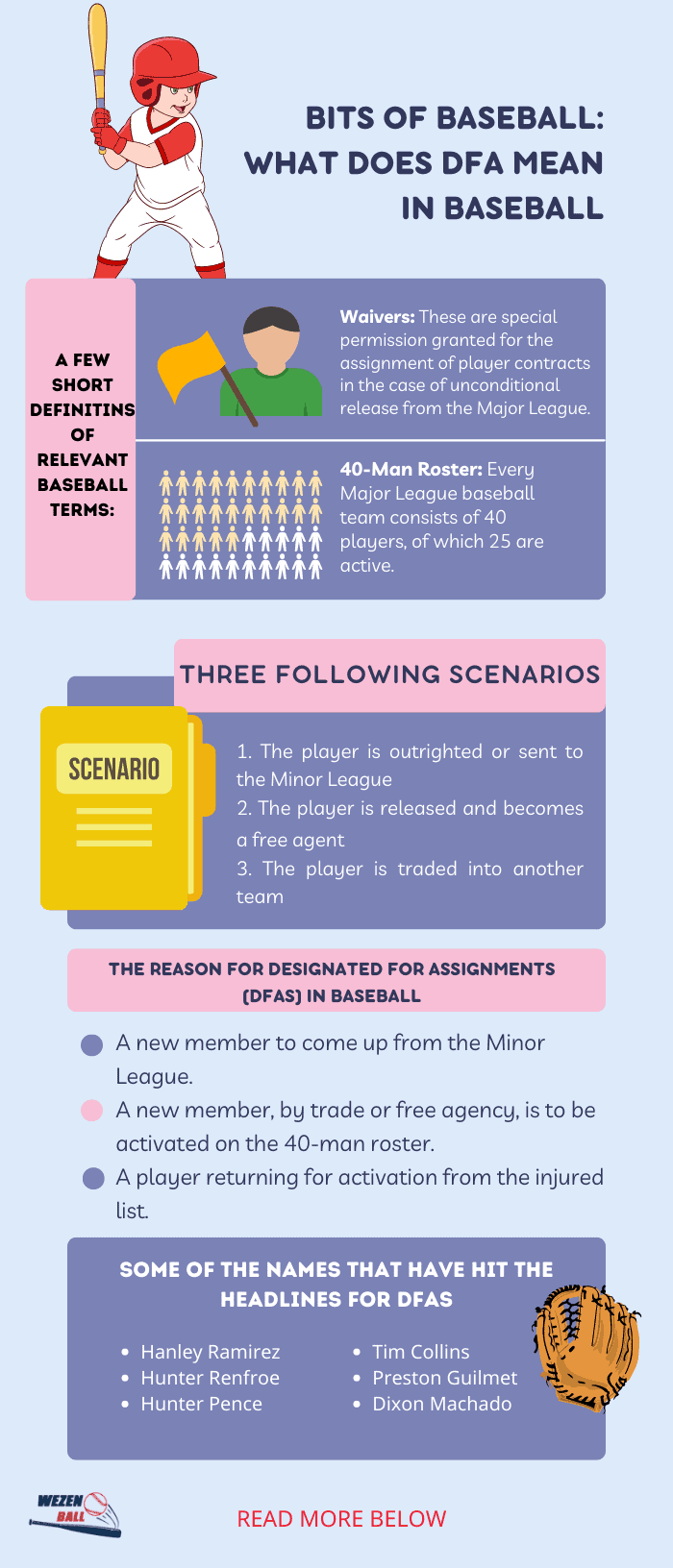
When a team decides to DFA a player, they are essentially placing them in a limbo state. The player is removed from the 40-man roster, but they remain under contract with their original team. This move is typically made when a team believes a player is no longer a viable option for their current roster, perhaps due to underperformance, injury, or the emergence of other players.
The crucial element of a DFA is the subsequent 48-hour period (or seven days for players on the 60-day injured list). During this time, any other MLB team can “claim” the player off waivers. If a team claims the player, they assume the remainder of that player’s contract and the player is added to their 26-man roster. If no team claims the player within the designated window, the original team then has a few more options. They can either outright release the player (making them a free agent), send them to their minor league affiliate (if they have a contract that allows for this), or negotiate a buyout of the remaining contract.
This waiver process is where much of the strategy comes into play. A team might DFA a player they hope other teams won’t claim, allowing them to send the player to the minor leagues without exposing them to waivers. Conversely, they might DFA a player hoping another team will take on their contract, especially if the player is on a significant salary. The decision to DFA a player is rarely made in a vacuum; it’s a calculated move within the larger framework of team building and resource allocation.
Strategic Applications: Why Teams DFA Players
The reasons behind a DFA decision are multifaceted and often reveal a team’s strategic priorities.
Roster Maneuverability and Development
One of the primary drivers for a DFA is to create roster space. As teams progress through a season, injuries occur, prospects emerge, and player performance fluctuates. A DFA allows a team to quickly remove a player from their 40-man roster without the complexities of trade negotiations or outright releases. This frees up a valuable spot for a player the team believes can contribute more immediately or for a prospect who has earned a promotion.
Furthermore, the DFA is a tool for player development. Sometimes, a player might be struggling at the Major League level but still possesses potential. A DFA can signal that the team wants to work with the player more closely in the minor leagues. If no other team claims them, they can be sent down to refine their skills, and the team retains their rights. This allows for a more controlled development process, avoiding the risk of losing the player altogether if they were outright released.
Financial Considerations and Contract Management
The financial aspect of baseball is inextricably linked to roster decisions. Player contracts can be significant, and teams are always mindful of their payroll. A DFA can be a way to shed salary, particularly if the player being DFA’d is on a large contract and the team doesn’t anticipate them being claimed. If the player is not claimed off waivers and is then outright released, the original team might still be responsible for a portion of their salary, depending on the contract terms. However, it’s often a better financial outcome than keeping a player who isn’t contributing and taking up a valuable roster spot.
In some cases, a DFA can be a precursor to a trade. If a team is looking to move a player but hasn’t found a trade partner, they might DFA the player with the hope that another team will claim them, thus facilitating a “waiver trade” where the acquiring team takes on the contract. This can be a way for teams to recoup some value for a player they were going to lose anyway.
Evaluating Player Value and Future Potential

The DFA process also serves as an objective evaluation of a player’s market value. When a player is placed on waivers, their peers and competitors get a chance to assess their worth. If multiple teams “claim” the player, it indicates that their value is higher than the originating team’s assessment, and the team might be able to negotiate a better trade outcome before the claim is processed. Conversely, if no one claims them, it provides a stark signal that the player’s perceived value is low in the current market.
This evaluation is critical for long-term team building. A team might DFA a player who was once a highly touted prospect but has failed to live up to expectations. The DFA process allows the organization to move on and allocate resources to players with brighter futures, rather than clinging to a past investment.
Beyond the Field: Technology, Branding, and the Business of Baseball
While the DFA is a baseball-specific mechanism, its underlying principles resonate with broader themes in business and technology. The strategic management of resources, the evaluation of talent, and the impact of market forces are all present in the decision to DFA a player.
Tech’s Influence on Roster Management and Player Evaluation
Technology plays an increasingly vital role in modern baseball, and its influence extends to roster management and player evaluation, which in turn impacts DFA decisions. Advanced analytics, biomechanical data, and even AI-powered scouting tools are providing teams with unprecedented insights into player performance and potential.
- Data-Driven Decisions: Teams utilize sophisticated statistical models to predict player performance, identify areas for improvement, and assess risk. These models can help inform whether a player is likely to improve or decline, influencing decisions like whether to DFA them or give them more time.
- Injury Analytics and Predictive Modeling: Technology allows teams to better understand player injury risks. If a player has a history of injuries or data suggests a higher likelihood of future issues, this can factor into a DFA decision, especially if the team has a need for more durable players.
- AI in Scouting and Development: Artificial intelligence is being used to analyze player swings, pitching mechanics, and even defensive movements. This granular data can help identify flaws that can be addressed in development, potentially saving a player from a DFA. Conversely, if AI analysis confirms a player’s limitations or lack of improvement potential, it can accelerate the DFA process.
- Digital Security of Player Data: As teams amass vast amounts of player data, ensuring its digital security becomes paramount. Protecting sensitive information about player performance, health, and contracts is crucial for maintaining competitive advantage and complying with privacy regulations.
The integration of technology means that DFA decisions are no longer solely based on gut instinct or traditional scouting. They are often informed by a wealth of data, allowing for more precise and strategic roster management.
Branding and Reputation: The Player and the Organization
The way a player is handled, including through a DFA, can significantly impact both their personal brand and the organizational brand.
- Player Reputation: A player who is frequently DFA’d might develop a reputation as an unreliable or underperforming asset, making it harder for them to secure future contracts. Conversely, a player who is claimed off waivers and thrives with a new team can rebuild their reputation and career.
- Organizational Brand: How a team treats its players, even those who are let go, contributes to its overall brand and reputation within the league. A team known for giving players second chances or handling departures with respect might attract more talent in the long run. Conversely, a team that is perceived as ruthless or dismissive of its players could face challenges in recruitment and retention.
- Marketing and Fan Perception: For fans, the DFA of a popular player can be a sensitive issue. Teams need to carefully manage the narrative around these decisions to avoid alienating their fanbase. Transparent communication about roster moves, even difficult ones, can help maintain positive fan perception.
The “Brand” aspect here extends beyond just marketing. It’s about building trust, demonstrating integrity, and understanding the human element within the business of baseball.
The Financial Ecosystem: Money and Player Transactions
The financial implications of a DFA are significant and are closely tied to the broader economic landscape of professional baseball.
- Contract Structures and Salaries: The majority of MLB players are on guaranteed contracts. When a player is DFA’d, the team is still obligated to pay their salary, at least until the contract is settled through waiver claims, outright releases, or buyouts. This can represent a substantial financial outlay, especially for players on multi-year deals.
- Payroll Management and Luxury Tax: Teams operate under strict payroll constraints, and often a luxury tax threshold that penalizes high-spending teams. A DFA can be a strategic move to manage payroll and stay within budget, especially if the team is trying to shed salary to avoid exceeding the luxury tax.
- Minor League Investments: The decision to DFA a player can also reflect the team’s investment in its minor league system. If a team has prospects ready to make the jump, they might DFA a veteran player to make room, essentially choosing to invest in developing their own talent rather than paying for external assets.
- Free Agency and Market Dynamics: The DFA process is a key feeder into the free-agent market. When players are released outright after being DFA’d, they become available to any team. This creates a dynamic marketplace where teams can acquire talent at potentially lower costs.
The “Money” aspect of baseball is not just about ticket sales and broadcasting rights; it’s deeply embedded in the day-to-day operational decisions of managing a roster, and the DFA is a prime example of this interplay.
Conclusion: A Multifaceted Tool in Baseball’s Arsenal
The Designated For Assignment, or DFA, is far more than a simple administrative procedure in baseball. It is a strategic tool that reflects the complex interplay of roster limitations, player development, financial considerations, and the ever-evolving technological landscape of the sport. For teams, it offers a degree of flexibility in managing their 40-man roster, allowing them to adapt to performance fluctuations, injuries, and the emergence of new talent. For players, it can represent a critical juncture in their careers, a moment where their future is put to the test in the waiver wire market.
Understanding the DFA provides a deeper appreciation for the intricate decision-making processes that underpin professional baseball. It highlights how teams balance immediate needs with long-term goals, how financial realities shape player movements, and how the constant evaluation of talent drives the competitive spirit of the game. As technology continues to advance and the business of baseball becomes increasingly sophisticated, the DFA will undoubtedly remain a pivotal mechanism in how teams navigate the challenges and opportunities of building a winning roster.
aViewFromTheCave is a participant in the Amazon Services LLC Associates Program, an affiliate advertising program designed to provide a means for sites to earn advertising fees by advertising and linking to Amazon.com. Amazon, the Amazon logo, AmazonSupply, and the AmazonSupply logo are trademarks of Amazon.com, Inc. or its affiliates. As an Amazon Associate we earn affiliate commissions from qualifying purchases.