
In the ever-evolving landscape of technology, even seemingly simple machines like bicycles are infused with ingenious engineering. While many cyclists take their gear-shifting mechanisms for granted, understanding the core components can significantly enhance appreciation for the ride. Among these crucial elements, the derailleur stands out as the unsung hero that allows riders to conquer varying terrains and maintain optimal pedaling efficiency. This article delves into the fascinating world of bicycle derailleurs, exploring their function, evolution, and the technological prowess that makes them indispensable.
The Mechanics of Smooth Shifting: How a Derailleur Works
At its heart, a derailleur is a mechanical device designed to precisely move the bicycle’s chain from one sprocket to another. This seemingly simple action is the key to accessing different gear ratios, which are fundamental to a bicycle’s versatility. Imagine a cyclist ascending a steep hill. Without a derailleur, they would be forced to pedal with immense effort, their legs burning. However, with a derailleur, they can effortlessly shift to a lower gear, effectively reducing the resistance and making the climb manageable. Conversely, on a flat stretch or downhill, a rider can shift to a higher gear, allowing for faster speeds with less pedaling effort.

The magic of the derailleur lies in its intricate interplay of levers, springs, and precisely engineered cages. When a rider actuates the gear shifter on their handlebars, a cable connected to the derailleur is pulled or released. This action causes the derailleur’s body to pivot.
The Front Derailleur: Navigating the Chainrings
The front derailleur, typically mounted on the bicycle’s seat tube, is responsible for shifting the chain between the front chainrings. These chainrings, often found in sets of two or three, provide the primary range of gear ratios. The front derailleur’s “cage” – a U-shaped metal piece – is designed to guide the chain. As the cable is manipulated, the cage moves laterally, pushing the chain off one chainring and onto another. The design of the cage is critical; it must be able to lift the chain smoothly without dropping it or causing it to snag. Manufacturers have invested heavily in aerodynamic and lightweight designs for front derailleurs, reflecting the broader trend in cycling towards optimizing performance through advanced materials and engineering.
The Rear Derailleur: Fine-Tuning the Cogset
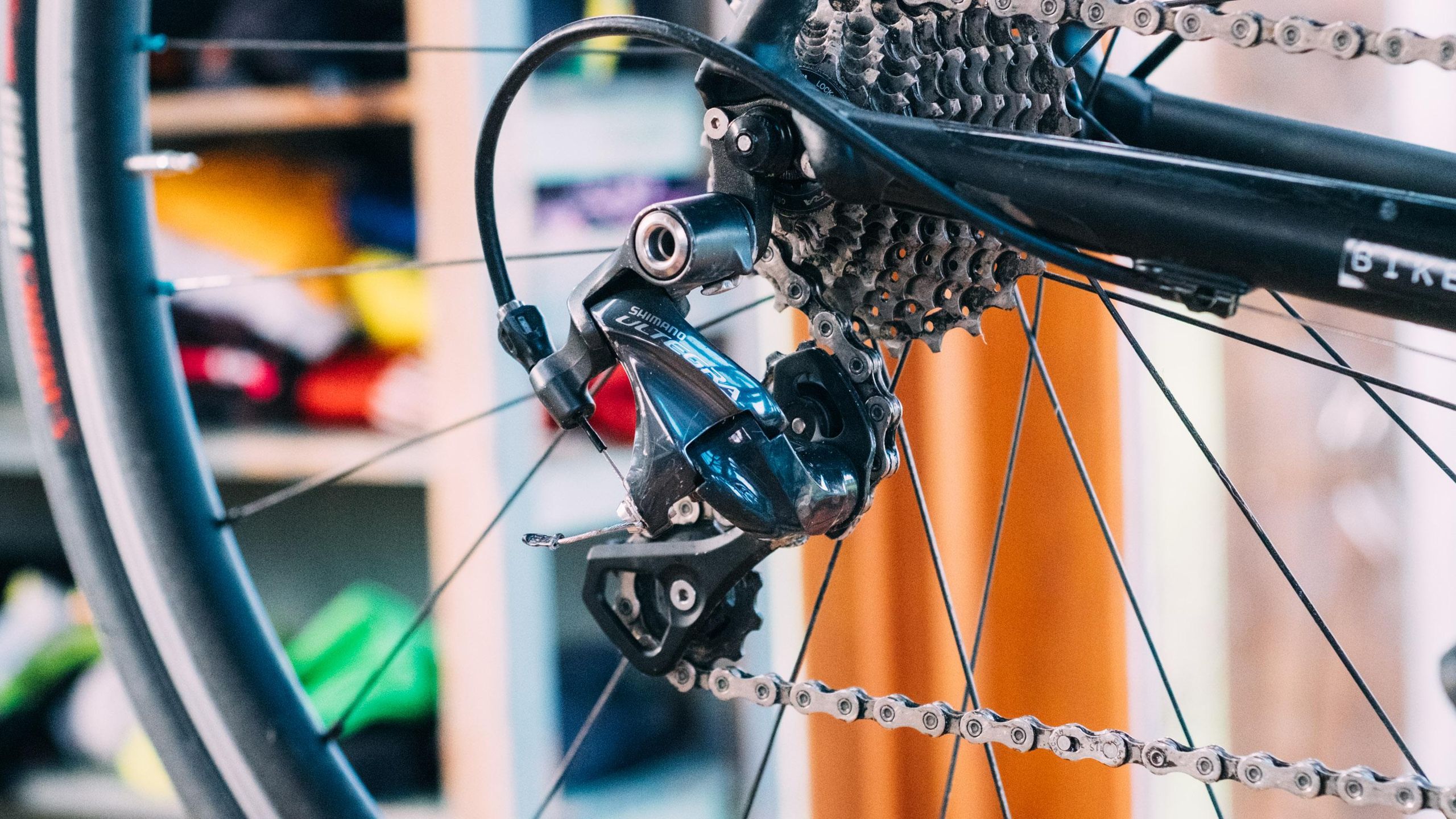
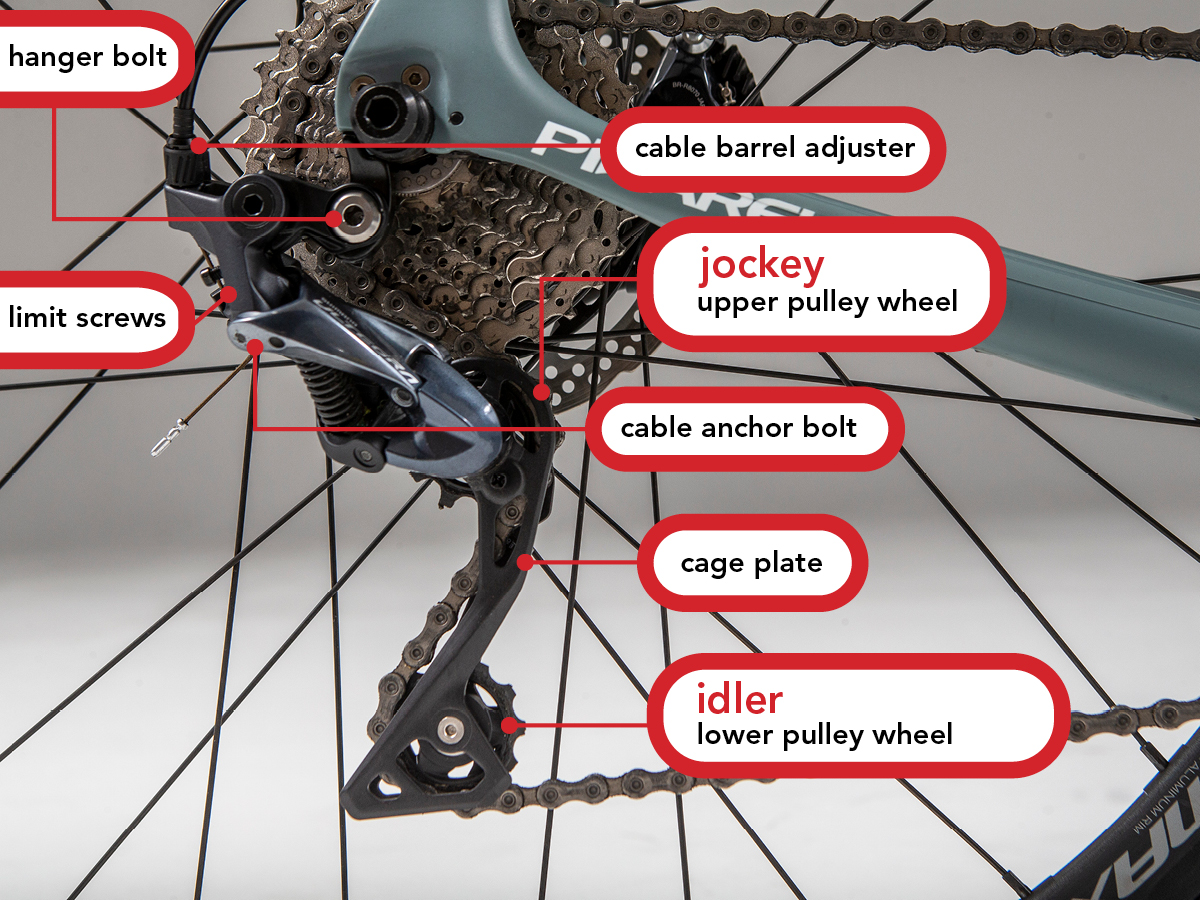
The rear derailleur, mounted on the bicycle’s frame near the rear wheel’s hub, handles shifting across the cassette or freewheel – the cluster of sprockets on the rear wheel. This is where the finer adjustments to gear ratios occur, allowing riders to make micro-adjustments to their pedaling cadence. The rear derailleur is a more complex piece of engineering than its front counterpart. It features a parallelogram mechanism that allows it to maintain a consistent distance between the upper jockey wheel (which guides the chain) and the cassette cogs. This precise positioning is vital for smooth and reliable shifting, especially when dealing with the closely spaced cogs on modern cassettes. The tension in the chain is managed by a spring-loaded mechanism within the rear derailleur, ensuring it remains taut and engaged with the sprockets.
Evolution and Innovation: A Look at Derailleur Technology
The derailleur, as we know it today, is a product of decades of iterative design and technological advancement. Early bicycles were single-speed, a limitation that spurred the invention of rudimentary shifting mechanisms. The derailleur concept, however, truly began to take shape in the late 19th and early 20th centuries.
Early Designs and the Dawn of Mechanical Shifting
The earliest forms of derailleurs were often crude, manually operated devices that required the rider to dismount or perform awkward maneuvers. Some early systems involved a secondary chain or a means to manually reposition the chain. However, the development of cable-actuated systems marked a significant leap forward. These systems allowed riders to control the derailleur from the handlebars, making gear changes far more convenient and efficient. The simplicity and robustness of these early mechanical systems laid the groundwork for future innovations.
The Rise of Index Shifting and Electronic Systems
A major turning point in derailleur technology was the introduction of indexed shifting. Prior to indexed systems, shifting required a discerning ear and a practiced hand to feel for the correct gear position. Indexed shifting, pioneered by companies like Shimano, incorporated detents or “clicks” into the shifter and derailleur mechanism. These clicks corresponded to specific gear positions, ensuring that each shift landed precisely on the intended cog or chainring. This innovation dramatically simplified the shifting process, making cycling more accessible to a wider audience and improving the overall riding experience.
The most recent and perhaps most revolutionary advancement in derailleur technology is the advent of electronic shifting. Electronic systems replace the traditional mechanical cables with electrical wires and motors. When a rider presses a button on their shifter, a small motor within the derailleur moves the derailleur cage. This offers unparalleled precision, speed, and consistency in shifting. Furthermore, electronic systems can be programmed with custom shift patterns, integrate with power meters to automatically adjust gears based on cadence and power output, and even offer features like automatic chain line correction. This represents a significant convergence of mechanical engineering and cutting-edge digital technology, mirroring trends seen across the broader tech industry.
Beyond the Mechanics: Derailleurs, Performance, and the Digital Frontier
The impact of derailleurs extends far beyond mere gear selection. They are intricately linked to a cyclist’s performance, efficiency, and overall riding experience. Understanding how derailleurs work can empower riders to make informed choices about their equipment and maintenance.
Optimizing Performance and Efficiency
The primary benefit of a derailleur system is its ability to allow cyclists to maintain an optimal pedaling cadence across a wide range of speeds and inclines. Cadence, the rate at which a cyclist pedals, is crucial for both efficiency and endurance. Pedaling too slowly with too much resistance leads to fatigue and wasted energy. Conversely, pedaling too quickly with too little resistance can be inefficient and jarring. Derailleurs enable riders to select the gear ratio that allows them to maintain their preferred cadence, whether climbing a mountain, cruising on a flat road, or sprinting for the finish line. This optimization translates directly into improved performance, whether for competitive racing or recreational riding.
Maintenance and Troubleshooting: Keeping Your Gears in Line
Like any mechanical system, derailleurs require regular maintenance to function optimally. Understanding the basic components and their interactions can help cyclists perform routine checks and address common issues. This includes ensuring proper cable tension, checking for bent derailleur hangers (the piece of metal that attaches the rear derailleur to the frame), and keeping the derailleur pivots clean and lubricated. Modern derailleurs, especially electronic systems, often come with diagnostic tools and software that can assist with troubleshooting, showcasing the growing integration of digital solutions in even traditionally mechanical domains.
The Future of Derailleurs: AI, Connectivity, and Smart Cycling
The future of bicycle technology is undeniably intertwined with advancements in the tech sector. Derailleurs are no exception. We are already seeing the emergence of “smart” cycling components that communicate wirelessly and can be controlled or monitored via smartphone apps. This trend is likely to accelerate. Imagine derailleurs that learn your riding style and proactively suggest shifts, or systems that integrate seamlessly with GPS devices to automatically adjust gears based on the terrain ahead. The potential for AI-powered derailleur systems to personalize the cycling experience and optimize performance is immense. Furthermore, the increasing focus on data collection in sports, driven by apps and wearable technology, will likely lead to derailleurs that provide even more granular insights into pedaling efficiency and gear usage, fostering a new era of data-driven cycling.
In conclusion, the humble derailleur, a marvel of mechanical engineering, plays a pivotal role in the modern cycling experience. From its simple beginnings to the sophisticated electronic systems of today, it embodies the spirit of continuous innovation. As technology continues to advance, derailleurs will undoubtedly become even more intelligent, intuitive, and seamlessly integrated into the broader digital ecosystem, further transforming how we interact with and enjoy our bicycles.
aViewFromTheCave is a participant in the Amazon Services LLC Associates Program, an affiliate advertising program designed to provide a means for sites to earn advertising fees by advertising and linking to Amazon.com. Amazon, the Amazon logo, AmazonSupply, and the AmazonSupply logo are trademarks of Amazon.com, Inc. or its affiliates. As an Amazon Associate we earn affiliate commissions from qualifying purchases.