
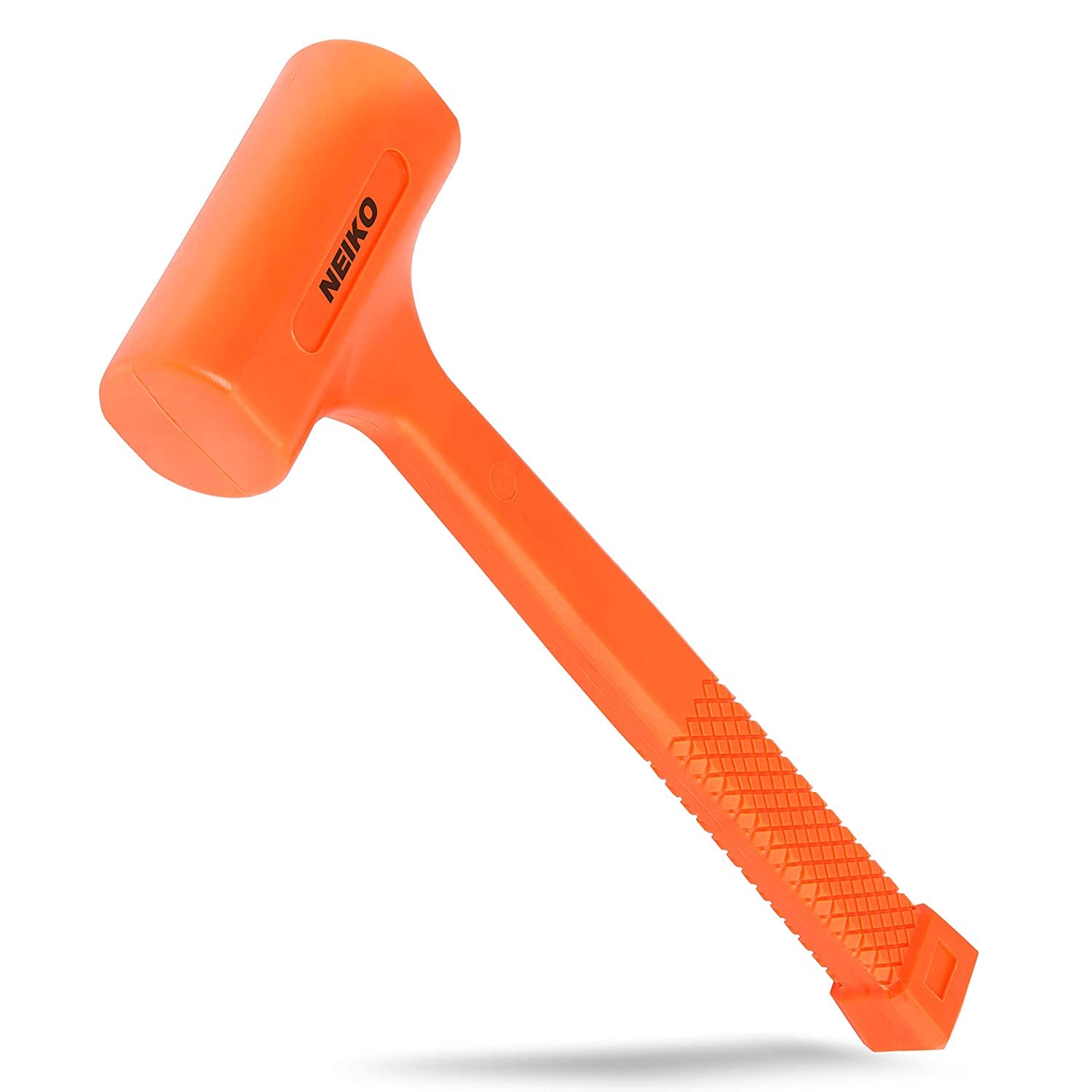
In the realm of mechanical engineering, hardware maintenance, and precision manufacturing, the tools we choose are often as critical as the designs we execute. Among the most misunderstood yet technologically significant tools in a technician’s arsenal is the dead blow mallet. While it may resemble a standard hammer to the untrained eye, the dead blow mallet is a sophisticated piece of kinetic engineering designed to deliver maximum force with zero rebound.
In high-tech environments—ranging from data center infrastructure management to aerospace assembly—the dead blow mallet serves as the gold standard for applying controlled impact. This article explores the technical architecture, material science, and specialized applications of the dead blow mallet within the technology and industrial sectors.

The Mechanics of Kinetic Energy: Understanding the “Dead” Impact
The defining characteristic of a dead blow mallet is its ability to strike a surface and remain there, rather than bouncing back. In physics, a standard hammer strike results in an elastic collision, where a significant portion of the kinetic energy is reflected back into the tool and the user’s arm. The dead blow mallet, however, is engineered to facilitate an inelastic collision.
The Internal Composition: Steel Shot and Cavity Design
The “secret” to the dead blow effect lies within the head of the mallet. Unlike solid-core hammers, the head of a dead blow mallet is hollow and partially filled with a loose, heavy material—typically steel shot, lead shot, or specialized sand.
When the mallet is swung, the shot stays at the back of the internal cavity. Upon impact, the mallet head stops instantly, but the internal shot continues its forward momentum, striking the front of the inner chamber milliseconds later. This secondary impact counteracts the natural tendency of the mallet to bounce, effectively “pinning” the tool to the surface and ensuring that 100% of the energy is transferred directly into the workpiece.
Eliminating Recoil through Physics
Recoil is more than just a nuisance; in precision tech environments, it is a liability. Recoil can cause “chatter” or secondary strikes that damage sensitive components or mar polished surfaces. By utilizing internal momentum transfer, the dead blow mallet eliminates the “rebound” effect. This allows technicians to apply high-force impacts in tight spaces—such as seating a heavy server blade into a rack or aligning a robotic arm—without the risk of the tool jumping back and hitting adjacent delicate hardware.
Material Science and the Evolution of Polyurethane Tooling
The external construction of a modern dead blow mallet is as technologically advanced as its internal mechanism. Most high-grade industrial mallets are encased in specialized polymers, moving away from the traditional wood or rubber designs of the past.
Chemical Resistance and Non-Marring Surfaces
In tech manufacturing, surface integrity is paramount. Dead blow mallets are usually hot-poured from high-performance polyurethane. This material is selected for its “non-marring” properties. Unlike metal hammers that can deform the target material, or cheap rubber mallets that leave black streaks, polyurethane protects the aesthetic and structural integrity of the component.
Furthermore, in laboratory or industrial tech settings, tools are frequently exposed to specialized chemicals, oils, and solvents. Polyurethane is engineered to be chemically inert and resistant to degradation, ensuring that the tool does not break down or contaminate a clean-room environment during use.
Spark-Resistance in High-Tech Environments
A critical safety feature of many professional-grade dead blow mallets is their non-sparking nature. In environments where volatile gases are present or where sensitive electronic components are sensitive to electrostatic discharge (ESD), a steel-on-steel strike could be catastrophic. By completely encasing the internal steel shot in a thick layer of non-ferrous polymer, the dead blow mallet becomes a vital tool for “intrinsically safe” operations, allowing for heavy-duty maintenance in high-risk technological zones.
Essential Applications in Hardware Engineering and Infrastructure
The utility of a dead blow mallet extends far beyond basic assembly. In the technology sector, it is a precision instrument used to solve complex physical integration challenges.
Precision Seating in Data Center Hardware
Modern data centers rely on modularity. Server racks, cooling manifolds, and power distribution units (PDUs) are designed with extremely tight tolerances to maximize space. When these components become stuck due to thermal expansion or slight misalignments, a standard hammer could shatter the casing or damage the internal circuitry.
A dead blow mallet allows an infrastructure engineer to apply a “soft” yet powerful blow that seats the component firmly into its housing. The lack of vibration produced by the mallet also protects nearby hard drives—which are notoriously sensitive to kinetic shocks—from experiencing head crashes or data corruption during adjacent maintenance.
Automotive Tech and Aerospace Integration
As the automotive industry shifts toward Electric Vehicles (EVs) and advanced driver-assistance systems (ADAS), the assembly process has become more digital and delicate. Dead blow mallets are used to calibrate sensors and seat high-voltage battery modules where precision is non-negotiable. Similarly, in aerospace technology, where every gram of weight and every millimeter of fit matters, the dead blow mallet is used to join composite materials that cannot withstand the sharp, high-frequency vibrations of a traditional hammer.
The Digital Analogy: Applying “Dead Blow” Principles to Software Engineering
While the dead blow mallet is a physical tool, its underlying philosophy—delivering maximum impact with zero collateral damage—has strong parallels in the world of software engineering and digital systems.
Targeted Debugging vs. System-Wide Overhauls
In software development, “brute force” methods are often discouraged because they create “rebound” effects—bugs that appear elsewhere in the system as a result of a heavy-handed fix. A “dead blow” approach to coding involves creating precision patches that address the root cause of an issue without vibrating through the rest of the tech stack. This is seen in the use of microservices and containerization (like Docker), where a failure in one area can be “struck” and fixed without rebounding into the entire ecosystem.
Minimizing Collateral Damage in Data Migrations
When performing large-scale data migrations, tech architects aim for an “inelastic” transition. Much like the mallet stays on the surface, a successful data migration should “stick” the first time. The use of “dead blow” strategies in tech—such as atomic transactions—ensures that if an operation cannot be completed perfectly, it leaves no residual “bounce” or corrupted state behind. It is a philosophy of controlled force that modern DevOps teams strive to emulate in their CI/CD pipelines.
Future Innovations in Impact Tooling Technology
As we look toward the future of industrial design and technology, the dead blow mallet continues to evolve. We are seeing the integration of smart materials and ergonomic advancements that further bridge the gap between human effort and mechanical efficiency.
Ergonomics and Vibration Damping
Repetitive strain is a significant concern for hardware technicians. The next generation of dead blow tools features “vibration dampening” handles that utilize advanced geometries to further insulate the user from kinetic feedback. This is crucial for long-duration tasks, such as the manual assembly of large-scale solar arrays or the decommissioning of heavy industrial hardware.

Smart Manufacturing Integration
With the rise of Industry 4.0, even the humble mallet is being digitized. Some high-end manufacturing facilities now utilize “torque-sensing” impact tools that can measure the exact Newtons of force applied during a dead blow strike. This data is fed back into a centralized Quality Assurance (QA) system, ensuring that every component of a high-tech product has been assembled with the exact amount of force required—no more, no less.
In conclusion, the dead blow mallet is far more than a “heavy hammer.” It is a masterclass in applied physics and material science, essential for the maintenance and progression of our modern technological world. By understanding the engineering behind the tool, professionals in tech and manufacturing can better appreciate the balance of power and precision required to build the future. Whether you are seating a server in a rack or designing a software architecture, the principles of the dead blow mallet—impact without rebound—remain a cornerstone of efficient, high-impact work.
aViewFromTheCave is a participant in the Amazon Services LLC Associates Program, an affiliate advertising program designed to provide a means for sites to earn advertising fees by advertising and linking to Amazon.com. Amazon, the Amazon logo, AmazonSupply, and the AmazonSupply logo are trademarks of Amazon.com, Inc. or its affiliates. As an Amazon Associate we earn affiliate commissions from qualifying purchases.