
The Massachusetts Institute of Technology (MIT) stands as a beacon of innovation and academic rigor, attracting ambitious minds from across the globe. For aspiring students, the question isn’t just about excelling in academics, but about cultivating a specific set of attributes that align with MIT’s unique culture and mission. While a strong academic record forms the bedrock of any MIT application, the admissions committee seeks candidates who demonstrate more than just high grades and standardized test scores. They are looking for individuals who possess a potent blend of intellectual curiosity, a passion for problem-solving, and a drive to make a tangible impact on the world.

Cultivating an Unquenchable Thirst for Knowledge
At its core, MIT is a crucible for intellectual exploration. The admissions process is designed to identify students who not only excel in traditional academic subjects but also exhibit a deep-seated desire to understand how things work, why they work, and how they can be improved. This isn’t merely about memorizing facts; it’s about fostering a genuine, lifelong love of learning that extends far beyond the classroom.
Beyond the Report Card: Demonstrating Intellectual Vitality
While stellar grades and high standardized test scores (if submitted) are foundational, MIT admissions officers look for evidence of intellectual vitality that transcends a GPA. This is often demonstrated through a student’s engagement with challenging coursework, their willingness to delve into subjects outside the prescribed curriculum, and their ability to articulate complex ideas with clarity and insight.
Rigorous Coursework and Academic Achievements
The most straightforward way to signal academic prowess is through a challenging high school curriculum. This includes taking advanced placement (AP) courses, International Baccalaureate (IB) programs, or dual enrollment classes, particularly in STEM fields. However, it’s not just about the quantity of these courses, but the quality of performance within them. MIT wants to see that you’ve not only enrolled in challenging classes but have thrived in them, demonstrating a strong grasp of the material and a capacity for higher-level thinking. This might manifest as consistently high grades in demanding subjects, or a progression of coursework that shows increasing academic maturity.
The Power of Genuine Curiosity and Independent Exploration
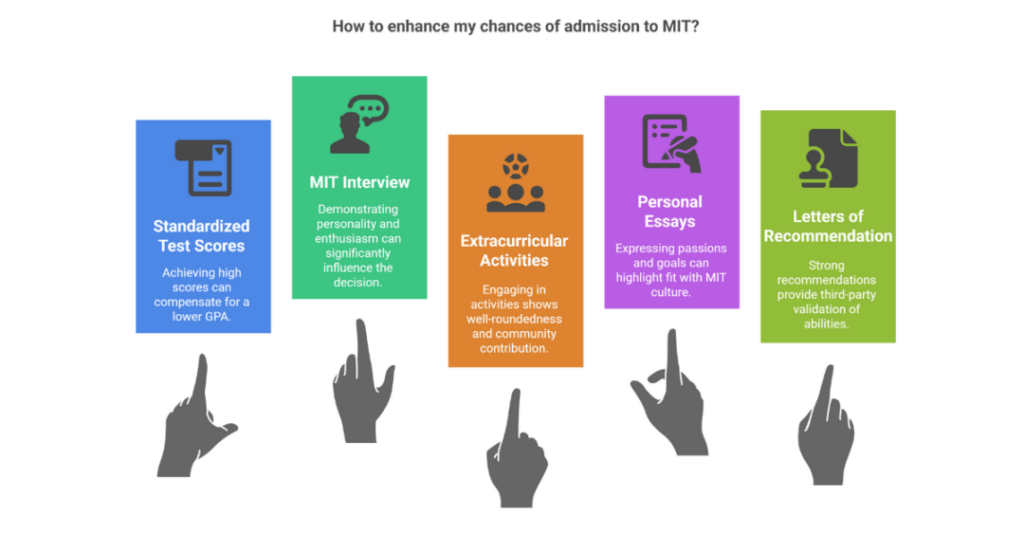
MIT deeply values intellectual curiosity, which is often revealed through extracurricular activities and personal projects. Think beyond the standard clubs. Have you built a robot in your garage? Taught yourself a new programming language to solve a problem? Conducted independent research on a topic that fascinates you? These activities showcase initiative, a proactive approach to learning, and a genuine passion for discovery that resonates with MIT’s ethos. Admissions committees actively seek examples of students who go above and beyond, driven by an intrinsic desire to learn and create.
Articulating Your Intellectual Journey: Essays and Recommendations
Your application essays and letters of recommendation are crucial platforms to showcase your intellectual journey. Essays provide an opportunity to elaborate on your experiences, your thought process, and what drives your intellectual pursuits. Admissions officers want to understand not just what you’ve done, but why you’ve done it, and what you’ve learned from the process. Similarly, letters of recommendation from teachers and mentors who know you well can offer invaluable insights into your academic capabilities, your intellectual engagement, and your potential to thrive in MIT’s demanding environment. They should speak to your ability to think critically, your problem-solving skills, and your collaborative spirit.
A Drive to Innovate and Solve Real-World Problems
MIT is synonymous with innovation. The institution is a breeding ground for groundbreaking research, entrepreneurial ventures, and solutions to some of the world’s most pressing challenges. Consequently, the admissions committee seeks individuals who not only possess the technical acumen to contribute but also harbor a deep-seated desire to apply their knowledge to effect positive change.
Beyond Theoretical Understanding: Practical Application and Impact
MIT values individuals who can translate theoretical knowledge into practical applications. This means demonstrating a capacity to not only understand complex concepts but also to use them to build, create, and solve problems in tangible ways. The focus here is on action, on making a difference, and on contributing to the betterment of society.
Project-Based Learning and Hands-On Experience
MIT emphasizes a learn-by-doing philosophy. Therefore, evidence of participation in project-based learning, internships, co-op programs, or research opportunities is highly valued. Whether it’s contributing to a science fair project that solves a local environmental issue, developing a mobile app that addresses a community need, or participating in undergraduate research at a university, these experiences demonstrate a practical aptitude and a commitment to applying knowledge. The ability to articulate the challenges faced, the solutions devised, and the impact achieved in these endeavors is paramount.
Entrepreneurial Spirit and Initiative
MIT has a strong entrepreneurial ecosystem, and the admissions committee looks for students who exhibit an entrepreneurial mindset. This doesn’t necessarily mean starting a multi-million dollar company before college. It’s about demonstrating initiative, resourcefulness, a willingness to take calculated risks, and the ability to identify opportunities and pursue them with determination. This could be seen in leadership roles within student organizations, developing a new club or initiative, or even a well-thought-out business plan for a hypothetical product. The key is to showcase a proactive approach and a drive to bring ideas to fruition.
Collaboration and Community Contribution
Innovation rarely happens in a vacuum. MIT values individuals who can work effectively in teams, contribute to a collaborative environment, and leverage the strengths of others. Evidence of participation in group projects, team sports, or community service initiatives where collaboration was essential can demonstrate this ability. Admissions officers want to see that you can not only excel individually but also contribute meaningfully to collective endeavors and that you are committed to using your skills for the benefit of others. This could be through mentoring younger students, participating in volunteer work, or contributing to open-source projects.
The MIT Fit: Character, Resilience, and a Collaborative Spirit
Beyond intellectual horsepower and a passion for problem-solving, MIT seeks individuals who align with its unique culture. This includes demonstrating strong character, the resilience to overcome challenges, and a genuine enthusiasm for contributing to the vibrant MIT community.
More Than Just Grades: Character, Ethics, and Personal Growth
MIT is more than just an academic institution; it’s a community of passionate individuals dedicated to pushing the boundaries of knowledge. Admissions officers are keen to understand the character of applicants, their integrity, and their capacity for personal growth.
Integrity and Ethical Decision-Making
MIT expects its students to uphold the highest standards of academic and personal integrity. Evidence of ethical decision-making, honesty, and a commitment to doing the right thing, even when it’s difficult, is crucial. This can be demonstrated through actions in academic settings, extracurricular activities, or personal experiences where ethical considerations were at play.
Resilience and Grit in the Face of Adversity
The path to MIT, and indeed the journey through MIT itself, is often paved with challenges. Admissions committees look for students who have demonstrated resilience, perseverance, and the ability to bounce back from setbacks. This is not about having a perfect record free of difficulties, but rather about how one has navigated those difficulties, learned from them, and emerged stronger. Sharing experiences where you’ve faced adversity and overcome it can reveal this crucial trait.
The Collaborative Ethos and Community Engagement
MIT’s collaborative spirit is legendary. The institution fosters an environment where students learn from, challenge, and support each other. Demonstrating an understanding of and enthusiasm for this collaborative ethos is vital. This means showcasing an ability to work effectively in diverse teams, a willingness to share knowledge, and a genuine desire to contribute positively to the MIT community. Extracurricular activities that highlight teamwork, leadership within a group setting, and a positive attitude towards collaborative problem-solving are excellent indicators. MIT seeks individuals who will not only benefit from the community but will also enrich it.
In conclusion, gaining admission to MIT is a multifaceted endeavor that requires more than just academic excellence. It demands a demonstrable passion for learning, a drive to innovate and solve problems, and a character that aligns with MIT’s values of collaboration, integrity, and resilience. By cultivating these attributes and thoughtfully presenting them in their applications, aspiring students can significantly enhance their chances of becoming part of this exceptional academic community.
aViewFromTheCave is a participant in the Amazon Services LLC Associates Program, an affiliate advertising program designed to provide a means for sites to earn advertising fees by advertising and linking to Amazon.com. Amazon, the Amazon logo, AmazonSupply, and the AmazonSupply logo are trademarks of Amazon.com, Inc. or its affiliates. As an Amazon Associate we earn affiliate commissions from qualifying purchases.