
In the vast ecosystem of tools, where every implement is designed with a specific purpose, the dead blow hammer stands out as a marvel of subtle engineering. Far from the blunt force implied by its name, this specialized hammer is a testament to precision, control, and damage prevention. In an age where technological advancements increasingly demand meticulous assembly, delicate adjustments, and the preservation of sensitive materials, the dead blow hammer has cemented its role as an indispensable “gadget” in workshops, factories, and professional environments worldwide. It’s a tool that doesn’t just hit; it places an impact, making it a critical asset for technicians and craftsmen alike.
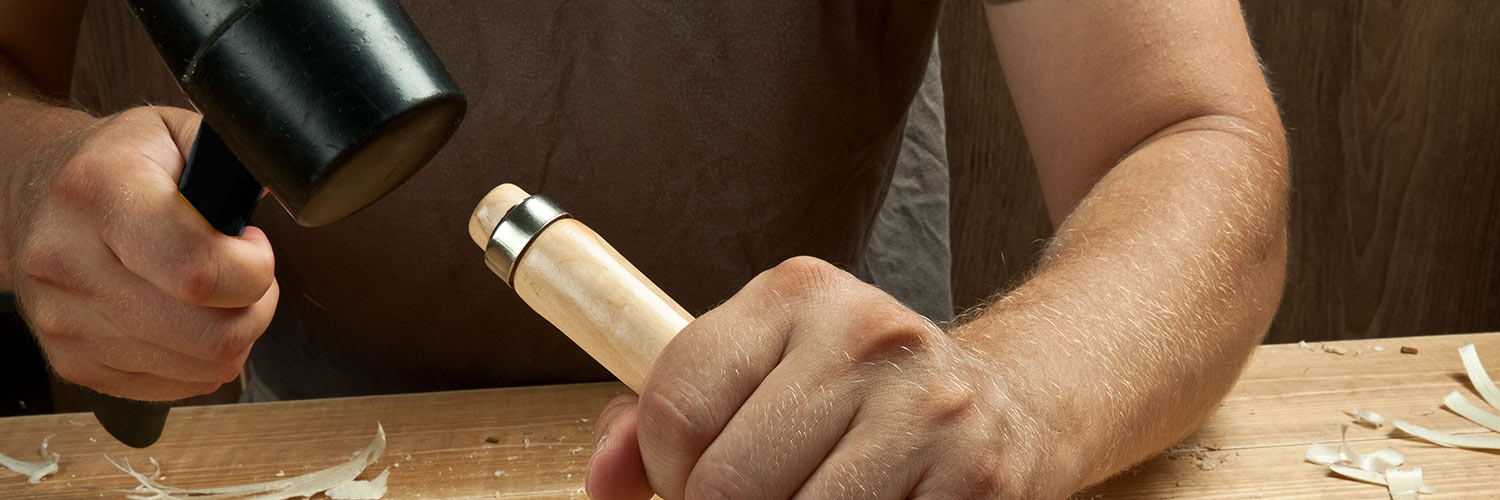
Unlike its conventional counterparts, a dead blow hammer is engineered to minimize rebound and prevent marring surfaces, achieving its impact with a controlled, “dead” force. This unique characteristic is not merely a convenience; it’s a fundamental design choice that addresses crucial operational challenges in numerous technical and mechanical applications. Understanding its function and utility is key to appreciating the subtle sophistication it brings to tasks that demand both power and finesse.
The Engineering Behind the Impact: Understanding the Dead Blow Mechanism
At the heart of the dead blow hammer’s distinctive performance is its ingenious internal design. This is not just a heavy object attached to a handle; it’s a precisely engineered device, often categorized as a specialized impact tool. Its design speaks volumes about the meticulous approach required in modern technical work, where uncontrolled forces can lead to costly damage or misalignment.
The Principle of Inertia and Recoil Reduction
The core innovation of a dead blow hammer lies in its ability to prevent rebound, a phenomenon that is both inefficient and potentially damaging with traditional hammers. This is achieved through an internal chamber, typically filled with steel shot, sand, or lead. When the hammer strikes a surface, the inertia of this movable internal mass delays its forward momentum slightly. Upon impact, the shot continues to move forward for a split second, essentially transferring a second, delayed impact just as the hammerhead begins to rebound. This counter-force effectively “kills” the bounce, making the hammer head “stick” to the workpiece for a fraction of a second longer, delivering the full force of the blow directly into the object.
This principle is crucial for tasks requiring maximum energy transfer with minimal residual vibration or recoil. For the user, it means less fatigue and greater control, as the hammer doesn’t bounce back unexpectedly. For the workpiece, it means a concentrated, unidirectional force that drives components into place without the jarring effects of multiple, smaller impacts from a rebounding head. This sophisticated recoil-dampening system elevates it from a mere striking tool to a precision instrument.
Material Science in Hammer Design
The choice of materials for a dead blow hammer is as critical as its internal mechanism. Traditional hammers often feature steel heads, which, while durable, are prone to damaging softer materials, leaving dents, scratches, or even deforming components. Dead blow hammers, by contrast, frequently utilize polymer, rubber, or urethane heads.
- Polyurethane and Rubber Heads: These materials offer superior impact absorption and are non-marring, meaning they won’t scratch or dent delicate surfaces like finished wood, automotive body panels, or precision-machined parts. The hardness of these materials can vary, allowing for different levels of impact and surface protection. Softer faces are ideal for delicate adjustments, while harder polymer faces can deliver substantial force without damaging harder, yet still sensitive, materials.
- Composite Construction: Many dead blow hammers feature a composite construction, combining a durable outer shell with a resilient core and the internal shot chamber. This design ensures longevity, resistance to chemicals (important in automotive or industrial settings), and consistent performance over time. The handle itself is often made of high-strength fiberglass or steel, ergonomically designed for grip and vibration absorption, further contributing to user comfort and control.
The intelligent combination of internal engineering and advanced material science is what truly defines the dead blow hammer, transforming it into a specialized “gadget” for a multitude of technical and industrial applications.
Precision and Control: Applications Across Technical Fields
The unique characteristics of a dead blow hammer make it invaluable across a spectrum of technical disciplines where accuracy and material preservation are paramount. Its ability to deliver a focused, non-marring impact makes it a preferred tool for tasks that would otherwise risk damage to components or require excessive force.
Automotive and Mechanical Repair
In the intricate world of automotive and mechanical repair, precision is non-negotiable. Components often need to be seated, aligned, or dislodged without causing collateral damage.
- Seating Bearings and Bushings: When installing bearings or bushings, a dead blow hammer allows technicians to tap them into place firmly and evenly, ensuring proper alignment without deforming the cage or race. The controlled impact prevents the bearing from bouncing out of position or getting cocked.
- Hubcap Installation and Trim Work: For delicate tasks like installing hubcaps, body trim, or interior panels, the non-marring head prevents scratches, dents, or paint damage. This is particularly important for modern vehicles with increasingly complex and aesthetically sensitive components.
- Engine and Transmission Work: When assembling or disassembling engine components, such as tapping on a stubborn flywheel or aligning transmission parts, the dead blow hammer delivers the necessary force without splintering gaskets or cracking cast iron components. Its controlled impact helps prevent overtightening or damaging fasteners that need a gentle persuasion.
- Aligning Components: For aligning axles, brake calipers, or exhaust systems, a dead blow hammer provides the precise taps needed to bring components into perfect position without damaging their mounting points or the surrounding structure.
Woodworking and Joinery
While often associated with heavier mechanical tasks, the dead blow hammer finds a surprisingly useful niche in woodworking, particularly in joinery and assembly.
- Seating Joints: In fine woodworking, joints like mortise and tenon, dovetails, or dowel joints often require gentle persuasion to seat perfectly. A dead blow hammer allows craftsmen to tap joints together without bruising the wood, leaving hammer marks, or splintering delicate edges. The non-rebounding action ensures that the joint stays seated once tapped.
- Assembling Furniture: For pre-fabricated or custom furniture assembly, where precision and surface integrity are crucial, the dead blow hammer is ideal for tapping dowels, cam locks, or panels into place. It ensures tight fits without damaging veneers or finished surfaces.
- Tapping Delicate Pieces: Whether it’s setting inlays, adjusting shims, or fitting intricate carved elements, the controlled impact prevents the shock that could crack or chip delicate wooden pieces.
Assembly and Manufacturing
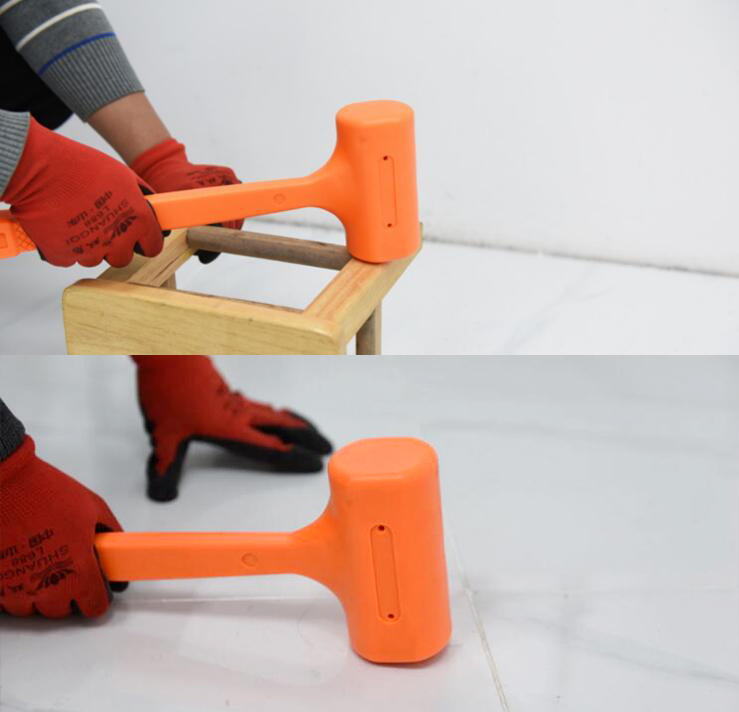
In industrial and manufacturing environments, where speed, precision, and consistent quality are paramount, dead blow hammers are utilized extensively.
- Precision Component Seating: On assembly lines, especially for electronics or machinery, small, precise components often need to be tapped into place. The dead blow hammer ensures these components are seated securely without damaging sensitive circuitry, optical elements, or delicate housings.
- Mold Adjustment and Die Setting: In plastics molding or metal stamping operations, subtle adjustments to molds or dies are often required. A dead blow hammer can be used to tap components into precise alignment without deforming the mold surfaces or affecting the critical tolerances.
- Sheet Metal Work: When forming or aligning sheet metal, particularly on visible surfaces, the non-marring head prevents dents and surface imperfections, reducing the need for rework and improving product aesthetics.
Beyond the Traditional: The Dead Blow Hammer as a Specialized Tool in Modern Workshops
The prevalence and continuous refinement of the dead blow hammer highlight a broader trend in tool design: a move towards specialized solutions that enhance efficiency, improve safety, and protect increasingly complex and expensive materials. It’s more than just a hammer; it’s a productivity enhancer and an asset protector.
Enhancing Workshop Efficiency and Safety
The advantages of a dead blow hammer extend beyond merely preventing damage; they significantly contribute to overall workshop efficiency and safety.
- Damage Prevention: By eliminating marring, denting, and splintering, the dead blow hammer significantly reduces rework, scrap material, and the need for costly replacements. This direct impact on material preservation translates into tangible cost savings and improved project timelines.
- Reduced User Fatigue and Injury: The absence of rebound means the user expends less energy fighting the hammer’s bounce. This reduces wrist and arm fatigue, allowing for longer periods of work with greater comfort. Furthermore, the controlled impact minimizes the risk of the hammer glancing off a workpiece or causing unexpected jolts, thus enhancing safety for the operator.
- Improved Accuracy: With a “dead” blow, the hammer tends to stay in contact with the workpiece, allowing for more precise alignment and seating of components. This enhances the quality of work, particularly in applications where tight tolerances are critical.
The Evolution of Hand Tools: Precision and Material Protection
The dead blow hammer exemplifies the ongoing evolution of hand tools, mirroring the demands of modern technology and craftsmanship. As materials become more sophisticated (e.g., lightweight alloys, advanced composites, delicate finishes), and as precision engineering becomes standard, the tools used to manipulate these materials must also evolve.
Traditional tools, while robust, often lack the nuanced approach required for contemporary tasks. The dead blow hammer represents a class of tools designed to provide controlled, non-damaging force, reflecting a demand for greater care and precision in assembly, maintenance, and fabrication. It’s a “smart” tool in its mechanical design, capable of performing tasks that would otherwise require highly specialized machinery or risk costly errors with conventional implements. Its place in the modern workshop underscores a commitment to quality, efficiency, and the protection of valuable assets.
Choosing the Right Dead Blow Hammer: A Guide for Technicians and Enthusiasts
Selecting the appropriate dead blow hammer is crucial to leveraging its full potential. Like any specialized tool, understanding the variations in weight, material, and design is essential for matching the tool to the task at hand. This informed choice ensures optimal performance and protection of the workpiece.
Weight, Material, and Head Design
Dead blow hammers come in a variety of configurations, each suited for different applications:
- Weight: Hammers range from lightweight options (e.g., 8 oz to 1 lb) ideal for delicate electronics assembly or fine woodworking, to heavier models (e.g., 5 lbs or more) for automotive repair, heavy machinery assembly, or driving stubborn components. The weight directly correlates to the amount of force that can be delivered.
- Head Material: While most are non-marring, the hardness of the head material can vary:
- Soft Face (e.g., very soft rubber, urethane): Best for highly polished surfaces, sensitive electronics, or delicate trim where even minor contact could leave a mark.
- Medium Face (e.g., standard polyurethane): A versatile choice for general automotive, woodworking, and assembly tasks where a balance of force and surface protection is needed. This is the most common type.
- Hard Face (e.g., tougher polymers, sometimes with embedded softer inserts): For tasks requiring more direct force on harder materials that still need protection from steel, such as tapping metal panels or seating robust components.
- Head Design: Some dead blow hammers feature interchangeable faces, allowing technicians to swap between soft, medium, and hard inserts, maximizing versatility. Others have specialized head shapes, such as mallets with larger contact areas for even force distribution or thinner heads for reaching into confined spaces.
Consider the typical materials you’ll be working with, the required force, and any space constraints when making your selection.
Maintenance and Longevity
While dead blow hammers are generally robust, proper maintenance ensures their longevity and consistent performance:
- Cleanliness: Keep the hammerhead free of grease, oil, or debris, especially if working with delicate surfaces. Contaminants can transfer to the workpiece, causing stains or impairing friction.
- Storage: Store the hammer in a clean, dry place to prevent degradation of the head material, particularly rubber or softer polymers which can become brittle or sticky over time if exposed to harsh conditions or certain chemicals.
- Inspection: Regularly inspect the hammerhead for signs of wear, cracking, or softening. A compromised head can affect the dead blow action or leave unwanted marks. For hammers with internal shot, ensure there are no signs of leakage from the internal chamber.
- Avoid Misuse: While designed for impact, dead blow hammers are not pry bars or chisels. Using them for unintended purposes can damage the head, handle, or compromise the internal mechanism.

Conclusion
The dead blow hammer, far from being a simple striking tool, is a sophisticated piece of equipment whose design embodies principles of advanced mechanics and material science. Within the “Tech” landscape of specialized gadgets and tools, it stands out for its unique ability to deliver controlled, non-rebounding impact, preventing damage and enhancing precision across an impressive array of applications. From the delicate operations in electronics assembly to the rigorous demands of automotive repair and the nuanced tasks of fine woodworking, its utility is undeniable.
By understanding the ingenious engineering behind its “dead” blow, recognizing its diverse applications, and making an informed choice in its selection, professionals and enthusiasts alike can unlock a new level of efficiency, safety, and quality in their work. The dead blow hammer is more than just a tool; it’s an intelligent solution that empowers users to achieve superior results while protecting valuable materials, truly making it an indispensable asset in the modern workshop.
aViewFromTheCave is a participant in the Amazon Services LLC Associates Program, an affiliate advertising program designed to provide a means for sites to earn advertising fees by advertising and linking to Amazon.com. Amazon, the Amazon logo, AmazonSupply, and the AmazonSupply logo are trademarks of Amazon.com, Inc. or its affiliates. As an Amazon Associate we earn affiliate commissions from qualifying purchases.