
In the modern digital landscape, data is often described as the new oil. However, raw data, much like crude oil, is of little value unless it can be refined, stored securely, and accessed efficiently. This is where the Database Management System (DBMS) comes into play. A DBMS is the foundational software that powers nearly every digital interaction we have today, from withdrawing money at an ATM to scrolling through a social media feed. Understanding what a DBMS is, how it functions, and the various forms it takes is essential for anyone navigating the realms of software development, data science, or information technology.

Understanding the Core: What Exactly is a DBMS?
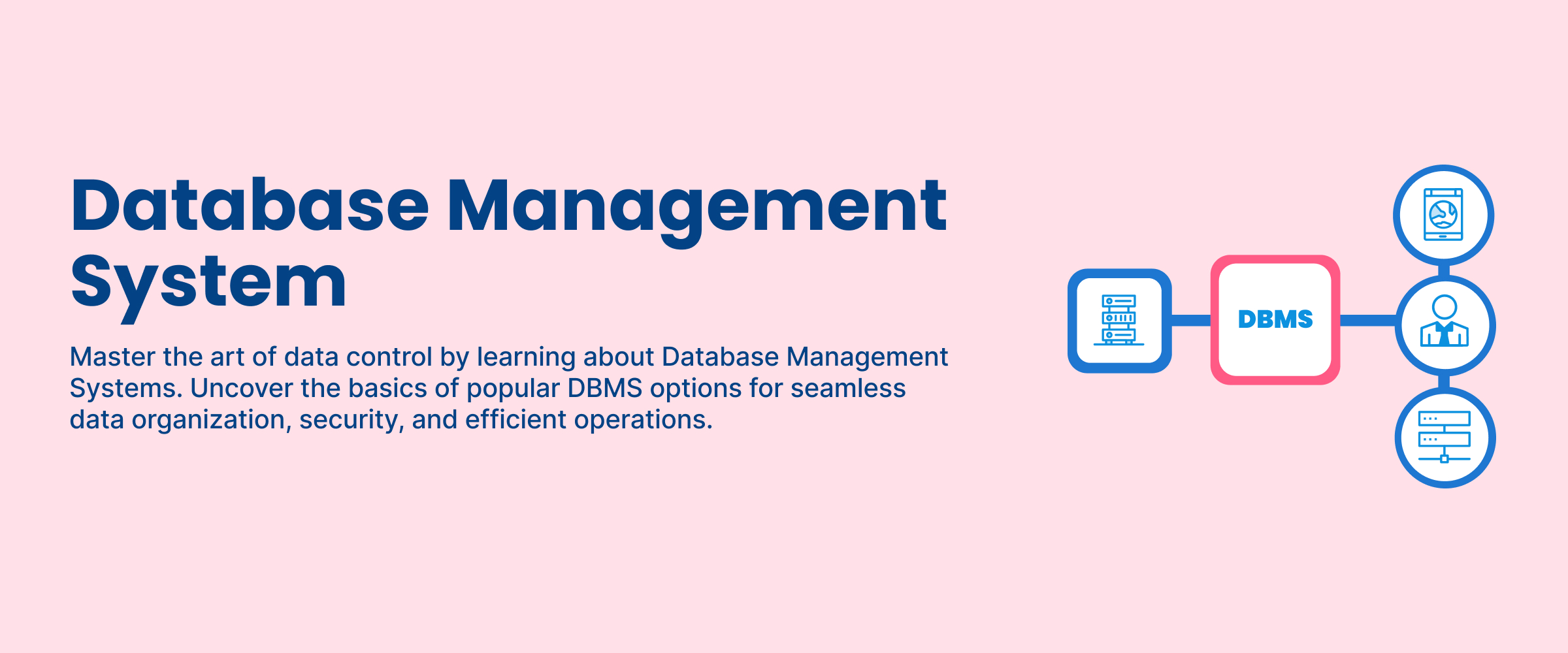
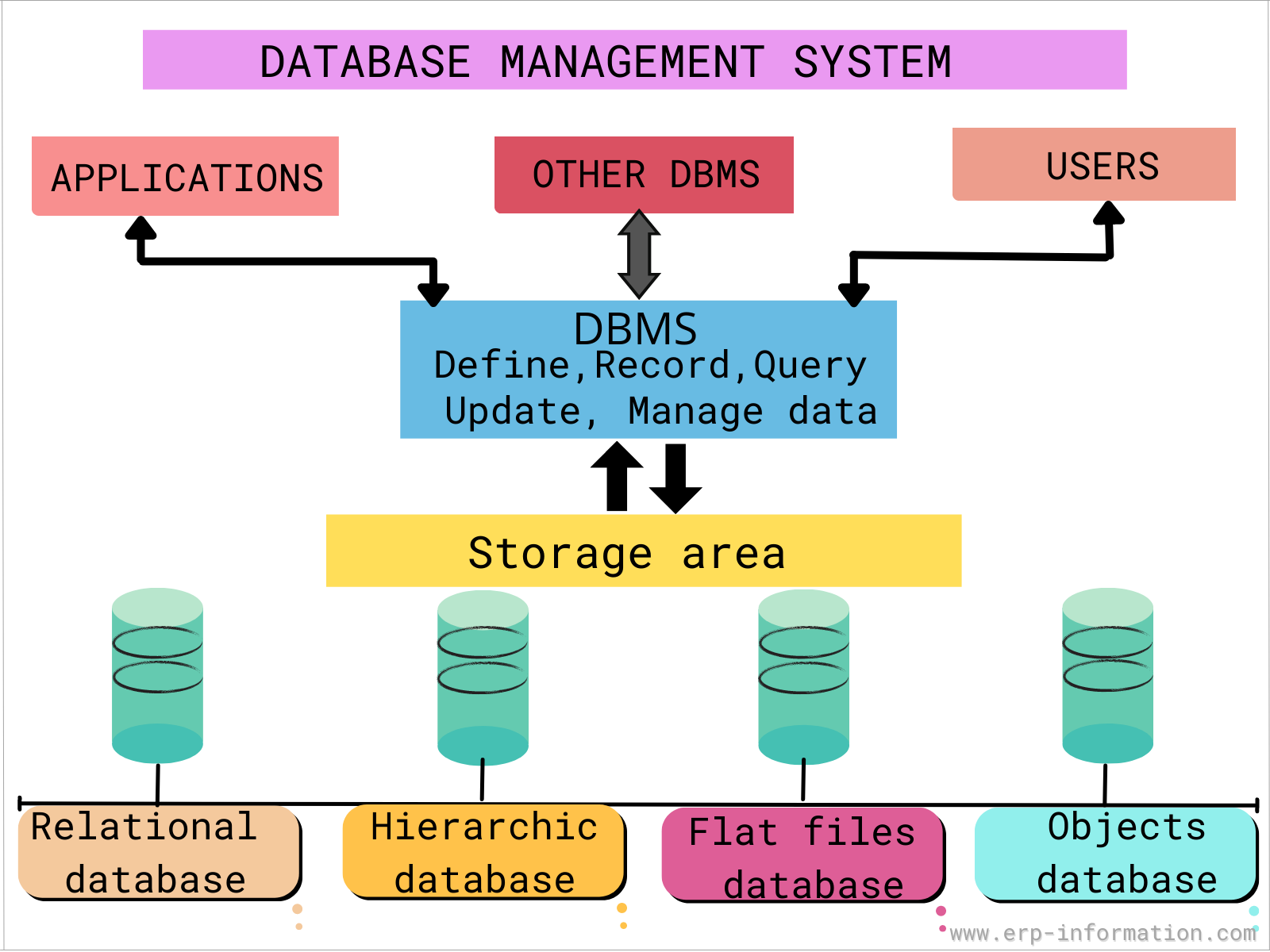
At its simplest level, a Database Management System (DBMS) is a software suite designed to define, manipulate, retrieve, and manage data in a database. It serves as an intermediary layer between the end-user and the database itself, ensuring that data is organized consistently and remains easily accessible through a standardized interface.
Without a DBMS, organizations would have to rely on manual file systems where data is stored in isolated flat files. This old-school approach leads to massive data redundancy, inconsistency, and difficulty in accessing specific information. A DBMS solves these issues by providing a centralized environment where data can be shared among multiple applications and users while maintaining strict control over who can see or modify the information.
The Bridge Between Data and User
The primary role of a DBMS is to shield the user from the complex physical realities of data storage. When a user requests information—for example, looking up a customer record—they do not need to know where on the physical hard drive that data is located or how the bits are arranged. The DBMS handles the “how” so the user can focus on the “what.” This abstraction is achieved through various languages, the most common being Structured Query Language (SQL), which allows users to interact with the data in a human-readable format.
Essential Components of a DBMS
To perform its duties, a DBMS consists of several integrated components:
- Storage Engine: The core element that actually writes data to and reads data from the disk.
- Query Processor: The engine that interprets and optimizes user commands (queries) to ensure they execute as quickly as possible.
- Data Dictionary (Metadata): A repository that stores information about the data itself—such as table structures, relationships, and constraints.
- Reporting and Utilities: Tools for monitoring performance, managing backups, and ensuring the health of the database environment.
Types of Database Management Systems
As technology has evolved, so have the ways we store data. There is no “one-size-fits-all” solution in the world of DBMS; rather, different systems are optimized for different types of workloads and data structures.
Relational DBMS (RDBMS)
The Relational Database Management System (RDBMS) is the most prevalent type and has been the industry standard since the 1970s. Based on the relational model proposed by E.F. Codd, an RDBMS organizes data into tables (relations) consisting of rows and columns. These tables are linked to one another using “keys.”
The hallmark of an RDBMS is its adherence to ACID properties: Atomicity, Consistency, Isolation, and Durability. These properties guarantee that database transactions are processed reliably, making RDBMS the go-to choice for financial systems and inventory management. Popular examples include MySQL, PostgreSQL, Microsoft SQL Server, and Oracle Database.
NoSQL and Non-Relational Systems
With the explosion of “Big Data” and the need for rapid web development, NoSQL (Not Only SQL) databases emerged. Unlike the rigid, schema-heavy RDBMS, NoSQL systems are designed to handle unstructured or semi-structured data like social media posts, sensor logs, and JSON documents.
NoSQL databases are categorized by their data models:
- Document Stores: Store data in documents (like JSON or BSON). Example: MongoDB.
- Key-Value Stores: Simple systems that pair a unique key with a piece of data. Example: Redis.
- Wide-Column Stores: Optimized for large datasets spread across many servers. Example: Apache Cassandra.
Specialized Databases: Graph and Vector
Beyond the general-purpose systems, specialized DBMS types cater to specific niches. Graph Databases (like Neo4j) focus on the relationships between data points, making them ideal for fraud detection and social networking.
More recently, Vector Databases (like Pinecone or Milvus) have surged in popularity due to the rise of Artificial Intelligence and Large Language Models (LLMs). These systems store data as mathematical vectors, allowing AI models to perform similarity searches across vast datasets of images, text, and audio.
Key Features and Functionalities
What separates a professional-grade DBMS from a simple spreadsheet? The answer lies in the robust features designed to protect and optimize data.
Data Integrity and Security
Data is one of an organization’s most valuable assets, and a DBMS provides the tools to keep it safe. Through “integrity constraints,” the DBMS ensures that data remains accurate. For example, a constraint might prevent a user from entering a negative value for an age or a duplicate value for a Social Security number.
On the security front, a DBMS implements Role-Based Access Control (RBAC). This allows administrators to define exactly what each user can see. A junior accountant might have “read-only” access to payroll data, while a CFO has the authority to modify records. Furthermore, modern systems offer transparent data encryption to protect information both at rest and in transit.
Concurrent Access and Transaction Management
In a globalized world, thousands of users might attempt to access and update the same database at the exact same time. Without a DBMS, this would lead to “race conditions” where data is overwritten or corrupted.
A DBMS manages “concurrency” by using locking mechanisms. If two people try to book the last seat on a flight simultaneously, the DBMS ensures that the transaction is serialized—one person succeeds, and the other receives a “sold out” message—maintaining the “single source of truth.”
Data Backup and Recovery
System failures, power outages, and cyberattacks are inevitable. A robust DBMS provides automated backup and recovery protocols. Through transaction logging, a DBMS can “replay” events to restore a database to its exact state before a crash occurred, ensuring that no data is lost and downtime is minimized.
The Evolving Role of DBMS in the Age of AI and Cloud
The landscape of technology is shifting toward distributed systems and intelligent automation. Consequently, the DBMS is undergoing a radical transformation to meet these new demands.
Cloud-Native Databases
The shift from on-premise servers to the cloud has given birth to Cloud-Native Databases and Database-as-a-Service (DBaaS). Platforms like Amazon RDS, Google Cloud Spanner, and Azure SQL Database allow businesses to scale their storage and processing power up or down instantly. This “elasticity” means companies no longer need to over-provision hardware; they pay only for the resources they use, while the cloud provider handles the maintenance, patching, and physical security of the infrastructure.
AI-Driven Database Optimization
Artificial Intelligence is not just a user of database data; it is now being integrated into the DBMS itself. Modern systems are increasingly “self-driving.” Using machine learning algorithms, these databases can automatically tune their own indexes, predict potential hardware failures, and optimize query execution paths without human intervention. This reduces the burden on Database Administrators (DBAs) and ensures that applications remain performant even as data volumes grow exponentially.
Choosing the Right DBMS for Your Project
Selecting the correct DBMS is one of the most critical decisions a technical architect can make. The choice often involves a trade-off between various factors.
Performance vs. Scalability
When evaluating a DBMS, you must consider the “CAP Theorem,” which states that a distributed system can only provide two out of three guarantees: Consistency, Availability, and Partition Tolerance.
If your application requires absolute data accuracy (like a banking app), you will likely prioritize Consistency and choose a relational system. However, if you are building a global social media platform where it is more important for the site to stay online than for every user to see the same “like” count at the exact same microsecond, you might prioritize Availability and choose a NoSQL system that scales horizontally across multiple regions.
Open Source vs. Commercial Solutions
The tech world is divided between open-source powerhouses (PostgreSQL, MySQL, MariaDB) and commercial titans (Oracle, SQL Server).
- Open Source: Offers lower costs, a vast community of developers, and no vendor lock-in. It is the preferred choice for startups and many modern tech enterprises.
- Commercial: Often provides more comprehensive “out-of-the-box” support, advanced proprietary security features, and deep integration with other enterprise software suites.
Ultimately, a DBMS is more than just a storage container; it is the engine of the digital economy. Whether it is a relational database maintaining the integrity of financial records or a vector database powering the next generation of AI, the DBMS remains the silent partner in every technological breakthrough of the 21st century. As data continues to grow in complexity and volume, the role of the DBMS will only become more vital, evolving to provide the speed, security, and intelligence required by the future of tech.
aViewFromTheCave is a participant in the Amazon Services LLC Associates Program, an affiliate advertising program designed to provide a means for sites to earn advertising fees by advertising and linking to Amazon.com. Amazon, the Amazon logo, AmazonSupply, and the AmazonSupply logo are trademarks of Amazon.com, Inc. or its affiliates. As an Amazon Associate we earn affiliate commissions from qualifying purchases.