
Since their first appearance on British television in 1963, the Daleks have transcended their origins as mere “monsters of the week” to become a global symbol of technological terror. While casual observers often mistake them for simple robots, the Dalek is, in fact, a sophisticated cybernetic organism—a masterclass in speculative engineering that merges biological matter with advanced robotics.
To understand what a Dalek is from a technical perspective, one must look beyond the “pepper pot” exterior. We must examine the integration of life support systems, the evolution of their sensory hardware, and the psychological algorithms that drive their collective intelligence. In the realm of technology and science fiction, the Dalek represents the ultimate cautionary tale of what happens when machine logic is used to purge biological “imperfection.”
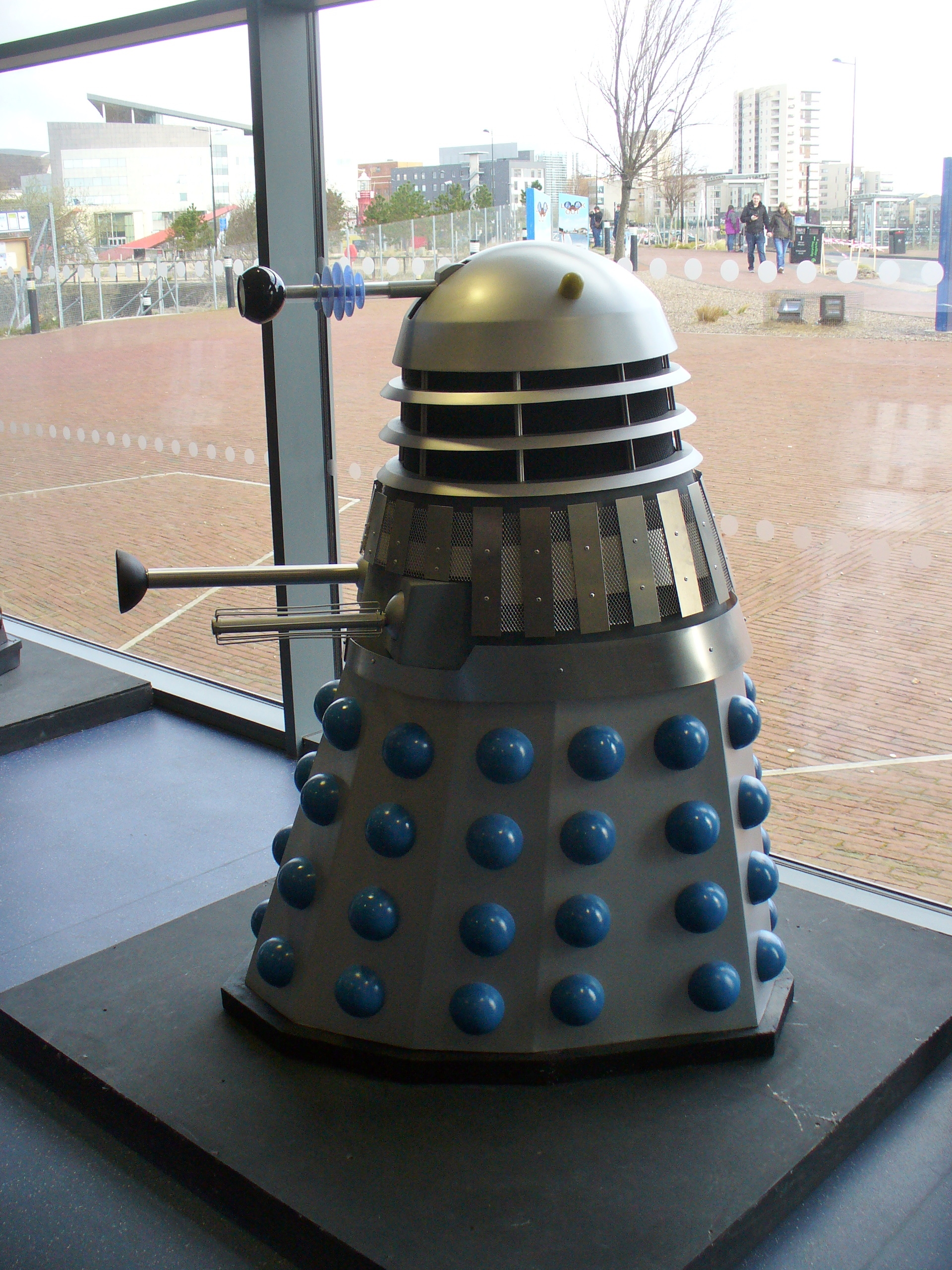
The Anatomy of a Travel Machine: Biology Meets Silicon
The most common misconception about Daleks is that they are entirely mechanical. In reality, a Dalek is a “cyborg” in the strictest sense. The creature inside—a mutated descendant of the Kaled race—is physically frail and entirely dependent on its external shell, known formally as a “Mark III Travel Machine.”
The Biological Core and Life Support
The internal organism is a mass of tentacles and exposed brain tissue, engineered by the scientist Davros to survive a nuclear winter. However, this biological core lacks the strength to move or interact with the physical world. The travel machine serves as a permanent prosthetic. Within the casing, a sophisticated life-support system regulates the creature’s atmosphere, provides nutrients, and filters out toxins. This integration is so complete that the creature’s nervous system is hardwired directly into the machine’s control conduits, allowing for instantaneous reaction times that exceed human capabilities.
The Polycarbide Armor and Defensive Systems
The exterior casing of a Dalek is constructed from a fictional material known as “dalekanium” or polycarbide. In the context of materials science, this serves as a lesson in high-durability shielding. The shell is designed to dissipate energy from heat-based weaponry and withstand significant physical impact. Furthermore, the Dalek is protected by a powerful force field that vaporizes incoming projectiles or reflects energy beams before they even touch the polycarbide surface. This multi-layered defensive strategy mirrors modern military tech trends where “active protection systems” are used to intercept threats before impact.
Sensory Input and the Eyestalk
Perhaps the most vulnerable-looking part of a Dalek is its eyestalk. However, this is a highly advanced optical sensor capable of seeing across the electromagnetic spectrum. It provides the pilot with thermal imaging, ultraviolet detection, and microscopic zoom capabilities. The data gathered by the eyestalk is fed directly into the creature’s visual cortex, augmented by an on-board computer that highlights tactical weaknesses in real-time.
The Weaponry and Utility Systems of the Mark III
A Dalek is designed for one primary function: total efficiency in combat. Every component of the machine serves a tactical purpose, from its locomotion to its offensive capabilities. Unlike general-purpose robots, the Dalek is a specialized tool of war.
The Energy Disintegrator (The Gunstick)
The Dalek’s primary weapon is the “gunstick,” an induction-based energy weapon. In technical terms, it operates by discharging a massive burst of ionized energy that disrupts the molecular bonds of its target. A unique feature of Dalek weaponry is its variable output; a Dalek can adjust its gunstick to stun, kill, or completely disintegrate a target. This level of granular control is a prerequisite for sophisticated directed-energy weapons (DEWs) currently being researched in modern aerospace defense.
The Manipulator Arm (The “Sucker”)
While often mocked for its resemblance to a household plunger, the manipulator arm is a versatile piece of high-tech equipment. It utilizes powerful vacuum pressure and localized gravity fields to grip objects, interface with computer terminals, and even extract information directly from a biological mind through neural induction. This “universal interface” allows the Dalek to bypass traditional physical locks and digital encryption, making it a master of technological infiltration.
Gravity-Defying Locomotion
For decades, Daleks were criticized for their inability to navigate stairs. However, as the “tech” within the show evolved, it was revealed that Daleks utilize a sophisticated gravity-repulsion system located in their base. This allows them to hover and fly, a concept known as “transmat” or “levitation drive.” This propulsion system allows the heavy casing to move with surprising grace, turning a ground-based tank into an aerial combat unit.

The Dalek Pathweb: A Hive Mind of Data and Logic
Beyond the physical hardware, the true power of the Daleks lies in their networking capabilities. They do not operate as isolated units; they are part of a massive, decentralized data network known as the Pathweb.
Decentralized Intelligence and Memory Sharing
The Pathweb is a precursor to modern concepts of cloud computing and hive intelligence. When one Dalek learns a piece of information, that data can be uploaded and shared across the entire fleet. This ensures that the collective never repeats a mistake. If a specific tactic is used to defeat a Dalek in one corner of the galaxy, every other Dalek is immediately patched with a defensive update. This is a fictionalized version of “machine learning,” where an entire fleet of devices improves its performance based on the data points of a single unit.
Algorithmic Purity and Emotion Suppression
The software driving a Dalek is hard-coded to suppress all emotions except for hate. From a software engineering perspective, this is a form of “constrained logic.” By removing empathy, doubt, and fear, the Dalek’s internal processors are freed to focus entirely on tactical optimization. Their logic is binary: a thing is either “Dalek” (to be preserved) or “Non-Dalek” (to be exterminated). This absolute clarity of purpose makes them a terrifying example of “black box” AI, where the reasoning behind an action is hidden but the output is consistently lethal.
The Battle Computer
Large-scale Dalek operations are coordinated by a “Battle Computer.” This high-level AI oversees the Pathweb, calculating the probability of success for various strategies. It processes billions of variables—from atmospheric pressure to the psychological profiles of enemy commanders—to issue commands to the ground units. This represents the pinnacle of predictive analytics, where the outcome of a war is determined by a processor before the first shot is even fired.
Real-World Engineering: The Evolution of the Prop
To truly answer “what is a Dalek,” we must also look at the real-world technology used to bring them to life. The transition from 1960s practical effects to modern digital integration reflects the broader history of the tech industry.
From Plywood to Fiberglass
The original Daleks were constructed from simple materials: wood, fiberglass, and even ping-pong balls (used for the “sensor globes” on the skirt). They were operated from the inside by a human performer who had to manually move the eyestalk and gun. This was a feat of mechanical engineering, requiring the operator to coordinate their movements with a radio-controlled light on the dome that flashed in sync with the Dalek’s voice.
Remote Control and Robotics
As technology advanced, the Daleks became increasingly robotic. Modern versions of the props are often sophisticated remote-controlled machines. Designers now use high-performance servos to control the dome rotation and eyestalk movement with precision that was impossible in the 20th century. The “voice” of the Dalek is created using a ring modulator, a piece of audio hardware that distorts a human voice into the iconic staccato metallic rasp we recognize today.
The Digital Integration (CGI)
In the modern era, physical props are frequently augmented by Computer-Generated Imagery (CGI). This allows Daleks to perform maneuvers that would be physically impossible for a mechanical prop, such as opening their casings to reveal the mutant inside or engaging in massive space battles. The synthesis of practical robotics and digital effects is a hallmark of modern film tech, ensuring the Daleks remain visually convincing to an audience raised on high-definition displays.

Conclusion: The Legacy of Cybernetic Perfection
The Dalek is more than just a science fiction villain; it is a conceptual exploration of the intersection between biology and technology. It challenges us to think about the ethics of cybernetics and the dangers of allowing algorithmic logic to override human values.
At its core, a Dalek is a highly specialized piece of military hardware designed to protect a fragile biological occupant. Through its advanced armor, devastating weaponry, and decentralized hive mind, it represents the absolute peak of speculative engineering. Whether viewed as a fictional threat or a technical case study, the Dalek remains a powerful reminder of how technology can be used to amplify the most dangerous impulses of its creators. As we continue to advance in the fields of AI and robotics, the “Travel Machine” of the Kaleds serves as a permanent benchmark for what it means to be truly, terrifyingly efficient.
aViewFromTheCave is a participant in the Amazon Services LLC Associates Program, an affiliate advertising program designed to provide a means for sites to earn advertising fees by advertising and linking to Amazon.com. Amazon, the Amazon logo, AmazonSupply, and the AmazonSupply logo are trademarks of Amazon.com, Inc. or its affiliates. As an Amazon Associate we earn affiliate commissions from qualifying purchases.