
In an increasingly digital world, few technological innovations have captured public imagination and financial speculation quite like cryptocurrency and its underlying technology, the blockchain. Beyond the headlines of fluctuating market values and individual success stories, lies a profound shift in how we conceive of digital transactions, data integrity, and decentralized networks. Understanding “what is a cryptocurrency blockchain” requires delving into the intricate architecture that underpins this transformative technology, revealing a system designed for security, transparency, and unprecedented levels of decentralization.
At its heart, a cryptocurrency blockchain is a distributed, immutable ledger technology that records all transactions across a network of computers. This innovative framework allows for the secure and transparent exchange of digital assets, primarily cryptocurrencies, without the need for a central authority. It represents a paradigm shift from traditional centralized systems, offering a glimpse into a future where trust is embedded in cryptographic proof rather than intermediaries. This article will unravel the core concepts, mechanisms, and profound implications of this technology, situating it firmly within the landscape of modern technological advancements.

The Core Concept: Decentralized Digital Ledgers
The fundamental innovation of blockchain lies in its departure from traditional centralized systems. For centuries, financial transactions, record-keeping, and information management have relied on trusted third parties—banks, governments, or corporations—to validate and maintain ledgers. Blockchain challenges this model by introducing a decentralized, peer-to-peer network where consensus, not a central authority, governs the system.
Understanding Traditional Centralized Systems vs. Decentralized Networks
In a traditional centralized system, a single entity holds the master copy of all records and controls access, validation, and modification. Think of a bank managing your account: all your transactions are recorded on their central servers, and you rely on the bank’s security and honesty. While efficient for some purposes, this model presents several vulnerabilities: a single point of failure (if the central server goes down or is compromised), a lack of transparency (data controlled by one entity), and potential for censorship or manipulation by the controlling party.
Decentralized networks, by contrast, distribute the ledger across many participants. Each participant (or “node”) holds a copy of the entire ledger. There is no central server, no single point of control. Instead, all participants must agree on the validity of new entries through a consensus mechanism. This distributed nature enhances resilience, making the system much harder to attack or shut down, and promotes transparency, as all participants can verify the ledger’s contents.
The Role of Distributed Ledger Technology (DLT)
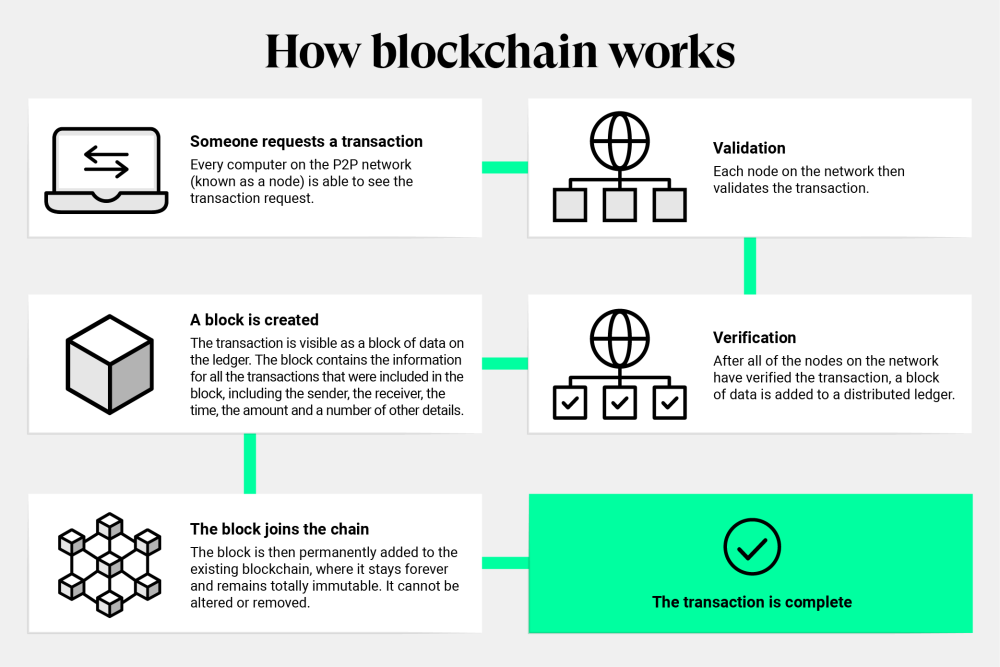
Blockchain is a specific type of Distributed Ledger Technology (DLT). DLTs are digital systems where transaction records are maintained across multiple sites, countries, or institutions. Unlike traditional databases, DLTs have no central administrator. The “distributed” aspect means that every participant on the network has an identical copy of the ledger. When a transaction occurs, it is broadcast to the network, validated by the nodes, and then added to their individual copies of the ledger. This process ensures that everyone has the same, updated record, fostering an environment of shared truth without requiring mutual trust between all parties. The immutability and transparency inherent in DLTs are what make them so powerful, extending their potential far beyond just financial applications.
Deconstructing the Blockchain: Key Components and Mechanisms
To truly grasp “what is a cryptocurrency blockchain,” one must understand its foundational components and the ingenious mechanisms that bind them together. It’s a symphony of cryptography, network protocols, and game theory, designed to create an unalterable and secure record of events.
Blocks: The Building Blocks of Data
At its most fundamental level, a blockchain is, as its name suggests, a chain of blocks. Each “block” is essentially a digital container of transaction data. When a new transaction occurs, it is bundled with other recent transactions into a new block. Beyond the transaction data itself, each block contains critical metadata: a timestamp, a reference to the previous block’s hash (a unique digital fingerprint), and a “nonce” (a number used once) which is crucial for the mining process. The size and capacity of blocks vary depending on the specific blockchain protocol. For example, Bitcoin blocks are generally around 1MB and contain a certain number of transactions.
Chains: Cryptographic Linking and Immutability
The “chain” aspect refers to how these blocks are cryptographically linked together. Each new block contains a cryptographic hash of the previous block. A hash is a fixed-size string of numbers and letters generated by a mathematical function. Even a tiny change in the input data will produce a completely different hash. This means that if anyone were to tamper with a transaction in an older block, that block’s hash would change. Consequently, the hash stored in the next block would no longer match, breaking the chain. This cryptographic link makes the blockchain incredibly secure and immutable: once a block is added, it’s virtually impossible to alter without invalidating all subsequent blocks, which would be immediately noticeable by the network’s participants. This append-only nature is a cornerstone of blockchain’s security model.
Consensus Mechanisms: Achieving Agreement in a Trustless Environment
In a decentralized network with no central authority, how do all participants agree on the correct order of transactions and the validity of new blocks? This is where consensus mechanisms come into play. They are the rules by which the network reaches agreement.
-
Proof of Work (PoW): Pioneered by Bitcoin, PoW requires “miners” to solve complex computational puzzles (finding a nonce that, when combined with the block data, produces a hash below a certain target). This process is energy-intensive and time-consuming, but once solved, the solution (and thus the new block) is broadcast to the network. Other nodes can quickly verify the solution. The first miner to find the solution gets to add the new block to the chain and is rewarded with newly minted cryptocurrency and transaction fees. The “work” makes it economically unfeasible for a malicious actor to outpace the honest network in solving puzzles and rewriting history.
-
Proof of Stake (PoS): An alternative to PoW, PoS does not rely on computational power. Instead, “validators” are chosen to create new blocks based on the amount of cryptocurrency they “stake” (lock up) as collateral. The more a validator stakes, the higher their chance of being selected. If a validator proposes an invalid block, they risk losing their staked assets. PoS is generally considered more energy-efficient and scalable than PoW, and many newer blockchains, as well as Ethereum 2.0, are adopting or have adopted it.
Other mechanisms like Delegated Proof of Stake (DPoS), Proof of Authority (PoA), and more are also emerging, each with different trade-offs in terms of decentralization, speed, and security.
Cryptography: Securing Transactions and Identities
Cryptography is the backbone of blockchain security. It’s used at multiple levels:
-
Hashing: As mentioned, hashing creates unique fingerprints for blocks, ensuring data integrity and immutability.
-
Digital Signatures: Every transaction on a blockchain is digitally signed by the sender using their private key. This signature proves the sender’s ownership of the funds and ensures that the transaction has not been tampered with. It’s akin to a cryptographic seal that confirms authenticity and non-repudiation.
-
Public and Private Keys: In blockchain, users have a pair of keys: a public key (like an account number, openly shared to receive funds) and a private key (a secret password that authorizes transactions). The private key must be kept absolutely secret, as its compromise means loss of control over funds. This asymmetrical cryptography is what enables secure transactions without needing a central intermediary to verify identities.
Cryptocurrencies: The Application of Blockchain Technology
While blockchain technology has a vast array of potential applications across industries, its most prominent and disruptive use case to date has been the creation of cryptocurrencies. Cryptocurrencies are digital or virtual currencies secured by cryptography, making them nearly impossible to counterfeit or double-spend.
How Cryptocurrencies Leverage Blockchain
Cryptocurrencies are, in essence, the native asset of a specific blockchain. Bitcoin, for example, is the native cryptocurrency of the Bitcoin blockchain. When you send Bitcoin, you’re initiating a transaction that is recorded on the Bitcoin blockchain. This transaction is then validated by miners (using PoW), bundled into a block, and added to the chain. The Bitcoin blockchain thus serves as the global, immutable ledger for all Bitcoin transactions.
The blockchain provides the infrastructure for cryptocurrencies to exist without central banks or governments. It ensures:
-
Decentralization: No single entity controls the supply or flow of the currency.
-
Security: Cryptography and consensus mechanisms prevent fraud and unauthorized spending.
-
Transparency: All transactions are publicly visible on the ledger, though participants remain pseudonymous.
-
Immutability: Once a transaction is recorded, it cannot be altered or reversed.
This framework allows for peer-to-peer electronic cash, fulfilling the original vision of Bitcoin’s anonymous creator, Satoshi Nakamoto.
Digital Currencies Beyond Bitcoin: A Brief Overview of Altcoins
Bitcoin was the first, but the success of its underlying technology led to an explosion of other cryptocurrencies, collectively known as “altcoins” (alternative coins). Ethereum, the second-largest cryptocurrency by market capitalization, introduced the concept of “smart contracts”—self-executing contracts with the terms of the agreement directly written into code. This expanded blockchain’s utility beyond just simple transactions, enabling decentralized applications (dApps), decentralized finance (DeFi), and non-fungible tokens (NFTs).
Other altcoins often aim to solve specific problems or offer different features, such as faster transaction speeds (e.g., Solana), enhanced privacy (e.g., Monero), or more energy-efficient consensus mechanisms. Each altcoin typically operates on its own dedicated blockchain or as a token built on an existing blockchain like Ethereum, demonstrating the versatility and adaptability of the core blockchain concept.
Wallets and Keys: Managing Digital Assets Securely
Interacting with cryptocurrencies requires a “wallet,” which isn’t a physical place to store coins but rather a software application or hardware device that manages your public and private keys.
-
Private Key: The most crucial element, it’s a secret alphanumeric code that allows you to access and spend your cryptocurrency. Losing it means losing access to your funds forever.
-
Public Key/Address: Derived from your private key, this is your public identifier on the blockchain, similar to an email address, where others can send you cryptocurrency.
Wallets come in various forms: “hot” wallets (connected to the internet, like mobile or desktop apps) offer convenience but higher risk, while “cold” wallets (offline hardware devices or paper wallets) offer maximum security for long-term storage. Secure management of these keys is paramount for anyone involved with cryptocurrencies, as there’s no “forgot password” button or bank to reverse unauthorized transactions.
Why Blockchain Matters: Advantages and Implications for Technology
The technological significance of the blockchain extends far beyond its role in enabling cryptocurrencies. Its inherent characteristics offer compelling advantages that are poised to reshape numerous sectors and redefine how digital information is managed and trusted.
Enhanced Security and Transparency
The cryptographic linking of blocks, combined with the distributed nature of the ledger, makes blockchain exceptionally secure against data tampering and fraud. Once a transaction is recorded and confirmed, it’s nearly impossible to alter. Furthermore, the transparency of the public ledger, where all transactions are visible (though participants are pseudonymous), allows for unprecedented levels of auditability. This means users can verify the integrity of the system without relying on a central authority’s claims. For areas requiring high trust and data integrity, such as digital identity management, medical records, or voting systems, these features are transformative.
Immutability and Auditability
The immutability of the blockchain—the inability to change or delete past records—is a powerful feature. It creates an indelible historical record, which is invaluable for supply chain management (tracking goods from origin to consumer), intellectual property rights (proving ownership and timestamps for creations), and legal documents (creating verifiable, tamper-proof contracts). Every transaction leaves a permanent, verifiable trail, significantly reducing disputes and enhancing accountability.
Resistance to Censorship and Single Points of Failure
Because blockchain networks are decentralized, with no single entity controlling them, they are inherently resistant to censorship. No government or corporation can unilaterally shut down the network or prevent specific transactions. This resilience against single points of failure makes them robust and reliable, particularly appealing for applications in regions with unstable infrastructure or authoritarian regimes. The distributed nature ensures that even if a significant portion of the network goes offline, the remaining nodes can continue to operate and maintain the ledger.
Potential Beyond Currency: Expanding the Blockchain Paradigm
While cryptocurrencies were the genesis, blockchain’s underlying technology has spawned innovations across various domains. Smart contracts, for instance, are revolutionizing legal and business agreements by automating execution based on predefined conditions without human intervention. Supply chain management is leveraging blockchain to enhance transparency and traceability, combating counterfeiting and ensuring ethical sourcing. Digital identity solutions are emerging, empowering individuals with control over their personal data. Even sectors like healthcare, real estate, and gaming are exploring blockchain for secure record-keeping, asset tokenization, and truly ownership-based digital economies. The technology isn’t just about money; it’s about creating a new infrastructure for trust and data management in a digital age.
Challenges and the Future of Blockchain Technology
Despite its immense potential, blockchain technology is still evolving and faces significant challenges that need to be addressed for mainstream adoption.
Scalability Concerns and Energy Consumption
One of the most pressing technical challenges is scalability. Early blockchains like Bitcoin can only process a limited number of transactions per second, leading to congestion and higher fees during peak times. This pales in comparison to centralized systems like Visa, which can handle tens of thousands of transactions per second. Solutions like “layer 2” protocols (e.g., Lightning Network for Bitcoin, rollups for Ethereum) and new blockchain architectures are being developed to tackle this.
Furthermore, Proof of Work blockchains, particularly Bitcoin, are highly energy-intensive. The electricity consumption associated with mining raises environmental concerns and is a key driver for the shift towards more energy-efficient consensus mechanisms like Proof of Stake.
Regulatory Landscape
The decentralized and borderless nature of blockchain technology presents a complex challenge for regulators worldwide. Governments are grappling with how to classify and oversee cryptocurrencies and blockchain applications, leading to a patchwork of regulations that can stifle innovation in some regions while fostering it in others. Clear, consistent, and forward-thinking regulatory frameworks are essential for the technology to mature and gain broader institutional and public trust. This also impacts the development and deployment of blockchain-based tools and services.
The Evolution of Blockchain: Web3 and Beyond
Blockchain technology is a cornerstone of the emerging “Web3” paradigm—the next generation of the internet characterized by decentralization, user ownership, and token-based economies. Web3 envisions a web where users, not large corporations, control their data and digital identities, powered by blockchain and decentralized applications. This evolution includes further advancements in interoperability between different blockchains, more user-friendly interfaces, and greater integration with existing digital infrastructure. As research continues into quantum-resistant cryptography, new consensus mechanisms, and more efficient network designs, the future of blockchain promises continued innovation and a deeper integration into the fabric of our digital lives.

Conclusion
The question “what is a cryptocurrency blockchain” unravels into an exploration of one of the most significant technological advancements of our time. It is a distributed, immutable ledger secured by advanced cryptography, designed to operate without central authority. This elegant architecture not only enables the existence of cryptocurrencies like Bitcoin and Ethereum but also lays the groundwork for a new era of secure data management, transparent record-keeping, and decentralized applications. From revolutionizing financial systems to enhancing supply chains and digital identity, blockchain’s impact is far-reaching. While challenges such as scalability, energy consumption, and regulatory uncertainty persist, the ongoing innovation within the tech community signals a robust future. As blockchain technology matures and evolves, its core principles of decentralization, security, and transparency will continue to reshape our digital landscape, promising a more open, equitable, and resilient technological future.
aViewFromTheCave is a participant in the Amazon Services LLC Associates Program, an affiliate advertising program designed to provide a means for sites to earn advertising fees by advertising and linking to Amazon.com. Amazon, the Amazon logo, AmazonSupply, and the AmazonSupply logo are trademarks of Amazon.com, Inc. or its affiliates. As an Amazon Associate we earn affiliate commissions from qualifying purchases.