
In the traditional financial world, investors look at a company’s market capitalization to determine its size, stability, and value relative to its peers. As the digital asset class has matured, the term “crypto market cap” has become the primary metric for evaluating the success and potential of cryptocurrencies. For any investor looking to navigate the volatile waters of digital finance, understanding this concept is not just helpful—it is essential.
Market capitalization, or “market cap,” provides a snapshot of a cryptocurrency’s total value. It serves as a more reliable indicator of a project’s “weight” in the market than the price of a single token alone. This guide explores the mechanics of crypto market cap, why it is a vital tool for portfolio management, and how to use it to make informed financial decisions.

Understanding the Fundamentals of Crypto Market Cap
At its core, the market cap of a cryptocurrency is the total market value of its circulating supply. It is the yardstick used to compare the relative size of different assets, helping investors understand the scale of a project beyond its nominal price point.
The Formula: Supply Meets Price
The calculation for market capitalization is straightforward:
Market Cap = Current Price × Circulating Supply
For example, if a cryptocurrency is trading at $50 and has 10 million tokens currently in circulation, its market cap is $500 million. This simple equation reveals a profound truth in investing: price is only half the story. A coin priced at $0.01 is not necessarily “cheaper” than a coin priced at $100 if the former has trillions of tokens in circulation and the latter has only a few thousand. By focusing on market cap, investors can evaluate whether a project is a “large-cap” giant or a “small-cap” speculative play.
Circulating vs. Fully Diluted Valuation (FDV)
One of the most critical nuances in crypto finance is the distinction between circulating supply and total supply.
- Circulating Market Cap is based on the number of tokens currently available to the public and tradable in the market.
- Fully Diluted Valuation (FDV) is the market cap if the maximum supply of the coin were already in circulation.
For an investor, the FDV is a vital risk-assessment tool. If a project has a circulating market cap of $1 billion but an FDV of $10 billion, it means a significant number of tokens are scheduled to be released in the future (through mining, staking rewards, or team vesting). This future “inflation” could put downward pressure on the price if demand does not grow at the same pace as the supply. Professional investors use the FDV to determine if a project’s current price is sustainable in the long term.
Why Market Cap Matters for Investors
In the realm of personal finance and investing, market cap is more than just a number; it is a lens through which we view risk and opportunity. It helps dismantle the psychological traps that often lead novice investors to make poor financial choices.
Assessing Stability and Risk
Generally, market cap correlates with the stability of an asset. In the crypto market, assets are typically categorized by their size:
- Large-Cap Cryptocurrencies: These are projects with market caps exceeding $10 billion (e.g., Bitcoin and Ethereum). They are considered the “Blue Chips” of the crypto world. While they still experience volatility, they are generally more resilient during market downturns and offer higher liquidity, making it easier for investors to enter or exit large positions without significantly impacting the price.
- Mid-Cap and Small-Cap: These projects range from a few hundred million to several billion dollars. They offer higher growth potential but come with significantly increased risk. Their lower liquidity means that a large buy or sell order can cause dramatic price swings.
By looking at market cap, an investor can balance their portfolio. A conservative strategy might involve 70% large-caps for stability and 30% mid-to-small caps for growth, whereas a speculative strategy would flip those ratios.
The “Unit Bias” Trap: Why Low Price Doesn’t Always Mean High Value
One of the most common mistakes in crypto investing is “unit bias.” This is the psychological tendency for investors to prefer buying a whole “cheap” coin (e.g., 1,000,000 tokens of a project priced at $0.0001) over a fraction of an “expensive” coin (e.g., 0.01 of Bitcoin).
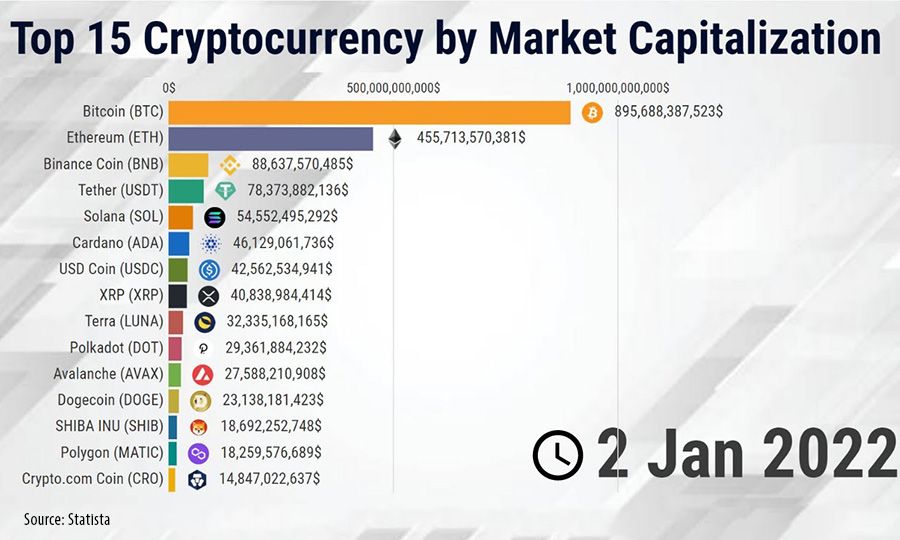
Market cap corrects this bias. It teaches the investor that the “cheap” coin might already have a market cap of $5 billion, meaning it would need to reach a $50 billion valuation to provide a 10x return—a massive hurdle. Meanwhile, a “expensive” coin with a $50 million market cap only needs to reach $500 million to provide the same return. Strategic investing requires looking at the “room for growth” based on market cap, rather than the nominal price of the asset.
Categories of Cryptocurrency by Market Cap
To build a diversified financial portfolio, it is helpful to categorize assets by their market cap tiers. Each tier represents a different role within a broader investment strategy.
Large-Cap: The “Blue Chips” of Crypto
Large-cap cryptocurrencies are the foundation of most institutional and retail portfolios. Because of their massive valuations, they require enormous amounts of capital to move their prices significantly. This makes them less prone to “pump and dump” schemes. For a long-term retirement or savings strategy, large-caps are often viewed as a store of value or a bet on the foundational infrastructure of the digital economy.
Mid-Cap: The Growth Potential Zone
Mid-cap coins (usually $1 billion to $10 billion) are often projects that have proven their utility but have not yet reached mass adoption. These projects may be emerging Decentralized Finance (DeFi) platforms or specialized blockchain ecosystems. For the investor, mid-caps represent a “sweet spot” where the project is established enough to have survived initial hurdles but still has the potential for 5x or 10x growth if it captures more market share.
Small-Cap: High Reward and High Volatility
Small-cap cryptocurrencies (below $1 billion) are the frontier of crypto investing. These are often new startups, experimental technologies, or niche tokens. While the allure of “100x” returns is real in this category, so is the risk of a 99% loss. From a financial management perspective, small-caps should usually represent the smallest portion of a portfolio—capital that the investor is entirely prepared to lose.
Market Cap as a Tool for Portfolio Strategy
Beyond evaluating individual coins, market cap is used to gauge the health and direction of the entire financial ecosystem.
Calculating Market Dominance
“Bitcoin Dominance” is a widely tracked metric that compares Bitcoin’s market cap to the total market cap of all other cryptocurrencies combined.
- High Dominance: Often signals a “flight to safety,” where investors are moving money out of risky altcoins and into the relative stability of Bitcoin.
- Declining Dominance: Often signals “Altcoin Season,” where investors are seeking higher returns in smaller, more speculative projects.
By monitoring dominance, investors can decide when to rotate their capital. If Bitcoin dominance is at a historical high, it might be an opportune time to look for undervalued mid-caps. If it is at a historical low, it may be time to take profits and move back into “safer” assets.
Limitations of Market Cap in Technical Analysis
While market cap is a powerful metric, it is not infallible. It can sometimes be misleading, particularly in the case of “ghost chains”—projects with high market caps but zero actual utility or trading volume.
A project could have a high market cap because a few individuals hold the vast majority of tokens and refuse to sell, keeping the circulating supply artificially low. Therefore, smart investors combine market cap analysis with Liquidity Analysis (how much can be traded without moving the price) and Realized Cap (which values each coin at the price it was last moved, filtering out “lost” coins).
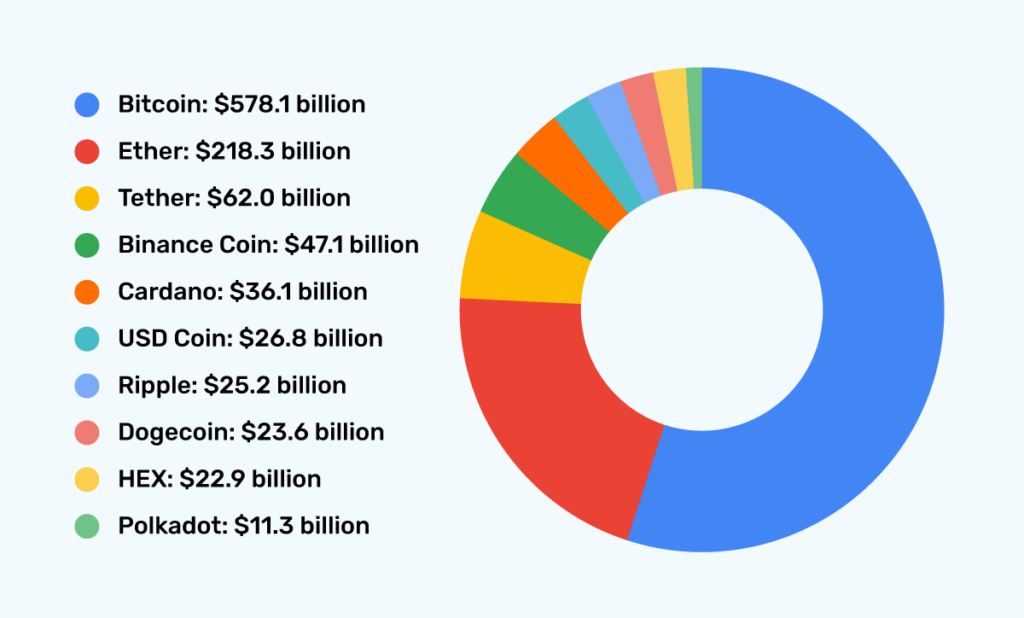
Conclusion: Using Market Cap for Smarter Financial Decisions
In the world of investing, information is the ultimate currency. Understanding crypto market cap moves an investor away from “gambling” on low-priced coins and toward a professional, analytical approach to wealth building.
By using market cap to identify the “Blue Chips,” assess the inflation risk of Fully Diluted Valuations, and avoid the psychological trap of unit bias, you can build a portfolio that is both resilient and positioned for growth. Market cap isn’t just a number on a screen; it is a reflection of the market’s collective belief in a project’s value. As you navigate your financial journey in the digital age, let market cap be your compass, ensuring that every dollar you invest is backed by a clear understanding of scale, risk, and potential.
aViewFromTheCave is a participant in the Amazon Services LLC Associates Program, an affiliate advertising program designed to provide a means for sites to earn advertising fees by advertising and linking to Amazon.com. Amazon, the Amazon logo, AmazonSupply, and the AmazonSupply logo are trademarks of Amazon.com, Inc. or its affiliates. As an Amazon Associate we earn affiliate commissions from qualifying purchases.