
The Crankshaft Position Sensor, commonly referred to as the CPS, is one of the most vital components in the modern internal combustion engine’s electrical architecture. Often hidden from plain sight, this small but mighty device serves as the heartbeat monitor for your vehicle’s engine management system. Without the precise, real-time data provided by the CPS, your car’s engine would essentially be unable to coordinate the complex dance of fuel injection and spark ignition required to produce power. Understanding what this sensor is, how it functions, and why it is critical for vehicle performance is essential for anyone interested in automotive technology and maintenance.
The Technical Foundations of the CPS Sensor
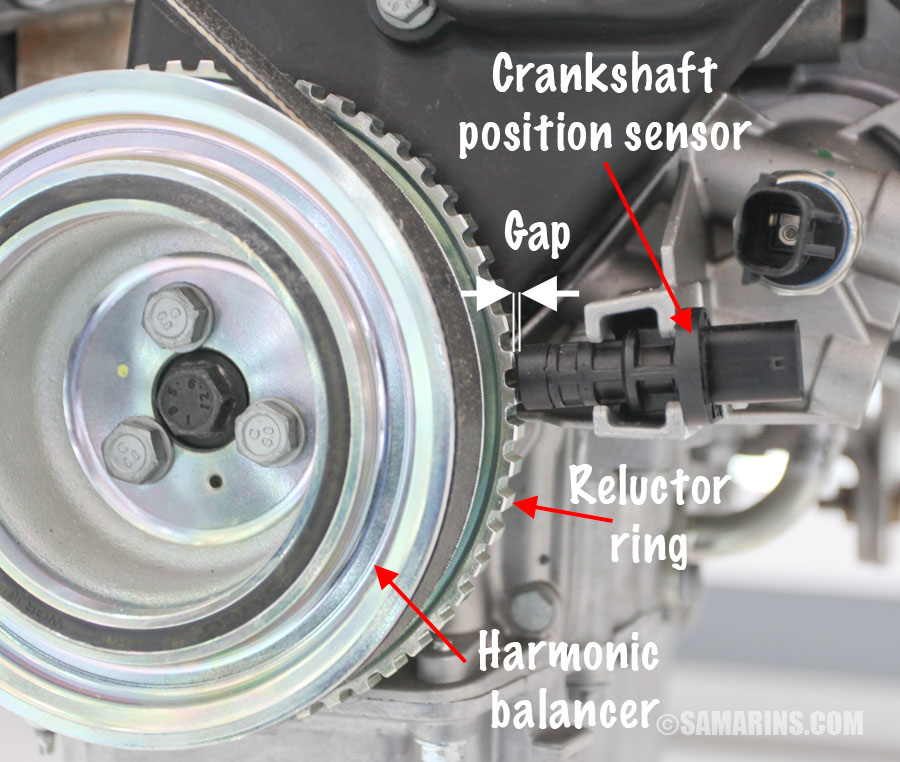
At its core, the Crankshaft Position Sensor is an electromagnetic transducer designed to monitor the rotational speed and the exact position of the engine’s crankshaft. By tracking the crankshaft’s orientation, the engine control unit (ECU) can determine exactly where each piston is located within its cylinder at any given microsecond.
How the Sensor Detects Movement
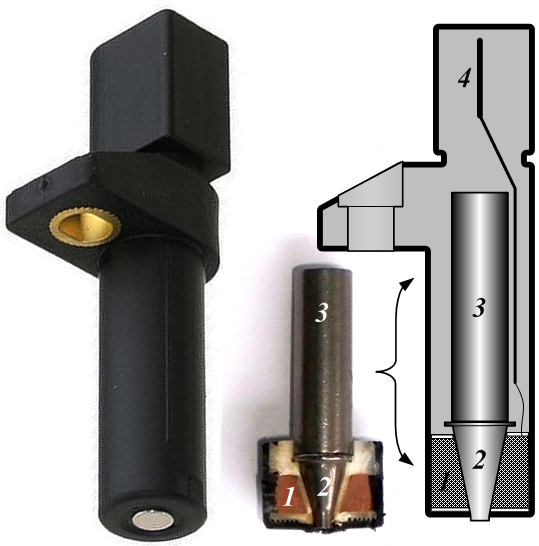
Most modern CPS units operate using either magnetic induction or the Hall Effect. In an inductive setup, the sensor consists of a permanent magnet wrapped in a coil of wire. As a “reluctor wheel”—a metal disk with notches or teeth attached to the crankshaft—rotates past the sensor, it creates fluctuations in the magnetic field. These fluctuations induce an alternating voltage signal that the ECU interprets as rotation.
Hall Effect sensors, conversely, use a semiconductor material that reacts to a magnetic field when an object passes by. These sensors provide a cleaner digital “on-off” square wave signal, which is highly accurate and preferred in modern, high-performance engine management systems that require precise timing for variable valve timing and ignition mapping.
Communication with the Engine Control Unit
The data stream generated by the CPS is sent directly to the ECU, which acts as the vehicle’s “brain.” The ECU compares the data from the CPS with the data from the Camshaft Position Sensor (CMP). This synchronization is known as “cranking synchronization.” By comparing these two signals, the ECU knows exactly which cylinder is at Top Dead Center (TDC) on the compression stroke. This allows the computer to trigger the fuel injectors and spark plugs at the exact moment required for optimal combustion efficiency.
The Critical Role of the CPS in Engine Management
The significance of the CPS cannot be overstated. It is the primary synchronization tool for the entire engine ignition and fuel system. If the ECU loses the signal from the CPS, it assumes the engine is not turning and immediately cuts off the fuel supply and the spark to prevent potential damage or flooding. This makes the CPS a “go or no-go” sensor for the engine.
Fuel Injection and Ignition Timing
Optimal fuel economy and horsepower rely on the precision of the air-fuel mixture and the timing of the spark. If the spark occurs too early, the engine may “knock” or ping, leading to internal damage. If it occurs too late, power output drops, and fuel is wasted. The CPS provides the reference point that allows the ECU to advance or retard timing based on engine load and speed, ensuring the engine runs efficiently under all conditions—from idling at a stoplight to cruising at highway speeds.

Engine Load Calculations
Beyond timing, the ECU uses the frequency of the CPS signal to calculate the engine’s RPM. This information is critical for determining load parameters. For instance, the transmission control module (TCM) relies on RPM data from the ECU to decide when to shift gears in an automatic transmission. If the CPS signal is erratic, the transmission may shift harshly or fail to engage the correct gear, leading to a cascading failure of electronic systems throughout the drivetrain.
Troubleshooting and Identifying CPS Failure
Because the CPS is a solid-state component, its failure is usually binary: it either works, or it fails completely. However, there are instances where the sensor may fail intermittently due to heat soak or vibration-related wiring issues. Recognizing the symptoms of a failing CPS is a fundamental skill for any DIY mechanic or technology enthusiast looking to maintain their vehicle’s digital integrity.
Common Symptoms of a Faulty Sensor
- Engine Cranking Without Starting: The most common sign of a dead CPS. The starter motor spins the engine, but because the ECU isn’t receiving a signal that the engine is turning, it doesn’t provide fuel or spark.
- Intermittent Stalling: If the sensor’s internal components are failing due to thermal expansion, the car might stall unexpectedly when it reaches operating temperature, only to start again once it cools down.
- Misfires and Rough Idle: An erratic signal can confuse the ECU, causing it to miscalculate the injection timing, which results in jerky performance or a rough, uneven idle.
- Check Engine Light (CEL): Most modern ECUs are sophisticated enough to detect an inconsistent or missing signal from the CPS. When this happens, a diagnostic trouble code (DTC), usually in the P0335–P0339 range, will be stored in the ECU’s memory.
Diagnostic Procedures for the Tech-Savvy
To diagnose a CPS, you need a digital multimeter or an oscilloscope. A multimeter can be used to measure the resistance of the sensor (in inductive types) to see if it falls within the manufacturer’s specified range. However, for a more accurate diagnosis, an oscilloscope is preferred. By connecting the leads to the sensor output, you can visually inspect the waveform generated while cranking the engine. A healthy sensor will produce a consistent, clean, and symmetrical signal; a failing sensor will show “dropouts,” where the signal disappears intermittently, indicating the need for a replacement.
The Future of Position Sensing Technology
As automotive engineering shifts toward electrification and highly integrated sensor suites, the role of position sensing continues to evolve. While traditional combustion engines rely on the CPS for crankshaft tracking, hybrid and electric vehicles (EVs) utilize similar resolver technology to track the position of the electric motor’s rotor.
Advancements in Sensor Durability
Manufacturers are increasingly moving toward non-contact, solid-state sensors that are less susceptible to the heat and electromagnetic interference (EMI) found in the harsh environment of an engine bay. Newer sensors incorporate self-diagnostic capabilities, where the sensor itself reports its health status back to the ECU. This preemptive monitoring allows for “predictive maintenance,” where a mechanic is alerted to a degrading sensor before it fails entirely, preventing a breakdown on the road.
Integration with AI-Driven Diagnostics
We are also seeing the integration of machine learning algorithms into automotive diagnostic tools. By analyzing the “noise” and signal patterns coming from sensors like the CPS, AI can predict the lifespan of the component based on driving patterns, ambient temperature, and historical data. This transition from reactive repairs to predictive, data-driven vehicle maintenance represents the next frontier in automotive technology.
In conclusion, the Crankshaft Position Sensor is a testament to how small, unassuming electronic components underpin the massive mechanical power of modern machinery. Whether you are maintaining a daily driver or working on a high-performance vehicle, recognizing the importance of the CPS is key to understanding how your car translates raw mechanical movement into controlled, efficient locomotion. As sensors become more integrated and intelligent, they continue to serve as the critical bridge between mechanical hardware and the sophisticated digital software that defines modern automotive performance.
aViewFromTheCave is a participant in the Amazon Services LLC Associates Program, an affiliate advertising program designed to provide a means for sites to earn advertising fees by advertising and linking to Amazon.com. Amazon, the Amazon logo, AmazonSupply, and the AmazonSupply logo are trademarks of Amazon.com, Inc. or its affiliates. As an Amazon Associate we earn affiliate commissions from qualifying purchases.