
In the evolving landscape of personal finance and employee benefits, the Consumer-Driven Health Plan (CDHP) has emerged as a cornerstone of modern financial planning. For many years, healthcare was viewed purely as an expense—a monthly premium paid to an insurance company in exchange for a safety net. However, the rise of CDHPs has shifted this paradigm, turning healthcare management into a strategic financial decision. By integrating high-deductible insurance with tax-advantaged savings accounts, these plans empower individuals to take control of their healthcare spending while building long-term wealth.
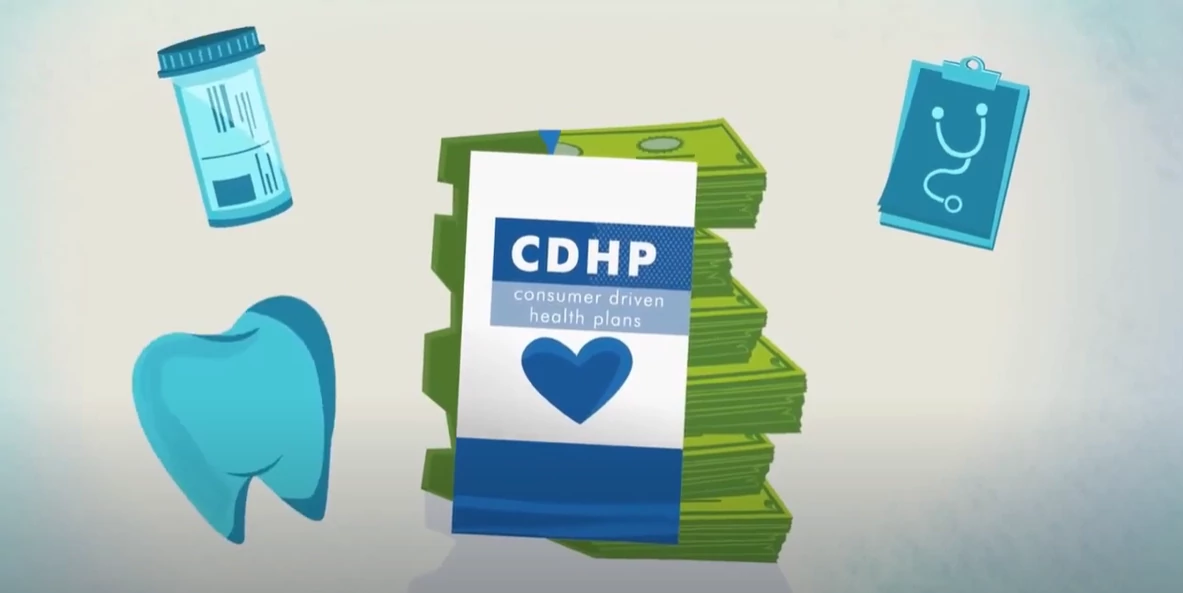
Understanding the mechanics, benefits, and potential risks of a CDHP is essential for anyone looking to optimize their cash flow and investment strategy. This guide explores the financial intricacies of consumer-driven healthcare and how to leverage these plans as powerful tools for financial independence.
Understanding the Mechanics of CDHPs
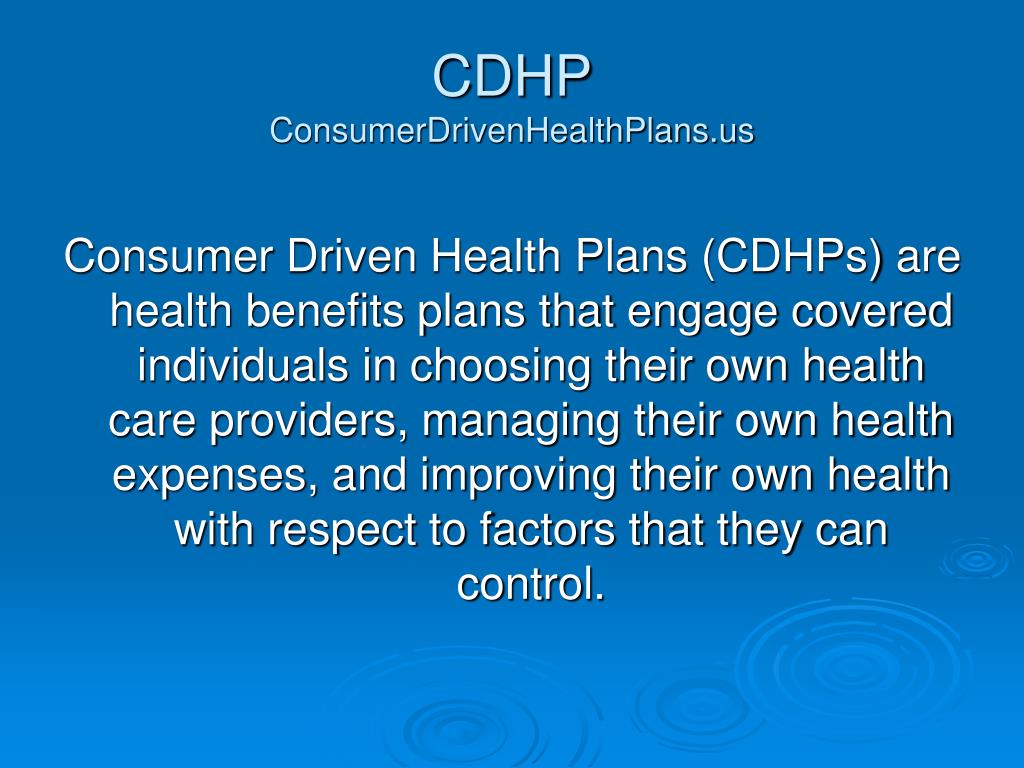
At its core, a Consumer-Driven Health Plan is a type of health insurance architecture that encourages the policyholder to be more conscious of the cost and quality of the medical services they receive. Unlike traditional HMOs or PPOs, which often have low deductibles and high monthly premiums, a CDHP flips the script.
High Deductibles and Lower Premiums
The primary engine of a CDHP is the High-Deductible Health Plan (HDHP). In this model, the monthly premium—the amount you pay just to have the insurance—is significantly lower than that of traditional plans. In exchange for these lower monthly costs, the plan carries a higher deductible, meaning the individual is responsible for paying a larger portion of their medical expenses out of pocket before the insurance coverage fully kicks in. From a personal finance perspective, this represents a shift from “pre-paying” for healthcare through high premiums to “paying as you go” while keeping more of your monthly income in your own pocket.
The Role of the Tax-Advantaged Account (HSA/HRA)
A CDHP is rarely just an insurance policy; it is usually paired with a funding vehicle, most commonly a Health Savings Account (HSA) or a Health Reimbursement Arrangement (HRA).
The HSA is perhaps the most powerful financial tool in the American tax code. It is an individually owned account where you can deposit pre-tax dollars to pay for qualified medical expenses. Because the money in an HSA belongs to the individual, it stays with you even if you change jobs. An HRA, conversely, is employer-funded and typically owned by the company, though it serves a similar purpose of covering out-of-pocket costs. These accounts act as a buffer, allowing consumers to bridge the gap created by the high deductible using tax-optimized funds.
The Financial Strategy Behind Choosing a CDHP
Choosing a CDHP is not merely a medical decision; it is a sophisticated cash-flow strategy. For many, the transition to a CDHP is driven by the desire to reduce “wasted” premium dollars that go to an insurance company regardless of whether medical services are utilized.
Analyzing Cash Flow and Premium Savings
When evaluating a CDHP against a traditional plan, the first step is to calculate the “premium delta.” This is the difference between the high premium of a traditional plan and the low premium of the CDHP. For a family, this difference can often amount to several thousand dollars per year.
In a CDHP strategy, that saved premium is not “spent” elsewhere; instead, it is redirected into the HSA. By doing so, the individual effectively self-insures for smaller medical needs while maintaining a safety net for catastrophic events. If the year passes with minimal medical needs, the individual keeps those savings, whereas, in a traditional plan, those premium dollars are gone forever.
The “Triple Tax Advantage” of HSAs
For those focused on investing and long-term wealth, the HSA component of a CDHP is unmatched. It offers a “triple tax advantage” that no other investment vehicle, including the 401(k) or Roth IRA, can provide:
- Tax-Deductible Contributions: Money goes in pre-tax, reducing your taxable income for the year.
- Tax-Free Growth: Funds within the HSA can be invested in stocks, bonds, or mutual funds. Any capital gains or dividends earned are not subject to taxes.
- Tax-Free Withdrawals: As long as the money is used for qualified medical expenses, it is never taxed upon withdrawal.
This makes the CDHP/HSA combination a formidable retirement tool. Many savvy investors choose to pay for current medical expenses out-of-pocket (if they have the cash flow) and allow their HSA to grow compoundly for decades, essentially creating a secondary retirement fund for healthcare costs in old age.

Strategic Decision Making for Different Life Stages
A CDHP is not a one-size-fits-all solution. Its effectiveness depends heavily on an individual’s financial situation, health status, and life stage.
Young Professionals and Wealth Accumulation
For young, generally healthy individuals, a CDHP is often a financial “no-brainer.” With low utilization of medical services, the high deductible is rarely reached, allowing the individual to maximize HSA contributions. Over 10 to 15 years, a young professional can accumulate a significant balance in their HSA, which serves as both an emergency fund for health and a potent investment vehicle. In this stage, the CDHP acts as a tool for capital preservation and aggressive growth.
Managing Chronic Conditions and Out-of-Pocket Maximums
A common misconception is that CDHPs are only for the healthy. However, for those with high predictable medical expenses—such as chronic conditions—a CDHP can still be financially advantageous. The key metric here is the “total out-of-pocket maximum.”
In some corporate benefits packages, the out-of-pocket maximum on a CDHP (combined with the lower premiums and employer HSA contributions) may actually be lower than the total cost of a traditional PPO when factoring in its higher premiums. For a high-utilizer, once the out-of-pocket maximum is met, the insurance pays 100% of costs. Therefore, a CDHP can provide a predictable “ceiling” on annual healthcare spending, which is vital for household budgeting and business finance management.
Maximizing Your Healthcare Investment
To truly benefit from a CDHP, one must adopt the mindset of a “healthcare consumer.” This involves moving away from passive consumption and toward active management of healthcare costs.
Using Health Care as a Long-term Investment Vehicle
Because the funds in an HSA roll over year after year, the account should be viewed through an investment lens. Many HSA providers allow users to invest their balance once it exceeds a certain threshold (e.g., $1,000 or $2,000). By treating the HSA as a “Health IRA,” individuals can allocate these funds into diversified portfolios.
Furthermore, the “shoebox method” is a popular strategy among financial enthusiasts. This involves paying for current medical expenses with after-tax dollars, saving the receipts, and allowing the HSA to grow. Since there is currently no time limit on when you must reimburse yourself from an HSA, you can theoretically wait 20 years, allow the money to double or triple in the market, and then withdraw the exact amount of those old receipts tax-free.
Cost Transparency and Consumer Behavior
CDHPs encourage participants to shop for healthcare. Just as one might compare prices for a laptop or a car, CDHP participants are incentivized to compare prices for MRIs, lab tests, and prescriptions. Many insurers provide cost-transparency tools to help with this. By choosing an independent imaging center over a hospital-affiliated one, for example, a consumer might save $1,000—money that stays in their HSA rather than being paid out as a deductible. This behavior not only benefits the individual’s bottom line but also exerts downward pressure on healthcare pricing in the broader economy.
Common Pitfalls and How to Avoid Them
While the financial upside of a CDHP is significant, it requires discipline and a clear understanding of your financial limits.
Avoiding the “Under-Funded” Trap
The biggest risk of a CDHP is being “under-funded.” If an individual chooses a CDHP for the low premiums but fails to contribute to their HSA, they may find themselves in a precarious position if an unexpected medical emergency occurs. To mitigate this, a sound financial strategy involves immediately setting aside the premium savings into the HSA via payroll deduction. Ideally, one should aim to have at least the amount of the annual deductible sitting in liquid cash within the HSA before investing the surplus into the market.
Navigating In-Network vs. Out-of-Network Costs
Even within a CDHP, the rules of network management apply. Using an out-of-network provider can lead to costs that do not count toward your deductible or out-of-pocket maximum, or they may be subject to “balance billing.” To protect your assets, it is crucial to verify that all providers, labs, and facilities are in-network. In the context of a CDHP, an out-of-network mistake is far more expensive than in a traditional plan, making due diligence a mandatory part of your financial routine.
In conclusion, a Consumer-Driven Health Plan is far more than just an insurance policy; it is a strategic framework for managing one of life’s largest expenses. By leveraging the lower premiums, utilizing the unmatched tax benefits of the HSA, and adopting a proactive approach to healthcare shopping, individuals can transform their healthcare spending into a wealth-building engine. Whether you are a young professional looking to jumpstart your investments or a seasoned saver looking for tax efficiency, the CDHP offers a sophisticated path to financial resilience.
aViewFromTheCave is a participant in the Amazon Services LLC Associates Program, an affiliate advertising program designed to provide a means for sites to earn advertising fees by advertising and linking to Amazon.com. Amazon, the Amazon logo, AmazonSupply, and the AmazonSupply logo are trademarks of Amazon.com, Inc. or its affiliates. As an Amazon Associate we earn affiliate commissions from qualifying purchases.