
In the rapidly evolving landscape of technology, where software updates occur daily and hardware becomes obsolete in a matter of months, there is a profound reliance on things that never change. In mathematics, a constant is defined as a value that remains fixed and unalterable within a specific context or throughout the entirety of mathematical logic. While the term “constant” might sound like a relic from a high school algebra textbook, it serves as the foundational bedrock upon which our digital world is built. From the algorithms that power your social media feed to the encryption protocols protecting your bank account, the mathematical constant is a silent, unwavering force in the tech industry.
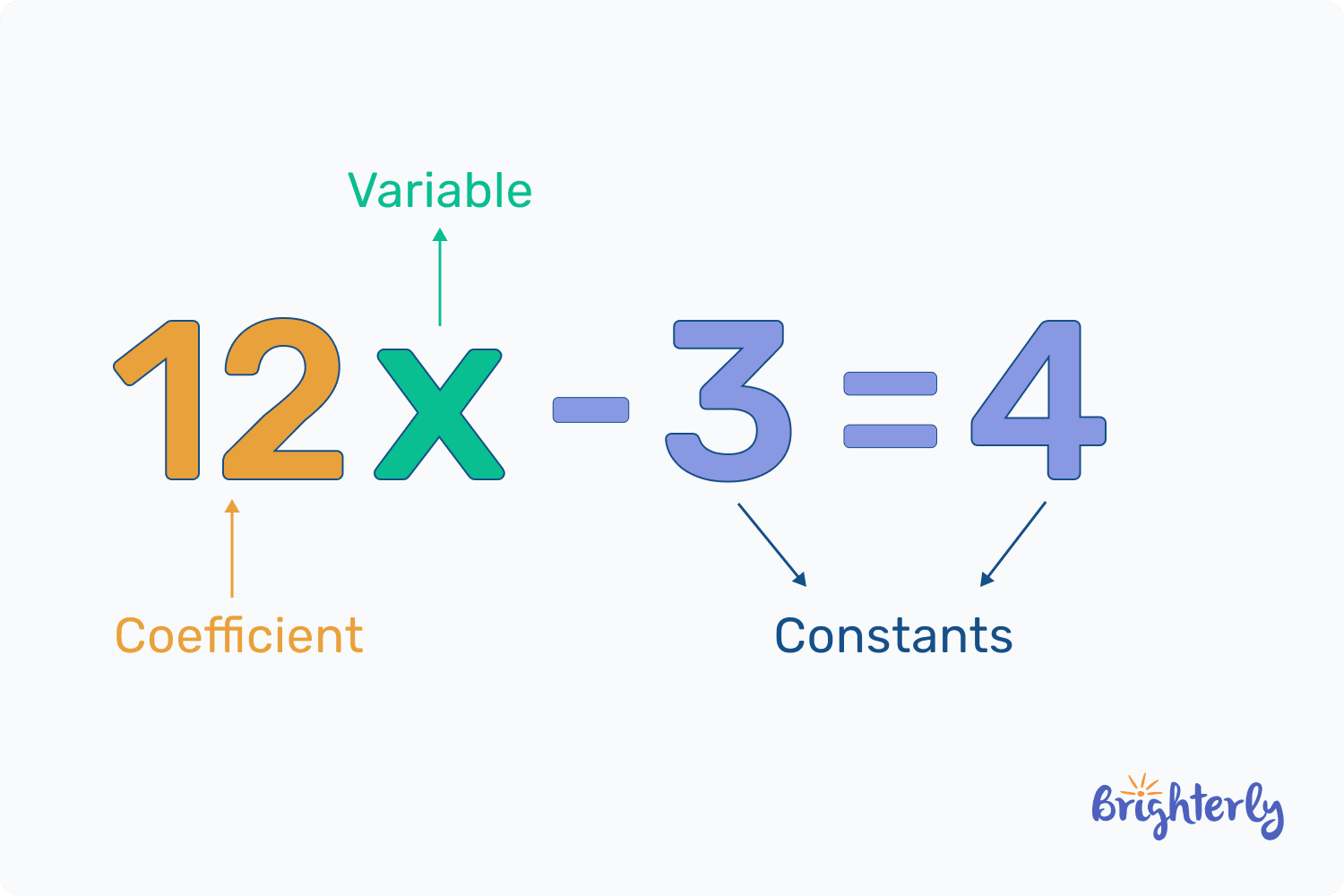
Understanding what a constant is—and why it matters—requires looking beyond the equal sign. In technology, constants represent stability, predictability, and the fundamental laws of logic that allow complex systems to operate without collapsing into chaos.
The Logic of Immutability: Defining Constants in a Digital Framework
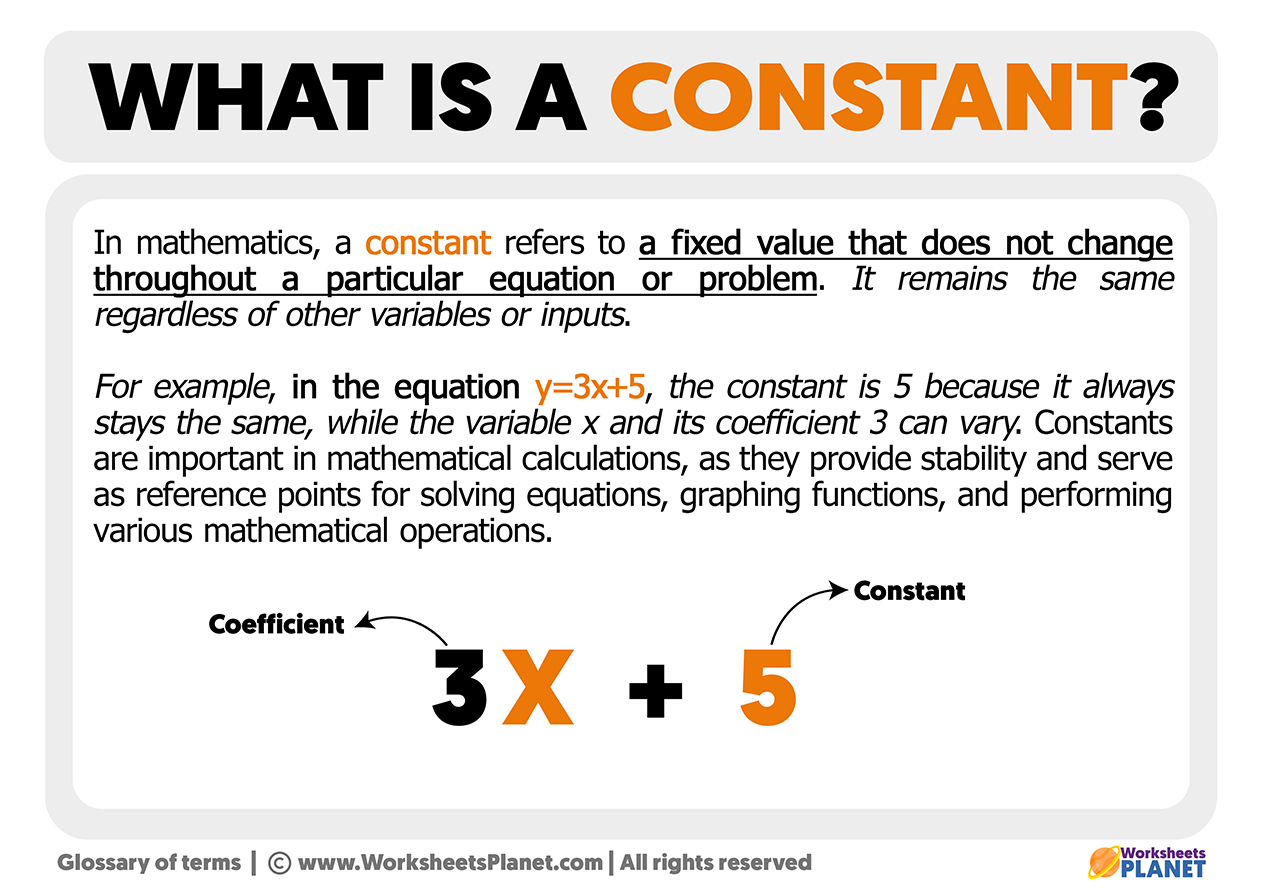
At its simplest level, a mathematical constant is a number that has a fixed value. Unlike a variable, which can represent different values depending on the equation, a constant like $pi$ (pi) or $e$ (Euler’s number) is universal. In the tech sector, this concept translates directly into the principle of “immutability.”
From Variables to Hard-Coded Values
In software engineering, developers distinguish between variables and constants to manage memory and ensure system stability. When a programmer defines a constant, they are telling the computer: “This value will not change during the execution of this program.” This is critical for parameters like a maximum file upload size, a specific API endpoint, or the speed of light used in a physics engine. By using constants, developers reduce the “surface area” for bugs, as there is no risk of these critical values being accidentally overwritten by another part of the code.
The Mathematical Foundation of Algorithmic Logic
Algorithms are essentially sequences of mathematical instructions. Within these instructions, constants act as the “tuning knobs” that determine how an algorithm behaves. For instance, in machine learning, certain hyperparameters are treated as constants during a specific training run to provide a baseline for performance. Without the mathematical certainty of constants, the logical structures of modern software would be fluid and unreliable, making debugging nearly impossible.
Universal Constants vs. Contextual Constants
In tech, we often deal with two types of constants. Universal constants (like $pi$) are hard-coded into the standard libraries of almost every programming language (Python, C++, Java). Contextual constants, however, are defined by the developer—such as the number of retry attempts for a failed server connection. Both serve the same purpose: providing a fixed point of reference in an environment defined by change.
Constants in Software Architecture and Data Science
The application of mathematical constants extends far beyond simple arithmetic; they are essential tools in the architecture of complex software systems and the processing of massive datasets.
The Role of $pi$ and $e$ in Computer Graphics and AI
If you have ever played a high-definition video game or used a VR headset, you are interacting with mathematical constants every second. $pi$ is fundamental to trigonometry and geometry, which are used to calculate the rotation of 3D objects and the rendering of circular shapes. Similarly, Euler’s number ($e$) is the base of the natural logarithm and is indispensable in data science. It appears in the sigmoid function, a critical component of neural networks that helps AI models “decide” whether a piece of data is relevant or not. These constants aren’t just numbers; they are the gears that allow software to simulate reality.
The Golden Ratio and User Interface (UI) Design
Technology is not just about logic; it is also about human interaction. The Golden Ratio ($phi approx 1.618$) is a mathematical constant that has been used for centuries in art and architecture. In the tech world, UI/UX designers use this constant to create layouts that are aesthetically pleasing and intuitive. From the curve of an iPhone’s corners to the layout of a landing page, this constant provides a mathematical blueprint for visual harmony, proving that even the “soft” side of tech is rooted in “hard” mathematical truths.
Constants in Big Data and Logarithmic Scaling
When dealing with billions of data points, tech companies like Google or Amazon cannot rely on linear calculations. They use logarithmic scaling—driven by constants—to organize data in a way that allows for near-instantaneous searching. The “Big O” notation, used to measure the efficiency of an algorithm, relies heavily on mathematical constants to predict how a system will perform as it scales. Without these fixed values, our digital infrastructure would buckle under the weight of its own data.
Cryptography: The Security of Fixed Mathematical Laws
Digital security is perhaps the most critical area where mathematical constants protect the modern world. Every time you send an encrypted message, you are relying on the unchanging properties of numbers.
Prime Numbers as Functional Constants
While prime numbers are not “constants” in the same way $pi$ is, they are used as fixed structural elements in RSA encryption. The security of the internet relies on the mathematical fact that it is incredibly difficult to factor the product of two very large prime numbers. In this context, the “constant” nature of prime factorizations provides the wall that hackers cannot scale. The laws of mathematics do not change, and that lack of change is what keeps our data safe.
Hashing Algorithms and Fixed Output Lengths
Cryptographic hash functions, like SHA-256 (the foundation of Bitcoin and many security protocols), rely on mathematical constants to ensure that any input—no matter how large—produces a fixed-length string of characters. This consistency is what allows systems to verify data integrity. If the mathematical logic behind these hashes were variable rather than constant, the entire foundation of blockchain technology and secure web browsing (HTTPS) would vanish.
Salt and Entropy: Constants in Password Security
In the world of cybersecurity, “salting” a password involves adding a fixed string of data to a password before hashing it. This “salt” acts as a localized constant that protects against rainbow table attacks. By understanding the interplay between the variable (the user’s password) and the constant (the salt), security engineers can build systems that remain resilient even when individual components are compromised.
The Future: Quantum Computing and Physical Constants
As we move toward the next frontier of technology—quantum computing and advanced robotics—the role of constants is shifting from the purely abstract to the physical.
Bridging the Gap Between Math and Physics
Quantum computing relies on the behavior of subatomic particles, which are governed by physical constants like Planck’s constant ($h$). In traditional tech, we deal with “logical constants.” In quantum tech, we must account for “universal physical constants.” Engineers are currently working to build hardware that can maintain “coherence,” a state that is incredibly sensitive to the slightest change. Here, the mathematical constant becomes a target: developers strive to create environments that are as stable and “constant” as the math itself.
The Impact of Constants on Edge Computing and IoT
The Internet of Things (IoT) consists of billions of small devices with limited processing power. To make these devices efficient, developers use “hard-coded” mathematical constants to perform complex calculations without the need for heavy processing. By leveraging these fixed values, we can bring AI and advanced analytics to “the edge”—placing smart technology in everything from lightbulbs to industrial sensors.
Conclusion: The Silent Foundation of Innovation
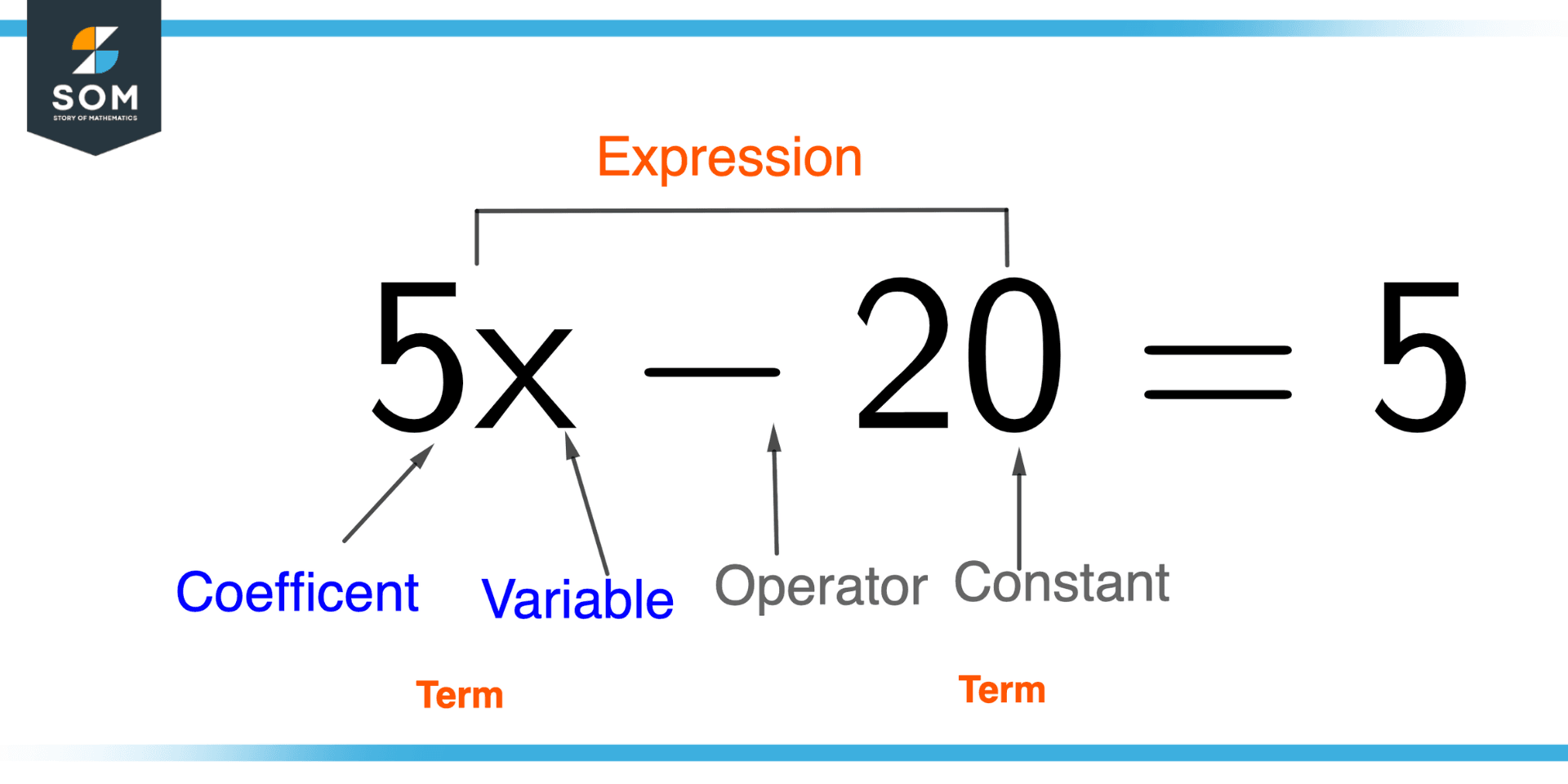
To ask “what is a constant in maths” is to ask what holds the digital world together. While technology is often defined by its ability to change, it is the things that do not change—the constants—that make innovation possible. Whether it is the $pi$ that renders a 3D world, the $e$ that powers an AI’s decision-making, or the prime-number logic that secures our privacy, constants are the invisible scaffolding of the 21st century. As we look toward a future of AI and quantum exploration, our success will depend on our ability to master these unchanging truths in an ever-shifting technological landscape.
aViewFromTheCave is a participant in the Amazon Services LLC Associates Program, an affiliate advertising program designed to provide a means for sites to earn advertising fees by advertising and linking to Amazon.com. Amazon, the Amazon logo, AmazonSupply, and the AmazonSupply logo are trademarks of Amazon.com, Inc. or its affiliates. As an Amazon Associate we earn affiliate commissions from qualifying purchases.