
The word “conceit” often conjures images of arrogance or excessive pride. However, within the realm of literature, particularly poetry, a conceit is something entirely different – and infinitely more fascinating. Far from a character flaw, a literary conceit is an elaborate and often surprising comparison between two vastly different things, designed to illuminate a deeper truth or create a profound intellectual effect. It’s a rhetorical device that stretches the imagination, inviting readers to see the familiar in a new, unexpected light.
In its essence, a poetic conceit is an extended metaphor or simile that forms a surprising or unusual comparison between two seemingly dissimilar objects, ideas, or emotions. Unlike a simple metaphor that might say “life is a journey,” a conceit delves deeper, drawing out the comparison over several lines, stanzas, or even an entire poem, exploring its various facets with intellectual rigor and often startling imagery. It’s a powerful tool for poets to express complex thoughts, evoke strong emotions, and challenge conventional perspectives.
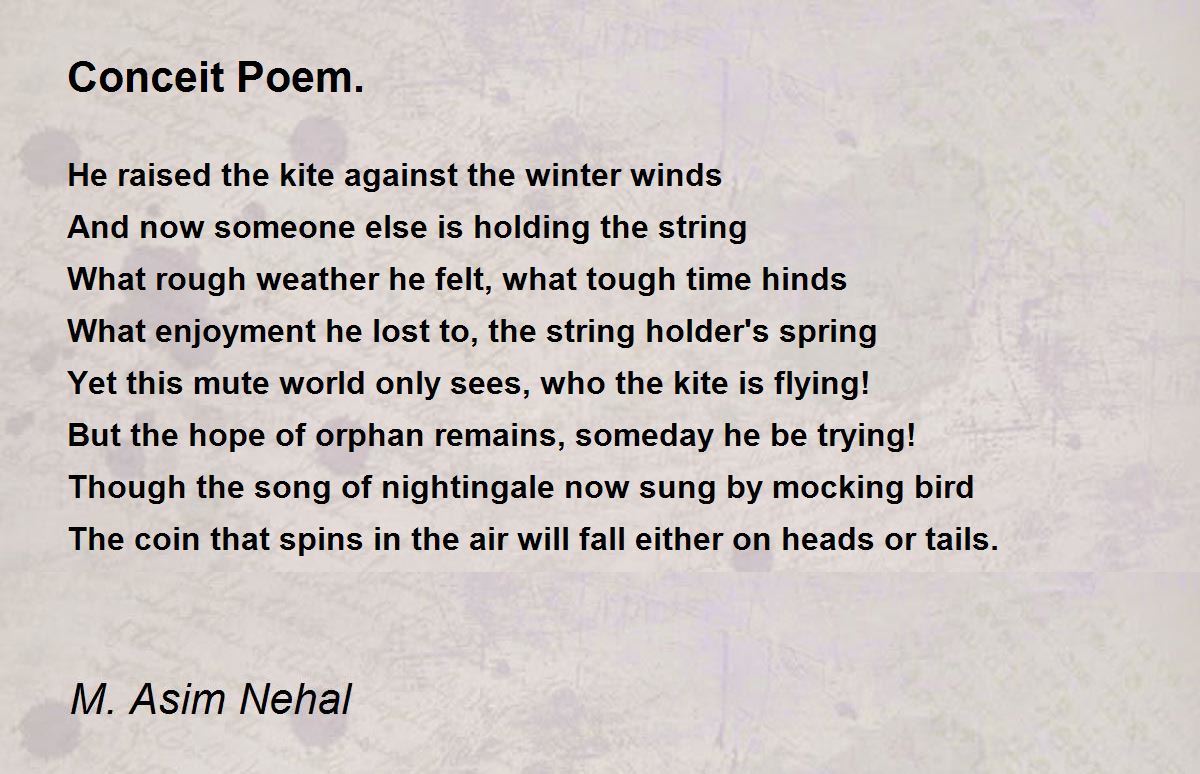
Rooted deeply in the Metaphysical poetry of the 17th century, particularly with poets like John Donne and Andrew Marvell, the conceit was a hallmark of their intellectual, often witty, and sometimes startling verse. They employed conceits to bridge the gap between abstract concepts and concrete experiences, exploring themes of love, death, spirituality, and the human condition with an unparalleled sharpness of mind. But the influence of the conceit extends far beyond this historical period, proving its enduring power as a communicative and creative force, even finding surprising resonance in the modern landscapes of technology, branding, and finance.
The Art of Extended Metaphor: Unpacking Poetic Conceits
At its heart, a poetic conceit is an exercise in intellectual agility and imaginative reach. It demands that the reader pause, reflect, and actively engage with the surprising connections being drawn. This makes it a particularly potent device for expressing complexity and adding layers of meaning that simple comparisons cannot achieve.
Defining the Unconventional: What Makes a Conceit Distinct?
While all conceits are extended metaphors, not all extended metaphors are conceits. The distinguishing feature of a conceit lies in its unusualness, its intellectual nature, and often its elaborate development. It usually connects two things that, at first glance, appear to have very little in common, forcing the reader to think abstractly and critically.
Consider John Donne’s famous conceit from “A Valediction: Forbidding Mourning,” where he compares two lovers to the two legs of a compass. This isn’t a casual comparison; Donne meticulously details how, even when one leg (the departing lover) roams far, the other (the staying lover) remains fixed, leaning towards the moving partner, eventually drawing them back. The compass, a tool of precision and mathematics, becomes a profound metaphor for the spiritual and emotional connection of two souls. This extended, surprising, and intellectually explored comparison is what makes it a true conceit.
Similarly, in Andrew Marvell’s “To His Coy Mistress,” the speaker uses the conceit of time as a relentless, charioted force pursuing them. He imagines vast temporal spans – “An hundred years should go to praise / Thine eyes, and on thy forehead gaze; / Two hundred to adore each breast, / But thirty thousand to the rest” – only to dramatically pivot to the reality that “But at my back I always hear / Time’s winged chariot hurrying near.” This intricate comparison of love and courtship against the backdrop of an inexorable, destructive time creates a powerful and urgent argument. The elaborate nature of the comparison, sustained and detailed, elevates it from a mere figure of speech to a full-fledged conceit.
Historical Roots and Enduring Appeal
The conceit gained prominence during the Metaphysical period of English literature (roughly the 17th century). Poets like Donne, Marvell, George Herbert, and Richard Crashaw broke away from the more conventional, often idealized comparisons of earlier Elizabethan poetry. They sought to explore complex philosophical and theological themes with a new intellectual intensity and a more individual, often paradoxical, voice. Their conceits were not merely decorative; they were integral to the argument or emotional core of the poem, reflecting a keen analytical mind at work.
The enduring appeal of the conceit lies in its ability to surprise, to challenge, and to offer fresh perspectives. It demonstrates the poet’s wit and ingenuity, inviting the reader into a shared intellectual adventure. Even today, though perhaps less overtly utilized in mainstream poetry, the spirit of the conceit – making profound connections between disparate ideas – continues to resonate in various forms of communication, demonstrating its foundational strength as a persuasive and memorable device.
Beyond the Verse: Conceits in the Digital Age and Brand Storytelling
While born in the literary salons of centuries past, the underlying principles of the conceit – innovative comparison, creating new understanding, adding depth – are incredibly valuable in the contemporary world. In an age saturated with information and vying for attention, the ability to frame complex ideas or brand identities through compelling, extended metaphors is a powerful asset.
The Algorithmic Elegance: Conceits in Tech and AI
In the world of technology, where abstract concepts often define groundbreaking innovations, conceits serve as crucial bridges to understanding. Many of the terms we use daily to describe sophisticated technological phenomena are, in fact, brilliant conceits. They take something incredibly complex and abstract, and relate it to something tangible and familiar, making the intangible accessible.
Consider “cloud computing.” This isn’t a literal cloud in the sky; it’s a profound conceit that likens a distributed network of servers and data storage, physically grounded and intricate, to an ethereal, omnipresent “cloud” – accessible, vast, and somewhat mysterious. This single conceit transformed how we understand and interact with internet-based services, making an intricate technology digestible and even poetic in its simplicity. Similarly, the concept of a “digital twin” in the Internet of Things (IoT) or “neural networks” in artificial intelligence are not literal; they are powerful conceits that allow us to grasp incredibly complex systems by relating them to more familiar, if vastly different, ideas. They are intellectual constructs designed to elucidate.
Even the architecture of software or the design of user interfaces often rely on implicit conceits. A “desktop” interface is a conceit for an actual desk, with “folders” and “files” mirroring real-world organizational tools. These metaphorical frameworks allow users to intuit how to interact with new technologies, enhancing productivity and reducing the learning curve.
Furthermore, as AI tools become more sophisticated, the role of conceits might evolve. AI could potentially be trained to identify conceits in vast corpuses of text, analyzing their structure, effectiveness, and impact. Conversely, future AI tools might even assist in generating novel conceits, offering unexpected comparisons to human writers, marketers, and product designers, pushing the boundaries of creative communication. Imagine an AI offering a unique, extended metaphor for your new software feature, making it instantly memorable and relatable.
Crafting Brand Narratives: The Conceit as a Marketing Tool
A brand, at its heart, is often a carefully constructed conceit. In a competitive marketplace, it’s not enough to simply list product features; a successful brand tells a story, evokes an emotion, and creates a unique identity. This is where the power of the conceit shines, allowing brands to forge deep connections with their audience through elaborate and memorable comparisons.

Take Apple’s iconic early “Think Different” campaign. It wasn’t merely a slogan; it was an invitation to an entire worldview, positioning the brand not just as a tech company, but as a vanguard of creativity and rebellion. It created a conceit where Apple wasn’t just selling computers; it was selling the tools for “the crazy ones, the misfits, the rebels, the troublemakers,” the very individuals who push humanity forward. The brand became a conceit for innovation and non-conformity itself. This extended metaphor shaped public perception for decades and became a cornerstone of its corporate identity and reputation.
Nike’s “Just Do It” isn’t just an imperative; it encapsulates a powerful conceit. It positions the brand not merely as an athletic apparel company but as the very embodiment of determination, perseverance, and the spirit of victory. Wearing Nike isn’t just about sportswear; it’s about aligning oneself with a broader philosophy of overcoming challenges and achieving greatness. This strong, aspirational conceit resonates deeply, driving both brand loyalty and sales.
In personal branding, too, individuals craft their own “signature conceits.” A thought leader might position themselves as “the architect of future industries” or “the bridge between theory and practice.” These are extended metaphors that define their unique value proposition and professional identity, making them stand out in a crowded digital landscape. From a marketing perspective, a well-crafted conceit in a tagline, a company vision statement, or an advertising campaign can cut through noise, establish a clear brand strategy, and build a lasting reputation by offering a compelling, often emotional, narrative. It’s about designing a brand that isn’t just seen, but understood and felt on a deeper, metaphorical level.
The ROI of Rhetoric: Conceits, Value, and Financial Foresight
The art of the conceit, though seemingly confined to literary expression, holds surprising relevance in the pragmatic world of money and finance. In a domain where clear communication, persuasive arguments, and strategic thinking are paramount, the ability to articulate complex ideas through powerful, extended metaphors can significantly impact perceived value, investment decisions, and financial success.
Investing in Impact: How Powerful Language Drives Value
In the world of finance, where data often dictates decisions, the power of a well-articulated idea – a “financial conceit” – can be transformative. The “return on investment” of well-crafted communication, especially when it employs compelling conceits, is immense. It adds depth, memorability, and persuasive force to pitches, reports, and financial narratives.
Think of a startup pitch: it’s not just about numbers; it’s about painting a vivid picture, creating an extended metaphor for the future. An entrepreneur might present their disruptive platform as “the next generation’s digital town square” (a civic conceit) or “a financial engine for democratized wealth” (a mechanical conceit). These analogies, these extended metaphors, are crucial for investors to grasp the potential beyond the raw data, for them to “buy into” the vision, not just the product. The conceit provides the narrative framework that gives the numbers meaning and context. A compelling story, often built on a strong conceit, can differentiate a venture and unlock investment.
Similarly, in online income and side hustles, the ability to write persuasively and create engaging content is vital. Whether it’s crafting compelling sales copy, writing captivating blog posts, or developing persuasive landing page content, understanding rhetorical devices like conceits can enhance impact. Describing a financial tool as “your personal money fortress” or a budgeting app as “the GPS for your financial journey” uses conceits to make complex financial concepts accessible and appealing, directly influencing user engagement and, ultimately, conversion rates. This skillful use of language directly translates into a competitive advantage and increased income potential for content creators, marketers, and online entrepreneurs.
Financial Frameworks as Elaborate Conceits
Beyond direct persuasive applications, one can draw intriguing parallels between a complex financial plan or economic model and a literary conceit. Both require intricate construction, foresight, and a guiding, often abstract, principle. A robust financial strategy is not merely a collection of isolated transactions; it’s an elaborate framework designed to achieve specific goals, much like a conceit develops an idea through sustained comparison.
Consider the common financial adage: “Time is money.” This is a simple metaphor, but when expanded into a long-term investment strategy, it becomes an elaborate conceit. The “growth of wealth like a garden” is another; it implies careful planting, consistent nurturing, patience for seasons, and protection from pests (risks). This isn’t just a casual phrase; it’s an extended metaphor that informs decision-making, encouraging long-term thinking, diversification, and risk management, mirroring the care required for a successful garden.
Another example might be “building a financial fortress” – a conceit that immediately brings to mind concepts of security, defense against market volatility, and strategic allocation of resources to protect and grow assets. Such conceits help individuals and businesses conceptualize complex financial concepts in a relatable way, making personal finance more approachable and strategic business finance more intuitive. These metaphorical frameworks act as mental models, simplifying complexity and guiding action, demonstrating how the very structure of a well-articulated financial plan can itself be seen as an elaborate, purposeful conceit.
Crafting Your Own Conceits: A Guide for Modern Communicators
The ability to create a compelling conceit is a skill that transcends poetry, offering a powerful tool for clarity, persuasion, and memorability in any field. For writers, marketers, tech innovators, and financial strategists alike, mastering this art can elevate communication from merely informative to truly impactful.
From Inspiration to Innovation
Developing a strong conceit begins with a willingness to think unconventionally. It requires you to look beyond obvious similarities and seek connections between seemingly disparate concepts.
- Identify Your Core Idea: What is the central concept, product, or emotion you want to convey? (e.g., a new productivity app, the feeling of financial security, the complexity of AI).
- Brainstorm Dissimilar Analogies: What are some things that are entirely different from your core idea but possess one or two surprising parallel qualities? Don’t censor yourself; the wilder the initial ideas, the better. (e.g., for productivity: a symphony orchestra, a finely tuned engine, a river flowing downhill).
- Explore the Connection: Once you have a potential pairing, delve deep into the similarities. How does one thing mirror the other in unexpected ways? Extend the comparison. If your productivity app is a “symphony orchestra,” how does it conduct tasks? Does it have a lead instrument? How does it bring disparate elements into harmony?
- Embrace Complexity, Strive for Clarity: A good conceit is intellectually engaging, but it shouldn’t be so obscure as to be unintelligible. The goal is to illuminate, not to mystify. Balance the originality of the comparison with the reader’s ability to follow your train of thought.
- Refine and Polish: Like any good piece of writing or strategic plan, conceits benefit from iteration. Does it truly resonate? Is it too cliché or too convoluted? Test it on others.

Tools and Techniques for the Digital Creator
In the digital age, various tools can aid in the brainstorming and refinement process of crafting conceits:
- Digital Mind Mapping Software: Tools like XMind, Miro, or Lucidchart can help you visually connect disparate ideas, branch out your comparisons, and see the emerging structure of your conceit. Start with your core concept in the center and radiate out with potential analogies and their sub-connections.
- AI for Prompt Generation: While AI can’t yet craft truly brilliant, nuanced conceits on its own, it can be a fantastic brainstorming partner. Input your core idea and ask an AI language model to “generate metaphors for [X] from completely different domains” or “compare [X] to something unexpected.” Use these as jumping-off points for your own creative exploration, rather than direct answers.
- Thesaurus and Rhyming Dictionaries (Digital): These can help you find precise language to articulate your extended comparisons, especially when trying to add a poetic flair or rhythmic quality, even in prose.
- Collaborative Platforms: Sharing your nascent conceits with a team or trusted peers on platforms like Google Docs or Slack can provide valuable feedback, helping you refine the clarity and impact of your chosen metaphor.
Ultimately, the act of crafting a conceit is a human endeavor, requiring intuition, imagination, and intellectual curiosity. However, by leveraging both traditional critical thinking and modern digital tools, communicators across all fields can harness the enduring power of the conceit to articulate ideas with unparalleled depth, persuasion, and memorable impact.
In conclusion, the poetic conceit, a sophisticated and extended metaphor, is far more than a literary relic. It’s a testament to the power of human ingenuity in making sense of the world, connecting the abstract with the tangible, and illuminating profound truths through surprising comparisons. From the intricate verses of 17th-century poets to the brand narratives of global corporations, the intuitive frameworks of technology, and the strategic language of finance, the spirit of the conceit continues to thrive. By understanding and consciously employing this powerful rhetorical device, modern communicators can transcend superficial descriptions, imbue their messages with deeper meaning, and leave an indelible mark on their audience, ensuring that their ideas not only resonate but truly transform perception.
aViewFromTheCave is a participant in the Amazon Services LLC Associates Program, an affiliate advertising program designed to provide a means for sites to earn advertising fees by advertising and linking to Amazon.com. Amazon, the Amazon logo, AmazonSupply, and the AmazonSupply logo are trademarks of Amazon.com, Inc. or its affiliates. As an Amazon Associate we earn affiliate commissions from qualifying purchases.