
In a world increasingly dominated by digital tools, AI-powered solutions, and virtual realities, it might seem counterintuitive to focus on a piece of equipment as fundamentally analog as the combination square. Yet, this unassuming, multi-functional device remains an indispensable asset across a vast spectrum of trades, crafts, and DIY projects. Far from being a relic, the combination square embodies a timeless principle: precision is paramount. Its simple design belies a profound capacity to ensure accuracy, save time, and prevent costly errors, making it a cornerstone for anyone striving for quality in their physical endeavors.

Whether you’re a seasoned carpenter, a weekend warrior tackling home improvements, a machinist fabricating intricate parts, or even an artist designing a custom frame, the combination square is likely a tool you’ll reach for repeatedly. Its versatility stems from its ingenious design, combining several measurement and marking functions into a single, compact unit. This article will delve into the multifaceted uses of the combination square, explore its underlying principles of precision, and illustrate how this seemingly basic tool integrates surprisingly well with the broader themes of technology, brand building, and financial wisdom in modern making.
The Anatomy of Precision: Understanding Your Combination Square
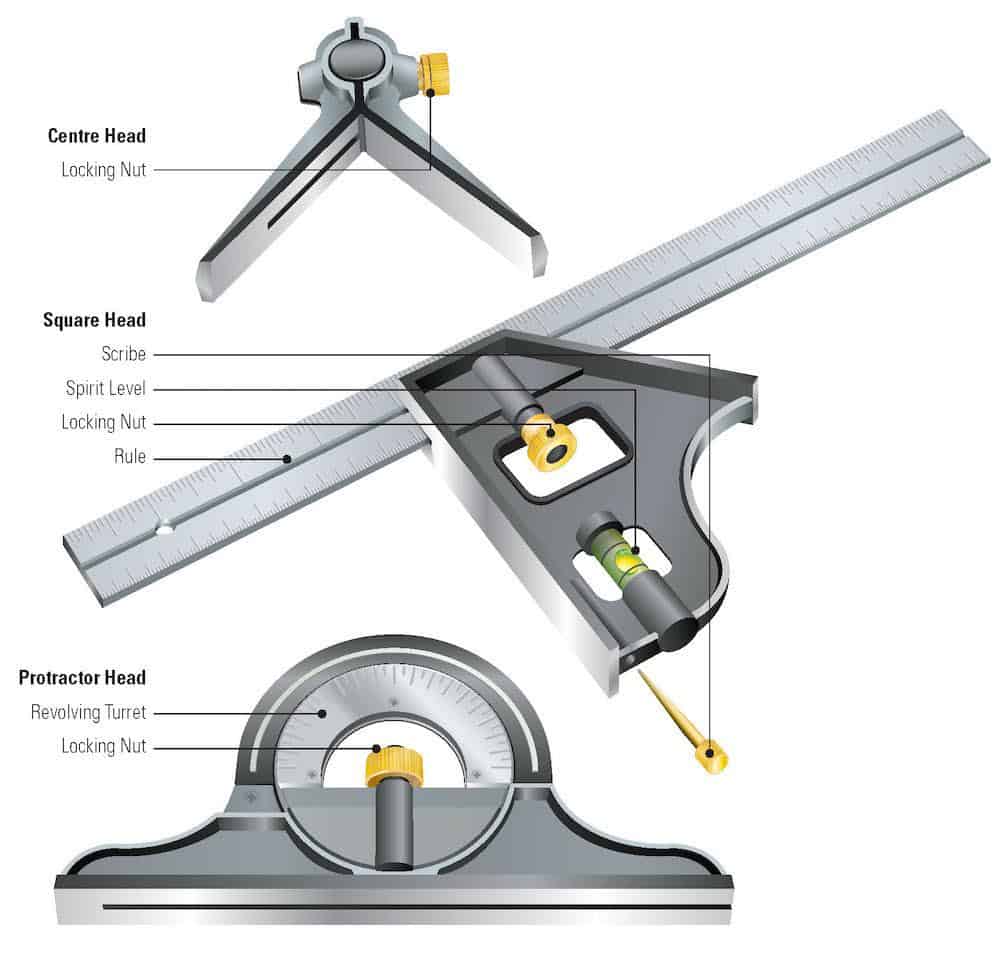
Before diving into its applications, it’s crucial to understand what a combination square is and what makes it such an effective instrument. At its core, a combination square is a layout tool comprising a steel rule (often called the blade) and one or more interchangeable heads that slide along the blade. The most common configuration features a “square head” that allows for 90-degree and 45-degree angle measurements, often accompanied by a small spirit level and a scriber.
Decoding the Components: Blade, Head, Scriber, and Level
The blade is typically a hardened steel rule, precisely marked in imperial or metric units (or both). Its edges are ground flat and parallel, ensuring straightness and accuracy for marking and measuring. The quality of the blade’s markings and its straightness are fundamental to the tool’s overall performance.
The square head, the most commonly used attachment, is designed to slide along the blade and lock into position with a knurled nut or cam lever. This head features two precisely machined faces, one set at 90 degrees to the blade and the other at 45 degrees. These faces allow users to quickly and accurately mark perpendicular lines, miter angles, or check for squareness on a workpiece. Many square heads also contain a small spirit level, enabling the tool to function as a basic level for checking horizontal or vertical alignment, and a retractable scriber. The scriber is a sharpened metal pin stored within the head, used for etching fine lines onto materials like wood or metal, providing a more permanent and precise mark than a pencil.
Some combination squares come with additional heads, such as a center finder head and a protractor head. The center finder head is used to locate the center of round or square stock, which is invaluable in turning or drilling operations. The protractor head allows for the measurement and marking of any angle between 0 and 180 degrees, offering even greater versatility for specialized projects.
The Core Principle: Accuracy and Versatility
The power of the combination square lies in its ability to combine several crucial functions into one tool, thereby increasing efficiency and reducing clutter in the toolbox. But more importantly, it delivers these functions with a high degree of repeatable accuracy. A well-made combination square is precisely machined, ensuring that its 90-degree and 45-degree angles are true, and its rule markings are exact. This precision is not just a luxury; it’s a necessity for any project that demands tight tolerances and a professional finish. Without it, errors accumulate, leading to ill-fitting joints, skewed assemblies, and wasted materials—all of which have significant implications for both quality and cost.
Beyond the Basics: Primary Applications in Practice
The combination square’s versatility makes it an indispensable tool across countless scenarios. Its applications span from the workshop floor to the construction site, making intricate tasks simpler and ensuring foundational accuracy.
Marking and Layout: Perfect Angles and Lines
Perhaps the most fundamental use of a combination square is for marking and layout. When building anything from a bookshelf to a complex machinery component, the first step often involves transferring measurements and drawing lines onto raw material.
- Marking 90-degree lines (squaring): By sliding the square head along the edge of a board and holding it firmly against the material, you can draw perfectly perpendicular lines with a pencil or scriber. This is essential for cutting stock to length, creating dadoes, or ensuring that corners meet at a true right angle. It’s also invaluable for checking if an existing corner is square.
- Marking 45-degree lines (mitering): The 45-degree face of the square head is perfect for marking miter cuts, commonly used in picture frames, trim work, and angled joinery. This allows for quick and accurate replication of these common angles without the need for a separate miter gauge or protractor for simple applications.
- Drawing parallel lines: By setting the head at a specific distance from the blade’s end and marking along the head’s edge, you can draw lines parallel to the edge of the material, useful for rip cuts or creating consistent borders.
- General straightedge: The steel blade itself serves as an excellent straightedge for drawing longer lines or for checking the flatness of a surface.
Measuring and Depth Gauging: Precision in Three Dimensions
The combination square is not just for marking; it’s also a highly effective measuring tool, capable of both linear and depth measurements.
- Standard linear measurement: The blade functions as a standard ruler, useful for measuring lengths, widths, and thicknesses.
- Depth gauging: By sliding the square head off the end of the blade and resting it on the surface of your material, you can use the blade to measure the depth of mortises, dados, or holes. This is particularly useful for ensuring consistent depths in joinery or for checking the setup of router bits and saw blades.
- Height gauging: Similarly, by placing the combination square on a flat reference surface (like a table saw top), you can use the blade to accurately set the height of blades, router bits, or fences. This ensures repeatable setups and precise cuts, especially when working with machine tools.
- Center finding: With the center finder head, locating the exact center of round or square stock is quick and effortless. This is crucial for drilling pilot holes, turning on a lathe, or any application where rotational symmetry is key.
Leveling and Squaring: Ensuring True Surfaces
The small spirit level integrated into many square heads allows the combination square to perform basic leveling and plumbing tasks. While not a replacement for a dedicated longer level, it’s perfect for checking small areas.
- Checking for level/plumb: You can quickly check if a small surface is horizontal or vertical, aiding in tasks like installing shelves, aligning picture frames, or setting up small jigs.
- Checking for squareness: Beyond marking, the 90-degree face is frequently used to check the squareness of a workpiece or an assembly. By placing it against an inside or outside corner, you can visually confirm if the angle is truly 90 degrees. This is critical during assembly stages, preventing warped cabinets, misaligned frames, or poorly fitting components. The protractor head extends this capability, allowing you to check or set specific angles for more complex geometries.
A Low-Tech Powerhouse in a High-Tech World: The Combination Square’s Enduring Relevance
In an era where technology trends dominate conversations, where software and AI tools promise to revolutionize every industry, the combination square stands out as a testament to the enduring power of simple, effective design. It’s a low-tech productivity gadget that not only survives but thrives alongside its digital counterparts, proving that foundational tools are often the most resilient.
Precision Engineering and Manufacturing: The Tech Behind the Tool
While the combination square itself is analog, its creation is deeply rooted in advanced manufacturing technology. High-quality combination squares are products of sophisticated engineering processes. Their blades are often made from high-grade stainless steel or hardened tool steel, precisely ground to ensure flatness and parallelism. The markings are typically photo-etched or laser-etched, ensuring high contrast and extreme accuracy that withstands years of use. The heads are machined from solid stock using CNC (Computer Numerical Control) machines, guaranteeing precise angles and tight tolerances.
The development of superior alloys, heat treatment processes for durability, and advanced grinding techniques are all technological advancements that contribute to the precision and longevity of a modern combination square. Manufacturers like Starrett, Mitutoyo, and PEC are celebrated for their unwavering commitment to these manufacturing tolerances, understanding that the reputation of their brand hinges on the absolute accuracy of their tools. In essence, the humble combination square is a physical embodiment of high-tech precision manufacturing.
Enhancing Digital Workflows: From Analog Layout to Digital Design
Paradoxically, the combination square plays a crucial role in projects that often culminate in digital outputs or rely on digital design. Consider someone designing a custom furniture piece using CAD software. While the initial design is digital, the physical manifestation still requires precise marking and measurement of raw materials. The combination square bridges the gap between the virtual design and the tangible product.
For instance, a DIY enthusiast might design a complex storage solution in SketchUp or Fusion 360 (an AI tool for design). When it comes time to cut the wood or metal, the combination square is essential for accurately transferring those digital dimensions to the physical material, ensuring cuts are square and parts fit together as intended by the digital model. Similarly, in the installation of smart home gadgets or complex digital security systems, precise measurements for mounting brackets, cable runs, or device placements are fundamental. A slight inaccuracy from a poor measurement can compromise the aesthetics, functionality, or even the security of the installation. In this context, the combination square ensures the physical foundation upon which digital systems are built, making it an unsung hero of digital implementation.
The Unsung Productivity Gadget: Efficiency Through Simplicity
In an age obsessed with apps and software for productivity, the combination square offers a different kind of efficiency: that of elegant simplicity and immediate feedback. There’s no boot-up time, no battery to charge, and no software update to wait for. It’s always ready. This reliability translates directly into productivity. Quick, accurate measurements and markings reduce guesswork, minimize rework, and prevent material waste.
For professionals, time is money. A tool that allows for rapid, consistent, and accurate layout directly contributes to project timelines and profitability. For hobbyists, it means more time spent creating and less time correcting mistakes. The combination square is, in essence, a “productivity hack” that has stood the test of time, proving that sometimes, the simplest tools are the most effective for streamlining physical workflows.
The Brand of Quality: Investing in Accuracy and Reputation
The choice of a combination square, like any other professional tool, extends beyond its immediate utility; it’s an investment that impacts the quality of work, the efficiency of projects, and even the financial health of an endeavor. The principles of brand strategy and personal branding are surprisingly relevant here, as is the concept of smart financial tools for business and personal finance.
Building Your Craft: How Premium Tools Shape Your Brand
For anyone involved in a craft—be it woodworking, metalworking, jewelry making, or custom fabrication—the quality of their tools directly influences the quality of their output. Using a cheap, inaccurate combination square can lead to slight misalignments that compound into significant flaws in the finished product. These flaws, however minor, can detract from the perceived value and craftsmanship of the item.
Conversely, consistently producing high-quality work, facilitated by precise tools, builds a strong personal brand or reputation. When your work is consistently accurate, well-fitted, and aesthetically pleasing, you gain trust and recognition. For those who turn their craft into an online income or a side hustle, this reputation is invaluable. Social media platforms and online marketplaces (like Etsy) are flooded with creations; what differentiates successful makers is often the meticulous attention to detail and precision that stems from using reliable tools. A good combination square isn’t just a tool; it’s an enabler of quality, and quality is a cornerstone of any strong brand.
The Financial Sense of Smart Tool Investment: Preventing Costly Mistakes
From a money perspective, investing in a high-quality combination square is a financially astute decision. While a premium model might have a higher upfront cost than a budget alternative, the long-term savings are substantial.
- Reduced material waste: Inaccurate measurements lead to ruined cuts and wasted materials. For expensive woods, metals, or composites, every mistake costs money. A precise combination square helps minimize these errors, directly saving on material costs.
- Increased efficiency: As discussed, accurate layout tools speed up the workflow. Time saved on rework or correcting errors translates directly into increased productivity and, for professionals, higher earning potential.
- Durability and longevity: High-quality tools are built to last. A well-made combination square, properly cared for, can serve for decades, often becoming a legacy tool passed down through generations. This long lifespan reduces the need for frequent replacements, saving money in the long run. Cheap tools often fail quickly, requiring repeat purchases that accumulate over time.
- Professionalism: For those running a business (e.g., a custom furniture shop or a fabrication studio), the investment in reliable tools is part of business finance. It ensures client satisfaction, reduces warranty claims for faulty products, and enhances the professional image of the company. It’s an investment in quality control that directly impacts profitability.
Tool Brands: A Legacy of Precision and Trust
Just as certain brands are synonymous with quality in software (e.g., Adobe for creative tools) or consumer electronics (e.g., Apple for gadgets), specific tool brands have earned their reputation through generations of producing superior measurement instruments. Brands like Starrett, Mitutoyo, PEC Tools, and even older Stanley tools are revered for their commitment to precision and durability.
These brands understand that their corporate identity and marketing revolve around trust. When a craftsman buys a Starrett combination square, they’re not just buying a piece of metal; they’re buying a guarantee of accuracy and reliability. This brand loyalty is built on consistent performance and a legacy of quality. Their design often prioritizes ergonomics, legibility of markings, and robust construction, all contributing to the user experience and the tool’s perceived value. For aspiring makers and seasoned professionals alike, choosing a reputable brand for fundamental tools like the combination square is a testament to their own commitment to excellence and a smart financial decision that pays dividends in accuracy and peace of mind.

Conclusion
The combination square, a marvel of simple mechanical engineering, stands as a testament to the enduring human need for precision. In an age where technological advancements often overshadow traditional craftsmanship, this versatile tool continues to prove its invaluable worth. From ensuring perfectly square cuts in woodworking to precisely gauging depths in metalworking, its applications are fundamental to achieving high-quality results across myriad disciplines.
Far from being obsolete, the combination square seamlessly integrates with modern practices, serving as the physical bedrock for projects conceived in digital spaces. Its very existence is a product of advanced manufacturing technology, and its consistent use is a direct driver of productivity and efficiency. Furthermore, the investment in a high-quality combination square is not merely a purchase; it’s a strategic financial decision that prevents costly mistakes, reduces material waste, and contributes significantly to the building of a strong personal or corporate brand through consistently excellent workmanship.
Ultimately, the combination square is more than just a measurement tool. It is a symbol of accuracy, a guardian against imperfection, and an indispensable ally for anyone who believes that true quality begins with true precision. Whether you’re a professional seeking flawless execution, a hobbyist pursuing personal growth, or an entrepreneur building a brand, understanding and utilizing the combination square is a foundational step toward mastering your craft and achieving truly remarkable results.
aViewFromTheCave is a participant in the Amazon Services LLC Associates Program, an affiliate advertising program designed to provide a means for sites to earn advertising fees by advertising and linking to Amazon.com. Amazon, the Amazon logo, AmazonSupply, and the AmazonSupply logo are trademarks of Amazon.com, Inc. or its affiliates. As an Amazon Associate we earn affiliate commissions from qualifying purchases.