
The relentless pursuit of efficiency and performance in lighting technology has driven remarkable innovations, none more impactful in recent decades than the widespread adoption of Light Emitting Diodes (LEDs). From simple indicator lights to sophisticated smart home systems, LEDs have revolutionized how we illuminate our world. Within this dynamic landscape, a particular advancement stands out for its unique blend of power, compactness, and quality of light: the Chip-on-Board (COB) LED. Understanding COB technology is key to appreciating the capabilities of modern lighting solutions, offering insights into its construction, advantages, and diverse applications across various industries.
Understanding LED Technology: A Foundation
To truly grasp the significance of COB LEDs, it’s essential to first establish a foundational understanding of LED technology itself. LEDs represent a fundamental shift from traditional incandescent and fluorescent lighting by converting electricity directly into light through a semiconductor process, rather than heating a filament or exciting gases.
The Evolution of Lighting: From Incandescent to LED
For over a century, incandescent bulbs, relying on a glowing filament, dominated lighting, but at a tremendous energy cost, with most energy lost as heat. Fluorescent lamps offered improved efficiency but contained mercury and often produced less desirable light quality. The advent of LEDs marked a paradigm shift. Early LEDs were limited in color and brightness, primarily used for indicators. However, breakthroughs in material science and semiconductor engineering led to the development of high-brightness LEDs capable of producing white light, thus paving the way for general illumination applications. This evolution brought unprecedented energy efficiency, extended lifespan, and significantly reduced environmental impact compared to their predecessors.
Basic Principles of LED Operation
An LED operates on the principle of electroluminescence. When an electric current passes through a semiconductor material, electrons and holes recombine, releasing energy in the form of photons (light). This process occurs within a tiny semiconductor chip, typically made from materials like gallium nitride (GaN) or indium gallium nitride (InGaN). Unlike traditional bulbs that radiate light in all directions, LEDs are directional light sources, making them inherently more efficient at delivering light where it’s needed. However, managing the heat generated by the chip, despite LEDs being cooler than incandescents, is crucial for maintaining their performance and longevity, leading to sophisticated thermal management solutions.
What is a COB LED? The Core Technology Explained
Building upon the fundamental principles of LED operation, COB (Chip-on-Board) technology represents a specific and advanced packaging method that distinguishes itself through its unique assembly and resulting performance characteristics. It’s not a different type of LED, but rather a different way of packaging multiple LED chips.
Chip-on-Board: A Unique Packaging Approach
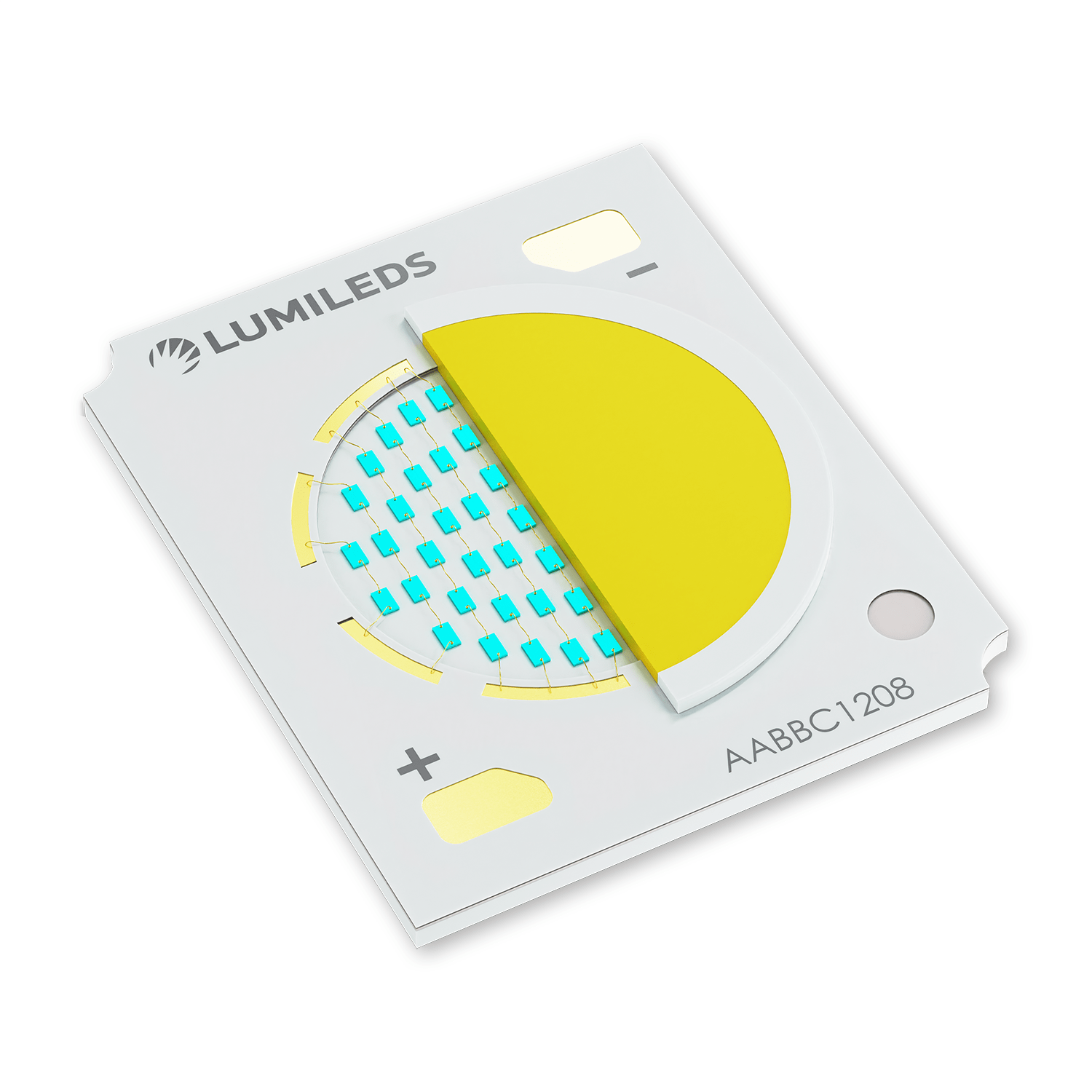
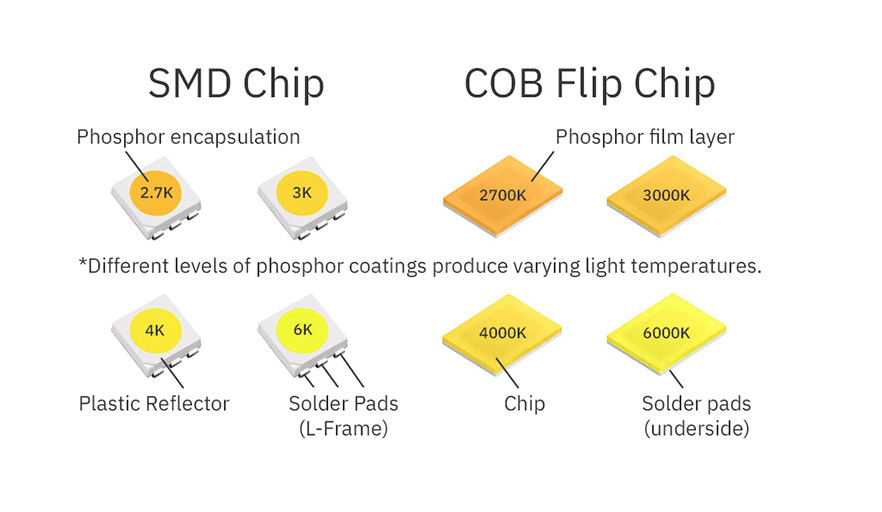
At its heart, a COB LED is a single lighting module comprising multiple individual LED chips directly mounted onto a single substrate, typically made of ceramic or metal core printed circuit board (MCPCB). These chips are then covered by a single, common phosphor layer, which helps to convert the blue light emitted by the LED chips into white light, and a lens or protective layer. This direct mounting process eliminates the need for individual chip packaging and soldering, which are common in other LED technologies like Surface Mount Device (SMD) LEDs. The “chip-on-board” nomenclature precisely describes this direct electrical and thermal connection of unpackaged LED chips to the substrate.
The Manufacturing Process: Simplicity Meets Power
The manufacturing of COB LEDs involves a streamlined process that contributes to their efficiency and performance. First, numerous tiny LED chips are precisely placed and bonded directly onto the substrate. These chips are then electrically connected using fine bonding wires, typically gold, to form a circuit. A critical step involves applying a uniform layer of phosphor gel or resin over the entire array of chips. This phosphor layer plays a crucial role in determining the final color temperature and quality of the emitted light. Finally, a protective lens or encapsulant is often applied to safeguard the chips and phosphor from environmental factors. This compact, integrated assembly results in a single, powerful light source from what would otherwise be many discrete components.
Key Structural Differences from Traditional LEDs (SMD)
The most prevalent alternative to COB technology in general lighting is the SMD (Surface Mount Device) LED. Understanding the structural differences clarifies the advantages of COB.
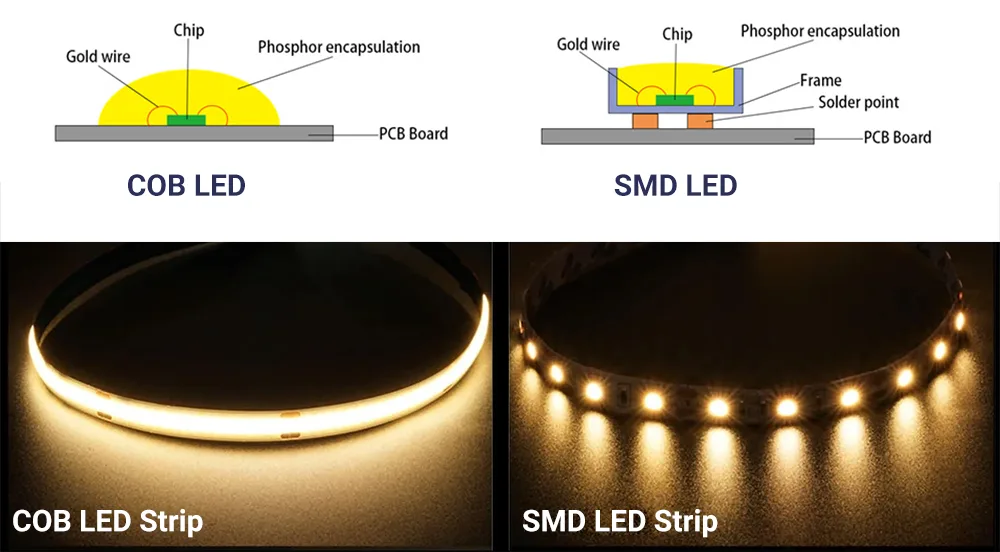
- SMD LEDs: In an SMD LED, individual LED chips are encapsulated in their own small, discrete packages, each with its own lens and two electrodes. These individual packages are then mounted onto a PCB (Printed Circuit Board) in a series of distinct points. This results in multiple light sources that are clearly visible as separate dots when illuminated, though they are clustered close together.
- COB LEDs: In contrast, a COB LED integrates many small LED chips directly onto a single, larger substrate. These chips are much closer together, and the entire array is covered by a single phosphor layer. When illuminated, a COB LED appears as a single, uniform light source, almost like a panel of light, rather than a collection of individual points. This fundamental difference in packaging leads to distinct performance characteristics.
Advantages of COB LED Technology
The unique structural design of COB LEDs translates into several significant advantages that make them a preferred choice for many high-performance lighting applications.
Enhanced Brightness and Luminous Efficacy
One of the most compelling benefits of COB LEDs is their ability to produce a very high lumen output from a small footprint. By packing a large number of LED chips into a concentrated area, COB modules can achieve exceptionally high brightness levels, making them ideal for applications requiring intense illumination. Furthermore, the efficiency of converting electrical power into light (luminous efficacy, measured in lumens per watt) is often superior in COB designs. The direct chip-on-board mounting minimizes optical losses and maximizes light extraction, contributing to better overall system efficiency compared to arrays of individually packaged LEDs.
Superior Thermal Performance and Longevity
Heat management is paramount for the lifespan and performance of any LED. COB technology excels in this regard due to its integrated design. The direct mounting of chips onto a substrate with high thermal conductivity (like ceramic or MCPCB) provides a very efficient pathway for heat dissipation away from the LED junctions. This superior thermal management helps maintain lower operating temperatures for the individual LED chips, significantly extending their operational lifespan and ensuring consistent light output over time. Less heat stress translates directly into greater reliability and reduced lumen degradation.
Compactness and Design Flexibility
The consolidated nature of COB LEDs allows for remarkably compact light engines. By eliminating individual packaging for each LED chip, a significant amount of space is saved. This compactness provides greater flexibility for luminaire designers, enabling smaller, sleeker fixtures that can integrate seamlessly into various architectural and product designs. This is particularly advantageous in applications where space is at a premium, such as track lighting, downlights, or even compact automotive headlights.
Uniform Light Output and Reduced Glare
Because multiple LED chips are covered by a single phosphor layer, a COB LED creates a highly uniform and homogenous light beam. Unlike SMD arrays where individual light points can create a “dotting” effect or multiple shadows, a COB module produces a broad, even spread of light, often with a wider beam angle. This uniformity reduces visual hot spots and minimizes glare, leading to a more comfortable and aesthetically pleasing illumination, especially in close-proximity viewing situations.
Applications and Use Cases of COB LEDs
The distinct advantages of COB LED technology have led to its adoption across a wide spectrum of applications, from general lighting to highly specialized industrial uses.
Commercial and Industrial Lighting
In commercial environments such as retail stores, offices, and showrooms, COB LEDs are widely used in track lighting, spotlights, and downlights. Their high brightness, excellent color rendering capabilities, and uniform light output make them perfect for accentuating displays, providing general ambient illumination, or creating focused task lighting. In industrial settings, COB LEDs are found in high bay lighting for warehouses and factories, where their powerful output and durability are crucial for illuminating large areas effectively and reliably.
Horticultural Lighting (Grow Lights)
The precise control over light spectrum and intensity offered by COB LEDs makes them ideal for horticultural applications. Modern grow lights often utilize COB arrays to deliver the specific wavelengths of light (e.g., blue and red) necessary for plant photosynthesis and growth, while maximizing energy efficiency. Their ability to deliver high photon flux density (PPFD) over a target area makes them highly effective for indoor farming and greenhouse operations.
Automotive and Specialty Lighting
The automotive industry benefits from COB technology in applications like headlights, fog lights, and interior lighting. Their compact size allows for innovative headlight designs, while their high output ensures excellent visibility. Beyond standard vehicles, COB LEDs are also used in specialty lighting for marine vessels, aviation, and emergency vehicles, where robust, powerful, and efficient lighting is critical.
Photography and Video Lighting
Photographers and videographers highly value the consistent and powerful light output of COB LEDs. Professional studio lights and portable on-camera lights often incorporate COB modules due to their ability to produce bright, color-accurate light with minimal flicker. The uniform light source helps in achieving soft, even illumination, reducing harsh shadows and making post-production easier.
Considerations When Choosing COB LEDs
While COB LEDs offer compelling advantages, several factors should be considered when selecting them for a specific application to ensure optimal performance and value.
Cost vs. Performance
COB LEDs generally have a higher initial cost per lumen compared to individually packaged SMD LEDs, especially for very low power applications. However, their superior performance in terms of brightness, thermal management, and light quality often justifies the investment for professional and high-performance applications where these attributes are critical. Evaluating the total cost of ownership, including energy savings and longer lifespan, is essential.
Power Requirements and Driver Compatibility
COB LED modules typically operate at higher current and voltage requirements than single SMD LEDs. It is crucial to pair them with compatible LED drivers that can supply the precise electrical characteristics (constant current or constant voltage, depending on the module) required for stable and efficient operation. Incorrect driver selection can lead to premature failure or suboptimal performance.
Heat Management Strategies
Despite their inherent thermal efficiency, high-power COB LEDs still generate significant heat. Effective heat sinking is absolutely critical to prevent thermal runaway and maintain the specified lifespan. This often involves integrating the COB module with robust aluminum heat sinks, active cooling solutions (fans), or specialized thermal pads and pastes to dissipate heat away from the LED junction efficiently. Proper thermal design is paramount for maximizing the longevity and reliability of any COB-based lighting fixture.
aViewFromTheCave is a participant in the Amazon Services LLC Associates Program, an affiliate advertising program designed to provide a means for sites to earn advertising fees by advertising and linking to Amazon.com. Amazon, the Amazon logo, AmazonSupply, and the AmazonSupply logo are trademarks of Amazon.com, Inc. or its affiliates. As an Amazon Associate we earn affiliate commissions from qualifying purchases.