
Causal inference, at its core, is the process of determining whether a particular action or event is the direct cause of an observed outcome. It’s about moving beyond simple correlation to establish a definitive cause-and-effect relationship. In the rapidly evolving landscape of technology, understanding causal inference is not just an academic exercise; it’s a critical skill for building smarter, more effective, and more trustworthy AI systems. From optimizing user engagement on digital platforms to predicting the impact of algorithmic changes, causal inference provides the framework for making informed decisions based on genuine understanding rather than mere observation.

The Fundamental Challenge: Correlation vs. Causation
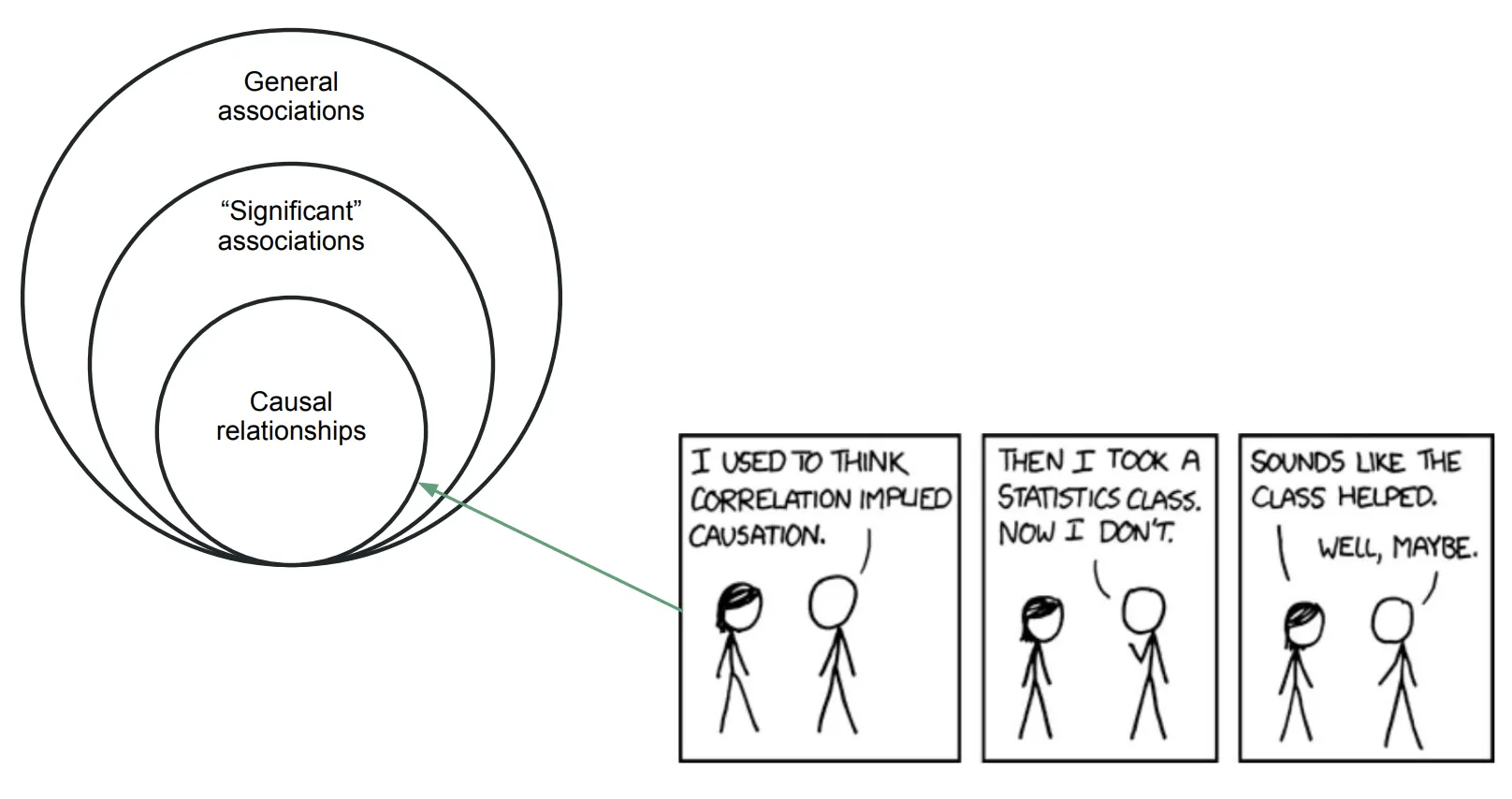
The most significant hurdle in causal inference is distinguishing between correlation and causation. We are bombarded daily with data that highlights associations between different phenomena. For instance, ice cream sales might rise concurrently with an increase in drowning incidents. This is a clear correlation. However, no one would reasonably conclude that eating ice cream causes drowning. The underlying, unobserved factor is likely the warm weather, which leads to both more ice cream consumption and more swimming, thus increasing the risk of drowning. This simple, albeit stark, example illustrates the fundamental challenge: identifying the true causal link amidst a sea of co-occurring events.
The “Black Box” Problem in AI
Many advanced AI models, particularly deep learning networks, operate as “black boxes.” They can achieve remarkable predictive accuracy by identifying complex patterns in vast datasets, but they often struggle to explain why they arrive at a particular prediction or decision. This lack of transparency is a significant limitation when we need to understand the impact of interventions. If a recommendation engine suggests a product, is it because the user is genuinely interested, or is it due to some spurious correlation in the training data? Without causal inference, we are left guessing, which can lead to suboptimal product development, misguided marketing strategies, and potentially harmful unintended consequences.
The “Rubin Causal Model” and Potential Outcomes
A foundational framework for thinking about causal inference is the Rubin Causal Model, often referred to as the “potential outcomes framework.” This framework, introduced by Donald Rubin, conceptualizes causality by considering what would have happened if an individual or unit had experienced a different treatment or condition. For any given unit, we can only observe one potential outcome – either the outcome under the treatment or the outcome under the control. The causal effect for that unit is the difference between these two potential outcomes.
-
The Fundamental Problem of Causal Inference: The core difficulty lies in the fact that we can never observe both potential outcomes for the same unit at the same time. If a user clicks on an ad, we observe their behavior with the ad. We can never observe what would have happened if they hadn’t seen the ad. This inherent unobservability means that we must rely on various statistical and experimental techniques to estimate average causal effects across populations.
-
Average Treatment Effect (ATE): In practice, we often focus on estimating the average causal effect across a population. The ATE is the difference between the average outcome if everyone in the population received the treatment and the average outcome if no one in the population received the treatment. This is a powerful concept for policy-making and strategic decision-making, as it provides an estimate of the overall impact of an intervention.
Methods for Estimating Causal Effects
Since we cannot directly observe counterfactuals, researchers and practitioners have developed a range of methods to estimate causal effects. These methods can be broadly categorized into experimental and observational approaches.
Randomized Controlled Trials (RCTs)
Randomized Controlled Trials are considered the gold standard for establishing causality. In an RCT, participants are randomly assigned to either a “treatment group” (receiving the intervention) or a “control group” (not receiving the intervention or receiving a placebo). Randomization ensures that, on average, the two groups are similar in all respects except for the intervention itself. Therefore, any observed difference in outcomes between the groups can be attributed to the intervention.
-
A/B Testing in Digital Platforms: A/B testing, widely used in the tech industry, is a practical application of RCTs. When a website or app developer wants to test a new feature, design change, or algorithm, they randomly show different versions (Version A, Version B) to different segments of their user base. By comparing key metrics (e.g., conversion rates, engagement time, click-through rates) between the groups, they can confidently infer the causal impact of the change. This is crucial for optimizing user experience, ad effectiveness, and feature adoption.
-
Limitations of RCTs in Tech: While powerful, RCTs are not always feasible or ethical in every tech context. For instance, randomly withholding a critical security update from a subset of users would be irresponsible. Furthermore, RCTs can be expensive and time-consuming to set up, especially for large-scale systems.
Observational Causal Inference Methods
When RCTs are not possible, we turn to observational data. This involves analyzing data collected without deliberate manipulation or randomization. The challenge here is to account for confounding variables – factors that influence both the exposure (the “cause”) and the outcome.
-
Propensity Score Matching (PSM): PSM is a technique used to mimic randomization in observational studies. It involves calculating the probability (propensity score) of an individual receiving the treatment based on their observed characteristics. Then, individuals in the treatment and control groups are matched based on similar propensity scores. This creates a pseudo-control group that is more comparable to the treated group, helping to reduce bias from observed confounders.
-
Difference-in-Differences (DiD): This method is used to estimate the causal effect of a specific intervention by comparing the change in outcomes over time between a group that receives the intervention and a group that does not. It requires data from at least two time periods (before and after the intervention) for both a treatment group and a control group. The assumption is that in the absence of the intervention, the outcomes of both groups would have changed in parallel.
-
Instrumental Variables (IV): Instrumental variables are variables that affect the treatment assignment but do not directly affect the outcome, except through their influence on the treatment. Finding valid instrumental variables can be challenging but can be a powerful tool for addressing unmeasured confounding. For example, if we want to study the causal effect of a particular software feature adoption on user productivity, and we suspect unmeasured factors influence both adoption and productivity, an instrumental variable might be an external event that drives adoption but is otherwise unrelated to user productivity.
- Regression Discontinuity Design (RDD): RDD is used when treatment assignment is determined by a threshold rule based on a continuous variable. For example, if a software license is granted to users above a certain usage threshold, RDD can be used to estimate the causal effect of the license by comparing users just above and just below the threshold.
Causal Inference in Modern Tech Applications
The principles of causal inference are increasingly vital for advancing various domains within the technology sector. As AI systems become more integrated into our lives, the ability to understand and influence their causal mechanisms is paramount.
Personalization and Recommendation Systems
Recommendation engines, ubiquitous in e-commerce, streaming services, and social media, aim to predict what users will like. While many rely on collaborative filtering and content-based approaches (which are primarily correlational), incorporating causal inference can lead to more robust and truly personalized experiences.
-
Beyond “Users who liked X also liked Y”: Instead of just identifying correlations, causal inference can help answer questions like: “Would showing this specific product to this user cause them to make a purchase?” or “Does exposing a user to more diverse content cause them to remain engaged for longer?”
-
Uplift Modeling: This is a specific application of causal inference focused on predicting the incremental impact of an intervention. For example, in marketing, uplift modeling aims to identify customers who are most likely to be persuaded by a marketing campaign, distinguishing them from those who would have purchased anyway (buy-the-propensity) or those who would be negatively influenced (lost-causes). This allows for more targeted and efficient resource allocation.
AI Fairness and Explainability
Ensuring that AI systems are fair and their decisions are explainable is a major ethical and technical challenge. Causal inference offers tools to diagnose and mitigate bias.
-
Identifying Sources of Bias: Causal graphs can be used to model the relationships between sensitive attributes (e.g., race, gender), input features, and model predictions. This allows for the identification of specific pathways through which bias might be introduced. For instance, we can investigate whether a hiring algorithm’s discriminatory outcome is a direct result of a biased input feature, or an indirect consequence mediated by other factors.
-
Counterfactual Explanations: Causal inference can provide counterfactual explanations for AI decisions. For example, “If this loan application had a slightly higher credit score, it would have been approved.” This type of explanation is more insightful than simply highlighting the features that contributed to the decision, as it suggests a concrete action that could have led to a different outcome.
Platform Design and Policy Making
Tech companies constantly make decisions about platform design, feature releases, and content moderation policies. Causal inference provides a rigorous framework for evaluating the impact of these decisions.
-
Measuring the Impact of New Features: Before launching a new feature to all users, companies often conduct A/B tests. However, for more complex, system-wide changes or policy shifts, more sophisticated causal inference techniques might be necessary to disentangle the effects from other ongoing trends or concurrent events.
-
Understanding User Behavior Dynamics: Causal inference can help understand the dynamic interplay of user behaviors. For example, does a change in notification frequency cause a long-term shift in user engagement, or is it a temporary effect? Does the introduction of a new privacy control cause users to trust the platform more?
The Future of Causal Inference in Tech
As data becomes more abundant and AI models grow more complex, the demand for causal inference will only intensify. The ability to move beyond prediction to understanding why things happen and what will happen if we intervene is essential for building responsible, effective, and trustworthy technologies.
Bridging the Gap Between Prediction and Intervention
The ongoing research in causal inference aims to further bridge the gap between purely predictive models and those that can effectively inform interventions. This includes developing more robust methods for dealing with complex data structures, incorporating domain knowledge, and scaling causal inference techniques to handle massive, real-time datasets.

Causal Discovery and Reinforcement Learning
Causal discovery, the process of inferring causal relationships from data without prior knowledge, is a burgeoning field that holds immense promise. When combined with reinforcement learning, where agents learn to make decisions by interacting with an environment, causal inference can lead to agents that learn more efficiently and make more robust decisions under uncertainty.
In conclusion, causal inference is not merely an academic curiosity but a fundamental pillar for the responsible and effective development and deployment of technology. By providing the tools to understand cause-and-effect relationships, it empowers us to build smarter systems, make more informed decisions, and ultimately create a more beneficial technological future.
aViewFromTheCave is a participant in the Amazon Services LLC Associates Program, an affiliate advertising program designed to provide a means for sites to earn advertising fees by advertising and linking to Amazon.com. Amazon, the Amazon logo, AmazonSupply, and the AmazonSupply logo are trademarks of Amazon.com, Inc. or its affiliates. As an Amazon Associate we earn affiliate commissions from qualifying purchases.